

Month: April 2026

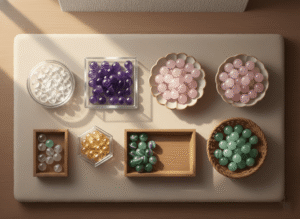
various types of crystal beads, including clear quartz, amethyst, rose quartz, citrine, fluorite, and aventurine beads
purchase guide
Sophia

What Are the Best Types of Crystal Beads for Beginners?

The best crystal beads for beginners are clear quartz, amethyst, rose quartz, citrine, fluorite, and aventurine—all of which offer a balance of affordability, durability, and ease of handling. Opt for medium-sized round beads (6–8 mm) with smoothly drilled holes for effortless stringing. For economical, entry-level collections or sample runs, synthetic crystal beads provide uniformity and minimize costly production errors.
Read More »
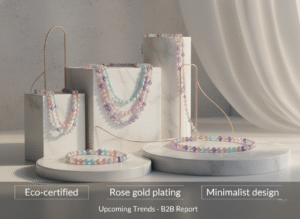
crystal-bead jewelry collections displayed on minimalist marble stands
purchase guide
Sophia

How to Start Making Jewelry with Crystal Beads: A Complete Beginner-to-Business Guide

To start making crystal-bead jewelry, begin with basic tools (pliers, cutters, bead board, needles) and affordable materials for practice. Learn essential assembly techniques like stringing, knotting, and crimping before sourcing premium crystals such as Czech glass or Swarovski alternatives. Choose reliable wholesale suppliers offering both loose crystal beads and matching findings to ensure design cohesion. For production planning, estimate costs and lead time based on bead type, labor skills, and MOQ requirements. This foundation supports efficient onboarding with an OEM jewelry manufacturer when scaling to bulk production.

Read More »
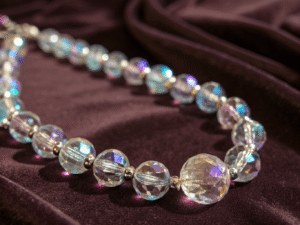
a crystal-beaded necklace illuminated under warm studio lighting
purchase guide
Sophia

The Strategic Role of Crystal Beads in Modern Fashion Jewelry Manufacturing

Crystal beads add brilliance, color, and luxury appeal to fashion jewelry collections. They serve as focal points or accent components in necklaces, earrings, and bracelets, elevating stainless steel and plated jewelry designs. In OEM/ODM jewelry production, high-quality crystal beads support customization, enhance craftsmanship, and increase buyer satisfaction—all at a manageable cost for bulk orders.

Read More »