
Crystal beads have been a hallmark of luxury and creativity in jewelry craftsmanship for decades, serving as an essential design component in everything from high-end bridal collections to mass-market fashion jewelry. For global jewelry manufacturers, suppliers, and distributors, understanding how crystal beads influence both product aesthetics and market positioning is critical. In the wholesale jewelry industry, crystal beads are not merely decorative—they are strategic elements that help brands differentiate their collections, enhance perceived value, and maintain competitive appeal in diverse markets.
Crystal beads add brilliance, color, and luxury appeal to fashion jewelry collections. They serve as focal points or accent components in necklaces, earrings, and bracelets, elevating stainless steel and plated jewelry designs. In OEM/ODM jewelry production, high-quality crystal beads support customization, enhance craftsmanship, and increase buyer satisfaction—all at a manageable cost for bulk orders.
In today’s fast-evolving global market, crystal bead integration reflects more than a trend—it represents a sourcing opportunity for B2B buyers aiming to align creativity with commercial performance. By leveraging crystal beads in stainless steel, brass, and alloy jewelry, manufacturers can balance aesthetic diversity with production efficiency. Below, we explore how crystal beads are used effectively across product lines, material pairings, and OEM/ODM jewelry projects.
How Crystal Beads Are Used in Jewelry Making
Crystal beads are a cornerstone of jewelry design, valued for their light reflection, varied color palette, and versatility in both minimalist and statement pieces.
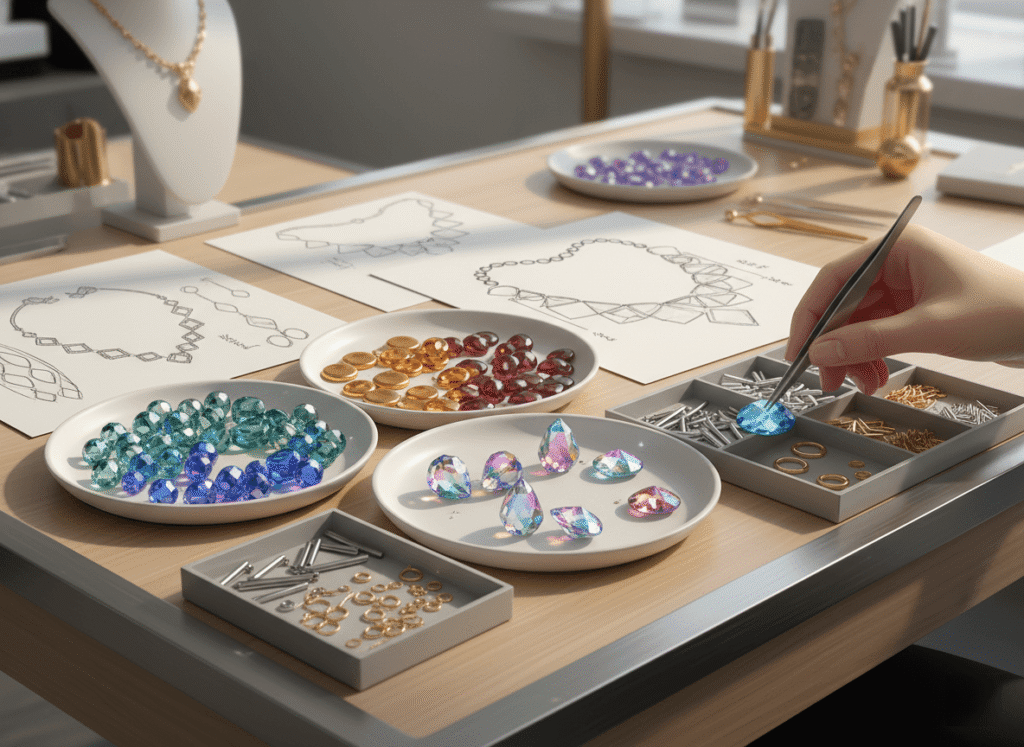
Adding Sparkle and Brilliance to Jewelry Components
They serve as decorative accents that amplify shine. With precise faceting, they refract light like fine gemstones, giving necklaces, bracelets, and earrings a diamond-like allure without the high cost of precious stones.
Design Versatility in Necklaces, Earrings, and Bracelets
Crystal beads are commonly used across multiple jewelry categories:
- Necklaces: Integrated into strands or pendants to create shimmering focal points.
- Earrings: Used in chandelier or drop styles where movement enhances sparkle.
- Bracelets: Perfect for layered designs, wire-wrapping, or stretch-bead assemblies.
Their adaptability makes them suitable for both premium collections and budget-friendly lines, supporting large-scale wholesale jewelry production.
Combining Crystal Beads with Findings and Gemstones
Designers often pair them with metal findings or semi-precious stones to achieve a balanced look. This blend brings depth and variation while maintaining production flexibility—a crucial factor in OEM/ODM jewelry manufacturing.
Key Benefits of Crystal Beads
| Application | Design Impact | Cost Efficiency | Common Materials Used |
|---|---|---|---|
| Statement Necklaces | Adds focal brilliance | Medium | Alloy / Stainless Steel |
| Bridal Jewelry | Creates luxury appeal | Medium to High | Brass / Plated Metals |
| Chandelier Earrings | Offers movement & sparkle | Low to Medium | Stainless Steel / Zinc Alloy |
| Bracelets | Enhances layering texture | Low | Elastic Cord with Crystal Beads |
Design Techniques & Product Development Applications
Crystal beads are not only decorative but also structural—defining form, rhythm, and functional cohesion in jewelry design.
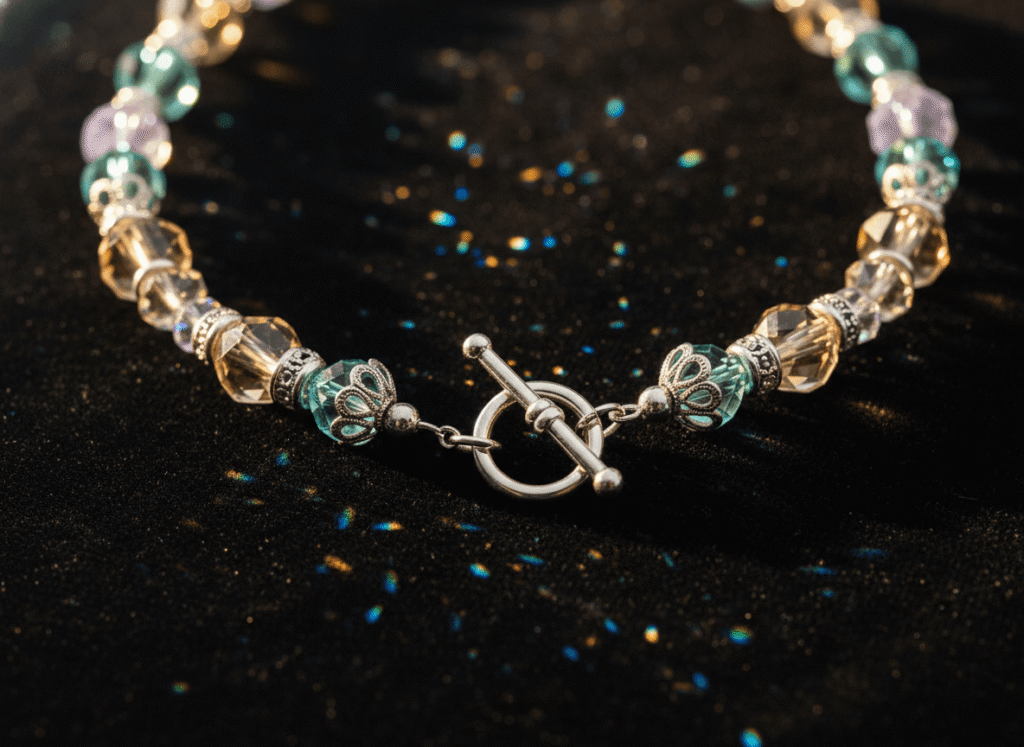
Focal, Spacer, and Fringe Uses in Jewelry Projects
- Focal Elements: Larger bicones or briolettes serve as centerpieces in pendants or earrings.
- Spacer Beads: Small rondelles and rounds separate larger beads, adding rhythm and visual contrast.
- Fringe and Tassel Work: Strung or wire-wrapped beads create movement in statement pieces.
These placements make crystal beads indispensable in complex beadwork, layered chokers, and custom bridal accessories.
How High-Quality Crystal Beads Drive Perceived Luxury
In the B2B jewelry market, product differentiation is often achieved through subtle quality improvements. Fine crystal beads—such as those from premium European manufacturers—offer:
- Superior optical clarity, enhancing perceived luxury.
- Metallic and iridescent coating compatibility, useful in plated jewelry lines.
- Durability and consistency in mass production, reducing defect rates in OEM orders.
Materials and Shine Comparison Table
| Material Type | Optical Clarity | Shine Intensity | Production Cost | Common Application |
|---|---|---|---|---|
| Leaded Crystal Beads | High | Excellent | Medium to High | Bridal & Luxury |
| Glass Beads | Medium | Moderate | Low | Costume Jewelry |
| Acrylic Beads | Low | Average | Very Low | Budget Lines |
| Genuine Gemstone Beads | Variable | Natural Shine | High | Spiritual / Handmade Collections |
For sourcing managers, understanding these differences allows efficient cost-quality balancing based on market segment and buyer intent.
Enhancing Stainless Steel and Plated Jewelry Designs
Crystal beads bridge the aesthetic gap between minimalist metals and artistic detail. When combined with stainless steel components, they introduce vibrant contrast—brightening otherwise industrial-looking pieces.
Stainless Steel Jewelry and Crystal Bead Integration
Stainless steel jewelry manufacturers often utilize crystal beads to:
- Add aesthetic diversity to men’s and women’s collections.
- Soften metallic lines with color and brilliance.
- Complement plated finishes (such as IP gold or rose gold) through color coordination.
These combinations help brands achieve a “high-end appearance” while maintaining production cost efficiency—a key consideration in wholesale sourcing.
Crystal Beads with Plated Findings
In plated metal jewelry (brass, alloy, or zinc), crystal beads offer the following advantages:
- Enhanced visual quality without using gemstones.
- Reflective glow that complements plating tones.
- Consistent color integration, especially in multi-strand designs.
H3: Plating Quality and Craftsmanship Standards
To ensure consistent brilliance, plating and bead pairing must follow controlled QC procedures:
- Use nickel-free, tarnish-resistant plating to sustain color over time.
- Request sample lots under OEM/ODM agreements to confirm bead-metal color matching.
- Implement bulk inspection standards focused on gloss uniformity, bead-setting stability, and plating resilience.
Integrating Crystal Beads into OEM/ODM Jewelry Production
In customized private label manufacturing, crystal beads can shape brand storytelling and enhance product exclusivity.
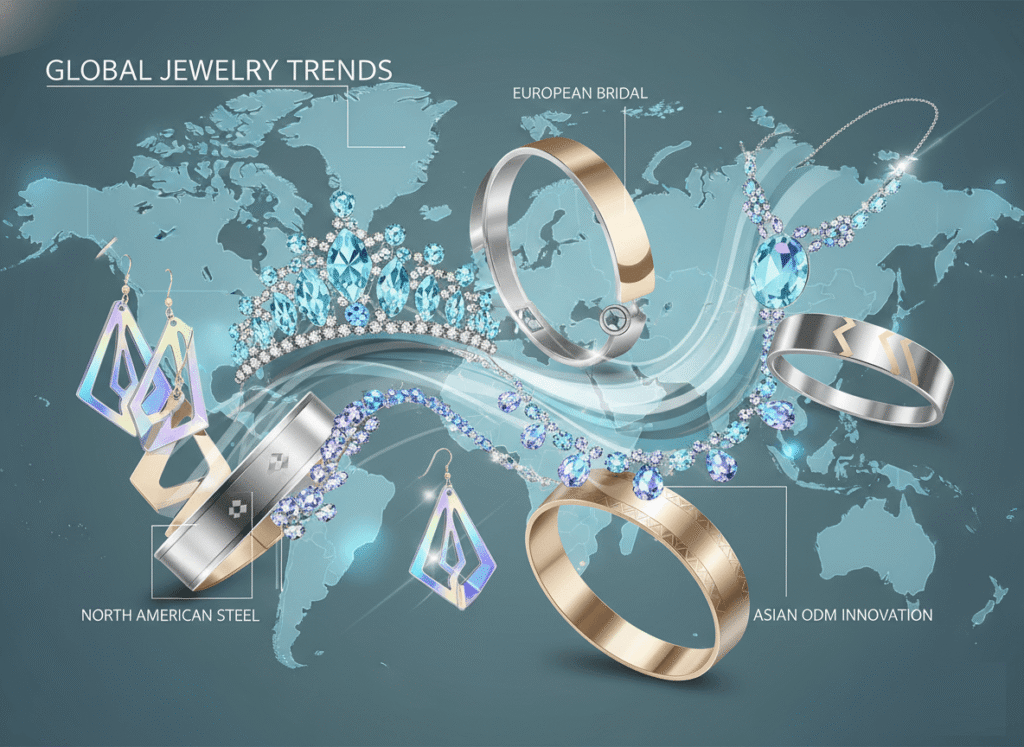
OEM vs ODM Production Considerations
- OEM (Original Equipment Manufacturing): Buyers provide designs, and factories integrate crystal beads based on specifications. Ideal for established brands with defined design identities.
- ODM (Original Design Manufacturing): Suppliers propose designs incorporating crystal beads; buyers choose and brand them under their label. Perfect for fast trend adoption and diverse product catalogs.
Private Label Customization Opportunities
Crystal beads offer limitless color and shape possibilities, improving SKU differentiation without major redesign costs. As a custom jewelry supplier, I often recommend crystal beads to new brands entering mid-tier retail markets because:
- They help achieve premium aesthetics affordably.
- Minimum order quantities (MOQs) remain manageable.
- They allow fast responsiveness to trending color palettes.
OEM/ODM Planning and Cost Control Table
| Production Type | MOQ Range | Design Customization | Market Advantage |
|---|---|---|---|
| OEM Custom Orders | 300–500 pcs/style | High | Brand-exclusive quality |
| ODM Catalog Selections | 100–300 pcs/style | Moderate | Speed to market |
| Private Label Seasonal Lines | 200–400 pcs/style | Variable | Trend flexibility |
For efficient production, I advise sourcing crystal beads directly from verified suppliers with ISO-certified plating quality and transparent material specifications.
Global Market Behavior and Trend Analysis
The global crystal bead jewelry market continues to evolve with changing consumer aesthetics and material innovation.
Trend 1: Sustainable & Ethical Crystal Sourcing
Buyers increasingly prefer lead-free crystal beads and recycled glass alternatives, aligning with global sustainability standards. This trend influences wholesale selections, especially for EU and US retail compliance.
Trend 2: Multi-Material Fusion
Blending crystals with stainless steel, ceramic, or resin has become common in modern designs. That combination creates tactile variation and a futuristic high-fashion look suitable for export collections.
Trend 3: Color Forecast for 2025 Jewelry Lines
Crystal beads align with forecasted hues such as champagne gold, iridescent lilac, and aquamarine teal. Suppliers offering broad color availability often gain faster contract engagement with design houses and brand buyers.
H3: Regional Demand Outlook
- North America: Demand for custom crystal bead bracelets and stainless steel earrings.
- Europe: High-market bridal and occasion jewelry featuring Swarovski-style crystals.
- Asia-Pacific: Growth in affordable ODM sets with plated brass components and crystal embellishment.
Supply Chain Insights and Quality Assurance
Maintaining consistency in crystal bead jewelry manufacturing requires structured QC protocols.
QC Standards and Inspection Criteria
For B2B buyers managing bulk orders:
- Verify color uniformity and bead clarity.
- Review surface finish under light reflection tests.
- Check adherence between bead holes and surrounding metal settings to ensure durability.
- Conduct random sample testing (AQL level 2.5) before shipment.
Bulk Order and MOQ Planning
Efficient MOQ planning minimizes warehouse stress and keeps inventory agile. For crystal bead jewelry lines, I generally suggest:
- Starter MOQ: 100–200 pcs per design for ODM lines.
- Advanced MOQ: 500–1000 pcs per OEM custom line.
This balance supports scaling without overcommitment.
Conclusion: Maximizing Crystal Bead Potential in Wholesale Jewelry Manufacturing
Crystal beads are more than decorative accents—they are strategic assets that elevate jewelry aesthetics, enhance brand appeal, and support scalable production. From stainless steel chokers to plated brass earrings, their light-reflecting properties bring instant luxury at a manageable cost. For jewelry wholesalers, brand owners, and sourcing managers, understanding crystal bead attributes allows smarter design planning, cost control, and better supplier collaboration.
Key Takeaways:
- Choose high-quality crystal beads with consistent faceting and optical clarity.
- Combine with stainless steel or plated materials for balanced luxury and durability.
- Integrate beads efficiently into OEM/ODM production for versatile private label lines.
- Verify quality at every stage—from plating to assembly—to maintain brand standards.
Are you exploring a new jewelry collection featuring premium crystal beads?
Request sample sets or explore our OEM/ODM catalog today to discover scalable, trend-driven designs perfect for your wholesale market needs.
