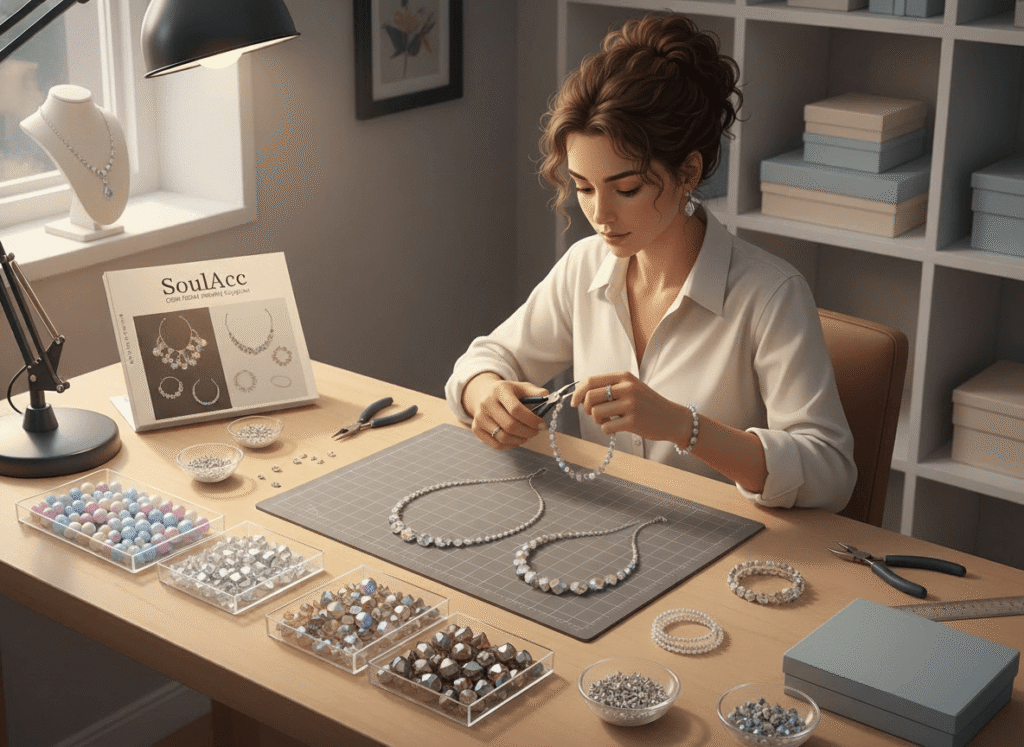
In the dynamic world of fashion jewelry manufacturing and wholesale trade, knowing which crystal bead types work best for beginners can dramatically influence both product development and early success. Whether you’re a new jewelry brand owner, a sourcing manager exploring supplier options, or a wholesale buyer looking to introduce accessible crystal bead kits to your catalog, understanding the right entry-level materials ensures both cost efficiency and design flexibility. As someone with years of experience as a custom jewelry supplier and OEM/ODM jewelry manufacturer, I’ve seen firsthand how the correct bead selection can simplify production and elevate perceived quality in early-stage jewelry lines.
The best crystal beads for beginners are clear quartz, amethyst, rose quartz, citrine, fluorite, and aventurine—all of which offer a balance of affordability, durability, and ease of handling. Opt for medium-sized round beads (6–8 mm) with smoothly drilled holes for effortless stringing. For economical, entry-level collections or sample runs, synthetic crystal beads provide uniformity and minimize costly production errors.
For B2B sourcing teams, starting with beginner-friendly crystal beads isn’t just about crafting ease—it’s a strategic way to enter the market with minimal risk. By learning material properties, cut consistency, and plating or drilling precision, you can align your product range with rising handmade and DIY jewelry trends. Let’s explore which cuts, materials, and suppliers make the most sense for first-time bulk buyers and manufacturing beginners.
Which Crystal Bead Cuts or Finishes Are Easiest for Beginners to Work With?
When you start assembling your first jewelry line—or introducing a beginner-friendly DIY kit to your retail partners—the cut and finish of your crystal beads matter as much as their color or composition. Certain shapes are simply more forgiving to work with, while others require precision and an experienced hand.
Recommended Easy-to-Work-With Crystal Cuts
| Bead Cut | Characteristics | Why It’s Ideal for Beginners |
|---|---|---|
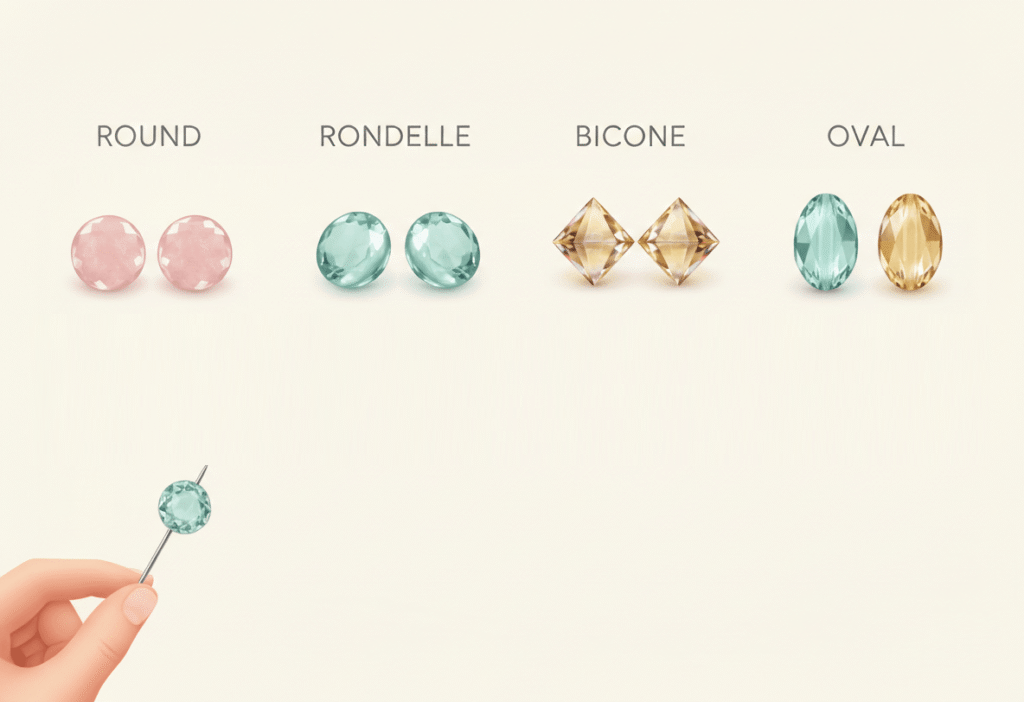
| Round Beads (6–8 mm) | Smooth, symmetrical, easy to thread | Consistent alignment simplifies design |
| Rondelle Beads | Slightly flattened, add sparkle | Great as spacers and accents |
| Bicone Beads | Faceted, decorative appearance | Intermediate-level sparkle without complexity |
| Oval or Rice Beads | Gentle elongated form | Easy handling and balanced hole drilling |
The round bead remains the beginner’s favorite—its symmetry prevents twisting or uneven stringing. If your production line aims to support entry-level jewelry makers, offering pre-packed assortments of round, rondelle, and bicone crystal beads is a smart move for both wholesale catalogs and teaching sets.
Sourcing Tip:
As a jewelry manufacturer, I always recommend starting with medium bead sizes (6–8 mm) because they provide enough visual impact while being easy to handle during assembly. Avoid tiny seed beads initially since they require specialized tools and magnification to manage consistently.
Surface Finishes That Simplify Production
Selecting the right crystal finish improves product appeal and prevents assembly issues:
- Polished Finish: Smooth and shiny, ideal for first projects and faster QC checks.
- Matte Finish: Non-reflective surface hides minor scratches during early handling.
- AB (Aurora Borealis) Coating: Adds brilliance but requires gentle polishing and careful plating control.
- Frosted Finish: Trendy, tactile finish popular with minimalist jewelry lines.
For new production teams or private-label jewelry startups, offering a mix of polished and frosted finishes allows easier handling while testing market preferences.
How Can I Identify Good-Quality Crystal Beads for My First Bulk Order?
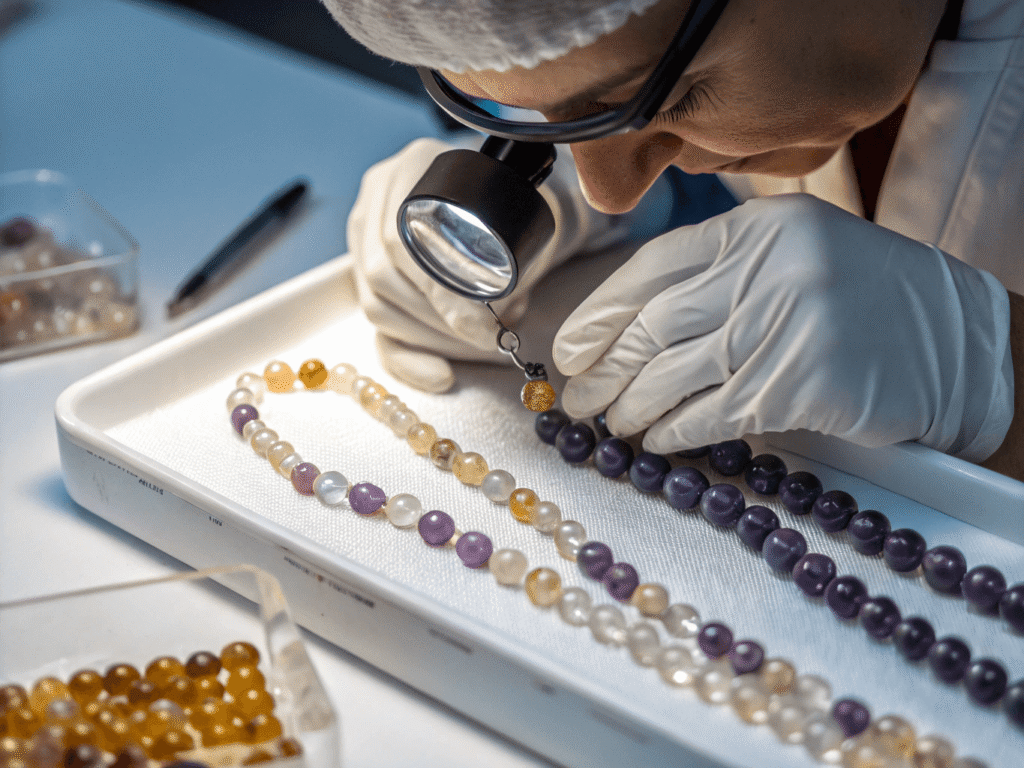
Quality identification is critical during your early sourcing phase. Beginners might easily overlook small defects—off-centered holes, surface scratches, or inconsistent cuts—that can compromise both appearance and durability.
Key Quality Control (QC) Criteria for Crystal Beads
| Inspection Point | What to Check | Acceptable Standard |
|---|---|---|
| Hole Alignment | Centered, smooth drilling | <2° variance tolerated |
| Surface Uniformity | No cracks, scratches, or bubbles | Visual QC after 100 pcs |
| Color Consistency | Shades evenly matched | ±5% hue deviation |
| Faceting Precision | Angles cut symmetrically | CNC machine-cut or similar precision |
| Transparency Level | Matches catalog grade | Based on manufacturer’s sample batch |
Supplier Verification:
Before committing to a large MOQ, I always advise B2B buyers to:
- Request a small sample pack (100–200 pcs) for in-house QC testing.
- Check packaging and labeling consistency—a professional supplier provides lot numbers and quality reports.
- Compare finish and color under daylight to confirm plating or coating consistency.
The best wholesale jewelry suppliers in China or Thailand often offer sample approval programs before finalizing production. This assures alignment with your brand’s visual standards and customer expectations.
Material Selection & Durability
Here’s how the six most recommended beginner crystals perform in both durability and cost:
| Crystal Type | Hardness (Mohs) | Durability | Bulk Cost Range (per 100 g) | Common Use |
|---|---|---|---|---|
| Clear Quartz | 7 | Very durable, stable color | Low | Universal practice & neutral designs |
| Amethyst | 7 | Durable, steady hue | Moderate | Practice projects, violet accents |
| Rose Quartz | 6–7 | Smooth surface, gentle tone | Moderate | Beginner bracelets, feminine sets |
| Citrine | 7 | Good hardness, warm tones | Moderate | Gold-tone jewelry |
| Fluorite | 4 | Slightly softer | Low | Learning basic bead stringing |
| Aventurine | 6.5–7 | Highly resistant to chipping | Low | Casual design pieces |
Harder crystals such as clear quartz and amethyst tolerate repetition during beginner learning cycles. Fluorite, though softer, helps beginners recognize the nuances of pressure handling while threading or wire wrapping.
Are There Affordable Suppliers That Offer Sample Packs for New Jewelry Makers?
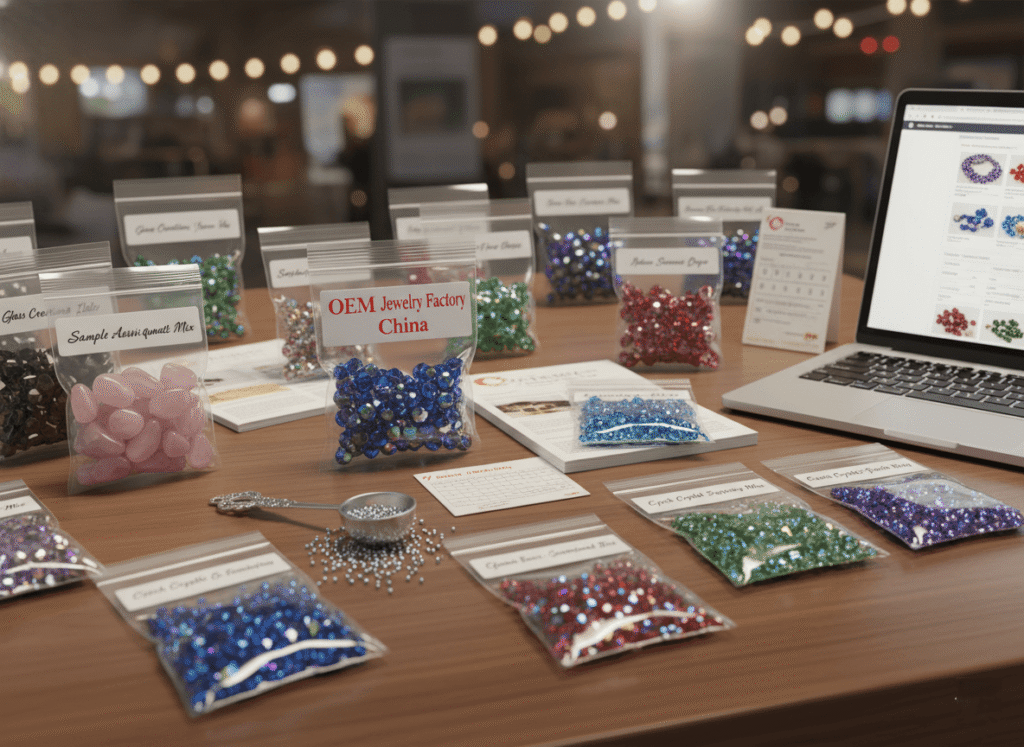
Finding budget-friendly crystal bead suppliers for sample or small-batch orders can define your long-term business relationship and profitability margin. Fortunately, many fashion jewelry wholesale suppliers and OEM factories now accommodate testing orders, enabling new designers and retailers to evaluate quality without full MOQ commitment.
Where to Source Entry-Level Sample Packs
- China-Based OEM Jewelry Manufacturers
Many top-tier fashion jewelry wholesale China factories provide affordable trial kits or sample bags containing 10–12 types of crystal beads. It’s an efficient introduction to multiple finishes and shapes. - Thailand & India Jewelry Markets
Renowned for cut variety and semi-precious supply chains, vendors often sell “designer samplers” at trade shows or export fairs—ideal for brand-testing assortments. - Online Wholesale Platforms
Sites like Alibaba, 1688, and Global Sources let buyers connect directly with verified custom jewelry suppliers offering OEM/ODM services, with small sample MOQs and secured payment channels.
Insider Advice as a Manufacturer:
When evaluating affordability versus quality, always consider plating compatibility. If you intend to include gold-plated findings in your jewelry sets, select crystal beads tested for plating durability and anti-tarnish treatment.
Cost Control and MOQ Planning for Beginner Bead Lines
Building your first jewelry line or bead kit requires careful MOQ strategy. Here’s a framework many of my B2B clients follow:
| Order Type | MOQ (Beads or Weight) | Ideal For | Cost Efficiency |
|---|---|---|---|
| Sample Order | 100–200 pcs | Quality testing | High per-unit cost |
| Trial Batch | 500–1000 pcs | Retail testing or teaching kits | Moderate |
| Small Production | 3–5 kg | Practice jewelry lines | Lower per-unit cost |
| Bulk OEM Production | 10+ kg | Established brand lines | Best cost control |
For new brands targeting DIY markets, offering small bead assortments per color family (e.g., “Rose Quartz Starter Bead Mix”) creates low-barrier entry sets that sell well on e-commerce channels like Etsy or Shopify.
How Do Different Crystal Shapes Affect the Assembly Process of My Designs?
The shape and symmetry of your beads directly affect design flow, production efficiency, and stringing precision. Understanding the assembly impact early helps avoid wasted time and mismatched patterns during prototype development.
Round Beads
- Assembly Speed: Fastest among all shapes.
- Ideal Use: Bracelets, necklaces, and strand designs.
- Beginner Benefit: High consistency, minimal adjustment required.
Rondelles
- Assembly Speed: Moderate; may require spacing checks.
- Ideal For: Spacer accents and light reflections in layered designs.
- Tip: Use as separators to highlight gemstone centers.
Bicones
- Assembly Speed: Slightly slower due to faceted edges.
- Ideal For: Advanced beginner projects (sparkle emphasis).
- Tip: Combine with smooth beads for contrast.
Cube and Faceted Shapes
While visually striking, cube-shaped beads can result in uneven alignment unless designs are precisely planned. For early learners or first production runs, limit these shapes to small quantities within mixed kits.
Practical Observation:
When teaching production teams in beginner jewelry programs, I’ve noted that round and rondelle designs maintain the lowest defect rates during batch assembly. This reduces both QC rejection and material waste.
Additional Considerations for B2B Buyers and Jewelry Design Developers
Integrating OEM/ODM Services for Beginner Bead Lines
If you represent a jewelry brand planning to introduce bead-based products, partnering with an OEM/ODM jewelry manufacturer can simplify product development. These factories can:
- Customize bead compositions, packaging, and color themes.
- Add your private label branding to starter kits.
- Provide pre-tested blends of easy-to-handle crystal shapes and sizes.
Material Comparison: Natural vs. Synthetic Crystals
Synthetic or reconstructed crystal beads are economically advantageous for training markets or first-time collections.
| Material Type | Key Benefits | Common Issues | Recommended Usage |
|---|---|---|---|
| Natural Gemstone Crystals | Unique patterns, premium appeal | Higher cost, size variance | Boutique collections |
| Synthetic Crystals (Glass, Resin) | Affordable, uniform | Less perceived value | Learning projects & DIY kits |
| Reconstructed Stones | Balanced cost + consistency | Slightly lower hardness | Entry-level fashion lines |
Trend Insights & Global Market Behavior
As the DIY and handmade jewelry markets grow globally, more brands introduce beginner-friendly kits and semi-finished materials targeting hobbyists and small crafters. Demand for crystal beads with good luster, durability, and eco-friendly sourcing continues to increase.
- Trend 1: Retailers and wholesalers now prioritize crystal beads compatible with sustainable packaging.
- Trend 2: Transparent quartz and pastel beads like rose quartz are re-emerging as minimalist fashion staples.
- Trend 3: Online learning communities are driving small-batch crystal bead sales, boosting private label opportunities.
B2B buyers can capitalize on these trends by sourcing beads that meet key beginner criteria—balance, beauty, and practicality—while maintaining reliable wholesale pricing structures.
Conclusion
Choosing the best types of crystal beads for beginners combines artistry with smart sourcing decisions. As a jewelry manufacturer, I always advise starting with clear quartz, rose quartz, amethyst, citrine, fluorite, and aventurine—all proven beginner-friendly materials with stable supply chains and broad market appeal. Maintain a focus on round and rondelle cuts, medium sizes (6–8 mm), and polished or matte finishes to simplify early design stages.
When selecting a wholesale jewelry supplier or OEM partner, inspect product consistency, plating stability, and QC documentation before finalizing any bulk order. Request samples whenever possible, compare craftsmanship under good lighting, and start with small orders to establish baseline quality.
Next Step for Buyers:
Explore beginner-friendly crystal bead options in our curated sample catalog, or contact our manufacturing team for tailored OEM/ODM support. Experience first-hand how quality materials and expert craftsmanship can empower your first jewelry line to meet both beginner and professional expectations.