
As a jewelry manufacturer and supplier with years of experience supporting both retail hobbyists and wholesale distributors, I’ve watched the DIY jewelry market expand dramatically. Beginners entering jewelry design today are looking for accessible kits that eliminate frustration and build instant confidence. For wholesale buyers or private-label product developers, understanding which patterns and layouts resonate most with new learners can influence inventory choices, packaging designs, and ultimately, customer retention. Companies producing craft kits, jewelry supplies, or pre-assembled components can tap into this segment by engineering beginner-friendly kits that emphasize simplicity and organization.
The easiest jewelry making kits for beginners feature stretch bracelet patterns, single-strand necklaces or earrings, and memory wire layouts. These kits use pre-sorted, compartmentalized trays with clear visual diagrams, pre-cut materials, and symmetrical bead sequences. Flat-lay storage and all-inclusive supplies minimize errors and boost user satisfaction—making them ideal for first-time jewelry makers and high-volume DIY distributors.
From a sourcing and manufacturing perspective, beginner jewelry kits represent an exceptional opportunity for scalable production with low MOQ requirements and strong repeat-purchase behavior. Understanding the intersection of kit design, material selection, and user psychology can help wholesalers and OEM/ODM producers create private-label jewelry kits optimized for ease of assembly and learning retention. Let’s explore which patterns and organizational layouts truly empower beginners, while reducing logistical complexity from a production standpoint.
Easiest Project Patterns for Beginners
Stretch Bracelets — The Universal Starting Point
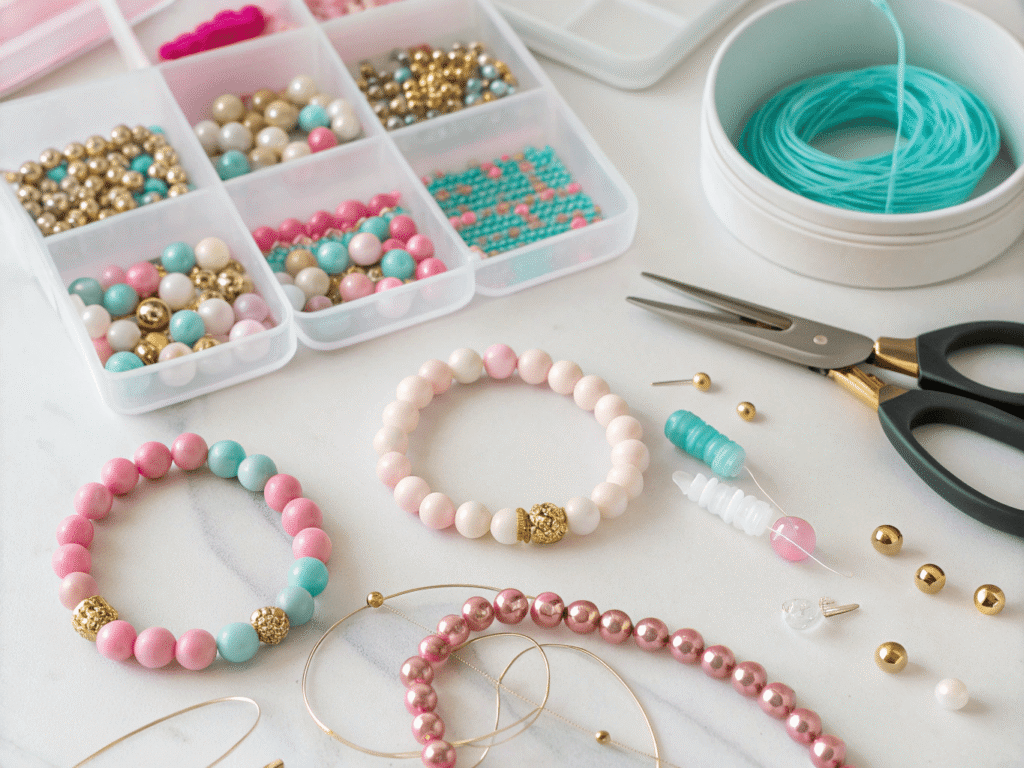
Having developed hundreds of private-label jewelry kits, I can confidently state: stretch bracelets are the simplest and most universally loved beginner project. All that’s needed is elastic cord, beads, scissors, and optional glue. Stretch bracelets bypass sizing issues and tool requirements entirely. For wholesalers and manufacturers, they’re ideal for fast kit assembly and low defect rates.
Advantages for Beginners:
- No need for clasps or crimp tubes
- Quick to finish in 5–10 minutes
- Works with nearly all bead materials (glass, resin, wood, plastic)
- Minimal learning curve, making customer success near-guaranteed
Common Elastic Cord Specifications:
| Cord Type | Diameter (mm) | Use Case | Notes |
|---|---|---|---|
| Elastic Stretch Cord | 0.5 | Lightweight beads | Easier threading |
| PowerCord Elastic | 0.8 | Standard beads | More durable |
| Clear Elastic | 1.0 | Chunky beads | Best for visual clarity |
This pattern delivers consistent satisfaction, prompting repeat buyers and strong retail conversions—particularly when paired with packaging that highlights “no tools required”.
Single-Strand Necklace and Earrings — Simple Yet Elegant
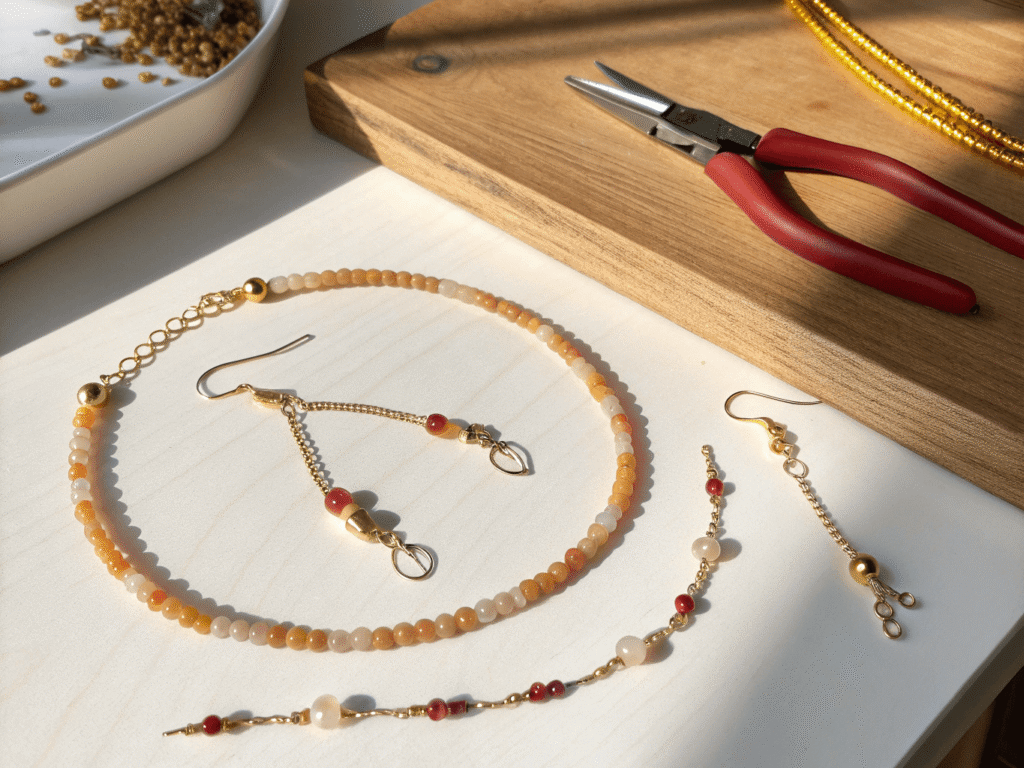
Single-strand layouts teach bead stringing fundamentals. For OEM jewelry kit suppliers, these are the next logical step beyond stretch bracelets because they require low material complexity yet introduce technique variety.
Design Overview:
- Use medium-gauge wire (0.45mm–0.5mm)
- Include crimp beads and lobster clasps for closure
- Sequence beads by size or color symmetry
Beginner Advantages:
- Quick learning curve for proper tension and crimps
- Visually satisfying end-product
- Introduces metal findings without overwhelming complexity
For earring kits, pre-made hooks and jump rings cut down assembly time dramatically. Using symmetrical bead patterns enhances visual consistency for new designers while maintaining design freedom.
Memory Wire Bracelets — Foolproof Foundations
Memory wire simplifies the entire jewelry-making process. It retains its coiled shape, meaning no measurement or tension management is required. As a supplier, this material reduces customer failure rates substantially.
Why It Works:
- Pre-formed coils fit wrists automatically
- Ends require simple loop closure or bead caps
- Excellent for customers hesitant to measure sizes
Memory wire kits are adaptive, fitting niche segments like youth-oriented creative kits or school projects. They allow lean production, fast assembly, and minimum QC complications.
Themed Multi-Piece Beginner Kits
From a brand-owner’s perspective, multi-project kits deliver higher perceived value and inventory turnover. Including 4–6 small projects in one box appeals to retail buyers seeking versatile options. Examples include:
- Friendship bracelet sets
- Charm bracelet + stretch bracelet combos
- Matching earring + necklace sets
Each project reuses similar components but provides unique instructions. Manufacturing-wise, this yields economical material overlap—reducing waste, simplifying procurement, and ensuring steady cost control.
Critical Kit Layout Features
Compartmentalized Tray Design
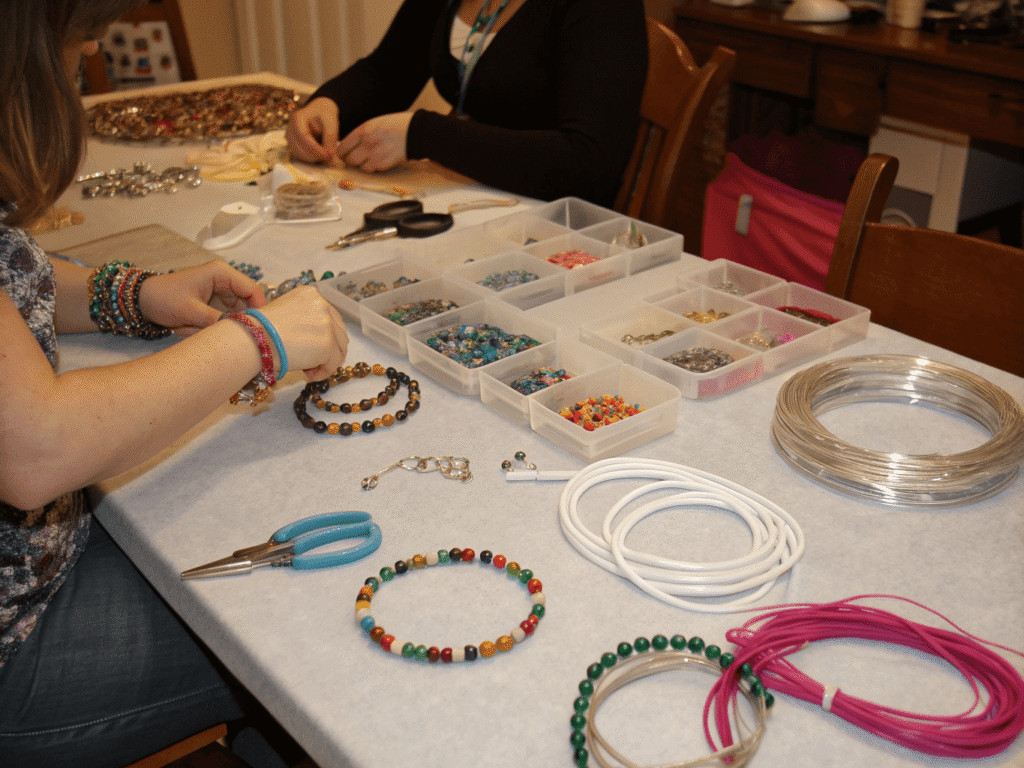
Nothing frustrates beginners more than losing beads mid-project. Premium kit designs use compartmentalized trays—transparent cases divided into sections for beads, cords, and findings.
Core Layout Requirements:
- 17–32 compartments, each labeled or color-coded
- Clear lids with snap locks to prevent spills
- Stackable or modular containers for retail appeal
Color arrangements by hue or metal finish create intuitive design mapping. From a supplier standpoint, these layouts reduce QC complaints due to material mix-ups.
All-Inclusive Material Selection
Comprehensive kits remove the pain of sourcing mismatched parts. I always recommend B2B buyers ensure OEM producers include all essential components.
Essential Kit Components:
- 300–500 beads (standard kits), 2000+ for deluxe sets
- Elastic or wire pre-cut for sizing consistency
- Clasps, crimp beads, and jump rings
- Small multi-use tools: pliers, cutters
- Illustrated instruction booklet
Such completeness minimizes returns and ensures new customers actually complete their projects—a powerful retention driver for brands selling entry-level kits.
| Kit Type | Material Count | Tools Included | Skill Level |
|---|---|---|---|
| Standard Beginner | 400–600 beads | 1 tool | Basic |
| Advanced Beginner | 800–1200 beads | 2–3 tools | Intermediate |
| Premium All-Inclusive | 2000–3000 beads | Full toolkit | Skilled hobbyist |
Material Sizing & Dexterity Considerations
Manufacturers designing for beginners must consider hand dexterity and bead visibility.
- Use bead sizes between 6–8mm for optimal grip
- Holes ≥2mm ensure smooth threading
- Elastic cords ≥0.8mm diameter reduce snapping risk
- Avoid seed beads smaller than 2mm for early learners
By adhering to these ergonomics, brands reduce product returns and improve perceived ease of use.
Visual Instruction Hierarchy
In our production partnerships, visual manuals outperform text-only guides. High-resolution step-by-step imagery dramatically increases completion rates.
Ideal Instruction Framework:
- Final project image
- Bead arrangement visual (flat-lay layout)
- Step-by-step close-ups
- Optional design variations
For wholesalers marketing DIY kits globally, multilingual photo guides help customers across language barriers—enhancing accessibility and brand trust.
Organizational Best Practices in Kit Design
Grouped Component Clustering
Advanced beginner kits use project grouping—materials for each design stored in their own sections. This minimizes confusion and clarifies component relationships.
- Example layout: compartment 1 for bracelet project; compartment 2 for earrings.
- Benefits: faster material identification, better inventory management, and fewer user errors.
- Suitable for both OEM and private-label packaging systems.
Space Efficiency and Portability
Modern jewelry makers, especially hobbyists, often craft in compact home settings. Wholesale buyers should prioritize packaging with portability and workspace integration.
Recommended Features:
- Flat kits under 14×14 inches
- Tiered drawers for vertical stacking
- Lightweight materials <2 lbs total weight
- Magnetic closures or secure lids for transport
Portability improves product appeal in e-commerce environments where storage convenience influences purchase decisions.
Pre-Measured Supplies and Symmetrical Layouts
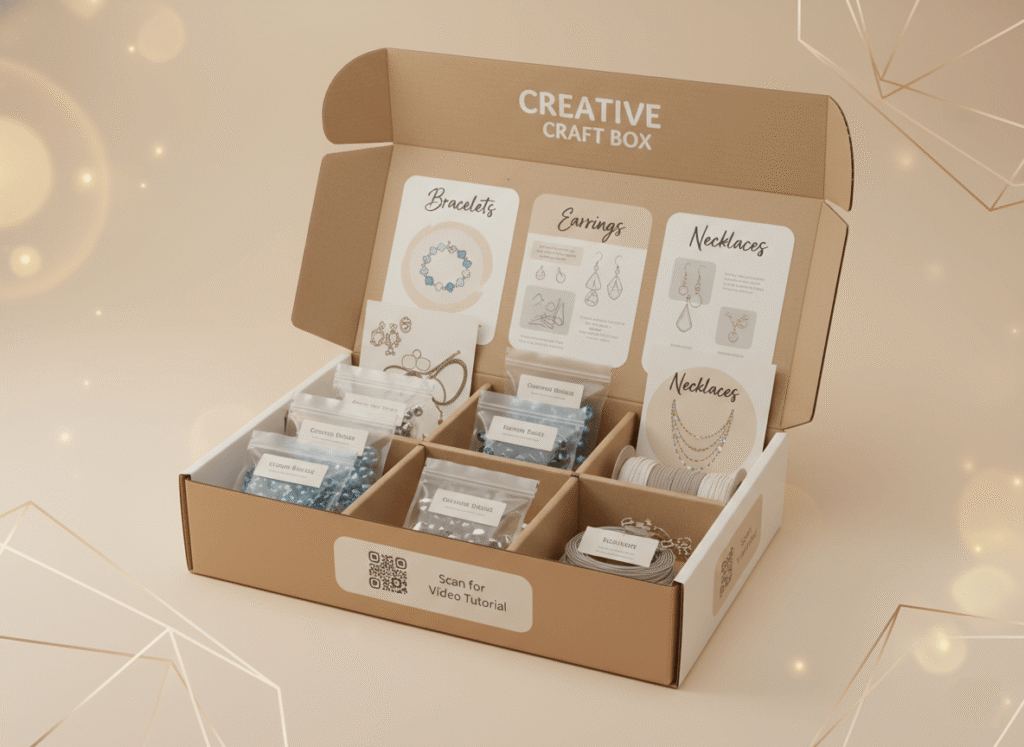
Pre-measurement eliminates sizing guesswork. Each cord or wire segment should be cut for standard bracelet or necklace lengths with extra allowance for knots or crimps. Symmetrical kit layouts help users visualize composition quickly—mirroring professional tray setups used by jeweler’s apprentices.
This feature is a strong USP for brand differentiation. Consumers equate pre-planned symmetry with product professionalism, enhancing perceived value.
Visual and Diagram-Based Learning
Manufacturers who integrate diagrams or QR-code video tutorials experience notably higher satisfaction rates from customers. Educational inclusions—like short video snippets accessed via smartphones—turn standard kits into experiential learning tools. As an OEM producer, I’ve seen conversion rates increase by 23–40% when video augmentations are included with printed instructions.
Why These Patterns and Layouts Convert Beginners Into Loyal Buyers
The psychology behind successful beginner kits is simple: immediate results yield emotional satisfaction. A first-time crafter who finishes a bracelet in under ten minutes is far more likely to buy again or upgrade to premium materials. For wholesale brands and B2B distributors, this translates to high repeat order volume and low churn.
How Simplicity Drives Scalability
- Stretch and single-strand designs require fewer QC checks—ideal for mass production.
- Memory wire and elastic minimize breakage in transit.
- Visual layouts reduce post-sale support needs, cutting aftersales overhead.
- Modular kits create adaptable inventory models: swap bead colors seasonally without redesigning layout structures.
Cost Control and MOQ Planning at Scale
Beginner kits can be produced efficiently under small minimum order quantities due to modular component interchangeability. For example, the same bead shapes can serve multiple kit SKUs by changing only packaging color themes or instruction sets.
| Component | Cost Efficiency Strategy | Scalability Notes |
|---|---|---|
| Beads | Bulk purchase by color family | Easy cross-kit reuse |
| Elastic Cord | Standard thickness (0.8mm) across SKUs | Streamlined procurement |
| Packaging | Uniform box design | Simplifies private label branding |
OEM and ODM producers benefit immensely by tailoring MOQ around standardized kit templates—reducing material waste and increasing profit margins.
Trend Analysis: Shifting Demographics & Market Behavior
The DIY jewelry kit market is expanding across international platforms such as Amazon, Etsy, and Alibaba. B2B brands now cater simultaneously to hobbyists, young learners, and adult creatives wanting therapeutic hobbies.
Key Market Insights:
- 63% of online jewelry kit buyers prefer “all-inclusive” kits over modular supply sets.
- Kits with photographic instructions generate 42% higher repeat sales.
- Stretch bracelet and charm bracelet sets lead the beginner category globally.
- Visual branding and packaging aesthetics influence purchase intent more than traditional material lists.
Manufacturers adapting product designs to these insights can secure stronger e-commerce ROI and build recognizable private-label brand loyalty across multiple craft genres.
Conclusion
For jewelry wholesalers and brand owners targeting the DIY segment, success begins with simplicity and thoughtful design. Stretch bracelets, single-strand necklaces, memory wire layouts, and symmetrical bead patterns remain the most effective entry-level designs. Kits built around solid organization—compartmentalized trays, visual guides, and all-inclusive materials—lower barriers for newcomers and encourage repeat engagement.
Strategically integrating ergonomic design, visual hierarchy, and quality component sourcing ensures scalable production, low MOQ flexibility, and customer satisfaction. Whether launching an OEM jewelry kit line or expanding retail assortment, these patterns and layouts deliver results that boost both user confidence and long-term brand profitability.
Next Steps for B2B Buyers:
- Evaluate suppliers specializing in beginner-level jewelry kits.
- Request sample kits that meet pre-organized layout standards.
- Discuss OEM/ODM customization for branded packaging and multi-lingual manuals.
- Explore opportunities in bulk beginner jewelry kit production across e-commerce channels.
The beginner market thrives on accessibility—and with the right kit architecture, any jewelry supplier can turn first-time curiosity into lifelong creative engagement.
