
In a world where children are often encouraged to compete, creating opportunities for collaboration is more important than ever. Craft activities offer a joyful, hands-on approach to teaching teamwork — allowing kids to share materials, distribute roles, exchange creative ideas, and build something meaningful together. Whether in the classroom, after-school clubs, or at home, crafts naturally transform individual effort into collective success.
By selecting the right group crafts, you can encourage communication, cooperation, and creative problem-solving — essential teamwork skills for life.
From shared murals to group jewelry making, collaborative crafting teaches kids that every small contribution matters, and that success is built together, not alone.
Let’s explore how different types of crafts can promote teamwork, what you’ll need to prepare, and how to guide children through these rewarding experiences.
How Crafts Foster Teamwork Among Kids
Collaborative crafting promotes shared ownership and mutual respect. It encourages children to listen, discuss, and compromise while creating something tangible together.
Key Teamwork Skills Developed Through Crafting
| Teamwork Skill | How Crafting Builds It |
|---|---|
| Communication | Kids must discuss design ideas, materials, and steps clearly. |
| Problem-solving | Teams face creative challenges (e.g. limited supplies) and find group solutions. |
| Cooperation | Every member has a defined role and contributes to a shared goal. |
| Empathy | Children appreciate others’ styles and value every contribution. |
| Leadership & Responsibility | Taking charge of small tasks cultivates accountability. |
When teachers or caregivers guide these projects intentionally, art becomes a social learning laboratory, nurturing both creativity and character.
Large-Scale Craft Projects That Build Cooperation
1. Group Mural Painting
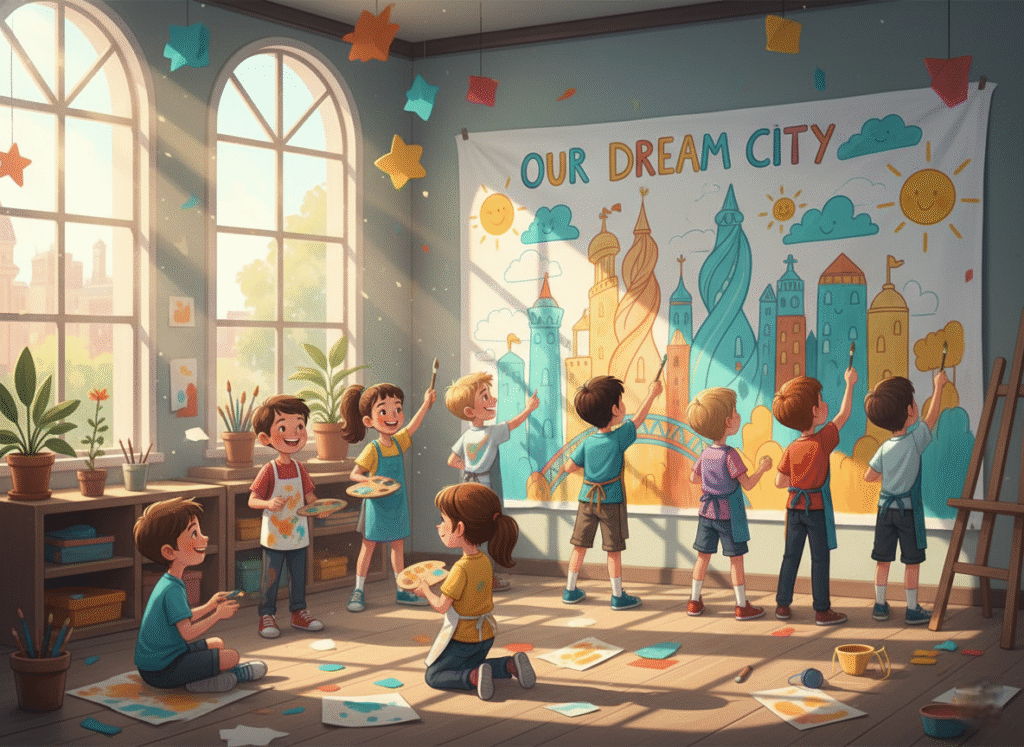
Few activities shout team spirit as strongly as a shared mural. Kids brainstorm together, plan the layout, sketch individual sections, then paint their parts to form a unified image.
Why it works:
- Encourages planning and coordination.
- Shows how individual effort blends into a collective whole.
- Suitable for schools or community centers with open wall or canvas space.
Tip: Use themes such as “Our Dream City” or “Underwater World” to inspire joint storytelling through art.
2. Collaborative Sculpture or Model Building
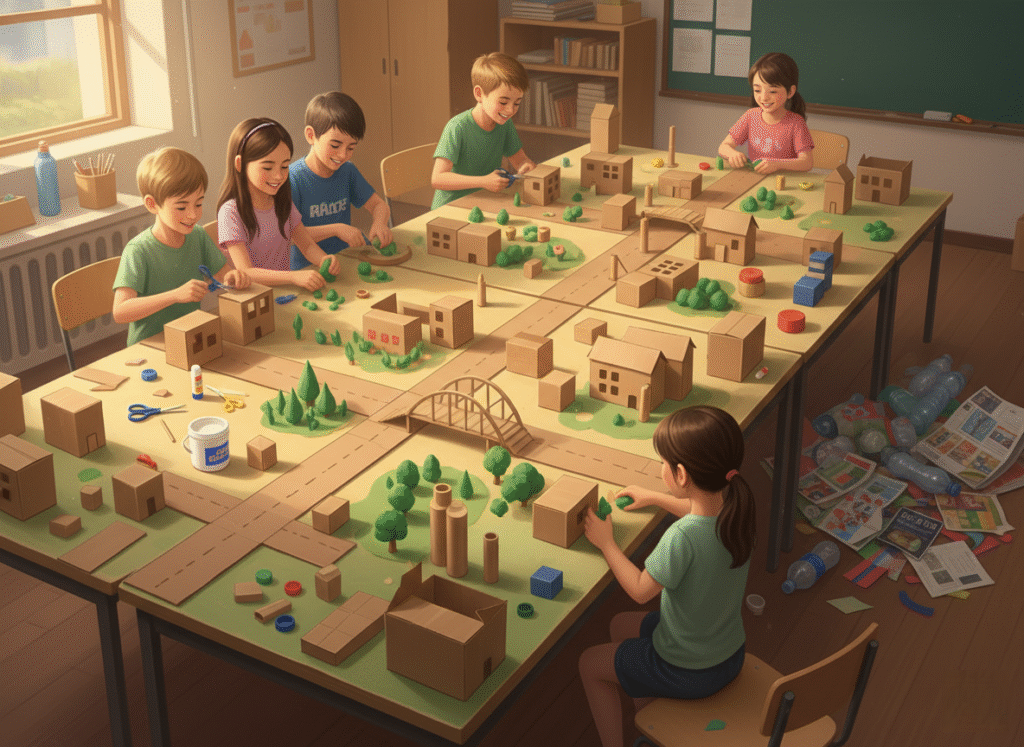
Children can work together to construct community models, mini cities, animals, or imaginative structures using clay, cardboard, or recycled materials.
Steps:
- Assign small teams to specific tasks (e.g., houses, trees, roads).
- Set time for assembly day where all sections merge into the shared model.
- Encourage teamwork through challenges like designing bridges that connect their zones.
Learning outcome: Kids actively strategize, negotiate design ideas, and distribute responsibilities while practicing patience and spatial problem-solving.
3. Connected Chain or Mosaic Projects
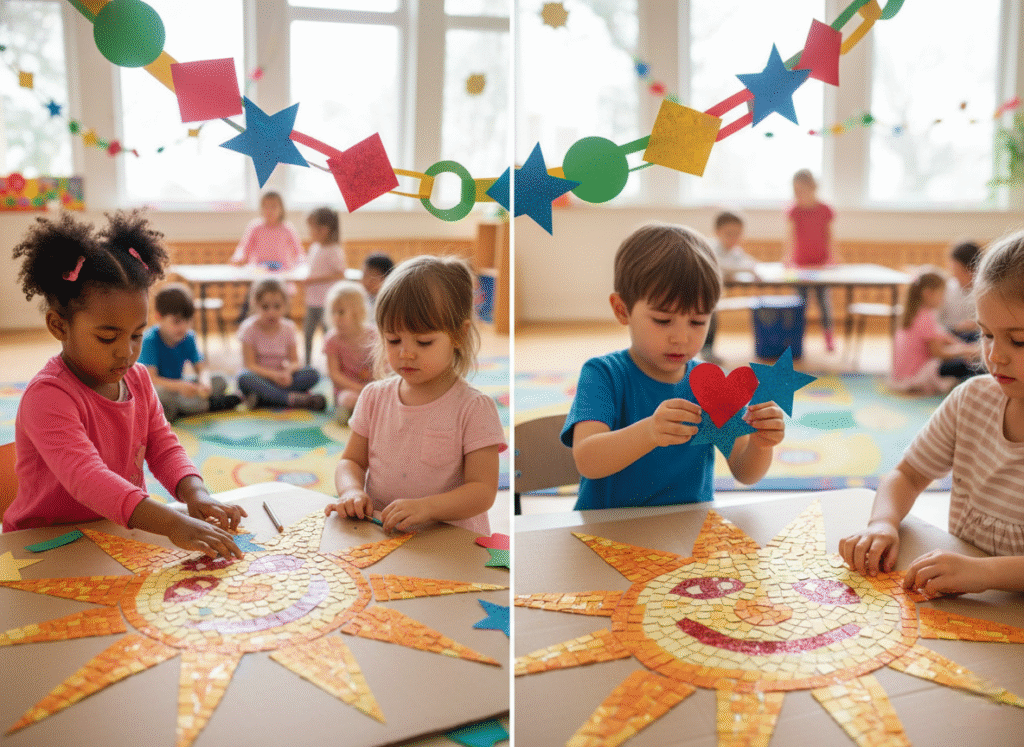
These low-cost, high-impact crafts visually represent unity and teamwork. Each child creates one piece that contributes to a final design.
Examples:
- Paper Heart Chain: Each child decorates a strip with positive words about teamwork, then links them together.
- Paper Mosaic: Every child decorates a tile or paper square, which joins to form a large image.
- Origami Collaboration: Each student folds one piece (e.g., a crane), and together they form a hanging mobile display.
Why it works: Children see the cause and effect of cooperation — one missing piece affects the whole.
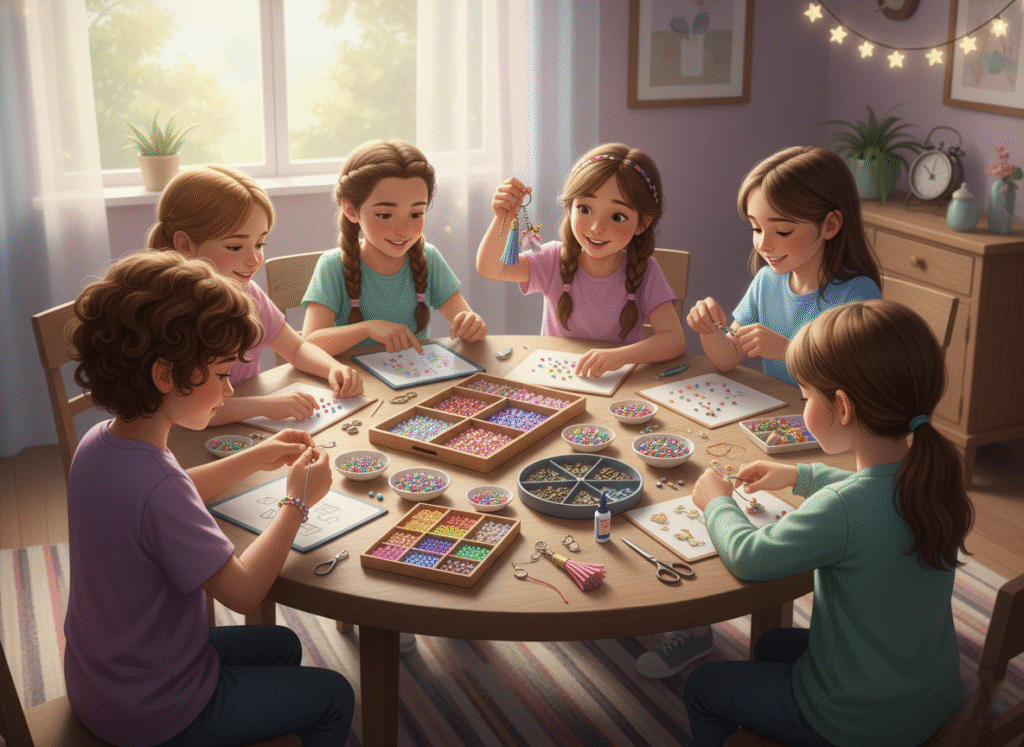
4. Jewelry and Craft Kits that Encourage Collaboration
Jewelry and accessory projects are often viewed as individual crafts, but with small modifications they can become fantastic teamwork builders.
How to organize:
- Design stage: Divide children into design, color coordination, and assembly roles.
- Material management: One group prepares beads, wires, or cords; another handles pattern layout.
- Assembly: Team members carefully follow the agreed design, communicating across tasks.
Example projects:
- Group friendship bracelets: Each student designs one bracelet for another member, promoting empathy and appreciation.
- Collaborative keychain project: Each child contributes one charm or bead that reflects their personality — combined, it forms a symbolic team accessory.
Supplies to prepare:
- Beads of various colors and shapes
- Elastic cords or metal keyrings
- Charms or tags for customization
- Storage trays to organize materials
These projects develop fine motor precision, creativity, and interpersonal collaboration — perfect for art classes or extracurricular clubs.
Additional Ideas for Team-Centered Craft Activities
| Craft Type | Description | Teamwork Benefit |
|---|---|---|
| Group puppetry | Design and build puppets for a shared puppet show. | Combines storytelling, acting, and craftsmanship. |
| Paper Tapestry Sewing or Weaving | Each child contributes one woven section. | Reinforces coordination and mutual dependence. |
| Recycled Material Construction | Teams collect and repurpose household items. | Teaches sustainability and problem-solving. |
| Seasonal Decoration Projects | Create class displays for holidays together. | Builds pride in shared achievement. |
Tips for Running Successful Team Craft Sessions
- Define Roles: Assign each child a specific task — designer, material manager, assembler, or decorator — to avoid confusion and ensure participation.
- Balance Freedom and Structure: Too much control limits creativity, while too little may cause chaos; plan guidelines, but leave room for imagination.
- Encourage Communication: Ask reflective questions like “How can we combine your idea with theirs?”
- Celebrate Collective Outcomes: Display the final craft in common areas. Recognition reinforces the value of collaboration.
- Reflect After Creation: Allow teams to discuss what worked well and what could improve next time — mirroring real-world teamwork reflection.
Why Team-Based Crafts Matter
Beyond art, these experiences foster emotional intelligence and group resilience. Children gain a sense of purpose, realizing their efforts matter equally to the group’s success. This mindset extends to school projects, sports, and community life — every shared effort builds empathy and social awareness.
Team-based crafts also nurture confidence through collaboration, showing that creativity thrives not only in individual talent but in collective synergy.
In Summary
Crafts that promote teamwork — from murals and mosaics to jewelry and recycled constructions — give children the chance to create, communicate, and collaborate in meaningful ways. By designing structured yet flexible projects, educators and parents can transform simple art activities into lessons of leadership, empathy, and unity.
If you’re preparing a classroom or group activity, start with something accessible like a team keychain project or community mural. With the right balance of materials and guided teamwork, you’ll see creativity flourish right alongside lasting friendship and cooperation.
