Importing brooches from China can be highly profitable for fashion brands, jewelry wholesalers, and retailers—especially given the country’s diverse manufacturing base and competitive pricing. Yet one of the first questions buyers encounter when sourcing from China is: What’s the MOQ (Minimum Order Quantity)? Determining the right MOQ helps balance cost efficiency and inventory risk, especially when testing new designs or entering the market.
In most cases, Chinese brooch suppliers set MOQs between 100 and 500 pieces per design for standard models. Custom-made or branded brooches, however, often require a higher MOQ—starting from around 1,000 units—because of mold costs and design complexity.
Understanding MOQ differences is crucial for both buyers and suppliers. Lower MOQs can support small-batch retailers and new brands, while higher quantities provide economies of scale for larger importers and OEM partners. Below, we’ll explore how MOQs vary depending on materials, customization levels, and supplier types—and how you can negotiate more flexible terms.
Choosing the Right Supplier for Small Batch Orders
Finding a supplier who accepts small batch orders is often the first challenge for new buyers or boutique retailers.
1. Platforms and Supplier Types
- Yiwu-based suppliers and trading companies are known for lower MOQs—often 100 to 120 pieces for ready-made designs.
- Direct factories specializing in custom metal brooches typically start from 500 pieces per design, as production setup and mold creation increase costs.
- Some export-focused manufacturers accept trial orders as low as 50 pieces for sample testing, especially if future bulk orders are expected.
2. How to Identify Flexible Suppliers
When searching on Alibaba, Made-in-China, or Global Sources:
- Use filters like “low MOQ,” “ready to ship,” or “in-stock brooches.”
- Contact suppliers directly and mention your brand’s growth plan—many factories will lower the MOQ for long-term buyers.
- Look for factories advertising mixed design capability, meaning you can combine several models within one batch.
Tip: Small-batch-friendly suppliers often focus on export or custom gift markets rather than mass fashion jewelry lines.
MOQ Differences by Material Type
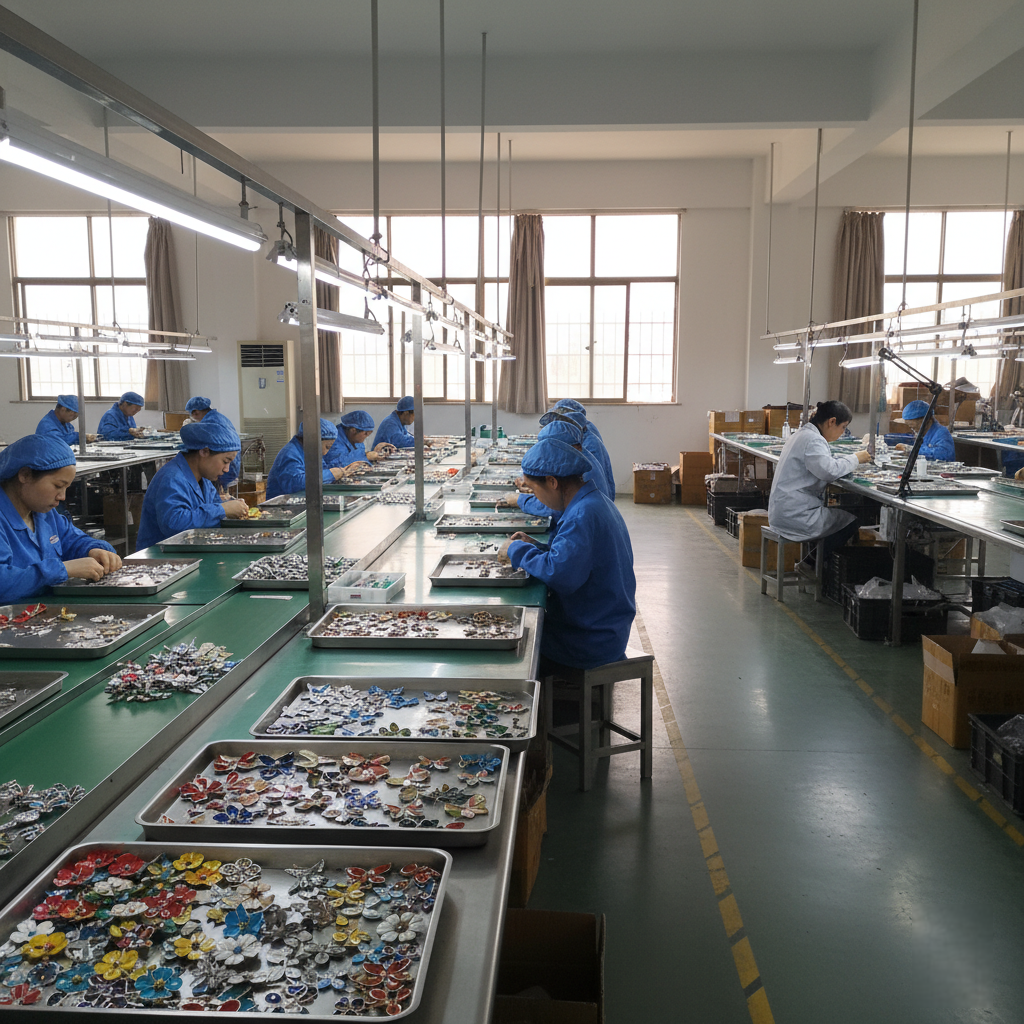
The material of your brooch affects both price and the minimum order quantity because each metal requires different setup and finishing procedures.
| Material Type | Typical MOQ Range | Notes on Production |
|---|---|---|
| Stainless Steel Brooches | 200 – 500 pieces | Durable, often for premium lines; laser cutting increases setup cost. |
| Zinc Alloy Brooches | 300 – 1,000 pieces | Requires mold creation; ideal for detailed enamel designs. |
| Brass Brooches | 100 – 600 pieces | Softer metal, easier to shape; often used for antique finishes. |
| Resin or Acrylic Brooches | 50 – 200 pieces | Lower MOQ; quick production cycles and minimal tooling. |
How to Choose the Right Material for Your MOQ Goals
If you aim for lower quantities, resin, acrylic, or pre-made zinc alloy molds are your best options.
For high-end brooches with brand engraving or logo plating, stainless steel and brass will require higher MOQs—but yield better long-term durability.

Customized vs. Ready-Made Brooch MOQs
Customization complexity greatly impacts MOQ requirements. Factories must account for design artwork preparation, mold manufacturing, and color-matching time.
Ready-Made Brooch Designs
- MOQ often 100–240 pieces per model.
- Ideal for retailers testing the market or stocking multiple designs.
- Available in diverse options from Yiwu or Guangzhou jewelry markets.
- No mold or setup cost, making production turnaround faster.
Customized or OEM Brooches
- MOQ usually 500–2,000 pieces per design.
- Required for unique logos, shapes, or color elements.
- Factories might need CAD design confirmation and mold proofing, which add lead time (typically 20–35 days).
| Design Type | MOQ Range | Production Cycle |
|---|---|---|
| Ready-Made / In Stock | 100 – 240 pcs | 7 – 14 days |
| Custom Mold Design | 500 – 1,000 pcs | 20 – 35 days |
| Enamel / Soft Enamel Brooch | 800 – 2,000 pcs | 25 – 40 days |
Pro Insight: If your design can be adapted from an existing mold, the supplier may reduce the MOQ by 30–40%. Always ask whether the mold is customizable.
Negotiating MOQs for Long-Term OEM Projects
A smart importer knows that MOQ isn’t always fixed—it’s a starting point for negotiation. Factories use MOQs to cover setup and guarantee profitability but are often willing to adjust terms for strategic buyers.
1. How to Negotiate Effectively
- Offer a long-term commitment: Let suppliers know you plan recurring orders every quarter or season.
- Increase per-unit price slightly: A higher price can justify small batches during initial cooperation.
- Bundle designs: Combine several designs into one production cycle to optimize shipping and setup costs.
- Show professionalism: Provide detailed design requirements and packaging specs—factory teams value clarity.

2. Seasonal and Promotional Opportunities
Chinese exporters sometimes lower MOQs during:
- Trade fairs (Canton Fair, Yiwu Fair)
- Off-season months (January–February, July–August)
- Product promotion campaigns targeting new international clients
3. Logistics and Packaging Considerations
Shipping consolidation can affect the effective MOQ—for example, less than 200 pieces may not fill a carton efficiently, raising per-unit freight cost.
Expert Tip: If your OEM brooch line has ongoing demand, you can request a “rolling MOQ,” producing 500 pcs now and 500 later under one mold setup.

Conclusion
The minimum order quantity for brooches from China generally ranges between 60 and 1,000+ pieces, depending on design complexity, materials, and supplier flexibility.
- Ready-made designs: as low as 100 pcs.
- Customized brooches: typically start at 500 pcs.
- Trial or promotional batches: sometimes accepted from 50 pcs.
For jewelry brands, wholesalers, and OEM partners, understanding MOQ structures is key to efficient sourcing and cost control.
If you’re building a new product line or testing market appeal, consider working with Yiwu-based small factories or OEM partners offering flexible batch quantities. This strategy not only cuts risk but also lays the foundation for long-term cooperation—and eventual large-volume cost benefits.
Action Point: Ready to source your next collection? Start by shortlisting three suppliers with different MOQ offers, and compare cost per unit, material quality, and customization capacity before committing to bulk production.
