
Diamond painting has become one of the most engaging art crafts worldwide, uniting precision with creativity. For wholesalers, producers, and design studios specializing in diamond art kits, understanding the difference between square and round drills is strategic—not just aesthetic. The choice of drill shape directly influences product complexity, labor time, visual outcome, and end-user satisfaction. As manufacturers and global suppliers, we balance between cost efficiency, production feasibility, and the artistic expectations of retailers and hobby enthusiasts.
Square diamonds deliver seamless, pixel-perfect coverage ideal for detailed artwork and portraits, whereas round diamonds provide faster assembly and a luminous, soft sparkle. For B2B procurement, square drills are preferred in high-definition designs and premium kit lines, while round drills fit budget-friendly, beginner-oriented or large-format collections.
From a sourcing perspective, selecting the right diamond drill type can refine portfolio segmentation and pricing architecture. Square drills demand higher alignment precision in manufacturing molds, affecting labor costs and packing time. Round drills, on the other hand, simplify pattern printing and adhesive layering, providing speed in bulk production. Understanding material composition, drill calibration, and market segmentation helps buyers and OEM/ODM diamond art suppliers plan assortments that meet diversified consumer preferences globally.
How Can I Decide Between Square and Round Drills for My Designs?
As a supplier, I often guide brand owners and design resellers through the process of deciding which drill type to use. The decision depends on the artwork style, target customer skill level, and the retail positioning of your diamond painting line.
Key Comparison Table: Drill Type Overview
| Feature | Square Diamonds | Round Diamonds |
|---|---|---|
| Shape | 2.5 mm square edges | 2.8 mm round edges |
| Canvas Coverage | Near full coverage, no gaps | Slight gaps visible |
| Detail & Precision | High – ideal for portraits | Moderate – better for abstract art |
| Speed of Placement | Slower, requires alignment | Faster, easier for beginners |
| Visual Finish | Mosaic-style realism | Soft sparkle, cross-stitch-like |
| Market Segment | Advanced crafters, premium lines | Beginners, hobby kits |
| Production Cost | Slightly higher (tight fit molds) | Lower (simpler bead molds) |
| Skill Requirement | High | Moderate |
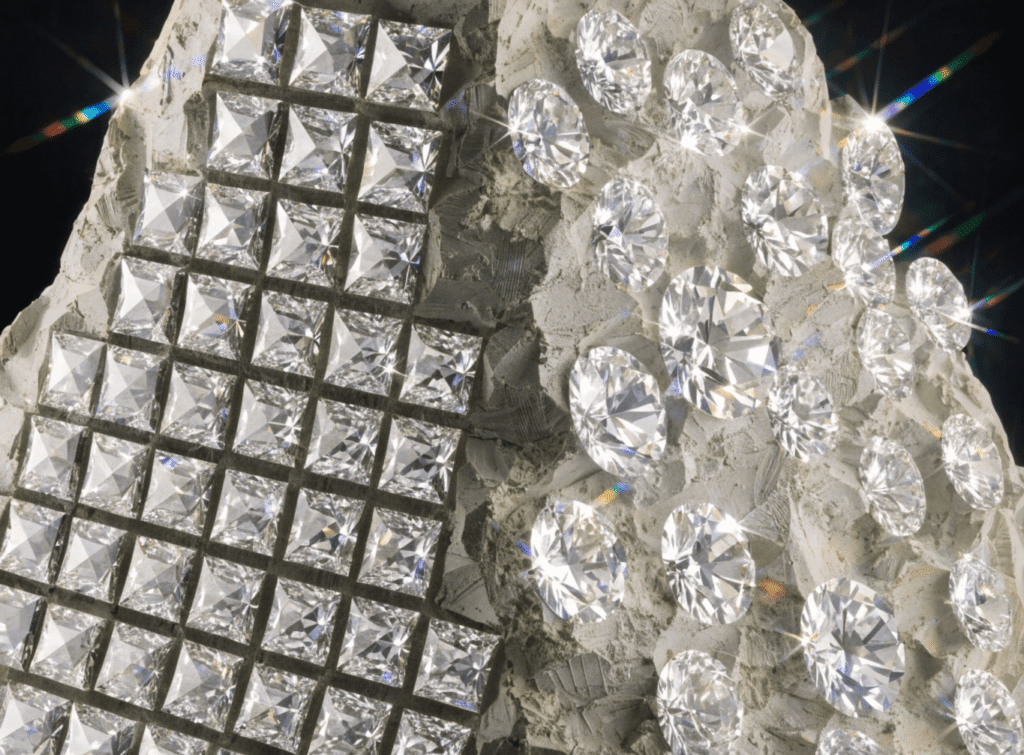
Choosing the right drill type also impacts your inventory planning. For high-traffic online marketplaces, offering both variations under separate SKUs allows segmentation—catered toward experienced artists or casual crafters. Our OEM clients often choose square drills for licensed artworks or portrait-style kits due to their fidelity, while private label brands targeting lifestyle crafters tend to prefer round drills for mass retail.
Why Do Many Customers Prefer Square Diamonds for Detailed Artwork?
The Precision and Coverage Advantage
Square diamonds deliver unmatched detail thanks to their edge-to-edge coverage on canvas. Each piece connects perfectly with neighboring drills, forming a seamless mosaic effect. This minimizes visible spaces and ensures crisp transitions between color blocks—essential for realistic portrait and fine landscape designs.
Customers appreciate the pixelated realism created through squares. From a manufacturing viewpoint, square drill kits command higher perceived value since the visual depth and clarity align with professional artwork standards. That enhances product differentiation in premium collections and upscales buyer confidence.

Emotional Engagement and User Satisfaction
There’s also an experiential factor: when placing square diamonds, crafters enjoy the tactile “snap” sound confirming perfect placement. It makes the process feel more precise, fostering satisfaction and engagement. As a supplier, we’ve seen that such sensory feedback increases repeat purchases—particularly among dedicated crafters who seek challenge and craftsmanship.
B2B Insight: Quality Control Metrics for Square Drill Production
Since square drills demand precision, production QC involves tighter tolerances. Below is a simplified inspection checklist applied in our facilities:
| QC Parameter | Target Value | Frequency of Test | Notes |
|---|---|---|---|
| Drill size tolerance | ±0.02 mm | Every batch | Ensures alignment accuracy |
| Mold uniformity | ≥98% alignment | Weekly check | Prevents misfit rows |
| Color separation index | High clarity | Every color group | Maintains sharp image results |
| Adhesive strength | ≥1200 mpa adhesion rate | Every canvas batch | Reduces drill popping risk |
Maintaining these standards sustains long-term partnership reliability for wholesale clients and custom kit developers.
What Are the Production Differences Between Square and Round Diamond Drills?
Understanding the engineering side of diamond drills helps procurement teams calculate manufacturing costs and QC planning for bulk orders.
Mold Engineering and Calibration
- Square drills require ultra-precise mold calibration with uniform corner angles. Any deviation affects how the diamonds fit on canvas.
- Round drills utilize cylindrical or bead-shaped molds, often easier to mass-produce with consistent quality.
The alignment of square drills also demands stricter resin formulation to prevent slight warping—making their production relatively costlier. In OEM setups, square bead machines may have lower output rates per hour because of this precision constraint.
Supply Chain Cost Control
Let’s compare estimated bulk production metrics based on typical OEM manufacturing:
| Production Metric | Square Drill Type | Round Drill Type |
|---|---|---|
| Mold cost (per design) | High – precision required | Medium – faster turnover |
| Production speed | Slow (approx. 25% less) | Fast |
| QC rejection rate | Moderate (due to alignment issues) | Low (less shape variance) |
| Packing time per kit | Longer – more complex arrangement | Short – simplified sorting |
| MOQ for B2B orders | Often 1000–2000 sets | Often 500–1000 sets |
From a supplier’s viewpoint, round drills deliver cost advantages when scaling entry-level product lines, while square drills strengthen premium positioning through detail performance. Balancing both can broaden your product catalog range, serving diverse resellers and markets.
Material and Coating Insights
Both drill types are typically made of high-quality resin, sometimes coated with diamond dust or light-reflective layers to enhance brilliance. However, square drills often include thicker coatings to maintain uniform shine across flat surfaces.
As a manufacturer, we also test adhesive compatibility. Square drills require strong stickiness due to full surface contact, whereas round drills rely more on center adhesion points.

How Do Square Versus Round Diamonds Affect the Final Look and Customer Satisfaction?
Visual Outcome: Realism vs Sparkle
Square diamond paintings create a sharper, mosaic-style visibility. Viewed from a distance, they deliver clean precision similar to digital pixel art. This appeals to customers seeking realism—portraits, landscapes, and photographic prints.
Round diamonds, however, emphasize luminosity and twinkle. Their curved surface refracts light from different angles, yielding a softer, more ethereal glow. It’s ideal for floral, abstract, and fantasy-themed artworks.
Customer Experience Correlation
Round kits generally generate faster progress and fewer frustration points. They cater to beginners who prioritize relaxation and visual charm over technical perfection. Meanwhile, square kits nurture hobbyists seeking intricate challenges—a niche with strong long-term brand loyalty.
Analysis of Customer Feedback Patterns
Based on our post-sale surveys and market studies:
| Attribute | Square Drill Kits (Feedback) | Round Drill Kits (Feedback) |
|---|---|---|
| Satisfaction with detail | 95% positive | 78% positive |
| Ease of placement | 72% satisfied | 94% satisfied |
| Project completion speed | Slow but rewarding | Fast and relaxing |
| Sparkle/brilliance appeal | Moderate | High |
| Likelihood to repurchase | High (for advanced users) | High (for casual users) |
This data helps guide our B2B partners in segmenting product lines and setting retail pricing according to customer expectations.
Material Comparison and Craftsmanship Considerations
While shape defines much of the outcome, the material density, cut precision, and plating or coating process also affect quality. Manufacturers customizing diamond kits under private label contracts often adjust resin hardness and surface luster depending on the market target.
Material Differences
| Composition Factor | Square Diamonds | Round Diamonds |
|---|---|---|
| Resin Hardness | High (requires sharp edges) | Medium (allows smoother placement) |
| Surface Coating | Uniform gloss | Multi-angle reflection |
| Compatibility with Adhesive Canvas | High (flat adhesion) | Moderate (point adhesion) |
Craftsmanship directly influences user perception. The precision of mold tooling and uniformity of coating affect how drills interlock and how they reflect light. For export orders, especially in the EU or US markets, maintaining consistent coating and color uniformity is vital for brand credibility.
Trend Analysis: Market Behavior and Product Strategy
The global diamond painting market continues to expand, merging craft hobby with decorative art sectors. Square drills remain dominant in professional-grade kits sold through specialized platforms, while round drills drive large-scale purchases for DIY and gift retail stores.
Current Market Trends Observed
- Premium lines: Increasing adoption of square drills for celebrity portrait or detailed designs.
- Mass retail kits: Round drills dominate due to lower entry cost and beginner accessibility.
- Hybrid sets: Some advanced kits combine both shapes for varied texture effects.
- Private label growth: Retail brands request custom packaging that highlights drill type and craftsmanship assurance.
As a supplier, we continuously monitor consumer feedback through analytics to help our B2B clients align their product development with emerging preferences.
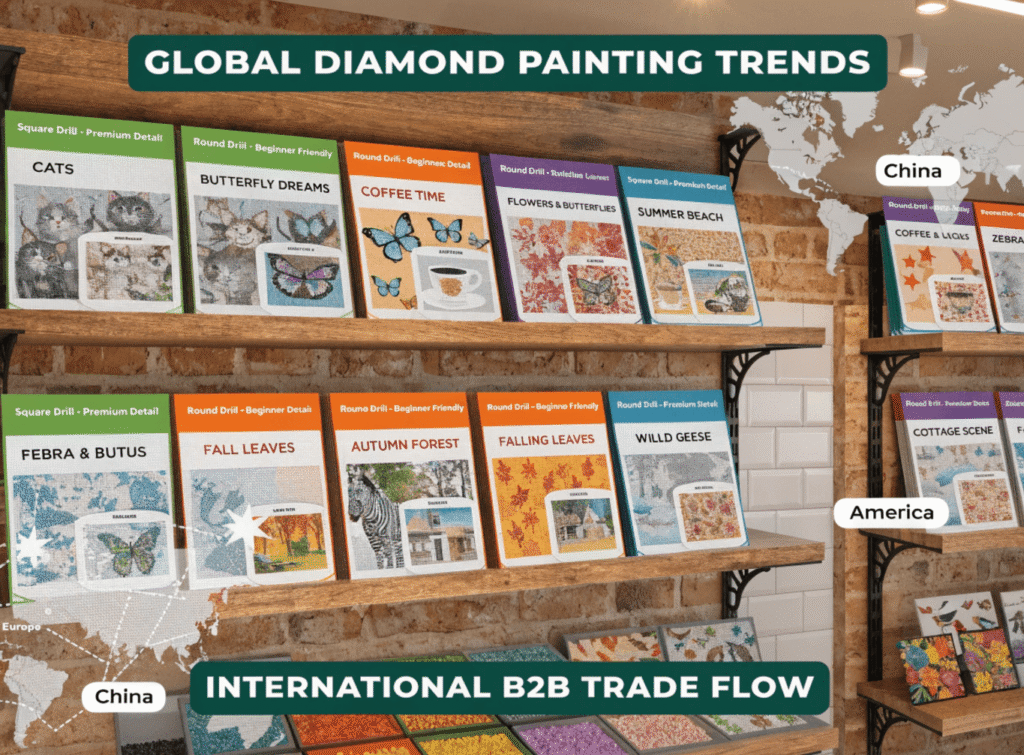
Conclusion: Choosing the Right Drill Type for Sustainable Success
In B2B diamond painting production, understanding the nuances between square and round diamonds is essential for effective sourcing and brand strategy.
- Square drills provide pixel-perfect detail, high customer engagement, and premium visual precision.
- Round drills deliver luminous charm, faster assembly, and broad-market appeal for beginners.
From a supplier’s standpoint, I recommend offering both options to maintain flexibility for distributors and private label buyers. Ensure QC consistency in mold precision and coating stability. Negotiate MOQ and production cycles based on complexity—higher for square, lower for round.
If you plan to expand your diamond art range, consider requesting quality samples or consulting directly for OEM/ODM kit customization. Offering variety and craftsmanship ensures not just competitive positioning but lasting customer satisfaction across different market tiers.
Interested in exploring sample kits or discussing your next diamond art series? Contact our sourcing team to access our updated catalog and OEM service guide.
