
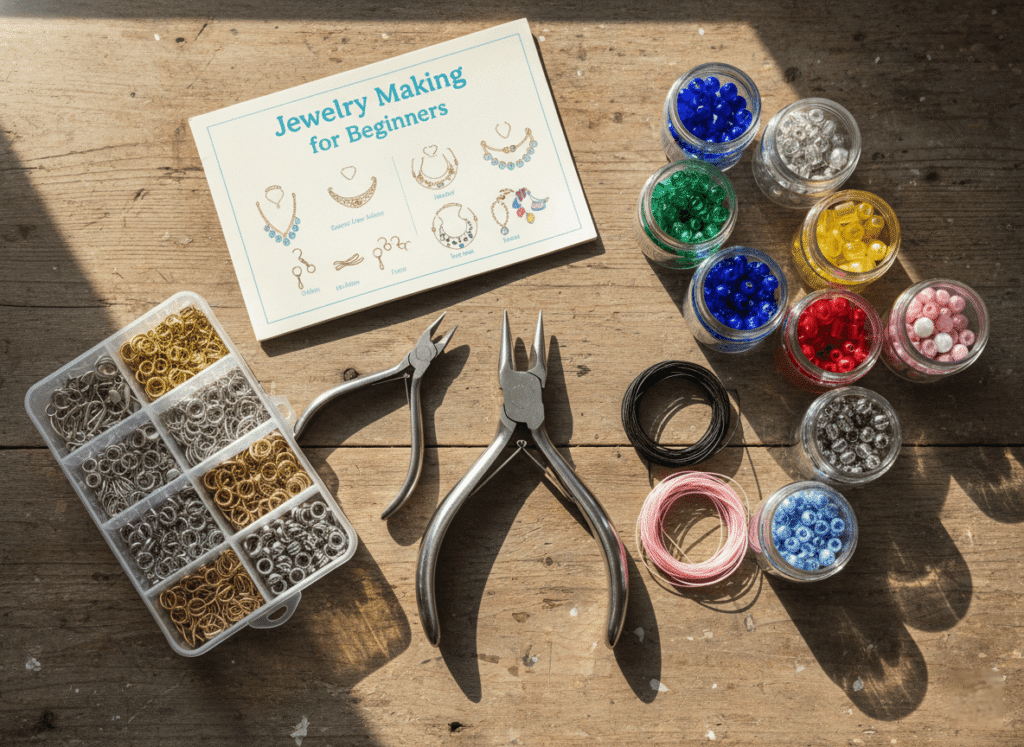
When I first decided to start making jewelry, I didn’t know where to begin. I bought my first “all-in-one jewelry kit” online, thinking it would have everything I needed—but quickly learned that not all kits are created equal. Some were packed with beads and charms but lacked essential pliers or cutters, while others included great tools but no stringing materials. If you’re just starting out like I was, understanding what a complete jewelry making kit includes will save you time, money, and frustration.
The best jewelry making kit for beginners typically includes a set of basic pliers (round-nose, chain-nose, and cutters), a variety of wires and cords, essential findings such as jump rings and clasps, a selection of beads, and helpful instructions for simple projects. In this guide, I’ll explain how to choose the right kit for your needs, what to expect inside a professional DIY kit, how to check quality standards, and how to work directly with manufacturers if you plan to order in bulk.
Based on my experience teaching jewelry beginners and sourcing kits for small craft businesses, I’ll guide you through each step—from understanding the basic tools to verifying material quality and considering OEM/ODM options if you want custom kits. Let’s explore what makes a jewelry making kit truly beginner-friendly and how to select one that grows with your skills.

How Can I Choose the Right Jewelry Making Kit Based on My Business Needs?
When choosing a jewelry making kit, your purpose should guide your choice. Are you crafting as a hobby, starting a small jewelry brand, or sourcing for resale? Each goal requires a slightly different type of kit.
Understanding Your Purpose
- For Personal Use or Hobby Crafting:
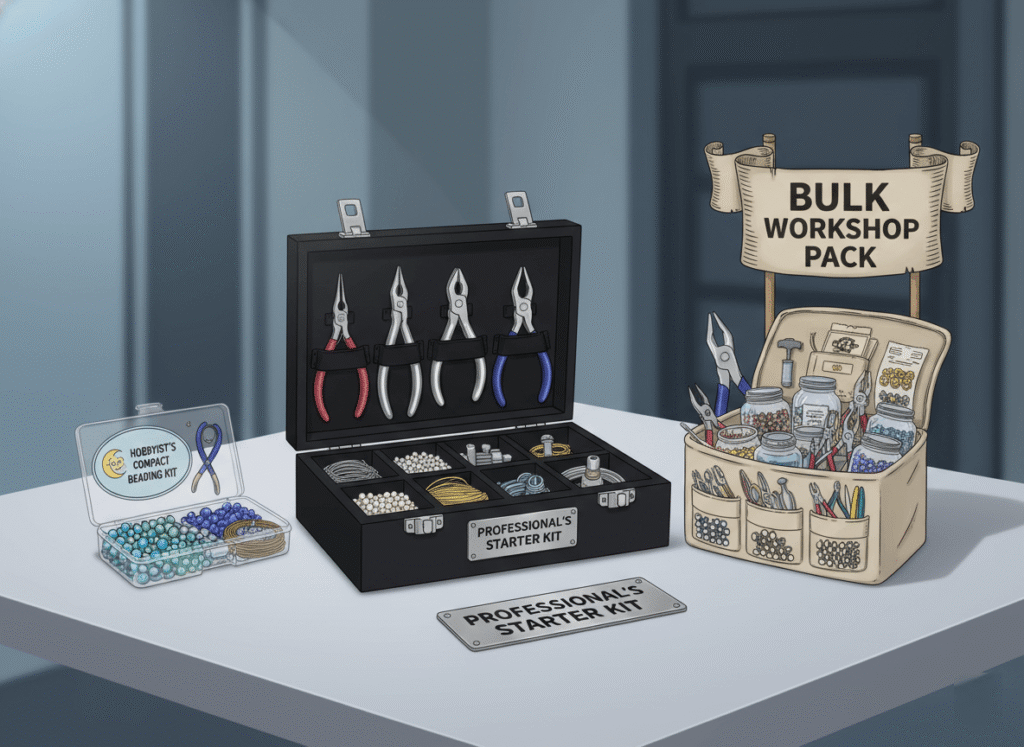
Pick a basic beading and assembly kit that contains the essential pliers, diverse beads, and elastic stringing materials. These are affordable and easy to learn with. - For Small Business or Etsy Sellers:
Choose a professional starter kit that includes higher-grade tools, stainless steel or brass findings, and additional supplies like crimping tools or wire assortments in multiple gauges. - For Training or Workshops:
Go for kits that come in bulk packs—they often include duplicates of the most-used tools so every participant can work comfortably.
Quick Comparison Table: Choosing by Purpose
| Buyer Type | Ideal Kit Type | Key Features | Price Range | Benefits |
|---|---|---|---|---|
| Hobbyist | Basic Beading Kit | Assorted beads, elastic cord, 3-piece plier set | $20–$40 | Affordable and easy to use |
| Small Business | Professional Starter Kit | Premium tools, stainless steel findings, instruction booklet | $50–$100 | Build durable, sellable jewelry |
| Workshop Trainer | Classroom Bulk Pack | Multiples of key tools, organized storage | $100–$250 | Suitable for teaching groups |
Before finalizing your purchase, double-check component quality and replacement availability. I avoid kits that have flimsy wire cutters or generic beads with uneven holes—they slow down your progress. Always read verified buyer reviews that mention tool strength, bead uniformity, and material labeling.
What Tools and Components Should I Expect in a Professional DIY Jewelry Starter Kit?
After experimenting with several beginner and professional kits, I’ve noticed that the quality and completeness of tools vary significantly. Below is a breakdown of what’s typically inside a good DIY jewelry starter kit and how each tool serves a purpose.
The Essential Tools
Every serious beginner kit should come with:
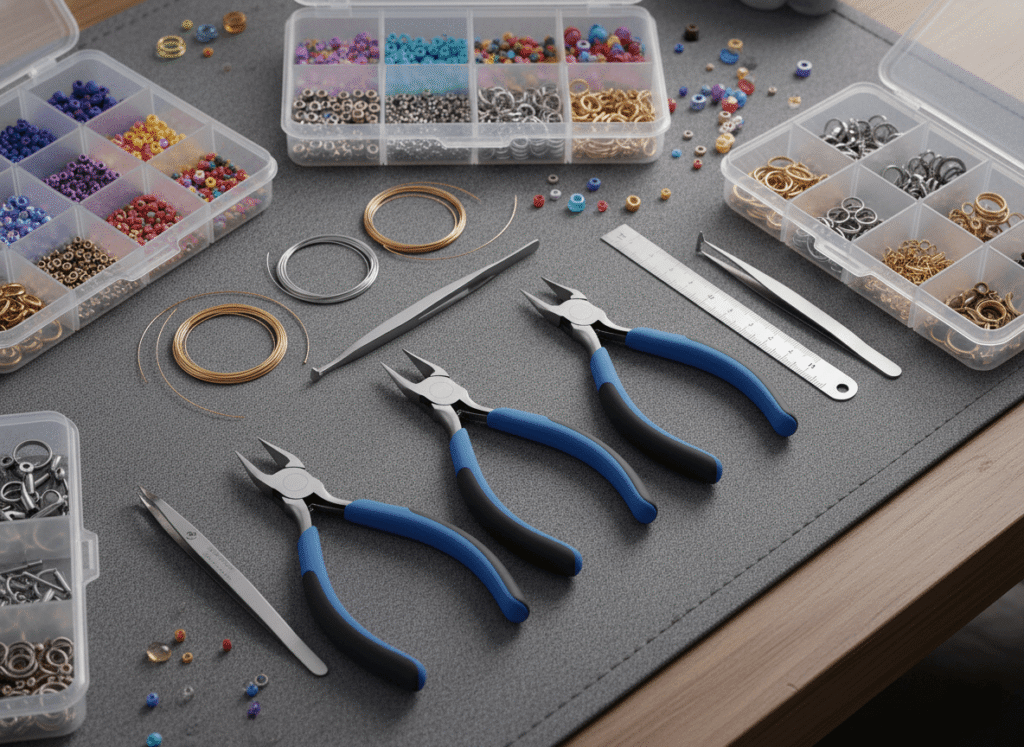
- Round-nose pliers – for making loops and curves in wire.
- Chain-nose or flat-nose pliers – to grip wires and open jump rings.
- Wire cutters – to trim excess wire cleanly.
- Tweezers or bead scoop – for picking up tiny components.
- Ruler or measuring tape – to maintain consistent lengths.
Some high-quality kits also include crimping pliers, bead reamers, or a small awl for fine detail work. Comfortable, spring-loaded handles make a big difference if you plan long crafting sessions.
Common Components (Findings and Materials)
In terms of materials, here’s what a balanced kit usually provides:
| Category | Examples | Beginner Tip |
|---|---|---|
| Findings | Jump rings, clasps, headpins, earring hooks | Learn how to open jump rings sideways and flatten crimps securely |
| Beads | Glass, plastic, gemstone, or metal | Start with uniform shapes for easier design balance |
| Wires & Cords | Copper wire (20–24 gauge), beading wire, elastic strings | Thicker gauges are stronger but stiffer—ideal for structure |
| Organizers | Bead trays or storage box | Keep small components from mixing |
| Instruction Booklet | Beginner tutorials or sample projects | Helps you practice simple connections and wire wrapping |
If your kit doesn’t include one, buy a bead mat separately—it keeps beads from rolling off your workspace and makes cleanup easier.
How Do I Ensure the Materials in My Jewelry Kit Meet Export and Quality Standards?
If you plan to sell or export your jewelry, paying attention to material safety and certification is essential. When I sourced jewelry findings for my first Etsy shop, I learned that not all base metals are safe or compliant for international sale.
Material Safety and Certification
Check these aspects before purchasing bulk kits or supplies:
- Nickel-Free and Lead-Free Certification: Required by EU and US standards for most wearable jewelry.
- REACH and RoHS Compliance: Ensures the materials are environmentally safe and non-toxic.
- Hypoallergenic Standards: Stainless steel, titanium, and brass are beginner-friendly, durable, and skin-safe choices.
- Vendor Transparency: Always ask the supplier for material data sheets (MDS) or compliance certificates.
Testing for Quality at Home
You can do simple home checks even without laboratory tools:
- Magnet Test: Stainless steel or aluminum findings are non-magnetic; avoid overly magnetic items as they may contain inferior alloys.
- Color Consistency: Plated parts should have even color without dull spots.
- String Durability: Tug test cords slightly; poor-quality threads fray or snap easily.
Maintaining consistent material quality is vital if you’re building a serious jewelry brand. Customers can often tell the difference between high-end findings and cheaper alternatives just by touch.
Can I Customize or Bulk Order Jewelry Making Kits Directly From a Chinese OEM/ODM Manufacturer?
Once your jewelry brand grows or you start selling kits yourself, working with original equipment manufacturers (OEM) or original design manufacturers (ODM) in China can be very cost-efficient. I’ve sourced bulk kits through both international platforms and direct factory partnerships, and here’s what I’ve learned.
Benefits of OEM/ODM Sourcing
- Customization: You can choose your own combination of pliers, beads, and packaging designs.
- Brand Labeling: Factories can print your logo directly on tool handles or boxes.
- Scalability: Easily scale from 50 to 5,000 kits without major pricing jumps.
- Flexibility: Combine multiple craft categories (e.g., beading + wire wrapping) in one kit.
Key Steps When Ordering
- Request a Sample Kit: Always test before committing to bulk production.
- Confirm Material Compliance: Ask for SGS, FDA, or CE certificates depending on your export markets.
- Negotiate MOQ (Minimum Order Quantity): Most manufacturers allow small trial runs for first-time buyers.
- Design Packaging: Clear labels and tutorials add value and make it easier for your target customers to use the kit.
- Inspect Shipments: Conduct pre-shipment quality inspections or use a local QC service if you can’t visit in person.
OEM/ODM Manufacturer Consideration Table
| Feature | OEM | ODM | Suitable For |
|---|---|---|---|
| Uses existing design | ✔ | ❌ | Buyers who want to add their branding to a pre-made kit |
| Custom design & materials | ✔ | ✔ | Brands designing exclusive jewelry tool kits |
| Typical MOQ | 100–500 sets | 300–1000 sets | Medium to large resellers |
| Advantage | Fast setup, lower cost | Full control of products & branding |
Working directly with a manufacturer lets you build kits tailored to your brand vision—whether that’s eco-friendly materials, luxury packaging, or specialized metalwork tools. My advice: start small, ensure quality first, and build trusted supplier relationships before scaling.
Conclusion
Starting jewelry making can feel overwhelming at first, but having a complete, high-quality kit makes all the difference. Whether you’re learning beading for relaxation or preparing to launch a jewelry brand, the essential tools—pliers, cutters, wires, findings, and beads—form the foundation of your craft.
From my experience, investing in a well-equipped starter kit helps you avoid frustration and gives you room to experiment confidently. Once you understand how each tool works, you can upgrade individual items over time or move into metalsmithing.
If your goal is to sell or teach, explore OEM/ODM manufacturers who can help you design your own signature kits with compliant materials. Based on my experience, I’d start with a standard beading kit for mastering basics and expand into custom sourcing once you’ve developed your style. Happy crafting and may your first creations inspire many more!
