The global DIY jewelry market continues to expand rapidly, attracting both young creators and professional artisans. As a jewelry manufacturer and wholesale supplier, I’ve observed clear distinctions in how kids’ and adults’ jewelry bead kits are designed, produced, and marketed. For B2B buyers — particularly those sourcing for toy retailers, craft stores, or jewelry brands — understanding these differences is vital to avoid design mismatches, compliance issues, or missed opportunities in differentiated product lines.
Kids’ jewelry kits emphasize safety, simplicity, and bright play-friendly design, using large plastic or wooden beads with non-toxic materials. Adult bead kits prioritize complexity, material quality, and design versatility, using glass, metal, or stone elements suitable for wearable jewelry. For wholesalers and OEM/ODM buyers, this means tailoring your supply chain and packaging per target age group — focusing on safety certifications for kids’ kits and premium craftsmanship for adult kits.
In this guide, I’ll explore the structural, material, and design distinctions between both categories, while also sharing practical manufacturing insights. From sourcing safe raw materials for children’s jewelry to selecting advanced plating finishes for adult DIY kits, each segment has specific compliance, cost, and branding considerations that directly affect profitability, customer satisfaction, and regulatory clearance.
As an experienced fashion jewelry supplier producing for both retail and promotional markets, the topic of safety strongly drives our design and material selection decisions.
Kids’ Jewelry Kits: Compliant, Lightweight, and Play-Friendly
Children’s bead kits fall under toy safety directives such as:
EN71 (Europe)
ASTM F963 (USA)
CPSIA compliance for heavy-metal and lead-safe materials.
Key attributes include:
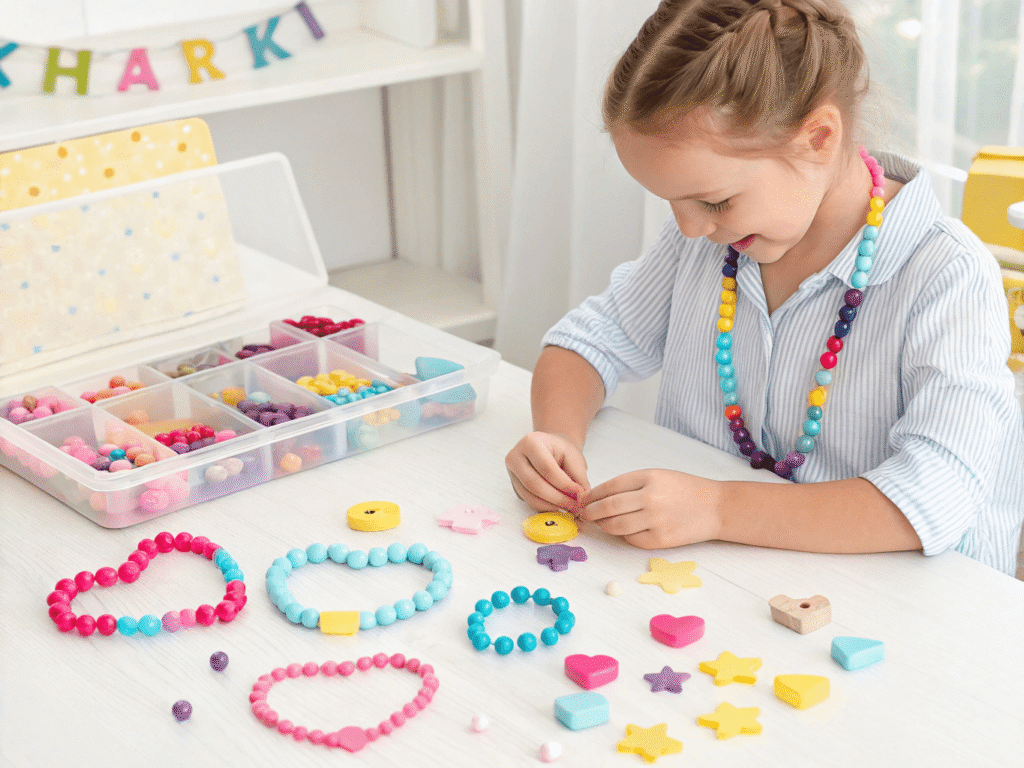
Larger bead sizes (≥10mm) to minimize choking hazards.
Rounded edges and lightweight materials to avoid injury during play.
Use of non-toxic plastics, wood, or silicone.
Elastic or pre-threaded cords requiring no sharp tools.
Clearly marked age recommendations on packaging (“Ages 6+”).
Manufacturers must also maintain easy-to-inspect batch traceability for lab testing, a standard requirement in toy-grade jewelry production.
Adult Jewelry Kits: Professional Components and Smaller Findings
Adult DIY kits lean toward craftsmanship:
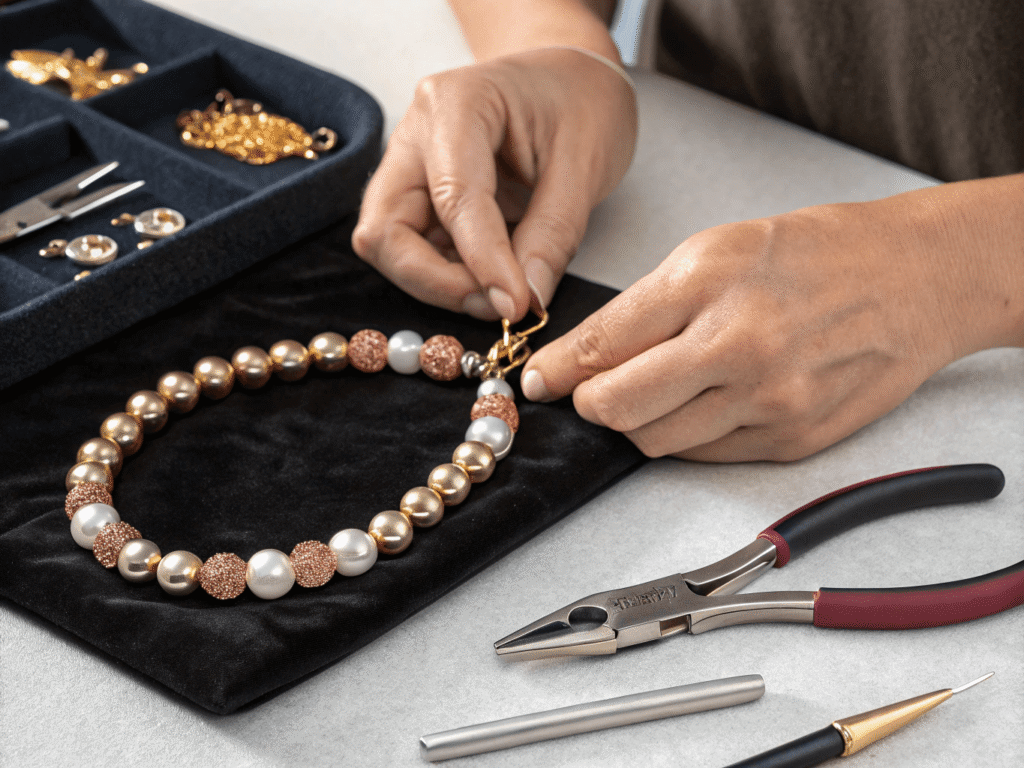
Beads as small as 2–4mm, including seed beads and faceted crystals.
Metal components (iron, brass, stainless steel) with nickel-free plating.
Real tools: pliers, wire cutters, metal needles.
Compact packaging with tool compartments or bead trays.
Pro Tip: For bulk OEM/ODM production, always classify adult bead kits under craft/hobby supplies, not toys, to avoid unnecessary compliance costs or customs delays.
Complexity and Skill Level: Craft Simplicity vs Creative Precision
As a custom jewelry supplier, I see two main buyer groups driving this segment: educational toy brands (kids) and craft hobby distributors (adults). Both use similar production machinery but differ significantly in technical detail.
Kids’ Kits: Simple, Intuitive, and Visual
Instruction sheets rely on picture-based guidance.
Pre-measured cords with printed step-by-step assembly.
Beads come in larger assortments, encouraging free play rather than structured design.
Projects can be completed in 15–20 minutes — an attention-friendly window.
Themes: unicorns, rainbows, hearts, pastel animals, usually molded with glossy plastic.
Adult Kits: Structured Projects and Advanced Techniques
Include project-specific goals, e.g. “boho bracelet set” or “crystal earring trio.”
Require bead weaving, crimping, wire wrapping, or even resin embedding.
Instructions often include pattern charts and tutorial QR codes.
Kits appeal to consumers seeking fashion-grade designs for wear or resale.
Sub-Sections for Adult Kit Buyers:
a. OEM vs ODM Options
OEM: Buyers send designs; supplier matching materials and findings.
ODM: Supplier provides catalog-based models; branding added to packaging.
b. MOQ Planning
Kids’ kits: Lower MOQs (~300–500 sets) typical for toy lines.
Adult kits: Usually higher MOQs (500–1000) due to premium packaging and accessories.
Materials, Durability, and Finish: Balancing Play Value and Wearability
Understanding material selection is central to B2B jewelry sourcing. Whether you’re an importer, private label brand, or craft chain buyer, durability and perceived value differ greatly between segments.
Category
Kids’ Jewelry Kits
Adults’ Jewelry Kits
Bead Material
Plastic, acrylic, wood, or silicone
Glass, metal, crystal, gemstones
Findings
Plastic clasps, snap closures
Lobster clasps, jump rings, crimp tubes
Cord/Chain
Elastic stretch cord
Wire, stainless steel chain, silk thread
Plating Quality
Non-electroplated, painted finish
Ion-plated, PVD, or electroplated
Durability
Short-term, play wear
Long-term, fashion wear
Safety Standard
EN71/ASTM
Nickel/lead/cadmium-free compliant
Material Impact on Cost and Manufacturing
From a supplier’s view, raw material cost may be 30–50% lower for children’s kits, driven by plastic injection molding versus metal casting. Adult kits, on the other hand, require:
Tighter plating adhesion
Color matching tolerance ±3%
Surface polishing to avoid scratches visible on metallic finishes
When quoting clients, I often highlight that stainless steel or brass item pricing fluctuates more heavily with commodity metal rates, whereas kids’ kits face less volatility.
Style, Aesthetics, and Market Positioning
The visual intent behind each kit determines everything from bead design to packaging color scheme. Retail presentation plays a direct role in market perception and conversion rate.
Kids’ Kits: Bright, Playful, and Themed
These fall under edutainment toys, designed to stimulate creativity and color recognition. Common features:
Branding emphasis on fun, educational, and safe play
Adult Kits: Trend‑Driven and Fashion‑Oriented
Adult bead kits lean toward wearability and contemporary jewelry trends. Popular themes include:
Bohemian / Minimalist / Vintage tones
Material blends — glass + brass, gemstone + stainless steel
Packaging positioned as hobby tools, sometimes gift-ready boxes
Sub-Trend Insight:
In 2024–2025, the adult jewelry DIY category will grow around mix-and-match sets using heishi beads, freshwater pearls, and matte stone elements. These pair well with eco-conscious packaging — a key driver for Western craft buyers.
Production, Safety, and Customization Factors for Wholesalers
When I consult with wholesale buyers launching dual-line (kids + adult kits), the first priority is categorization and compliance during production planning.
A. Supply Chain Segmentation
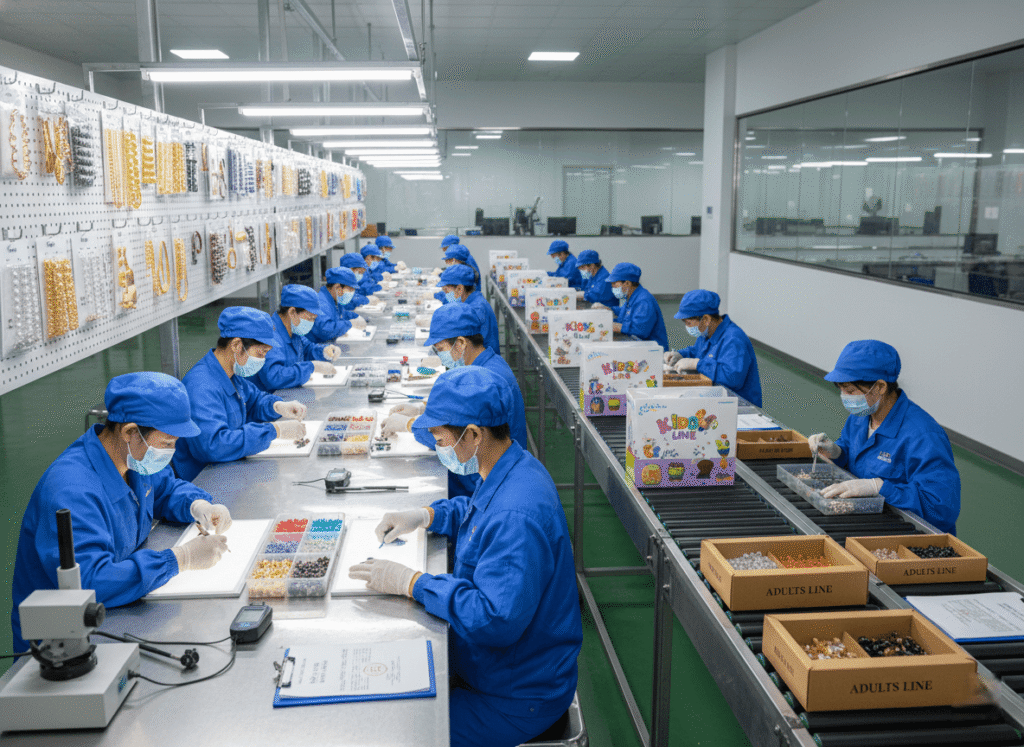
Kids’ Kits: Often made in factories audited for toy production (ISO 9001 + BSCI).
Adult Kits: Produced in jewelry or fashion accessory suppliers with plating and polishing lines.
B. Quality Control (QC) and Inspection
QC checkpoints vary by client preference — but a suggested standard framework is:
QC Step
Kids’ Kits
Adults’ Kits
Raw Material Test
EN71, Lead/Cadmium/Phthalate test
Nickel-free plating and scratch inspection
Size Accuracy
+/- 0.5mm tolerance
+/- 0.2mm tolerance
Drop Test / Packaging
1m drop test per carton
Edge protection and foam inserts
Small Parts Choke Test
Mandatory
Not required
Final Inspection AQL
AQL 1.5
AQL 0.65–1.0
Tip for Global Buyers: Always request supplier documentation (test reports, plating certificates) before deposit payment. Top-tier manufacturers in China or Thailand can provide SGS / Intertek certifications upon bulk order confirmation.
Packaging & Branding Strategy in B2B Private Label Production
Your packaging strategy defines perceived value — especially at wholesale scale.
For Kids’ Kits
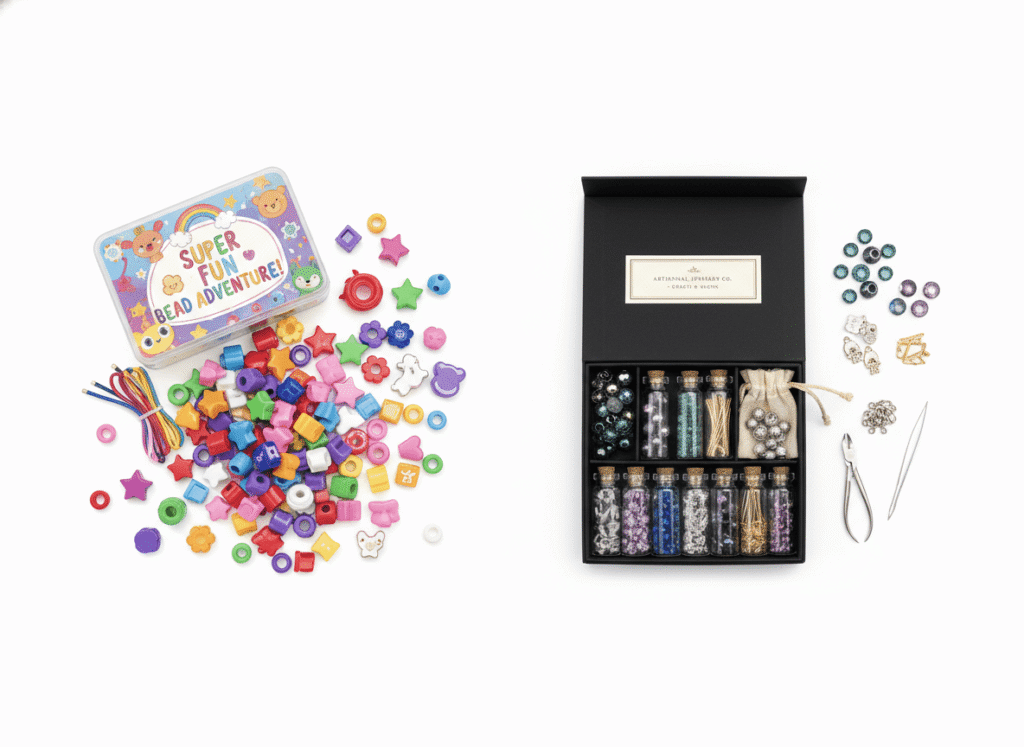
Use transparent compartments to display colors and bead variety.
Opt for reusable plastic boxes or blister trays.
Include colorful printed inserts with brand mascots or learning messages.
Safety callouts (non-toxic materials, CE mark) must be clearly printed.
For Adult Kits
Minimalist labeling using natural kraft boxes or black rigid paper packaging.
Luxury touches like UV embossing or metallic logos add perceived value.
Include instruction manuals, sample boards, or technique cards.
Optionally insert QR codes linking to online video tutorials.
Private Label Insight: MOQ for customized packaging usually starts at 500–1000 units per SKU. To reduce cost, you can share printed inserts between versions and only vary label stickers.
Comparative Cost Analysis: Kids vs Adult Bead Kits
Aspect
Kids’ Kits (Play-Focused)
Adults’ Kits (Craft-Focused)
Average Factory Cost (per set)
USD 1.20–2.50
USD 3.50–6.50
Typical Retail Margin
2.5–3×
3–4×
Recommended MOQ
300–500 sets
500–1000 sets
Lead Time (OEM)
25–35 days
30–45 days
Customization Cost (Logo/Packaging)
USD 0.05–0.15/set
USD 0.20–0.50/set
Material Value Perceived by Buyers
Low-cost, safe, colorful
Premium, durable, style‑driven
Such pricing transparency helps B2B buyers align retail price positioning with the intended category — toy aisle versus craft section — ensuring correct brand placement and ROI.
Wholesale Sourcing Tips and Supplier Evaluation
When identifying potential fashion jewelry manufacturers or OEM jewelry suppliers for bead kits, consider:
Factory Certification Portfolio
Look for BSCI, ISO9001, Sedex, or ICTI CARE audit reports.
Toy suppliers should have CPSIA/EN71 test lineage; jewelry suppliers should provide nickel-free guarantees.
Material Traceability
Metals from certified foundries; plastics should be PP or ABS grade.
Avoid PVC without phthalate-free documentation.
Production Sample Policy
Request pre-production samples for design verification and assembly safety testing.
Plating & Color Quality
Adult kits need anti-fade plating tests (24–48h salt spray).
Kids’ kits rely more on color integrity under sunlight testing (UV aging).
Packaging Audit
Confirm barcode availability and export labeling compliance.
Global Market Insights: Kids vs Adult Bead Kit Demand
The demand division between these segments connects directly to consumer behavior and retail channel focus.
Kids’ Kits: High-volume, low-cost items shipped to mass retail and toy stores in the U.S., EU, and Asia. Seasonal spikes align with back‑to‑school and holidays.
Top importing hubs: USA, Germany, Japan.
OEM potential: Starter craft sets, educational brands, licensed character merchandise.
Adult Kits: Smaller order sizes but higher margins, aimed at craft chains, Amazon sellers, and independent designers.
Top markets: U.S., Canada, UK, Australia.
Demand driven by wellness crafts and creative hobbies — especially post-pandemic.
Future trends indicate hybrid kits appealing to advanced teens — bridging both categories — combining safe materials with fashion-forward aesthetics.
Sustainability and Eco Trends in Bead Kit Production
Eco‑consciousness is no longer optional. Global buyers consistently request sustainable materials even in decorative arts categories.
Sustainable Options for Both Categories:
Wooden beads from FSC-certified sources.
Recycled glass or metal for adult kits.
Recycled PET packaging replacing PVC.
Use of soy-ink printing on inserts.
B2B Advantage: Aligning with these choices strengthens retailer trust and meets ESG procurement criteria, a growing selection factor for major distributors.
Conclusion: Sourcing Smart in Two Distinct Markets
To summarize, the main differences between kids’ and adults’ jewelry bead kits revolve around four pillars:
Safety and Compliance: Kids’ kits must meet stringent toy standards; adult kits focus on craftsmanship standards.
Material and Design Complexity: Plastic and wood for children; metal, glass, and crystal for adults.
Purpose and Functionality: Educational play vs wearable fashion accessory.
Packaging and Market Strategy: Colorful toy packaging vs minimalist, elegant craft presentation.
As a wholesale jewelry supplier, my recommendation is clear:
For kids’ lines, prioritize safety certification, bold aesthetics, and easy assembly.
For adult kits, invest in higher material quality, plating fidelity, and structured design instruction.
If you’re a B2B buyer, retailer, or brand exploring dual-segment offerings, now is the ideal time to leverage private-label or OEM jewelry kit lines. Request samples, evaluate material portfolios, and collaborate with an established custom jewelry manufacturer capable of meeting both EN71-compliant toy production and professional jewelry-grade finishing under one supply chain.
Ready to explore custom OEM bead kits or receive a quotation list? Contact us for a full catalog of kids’ and adult DIY jewelry kits with global export-ready documentation and flexible MOQ terms.
Sophia
Hi, I’m Sophia Luo, the funder of soulacc.com, I’ve been running a company in China that makes jewelry and kid's DIY crafts for 8 years now, and the purpose of this article is to share with you the knowledge related to imitation jewelry and crafts from a Chinese supplier’s perspective.