Introduction
As global toy and craft markets evolve, children’s DIY and art kits have transformed from simple creative pastimes into strategic retail categories. For importers, wholesalers, and private-label brands, understanding what defines the best-selling children’s craft kits in 2025 isn’t just about tracking new products—it’s about comprehending how education, sustainability, and digital engagement converge to attract modern parents. From customizable jewelry kits to hybrid STEM-based crafts, this sector now mirrors the innovation-driven approach traditionally reserved for tech and fashion accessories. For B2B buyers, the right craft product line can unlock high turnover with minimal shelf life, particularly when recycling trends, eco-friendly materials, and educational play value are properly aligned with market demand.
Featured Insight (Quick Read):
In 2025, the top-performing children’s craft kits feature STEM-art hybrids, eco-materials, and interactive crafting experiences. Bead and jewelry-making kits continue to be repeat bestsellers, while slime, pottery, and sensory play sets capitalize on tactile creativity trends. Buyers sourcing custom or private-label craft kits from China, Vietnam, and India should prioritize non-toxic certifications (EN71, ASTM F963), sustainable packaging, and age-appropriate design compliance to strengthen brand credibility and long-term sales.
From an OEM supplier’s perspective, I see an increasing shift where toy and craft importers expect retail-ready packaging, multi-activity bundles, and scalable product options for eCommerce distribution. The best-performing SKUs in 2025 combine creative freedom with educational value, packaging appeal, and production consistency. As we explore the categories and sourcing strategies below, I’ll share insights based on real factory experience—covering trend identification, product design workflow, quality inspection, and OEM partnership models that drive sustainable profit margins in the children’s craft segment.
How Can I Identify Top-Selling DIY Craft Kits for Kids That Suit My Retail Market?
The first step in crafting a winning wholesale or private-label assortment is market alignment. Product choice must resonate with your target demographic’s income, educational focus, and trend sensitivity. In 2025, classification into “Creative Education,” “Eco-Play,” and “Digital-Enhanced Crafting” defines the modern global craft kit landscape.
Core Identification Criteria
When assessing top-selling or trending children’s craft kits, I evaluate four main data sources:
- Sales Volume and Feedback Metrics – Ratings and review volume on marketplaces such as Amazon, Etsy, and Walmart give strong signals of repeat appeal.
- Seasonal Momentum – Spike frequency during holidays, back-to-school, and online gifting seasons (especially Q4) indicates throughput resilience.
- Material Narrative – Eco-friendly material usage (e.g., recycled paper, biodegradable glues) strongly appeals to parents in North America and Europe.
- Educational Value-in-Play – Kits that balance fun with structured learning (e.g., STEM + art) typically outperform single-skill offerings.
Product Segmentation Snapshot
| Category Type | Key Age Group | Core Selling Features | 2025 Popular Examples |
|---|---|---|---|
| STEM-Art Hybrid Kits | 7–12 yrs | Engineering + Art Integration, reusability | Circuit Drawing Kits, Crystal Science Art |
| Jewelry & Bead Kits | 6–10 yrs | Social crafting, personalization, eco materials | Clay Bead Bracelet Sets, Charms DIY Box |
| Slime & Sensory Kits | 5–9 yrs | Tactile fun, safe chemistry | Glow-in-Dark Slime Lab |
| Painting & Pottery Kits | 6–12 yrs | Fine motor skill engagement | DIY Pottery Starter, Watercolor Kits |
| Plush & Sewing Kits | 8–13 yrs | Screen-free, patience learning | Sew-your-own Animal Plush Kits |
Understanding Retail Channel Demand
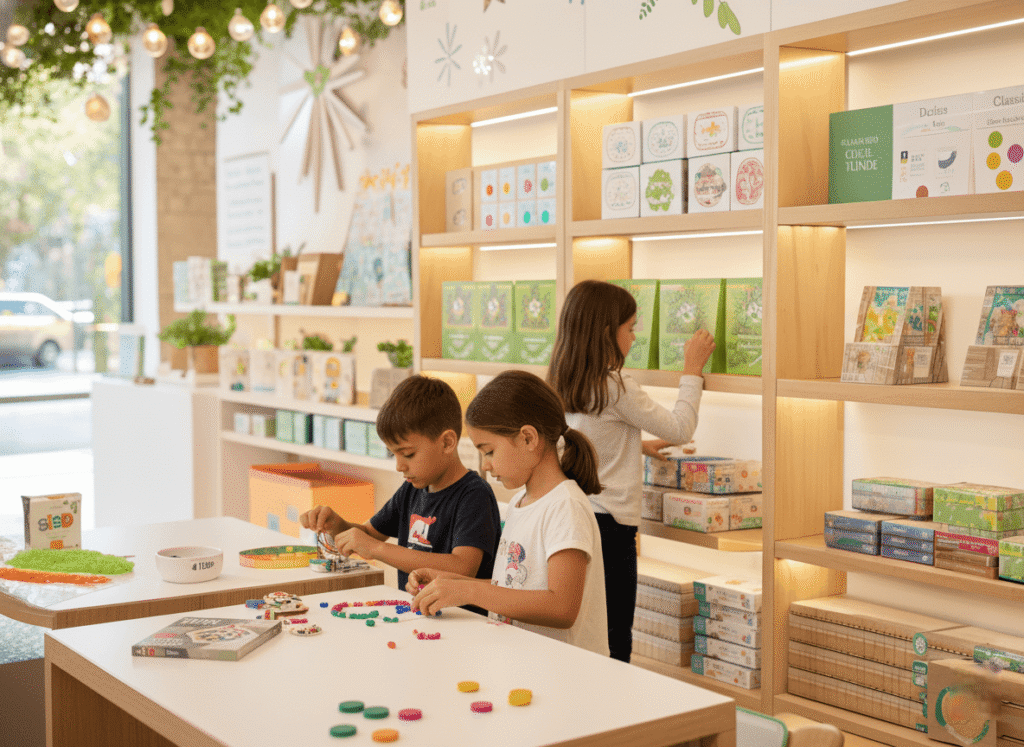
- Marketplace & eCommerce buyers prefer compact, mail-ready packaging and strong visual differentiation.
- Brick-and-mortar distributors prioritize tactile appeal and educational labelling for premium retail shelves.
- Subscription box providers seek consistent monthly SKU rotation with low vendor MOQ and color variation options.
As manufacturers, we advise buyers to start with 4–6 core categories aligned with their customer base, test them with targeted volume ranges (500–1500 sets per SKU), then scale production through OEM partnerships once confirmed by repeat sales and market feedback.
What Trends Should I Watch in Children’s Art and Jewelry-Making Kits for 2025?
Children’s DIY and jewelry craft kits are transforming faster than ever due to sustainability, technology integration, and educational design integration. Below are 2025’s most distinct and lucrative trends, based on real supply chain data, social media insights, and export orders.
1. Sustainable Materials and Eco Branding
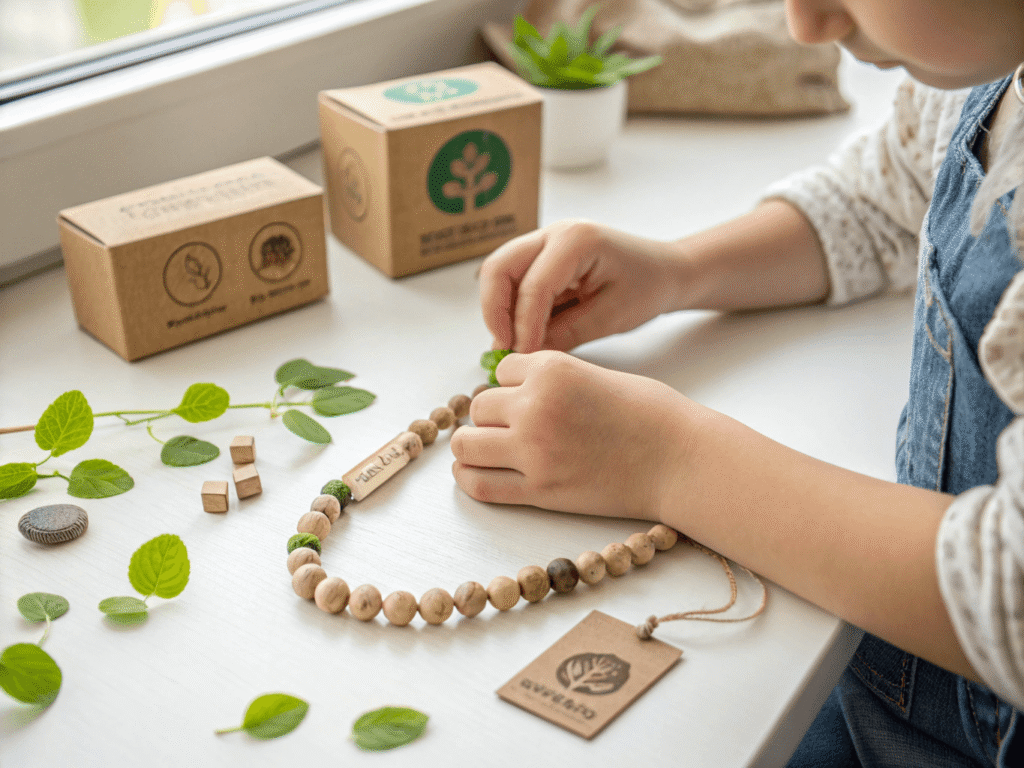
Parents now actively look for kits labeled as eco-friendly, biodegradable, or recycled. In production, this translates to:
- Wooden and bamboo beads replacing plastic.
- Recycled paper packaging with soy-based inks.
- Compostable containers instead of polybags.
Eco-certified jewelry-making or art sets are commanding 10–15% higher retail value, especially when accompanied by story-driven marketing phrases like “Crafting for Earth.”
Manufacturer Insight:
In my own factories, eco-sourcing partnerships have increased by 40% compared to 2023. Buying recycled polymers or bamboo stocks in bulk has lowered per-kit costs while allowing brands to label sustainably.
2. Hybrid Learning: STEM x Art Crossover
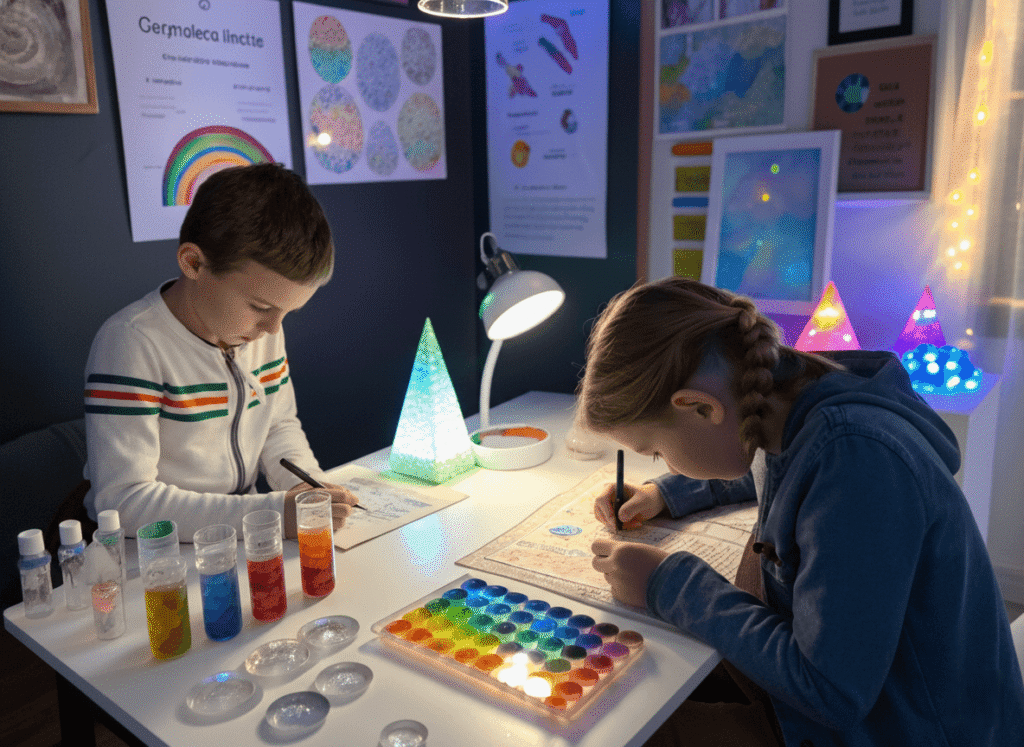
The merger of science, engineering, and creativity defines 2025’s fastest-growing craft segment. These kits typically include components like LED circuits, magnets, or chemistry-based color blending activities. Not only do they appeal to children aged 7–12, but schools and homeschooling networks also purchase them for hands-on curriculum.
Top 2025 Subcategories:
- Crystal Growing + Painting Sets
- Color Mixing + Light Science Kits
- Magnetic Construction + Craft Sets
3. Digital Integration in Traditional Crafts
AR-enabled craft kits, where children use mobile apps to “see” their work come alive, are driving next-generation engagement. For example, a jewelry-making app might show animated pets “wearing” the virtual bracelets the child designed.
4. Media Franchises & Nostalgic Themes
Licensing continues to fuel fast-moving consumer goods, with entertainment franchises like Disney, Pokémon, or classic fairy tales dominating “impulse purchase” activity kits. For brands seeking robust shelf rotation, licensing OEM ESL (exclusive SKU lines) offers a proven ROI multiplier.
How Can I Source Reliable OEM Suppliers for Kids’ Craft Sets from China?
With the post-2023 manufacturing recovery, China, Vietnam, and India remain the leading hubs for OEM / ODM production of children’s arts and craft sets. However, the supplier landscape for 2025 favors factories with ESG compliance, child-safe testing facilities, and design engineering teams trained in international standards.
Identifying the Right Supplier Type
| Supplier Type | Suitability for | Design Capability | MOQ Range |
|---|---|---|---|
| ODM Manufacturer | Ready-to-sell items, low R&D cost | Moderate – Template-based mix customization | 300–1000 sets |
| OEM Manufacturer | Private label / exclusive product | High – tailor-made design support | 1000–3000 sets |
| Trading Office | Broad category access | Low – outsourcing production | Flexible but varied QC |
| Specialized Factory | Single-category focus (e.g., jewelry kits, painting sets) | Specialized tooling | Bulk MOQ 2000+ |
Sourcing Practices for 2025
- Evaluate Material Compliance: Confirm that paints, resins, and glues meet EN71, ASTM F963, and REACH chemical safety guidelines.
- Implement Dual QC Checks: Conduct one mid-production inspection and one final AQL Level II test for each batch.
- Negotiate Packaging Engineering: Retailers often overlook packaging structure as part of user safety—standardize for drop-test compliance and choking hazard labeling.
- Request OEM Samples in Phases: Ensure first article approval samples reflect the same suppliers that will run your mass production.
Supply Chain Cost Control Tips:
- Centralize sourcing by region to reduce freight fees (e.g., consolidate supplier shipments in Guangdong or Zhejiang).
- Use nested packing designs to cut volumetric shipment costs by 15–20%.
- Set variable MOQ tiers that allow trial runs before full shipment commitments.
Partner Evaluation Table
| Evaluation Criteria | Importance | Benchmark |
|---|---|---|
| CPSIA & EN71 Compliance | 10/10 | Certified lab documentation |
| R&D / Sample Development Speed | 9/10 | ≤10 working days |
| MOQ Flexibility | 8/10 | Adjustable per SKU or season |
| OEM/ODM Capability | 9/10 | Artwork, mold, material sourcing in-house |
| Social Compliance (BSCI / Sedex) | 9/10 | Annual audit passes |
Practical Insight: MOQ Balancing
For new retail testing, keep your initial MOQ lower, around 500–800 sets per SKU, to monitor real-time market response. After 90 days of positive feedback, ramp up to 2000+ per SKU to optimize unit price reduction. Always coordinate with the supplier to lock in plating, accessory sourcing, and print packaging at least 45 days before production start, particularly during Q3 inventory rush seasons.
What Quality and Safety Standards Should I Verify Before Importing Children’s Craft Products?
Ensuring all kid-oriented craft kits comply with legal, chemical, and mechanical standards is not just due diligence—it’s a critical brand-protection measure. Countries have raised their scrutiny on child safety imports in 2025 due to eco-label fraud and glue toxicity investigations.
Essential Testing Categories
| Testing Category | Description | Compliance Standard |
|---|---|---|
| Chemical Safety | Content of heavy metals, BPA, phthalates | EN71-3, ASTM F963, CPSIA |
| Mechanical & Physical Safety | Choking hazards, sharp points, small part analysis | EN71-1 |
| Flammability | Material ignition property | EN71-2 |
| Labeling Compliance | Age labeling, choking warning, CE mark visibility | EU Toy Safety Directive 2009/48/EC |
| Packaging & Drop-Testing | Transit and retail resilience test | ISTA 2A, 3A |
OEM-Focused QC Workflow
- Pre-Production Material Check: Verify raw polymer, clay, pigment, and accessory samples before mass run.
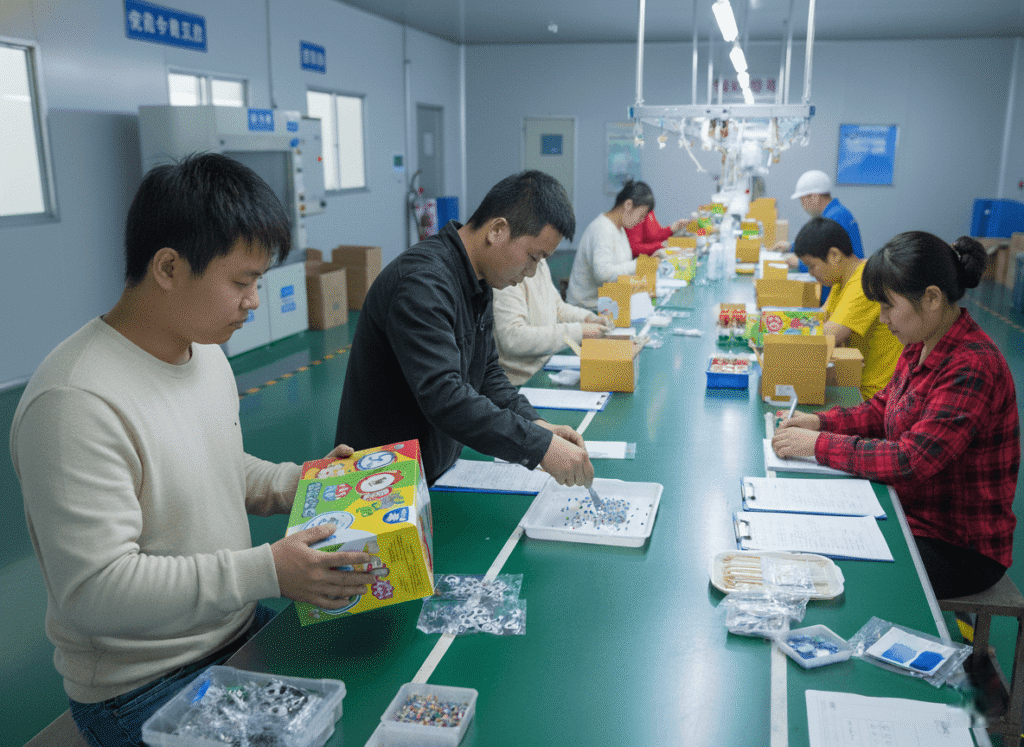
- On-line QC (during assembly): Maintain in-process checks for kit completeness and label accuracy.
- Final Randomized Inspection: Employ third-party inspection service (e.g., SGS, Intertek) to perform AQL tests.
- Post-shipment Sampling: Retain shipment samples for six months to verify post-sale compliance.
Safety Label Details
Compliance labeling should include:
- Product name, manufacturing address
- CE, EN71, or ASTM F963 mark
- “Not suitable for children under 3 years” icon (if applicable)
- Batch number and traceability code
Material Transition Advice
Since 2024, resin and coloring regulations have tightened globally. To future-proof your brand:
- Use natural polymer clay instead of PVC-based synthetic clay.
- Replace solvent-based paints with water-based pigment inks.
Adhering to these standards not only prevents customs detention but also builds consumer trust—an essential driver of long-term reorder success.
Bonus Insight: Market Growth & Monetization Opportunities
Global Distribution Behavior
- North America: Prioritizes eco-plastic-free certifications.
- Europe: Values CE-certified and educational narrative kits.
- Middle East / South America: Prefers low MOQ, colorful aesthetic packaging.
- Asia-Pacific: Fast-emerging for midrange online sales under private-label rebrands.
Subscription Box Integration
The subscription-model momentum continues into 2025. B2B buyers can negotiate monthly SKU rotation OEM contracts, offering:
- Predictable production flow for suppliers.
- Regular novelty for customers.
- Improved revenue consistency.
Bulk Supply Chain Strategy for Distributors
To streamline logistics:
- Combine 30% repeating items (evergreen sellers) with 70% rotating new SKUs.
- Establish dual-vendor supply chains to mitigate production delays.
- Utilize neutral packaging inventory for flexible rebranding.
Conclusion
The global children’s craft kit market in 2025 reveals a striking fusion of creativity, education, and sustainability. From an OEM producer’s perspective, the most successful B2B strategies emphasize age-appropriate design, eco-material implementation, and consistent safety testing. The core bestsellers—STEM-art hybrid kits, jewelry/bead craft sets, sensory slime labs, and digital-integrated arts—serve not only as consumer favorites but as pathways for brand diversification and steady sales turnover.
Key Sourcing Takeaways:
- Validate all suppliers with EN71 and ASTM certification before mass order placement.
- Prioritize ODM suppliers offering custom packaging, sustainable material options, and strong post-sale QC inspection channels.
- Test new SKUs in limited retail pilots before scaling to full container loads.
For distributors or retail brand managers ready to capitalize on the 2025 craft boom, now is the best time to request samples, review material compliance documents, or initiate OEM design discussions with trusted suppliers. Every successful craft kit brand starts with responsible sourcing—and ends with creative empowerment that parents trust and kids love.
Interested in developing your own private-label line?
Contact us for consultation, design assistance, and product catalog access to explore your region’s market-fit craft kits for 2025.
