
As a jewelry manufacturer specialized in custom bead components and silicone-based accessories, I often work closely with global buyers—from fashion jewelry wholesalers to OEM/ODM brand owners—who want clarity on material choices before launching their collections. The difference between silicone and plastic beads goes far beyond touch and appearance; it affects durability, safety certification, environmental impact, and ultimately brand reputation in international markets.
Silicone beads are made of food-grade polysiloxane, a silica-derived polymer that’s soft, flexible, and safe for baby or skin-contact products. Plastic beads, on the other hand, are petroleum-based (like polypropylene or acrylic), harder, less temperature‑resistant, and may release toxins when heated. For B2B buyers, choosing real food‑grade silicone ensures compliance with FDA or LFGB safety standards, better product longevity, and stronger consumer trust.
From a sourcing standpoint, the shift from plastic to silicone beads represents not just an upgrade in perception but a long-term supply chain optimization. Silicone materials reduce defect rates, simplify compliance documentation, and open opportunities in higher‑margin categories such as sensory jewelry, stretch hair accessories, and children’s OEM designs. Let’s explore each aspect in detail.
How Can I Tell the Difference Between Food‑Grade Silicone and Regular Plastic When Sourcing Beads?
When sourcing beads for wholesale jewelry or private‑label accessory production, identifying authentic food‑grade silicone is critical. Many suppliers label basic synthetic rubber or PVC as silicone, but genuine silicone has very specific properties, certification metrics, and manufacturing indicators.
Key Identification Markers for Food‑Grade Silicone
- Certifications and Compliance:
Look for FDA, LFGB, or EN71 certifications. These confirm the silicone is tested for food or baby safety standards.
Example: In my factory audits, we always cross‑verify raw material MSDS sheets and certification numbers before approving suppliers. - Stretch and Feel Test:
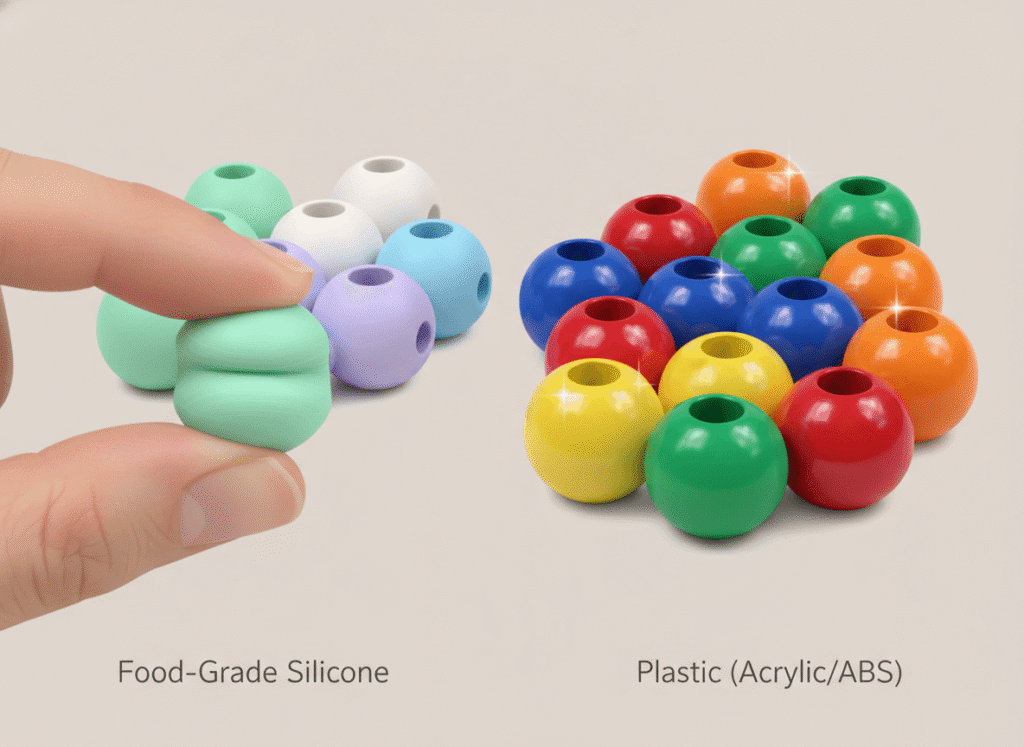
Authentic silicone beads stretch smoothly and recover shape instantly. Plastic beads feel rigid or resist deformation. - Odor and Finish:
High-quality silicone is odorless. Plastic or PVC imitation beads often emit a chemical smell when slightly heated. - Burn Test (Controlled Factory Method):
- Real silicone turns into white ash when burned.
- Plastic beads melt and produce black smoke or sticky residue.
This test is used internally, not recommended for final products.
5. Color Saturation:
Food-grade silicone holds color evenly after curing, without surface fading. In mass production, pigments integrate fully within the polymer matrix.
Table – Visual and Physical Differentiation Guide
| Test/Characteristic | Food‑Grade Silicone Beads | Plastic/Acrylic Beads |
|---|---|---|
| Texture & Flexibility | Soft, elastic, rubber-like | Rigid, brittle |
| Temperature Response | Stable under 200°C+ | Warps around 80–120°C |
| Chemical Composition | Silica polymer; BPA/PVC-free | Petroleum-based; may include toxins |
| Certifications | FDA, LFGB, EN71 | Often uncertified |
| Surface Finish | Matte or silky | Glossy, hard |
| Odor | Odorless | Often smells synthetic |
| Environmental Stability | UV-resistant, no color fading | Color degrades under sunlight |
| Recyclability | Specialized silicone recycling | General plastic recycling limits |
What Manufacturing Process Should I Check to Ensure Authentic Silicone Quality?
From my years managing OEM jewelry orders, the most transparent suppliers follow rigorous production protocols. Understanding these stages helps you verify authenticity and negotiate quality assurance more effectively.
Silicone Bead Production Chain
- Material Preparation:
- Base polymer: Polydimethylsiloxane (PDMS)
- Additives: Food-grade color pigments and silica fillers
- Curing agents: Platinum or peroxide catalysts (platinum curing is safer)
- Molding Process:
Beads are cast using steel molds or compression mold machines. Consistent pressure and temperature yield uniform size and density. - Curing & Vulcanization:
The silicone undergoes heat treatment at ~150–200°C to crosslink molecules, transforming from liquid rubber into durable elastic beads. - Post-Curing & Surface Treatment:
Removes volatile materials and stabilizes color pigments. Only platinum‑cured silicone meets full food-contact standards. - Inspection & Packaging:
Automated visual inspection removes deformed beads. Moisture-proof packaging ensures no contamination during transit.
OEM/ODM and Private Label Manufacturing Notes
For brands planning custom colors or logo beads:
- OEM Options: Design your own shapes, textures, or engravings.
- ODM Collections: Choose from pre-designed bead assortments for quick-to-market supply.
MOQ planning for silicone bead production often starts at 5,000–10,000 units per color, depending on mold complexity. For premium baby-safe lines, suppliers may require platinum-curing material confirmation before full run approval.
How Do Silicone Beads Perform Under Different Temperatures Compared to Plastic Beads?
Performance and durability define long-term product value. This section compares how both materials function under heat, cold, UV light, and moisture — crucial for exporters selling into climates ranging from humid Southeast Asia to dry Europe.
Temperature Resistance and Stability Overview
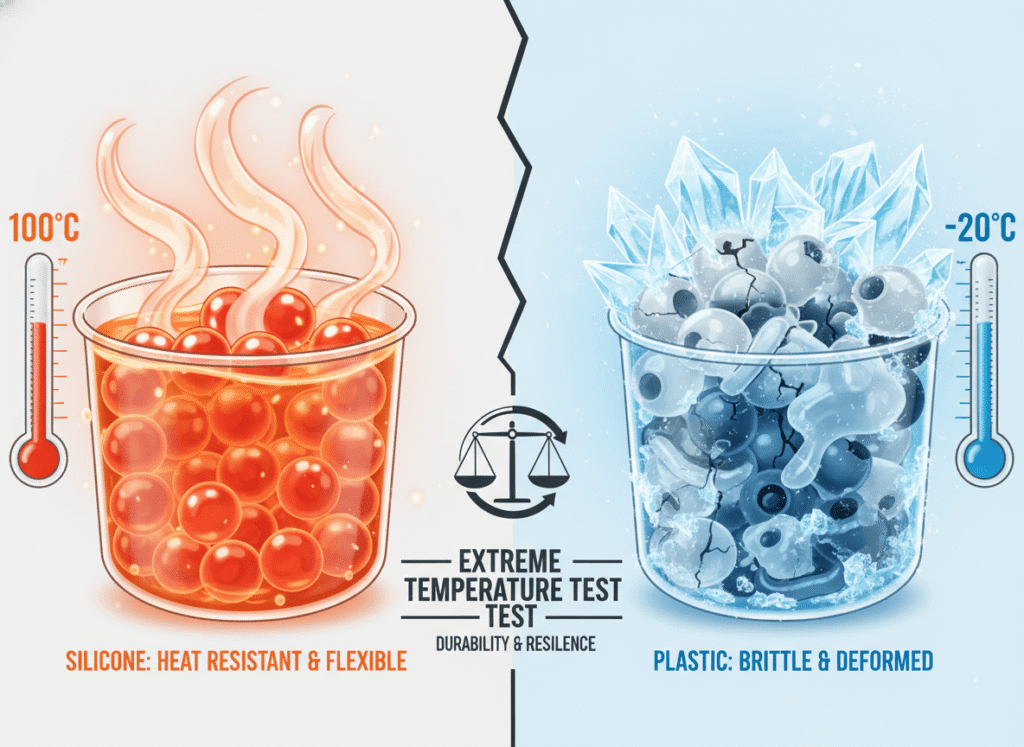
- Silicone: Retains its elasticity and color from ‑40°C up to +230°C.
- Plastic (PP/ABS/Acrylic): Begins deforming around 90–120°C; acrylic may crack under cold.
- UV Exposure: Silicone maintains hue for years; plastics tend to yellow or whiten.
Material Performance Table
| Condition | Silicone Beads | Plastic Beads |
|---|---|---|
| High Heat Exposure | No melting; structure stable | Warping, melting, or color fading |
| Freezing Temperature | Stays flexible | Cracks or stiffens |
| UV Light | Retains color and tensile strength | Discoloration after prolonged sun exposure |
| Repeated Cleaning / Boiling | No degeneration; safe for sterilization | Deformation and dull finish |
| Mechanical Stress | Stretch recovery excellent | Brittle fracture under tension |
Real-World Example from Testing
In our quality control lab, we boiled silicone beads for 15 minutes before cooling to ‑20°C. The beads returned to their original form with zero cracks. When we repeated this test with acrylic beads, more than 30% showed fracture lines. This illustrates the molecular crosslink strength of silicone compared to thermoplastics.
Why Should I Choose Silicone Beads Over ABS or Acrylic for My Jewelry Line?
Choosing silicone beads isn’t only about safety—it’s a strategic design and branding advantage, especially for modern jewelry businesses targeting the sustainable, baby-safe, or minimalist accessory market.
Material and Market Advantages
- Brand Safety Positioning:
Food-grade silicone conveys trust. Consumers associate it with non-toxic, skin-friendly products. - Expanded Product Use Cases:
- Baby teething jewelry
- Sensory and fidget accessories
- Yoga or wellness bracelets
- Outdoor/sport jewelry lines
- Design Versatility:
Silicone molds allow countless shapes, color gradients, and matte finishes.
Acrylic beads mostly rely on surface coatings—more limited and prone to scratches. - Long-Term Durability:
Silicone beads stay flexible, reducing damage during shipping and retail handling. - Reduced Warranty Claims:
For global distributors, fewer breakages translate directly to lower after-sale costs and higher client satisfaction.
Comparative Cost and Longevity Table
| Factor | Silicone Beads (Food-Grade) | ABS/Acrylic Beads |
|---|---|---|
| Raw Material Origin | Silica (natural quartz derivative) | Petroleum-based |
| Safety Profile | Non-toxic, BPA-free | May contain BPA or phthalates |
| Lifespan | 5–8 years average | 2–3 years average |
| Maintenance | Easy sanitation; dishwasher safe | Sensitive to alcohol or detergent |
| MOQ Flexibility | 5K–10K units (OEM) | 1K–3K units (standard) |
| Ideal Application | Baby, sports, sustainable jewelry brands | Costume and decorative jewelry |
| Environmental Impact | Low replacement rate; recyclable | Contributes to microplastic pollution |
Sustainability and Brand Perception
Modern buyers increasingly link material choice with eco-conscious branding. Although silicone isn’t biodegradable, its longevity and stability make it more sustainable in the long run. A single silicone bead can outlast several plastic versions, reducing manufacturing throughput and shipping emissions.
Additional Considerations for B2B Buyers
Supply Chain Planning and Cost Control
To effectively manage your product line:
- MOQ Optimization: Match mold costs to seasonal order volumes.
- Color Standardization: Use Pantone codes; silicone maintains tone across batches.
- QC Protocols: Implement tensile and heat testing during factory audits.
- Supplier Vetting: Choose producers with documented platinum-curing process, not peroxide‑curing substitutes.
OEM/ODM Partnership Insights
When negotiating with silicone jewelry manufacturers:
- Ask to see process pictures and certification samples.
- Confirm compliance with LFGB, CPSIA, and RoHS, especially if products target Europe or the US.
- For premium private labels, inquire about laser logo engraving or Custom Pantone coloring during bead molding.
Conclusion: Key Sourcing Insights & Action Plan
In the global B2B jewelry industry, material selection defines long‑term supply chain success. Silicone beads offer a compelling alternative to traditional plastics, delivering superior flexibility, safety certification, temperature durability, and environmental stability. They elevate perceived brand value, reduce rejection rates, and open doors to new export segments like baby accessories and sports jewelry.
To summarize:
- Material: Silicone (silica-based polymer) outperforms petroleum plastics.
- Safety: Certified food‑grade silicone ensures compliance and customer trust.
- Durability: Resists heat, UV, and mechanical wear more effectively.
- Sustainability: Longer lifespan, fewer replacements—greener over time.
- Market Fit: Ideal for high-value categories and global OEM/ODM projects.
If you’re sourcing for a new jewelry line or looking to upgrade to silicone materials, I recommend requesting sample beads in multiple durometers and finishes. You can then assess feel, flexibility, and surface smoothness firsthand.
Ready to explore quality food‑grade silicone beads for wholesale or OEM production?
Reach out to our technical sales team for a complete material guide, sample pack, and custom color quotation.
