
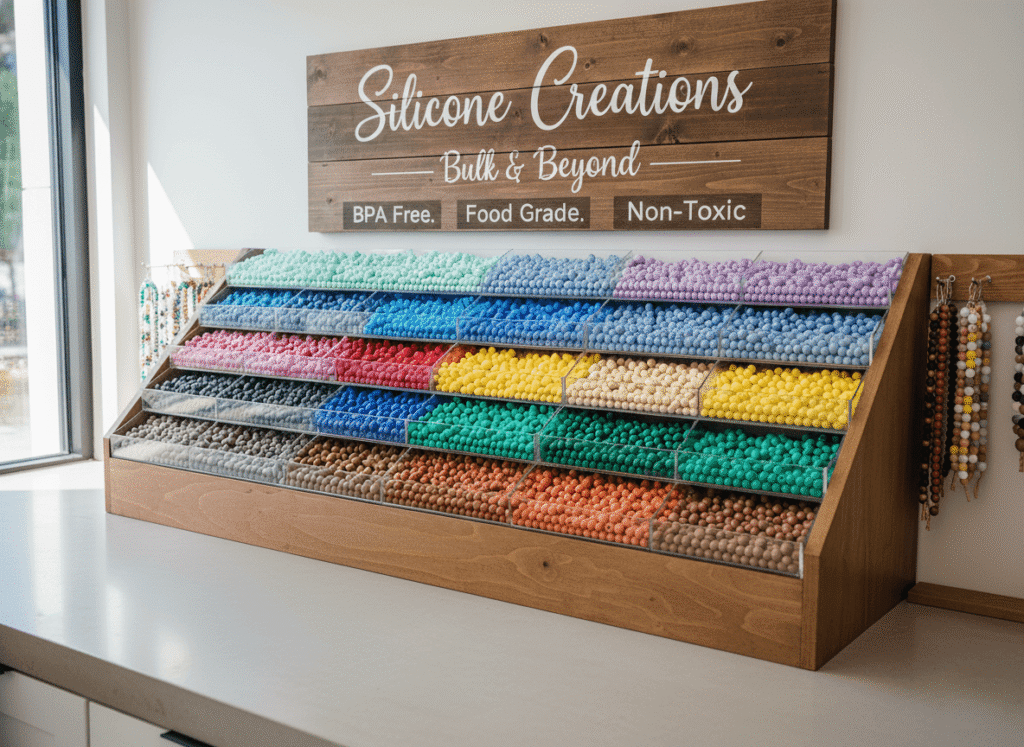
In the evolving world of fashion jewelry and accessories, silicone beads have gained immense popularity for their versatility, color diversity, and user-friendly qualities. As a manufacturer and wholesale supplier serving B2B clients across Europe, North America, and the Asia-Pacific regions, I’ve often seen sourcing managers and private label buyers curious—but also skeptical—about silicone beads. Misconceptions, stemming from material confusion or misinformation, often block informed sourcing decisions, especially when comparing silicone with resin, plastic, or natural rubber alternatives. For brands expanding into the baby accessories, lifestyle, or sustainable jewelry niche, understanding what silicone really is—and isn’t—is crucial for quality control, product safety, and branding credibility.
Silicone beads are non-toxic, durable, and nonporous synthetic polymers, completely different from plastic or resin beads. High-quality, food-grade silicone is BPA-, PVC-, and phthalate-free, heat-resistant up to hundreds of degrees Celsius, and does not absorb water or bacteria. However, not all silicone is created equal—only certified food-grade materials are safe for teething or baby-related products. While highly reusable, silicone is not easily biodegradable and requires specialty recycling systems.
From an industry perspective, silicone beads represent a modern material choice that bridges safety and style in international wholesale markets. Understanding their molecular stability and behavior across applications helps sourcing professionals distinguish genuine quality from low-cost imitations. In this article, I’ll address the most common misconceptions about silicone beads, compare their performance against other materials, and share practical guidance on educating your retail or wholesale customers.
Why Do Some Buyers Confuse Silicone Beads with Plastic or Resin Ones?
Material Confusion in the Wholesale Jewelry Market
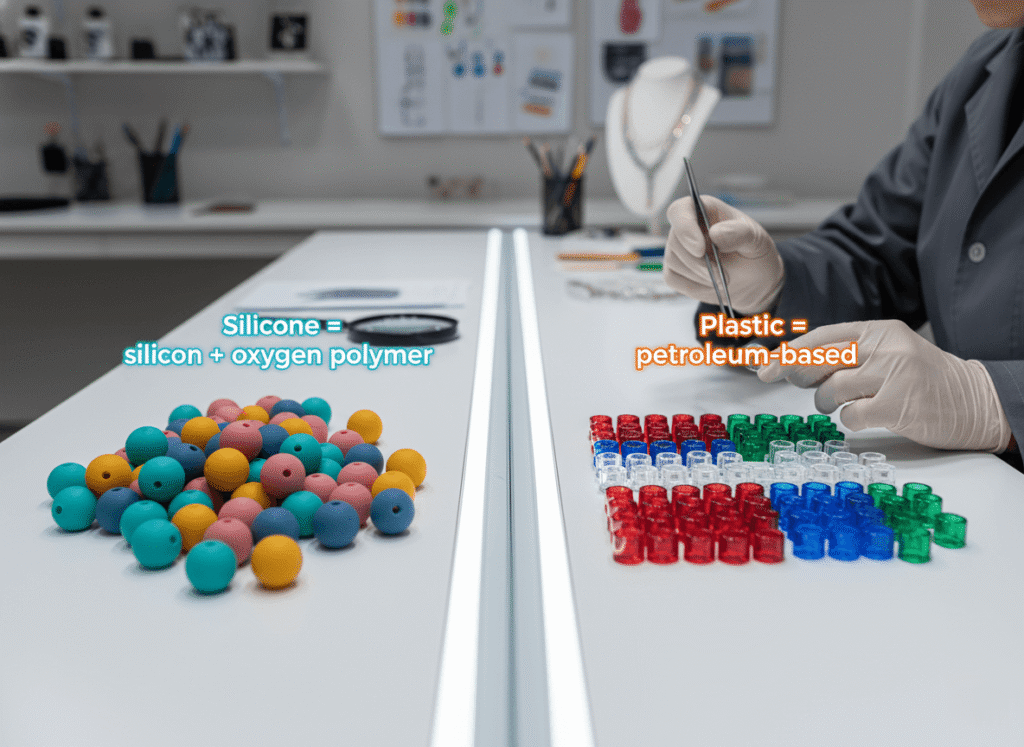
Many B2B buyers—especially those transitioning from resin or acrylic supply chains—often perceive silicone beads as another “soft plastic.” But from a materials science standpoint, silicone is a synthetic elastomer made of silicon, oxygen, carbon, and hydrogen, while plastics are typically composed of organic polymers derived from petroleum. This fundamental distinction explains silicone’s superior flexibility, temperature stability, and chemical inertness.
Common misconception: Silicone beads behave like acrylic or PVC resin in production.
Reality:
Silicone beads are manufactured through compression or liquid injection molding, not plastic extrusion. They feel rubbery yet smooth—ideal for jewelry designs that demand tactile comfort without rigid edges. This distinction is critical when creating teething necklaces, sensory bracelets, or non-slip hair accessories.
| Property | Silicone | Plastic (Acrylic, PVC) | Resin (Epoxy/PU) |
|---|---|---|---|
| Base Material | Synthetic polymer from silicon & oxygen | Petroleum-based | Petroleum/chemical compound |
| Flexibility | High elasticity | Brittle/rigid | Hard |
| Heat Resistance | Up to 230–260°C | Below 80°C | Below 120°C |
| Surface Porosity | Nonporous | Semi-porous | Porous |
| Safety (BPA, PVC, Phthalate) | Free | May contain | May contain |
| Reusability | Excellent | Moderate | Low |
Why It Matters for OEM/ODM Buyers
For private-label jewelry brands, confusing silicone with plastic can lead to incorrect molding decisions, poor durability, and brand trust issues. During the OEM design stage, silicone’s flexibility allows for integrated shapes without seams or joints—ideal for custom-molded beads, pendants, or sensory items. As a custom jewelry supplier, I often advise clients to request material certification sheets and hardness data (like Shore A scale) before mass production.
Is Silicone Really Biodegradable or Just Long‑Lasting?
The Sustainability Debate
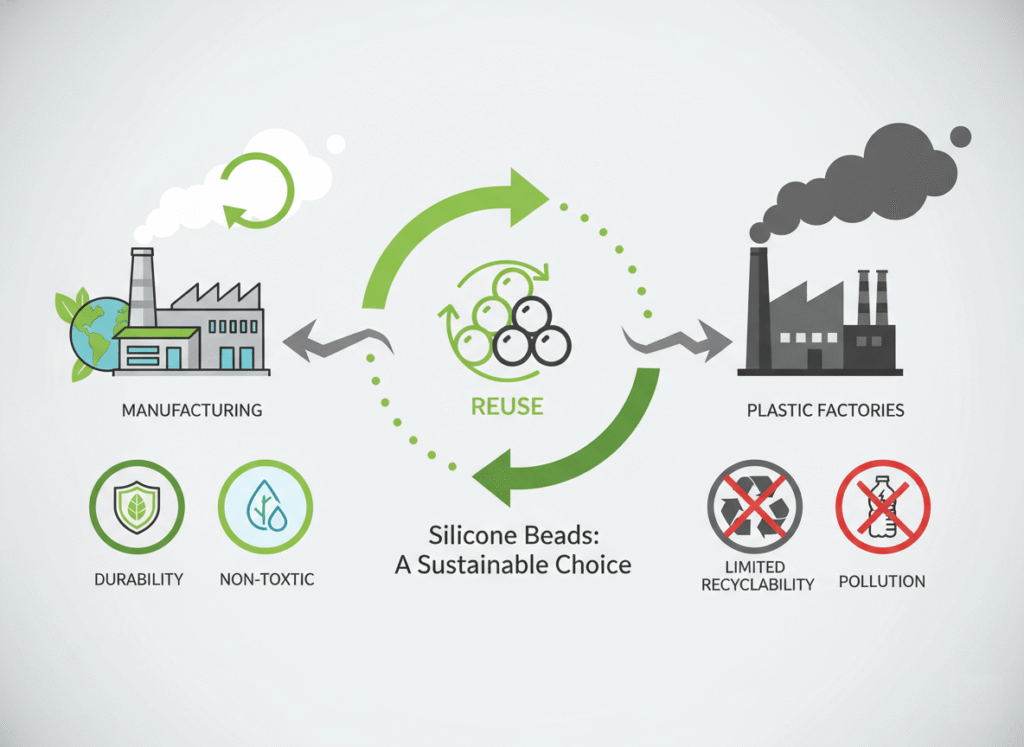
Sustainability is a major driver in jewelry sourcing discussions today. Buyers want eco‑friendly materials without compromising function. However, one persistent myth is that silicone is biodegradable. It’s not. Silicone does not break down naturally like organic rubber or plant-based polymers, but it is more sustainable than disposable plastics due to its longevity and reusability.
Misconception: Silicone beads are eco-friendly because they decompose naturally.
Reality:
Silicone is non-biodegradable, but it degrades slowly over decades instead of centuries, and it doesn’t release microplastics like plastic does. It’s thermally stable, meaning it doesn’t melt or emit harmful chemicals during high temperature exposure, which makes it suitable for sterilization and food-related use.
Recycling and Lifecycle Management
Recycling silicone requires specialized facilities that can process silicone for re-compounding or industrial reuse. While municipal recycling systems rarely accept it, high-end manufacturers may partner with closed-loop recyclers that accept post-consumer silicone products.
| Lifecycle Property | Silicone Beads | Single-Use Plastic Beads |
|---|---|---|
| Durability | Multi-year lifespan | Single use or short-term |
| Decomposition | Very slow, inert | Decomposes into microplastics |
| Recyclability | Limited, special programs | Common, but low reuse yield |
| Environmental Release | Non-toxic | Can leach toxins |
As a supplier, I position silicone jewelry not as biodegradable, but as long-lasting, reusable, and safer for extended product lifecycles. For B2B buyers, this helps in defining marketing narratives that are truthful and compliance-friendly—especially in markets with active sustainability regulations, such as the EU.
What Are the Real Pros and Cons of Silicone Jewelry for International Sellers?
The global B2B jewelry market has embraced silicone accessories not just for their color variety and tactile comfort, but also for the advantages they bring to production efficiency, margin control, and consumer trust. However, transparency about both strengths and limits ensures long-term brand credibility.
Pros of Silicone Jewelry
- Safety Certifications: Premium silicone beads comply with FDA, LFGB, CE, and EN71 standards, ensuring they’re free from BPA, PVC, phthalates, and lead.
- Nonporous Structure: This resists bacterial buildup, an ideal property for products like baby teethers and wellness accessories.
- Thermal Resistance: Can withstand boiling sterilization without deformation or odor release.
- Color Stability: Pigmentation is embedded into the polymer mix, so colors don’t fade or peel—perfect for multi-color jewelry design.
- Soft-Touch Feel: Provides a comfortable and hypoallergenic experience for users sensitive to metal alloys.
- Longevity: Maintains elasticity and shape even after repeated wear and cleaning cycles.
Cons and Limitations
- Non-biodegradability: As mentioned, not suitable for zero-waste claims.
- Limited Recyclability: Specialized recycling required; may incur logistics costs for eco-minded brands.
- Choking Risk (in Infant Use): Small, detachable beads can pose safety hazards if not properly strung or regulated under strict QC.
- Counterfeit Products: Uncertified silicone (often mixed with resin fillers or low-grade rubber) can compromise safety, creating legal exposure for importers.
- Higher Raw Material Cost: Compared with resin or acrylic, silicone material price per kilogram is higher, though offset by durability.
Practical Insights for Wholesale Buyers
From a supply chain perspective, silicone jewelry provides lower defect rates and simplified assembly for OEM or ODM orders. MOQ planning usually starts from 1,000 to 3,000 beads per color, depending on mold setup. Suppliers offering food-grade compliance certificates and pre-production samples strengthen quality assurance across deliveries.
How Can I Educate My Customers About the Authenticity and Safety of Silicone Materials?
Building Consumer Trust Through Transparency
Educating downstream customers is perhaps the most effective way to differentiate your brand. Many retail end-users still carry misconceptions: that silicone smells, that it’s painted, or that all silicone beads are safe for baby toys. As a manufacturer, I’ve found the following strategies effective for B2B communication and retail education campaigns.
1. Highlight Certified Material Sources
Specify “100% food-grade silicone” on product and packaging labels. If available, mention FDA/LFGB tested or BPA-free verified. These certifications instantly boost buyer confidence, especially for private label teething or sensory lines.
2. Clarify Color Origin
Explain that silicone bead colors are integral—they are not painted or coated. The pigment is mixed into the compound during vulcanization, preventing fading or chipping.
3. Use Visuals and Comparisons
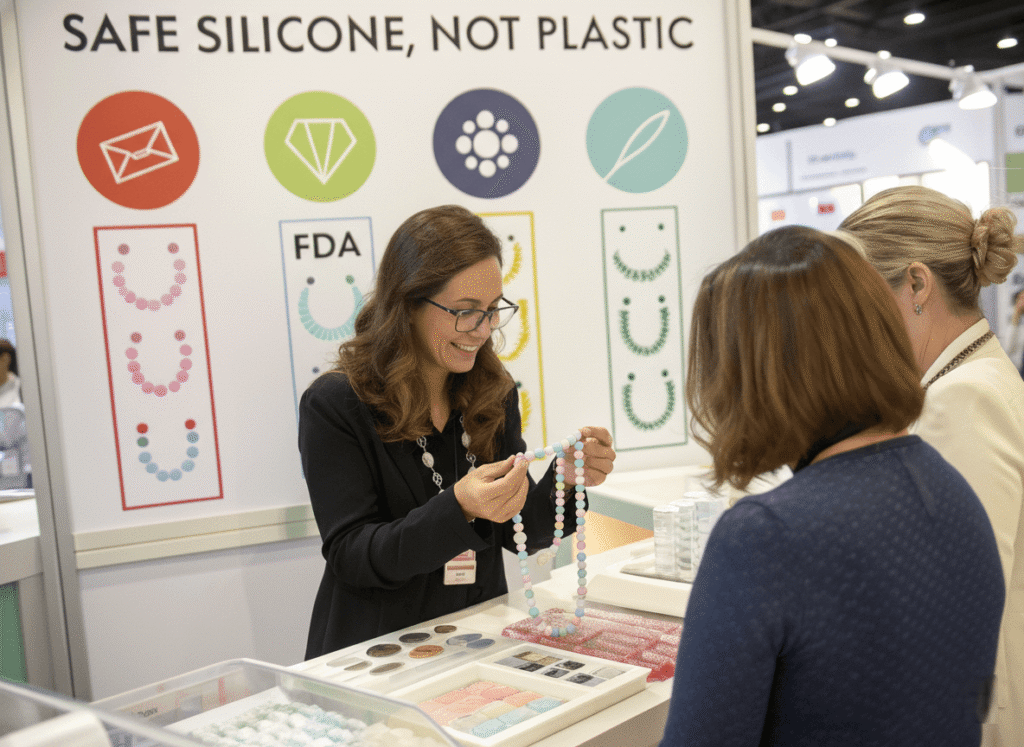
Include simple infographics or displays in B2B catalogs showing silicone’s flexibility, softness, and heat resistance versus plastic. Visual aids accelerate comprehension in showrooms or trade fairs.
4. Provide Proper Cleaning Guides
Encourage gentle cleaning via boiling water or steaming, not harsh solvents. This demonstrates both care and chemical understanding to your customers.
5. Promote Odor-Free and Non-Sticky Features
Explain that any odor usually indicates unfinished curing, a sign of poor-quality production. Your brand’s odor-free silicone communicates manufacturing precision.
6. Partner With Retailers for Educational Campaigns
Help them integrate messaging such as “Safe Silicone, Not Plastic” or “Certified for Peace of Mind.” These micro educational moments at point-of-sale help shift perception.
| Communication Focus | Recommended Message Example | Benefit to Buyer |
|---|---|---|
| Material Origin | “Made from 100% FDA food-grade silicone” | Builds trust & compliance assurance |
| Cleaning Instructions | “Sterilize by boiling, avoid harsh chemicals” | Extends product life & safety |
| Pigment Info | “Color integrated into material, not painted” | Educates consumers & prevents misinformation |
| Recycling Statement | “Durable & reusable; limited recyclability” | Aligns with sustainability transparency |
| Child Safety Alert | “Use under adult supervision, inspect strings” | Reduces liability & supports responsible use |
Additional Insights: Supply Chain Planning & Quality Control for Silicone Beads
OEM/ODM Production Workflow
For brands creating customized silicone jewelry, production typically follows this sequence:
- Mold Design: Based on CAD or sample prototype.
- Material Mixing: Pigment, food-grade silicone base, and curing agents blended uniformly.
- Vulcanization: Compression or injection molding to shape beads.
- Curing & Post-Treatment: Ensures elasticity and removes odor or stickiness.
- QC Inspection: Dimensional and surface checks, followed by tensile and bite resistance testing.
- Packing & Export: Vacuum-sealed or polybag packaging with labeling options.
Quality Control Checklist (for Importers)
Before shipment, request inspection covering:
- Dimensional tolerance ±0.2mm
- Color consistency under daylight D65 standard
- Odor-free verification
- Surface integrity (no burrs or residue)
- Heat resistance testing (boiling at 100°C for 10 mins)
- Material certificate compliance (LFGB/FDA)
High-standard manufacturers document these results in inspection sheets, giving clients full transparency.
Global Market Behavior and Trend Outlook
Rising Demand in Niche Sectors
The post-pandemic wellness and parent-care industries have accelerated silicone bead usage globally. In addition to jewelry and fashion accessories, silicone components are now seen in:
- Baby teethers & pacifier clips
- Sensory and stress-relief accessories
- Eco-friendly lifestyle jewelry
- Custom brand merchandise
Demand from Europe, the U.S., and Australia highlights a preference for certified, sustainable-looking, and hypoallergenic solutions. Countries with stricter chemical regulations (like Germany and Sweden) especially value compliance evidence.
Trend Forecast 2025–2030
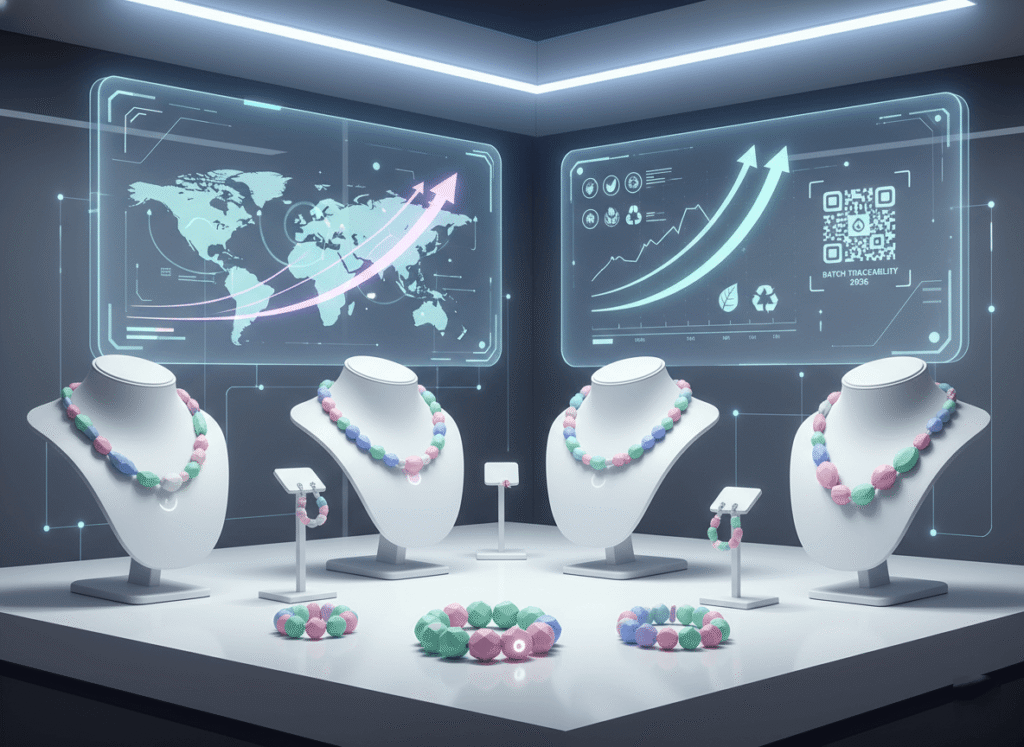
- More Eco-Positioning: Brands will focus on silicone’s reusability and lower environmental toxicity.
- Hybrid Materials: Pairing silicone with stainless steel jewelry or biodegradable cords for mixed-media designs.
- Digital Tracking: QR-coded batch traceability for food-grade verification.
- Customization: Larger OEM volumes for private label buyers seeking exclusive shapes, textures, and embossed logos.
For manufacturers, aligning product innovation with these trends ensures competitive advantage and brand relevance.
Conclusion
The misconceptions surrounding silicone beads—from material confusion to eco-friendliness—can easily misguide procurement decisions. By clearly distinguishing food-grade silicone from lower-quality substitutes, B2B buyers and private label brands can make informed, responsible choices. Silicone’s non-toxic, flexible, and long-lasting characteristics make it an outstanding material for global jewelry and baby-product lines, provided that certification and QC processes are properly managed.
To summarize key sourcing insights:
- Silicone ≠ Plastic or Resin: It’s a synthetic polymer with unique flexibility and stability.
- Not Biodegradable—but Highly Durable: Excellent for reusable product lines.
- Certified Silicone Only: Always demand FDA/LFGB documentation.
- Educate Your Customers: Transparency promotes trust and repeat business.
If you’re developing a new silicone-based jewelry collection or sourcing for a private label project, I invite you to request samples or explore our certified bead catalog. By understanding the truth behind these misconceptions, your brand can lead the market with safety, style, and science-backed confidence.
