
As a craft manufacturer and B2B supplier specializing in DIY art kits, I often receive inquiries from retailers and distributors about whether diamond painting is appropriate for children and complete beginners. Diamond painting, sometimes referred to as a “paint‑by‑diamonds” hobby, has rapidly grown in popularity as both a leisure product and an educational art tool. For B2B buyers, understanding its suitability for young users and novice crafters is essential for effective product selection, safety assurance, and market positioning—particularly when sourcing from China‑based producers or private‑label OEM suppliers.
Diamond painting is highly suitable for kids aged 6 and above and for beginners of all ages, provided that the kits are selected properly. Choose simpler designs, non‑toxic adhesives, and larger round drills for safety and easy handling. For sourcing managers, focus on child‑safe materials, clear canvas printing, and certified QC checks to ensure products meet international safety and educational standards.
When evaluating beginner‑friendly diamond painting kits, wholesalers and brand owners must balance three factors—safety, ease of assembly, and engagement. This article draws on years of manufacturing experience to explain how to source safe, child‑appropriate, and beginner‑friendly kits, verify canvas and adhesive quality, and even tailor custom OEM sets for retail buyers targeting the family and hobby segments.
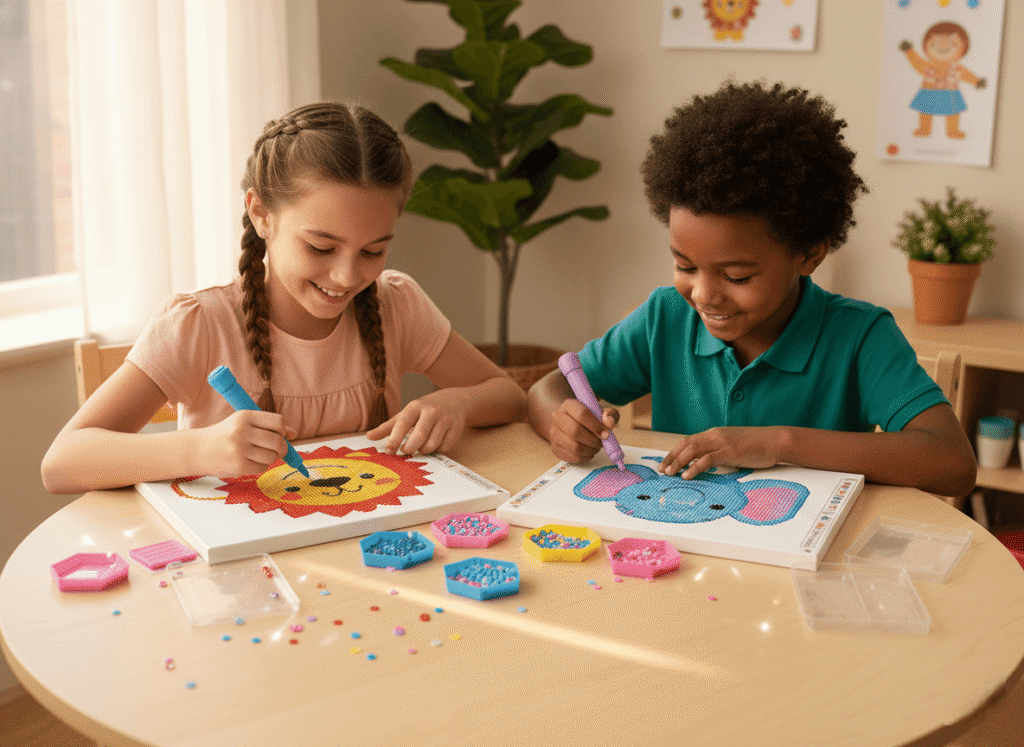
How Can I Choose Safe and Easy Diamond Painting Kits for Children?
Diamond painting becomes truly accessible to children when the mechanical process—placing tiny resin diamonds onto a sticky canvas—is adjusted to their developmental level. As a diamond art kit manufacturer, we always recommend B2B buyers evaluate both design complexity and component size before finalizing purchase orders.
Focus on Age-Appropriate Design Complexity
- Ages 3–6: Select “big gem” sticker kits with oversized diamonds and simple shapes (e.g., cartoon animals).
- Ages 6–10: Opt for small, full‑coverage canvases (15×15 cm or smaller) with fewer than 15 colors.
- Ages 10+ / Family Sets: Offer standard 30×30 cm canvases with 20+ color codes and finer details.
Such segmentation enables retailers to target multi‑age demographics with clearly labeled SKUs.
Safety-First Materials Checklist
| Component | Recommended Specification | Safety Notes |
|---|---|---|
| Drills / Gems | Large 5D or Round type | Easier to handle, lower choking risk |
| Canvas Adhesive | Non‑toxic eco glue | Must be odorless and compliant with EN71/ASTM standards |
| Tools | Blunt stylus pens, soft tweezers | Avoid sharp tools for kids kits |
| Packaging | Clear polybags with warning labels | Necessary for import compliance |
Key Selling Points for Retail Buyers
- Educational angle: Enhances hand‑eye coordination and fine motor skills.
- Stress‑relief element: Encourages focus and calmness for both young and adult beginners.
- Gift potential: Finished projects can be framed or used for decoration, widening resale opportunities.
Sourcing Tip — MOQ and Private Labeling
When ordering from a China diamond painting factory, request OEM packaging with your brand logo and localized safety text. Child‑oriented kits generally carry lower MOQs (100–300 pcs per design), allowing diverse SKU testing.
What Details Should I Check Before Sourcing Beginner-Friendly Diamond Painting Kits from a Supplier?
From a B2B sourcing perspective, due diligence goes beyond price negotiation. Ensuring quality consistency, adhesive reliability, and canvas clarity are crucial if you want to avoid customer returns and preserve your brand’s reputation.
Supplier Qualification and QC Standards
Always review the following supplier credentials:
- Material Safety Certificates: EN71 (Europe), ASTM F963 (USA), and CPSIA compliance for children’s crafts.
- Factory Audits: ISO9001 quality management and on‑site inspection reports.
- Pre‑shipment Sampling: Randomized batch samples to verify drill uniformity, color accuracy, and glue coverage.
Recommended Pre‑Shipment Inspection Criteria
| Inspection Item | Tolerance / Acceptance Standard |
|---|---|
| Adhesive area consistency | ≥95% of canvas evenly coated |
| Printing clarity | All symbols legible at 30 cm distance |
| Drill count accuracy | +3–5% spare drills per color |
| Non‑toxic certification | Mandatory documentation |
| Packaging durability | Drop tested from 1 m |
Canvas Production and Print Definition
High‑resolution canvas printing ensures children and beginners can easily follow patterns. Look for UV print clarity, waterproof backings, and smooth adhesive coatings. Avoid suppliers using solvent‑based inkjets for children’s kits, as fumes and residues may exceed safe levels.
Adhesive and Drill Bonding Strength
Poor bonding leads to diamonds falling off, causing product complaints.
Experienced OEM manufacturers use hot‑melt poured glue instead of low‑grade spray adhesives. Always request adhesion test data (72 hours, 25°C)—the industry standard benchmark.
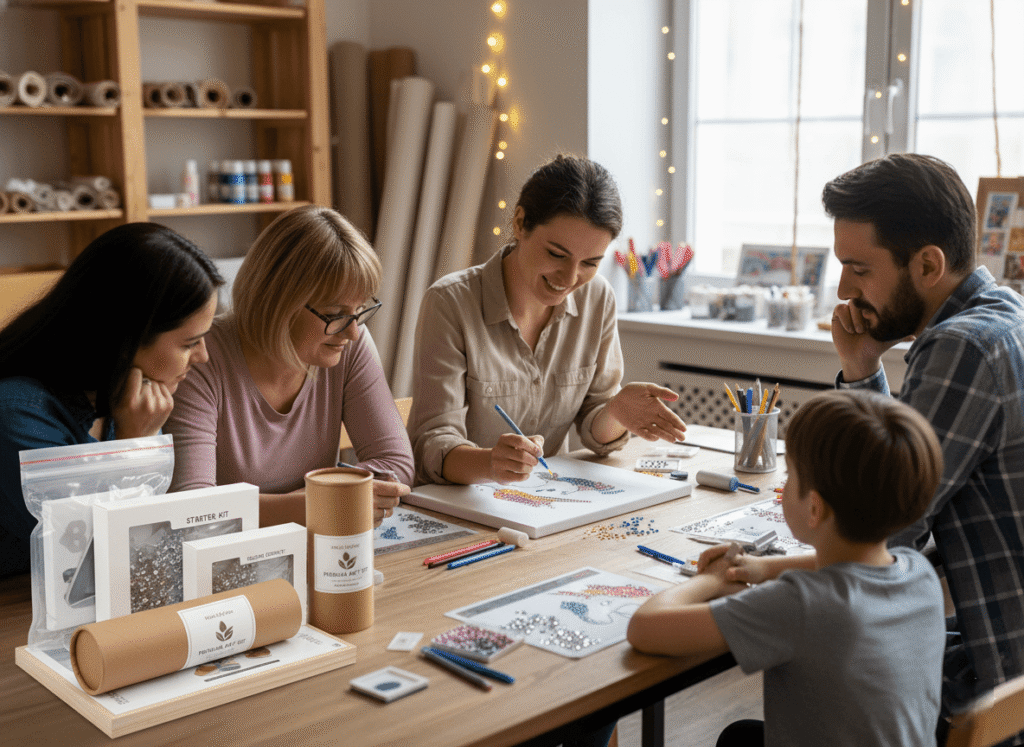
Packaging and Branding Options
For large importers or distributors, choose packaging types aligned with your market:
- Zipper bag + cardboard back: Economical for online retail.
- Rigid box with window: Premium perceived value for gifting.
- Eco paper tube: Sustainable packaging trending in EU markets.
How Do I Make Sure the Canvas Quality Is Non-Toxic and Child-Safe?
Canvas safety and non‑toxicity are top priorities when your target audience includes children and schools. In practice, this means verifying both chemical composition and production hygiene of every component.
Material Composition and Lab Testing
Professional suppliers source polyester or synthetic blend canvases coated with eco‑adhesives. To ensure child safety, always confirm:
- No BPA, phthalates, or formaldehyde traces.
- Heavy metal test reports (Lead, Cadmium <90 ppm).
- Compliance with REACH and EN71‑3 toy material standards.
If your markets include the USA or Europe, ask your supplier to share third‑party reports from SGS, Intertek, or TÜV.
Quality‑Control Protocol at Manufacturing Site
As a manufacturer, we run the following QC sequence:
- Raw material inspection: Resin drills melted under controlled temperature to avoid toxins.
- In‑process monitoring: Adhesive poured in cleanroom environments.
- Printing QA: Each canvas checked manually for color registration.
- Random toxicity batch test: Conducted every 10,000 pieces.
This methodology allows retailers to confidently use phrases like “non‑toxic and child‑safe certified” on packaging—a strong SEO keyword advantage for online marketplaces.
Adhesive and Surface Durability Comparison
| Parameter | Hot‑Melt Adhesive | Cold‑Paste Adhesive |
|---|---|---|
| Origin | Solid thermoplastic resin | Liquid polymer glue |
| Strength | High; long‑term stickiness | Moderate; less durable |
| Odor | Neutral | Slightly chemical |
| Child Safety | Certified EN71 safe | Depends on base formula |
Eco-Friendly Canvas Trends
Buyers aiming for eco & sustainable craft lines may request recycled PET fabric canvas or biodegradable PLA drills. The global trend toward green ODM production provides differentiation in export markets, particularly in Europe and Australia.
Can I Request Customized Beginner Sets for My Retail Customers?
Absolutely, and customization is one of the best strategies for establishing a signature product line. As a OEM/ODM diamond painting factory, we regularly collaborate with brands to design exclusive beginner sets targeting children, hobbyists, and gift buyers.
Customization Options Overview
| Category | Customizable Elements | Typical MOQ |
|---|---|---|
| Canvas Design | Brand‑exclusive patterns or licensed art | 200–300 pcs/design |
| Packaging | Logo printing, QR instruction code, retail barcode | 500 pcs |
| Accessories | Colored stylus pens, trays, eco wax, tweezers | 300 sets |
| Educational Value Add | Instruction booklet or reward sticker | Flexible |
With modular customization, retailers can launch differentiated SKUs without the expense of tooling new equipment.
Educational and Thematic Kits
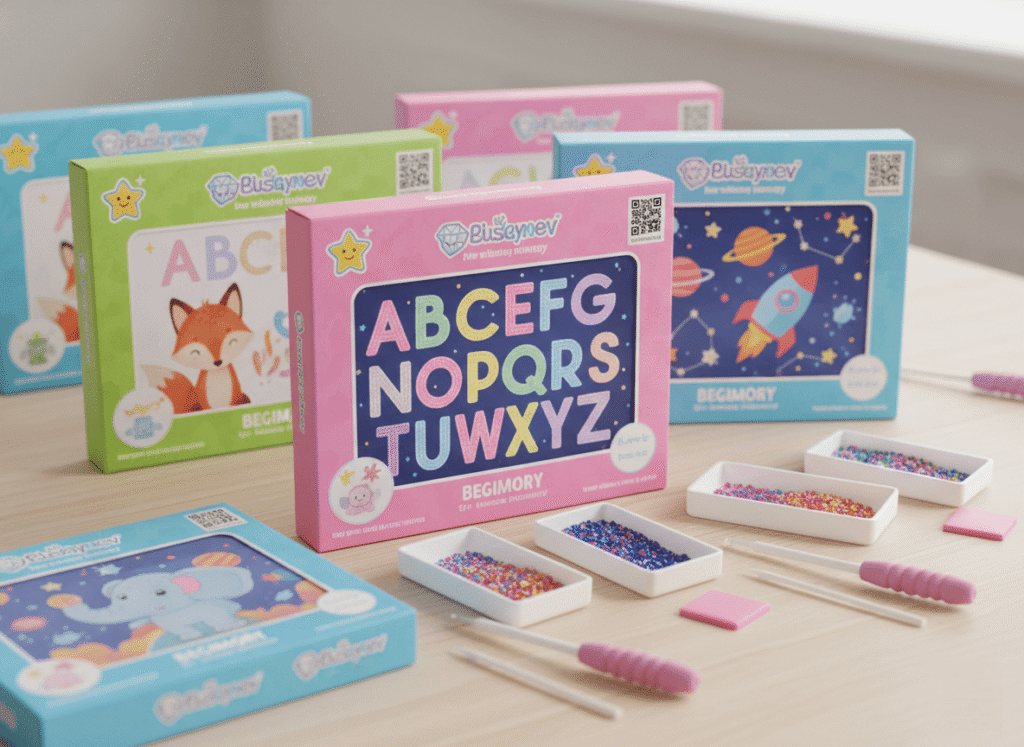
Introducing theme‑based beginner sets—animals, space adventures, alphabet learning—creates an emotional connection with family buyers. Many of our B2B clients combine educational goals with creative fun, marketing these kits as both “art therapy for kids” and “mindful crafts for beginners.”
Branding for Retail and E-Commerce
Strong branding drives conversions on marketplaces:
- Use appealing lifestyle photos with parents and children engaging together.
- Include multilingual instructions for global distribution.
- Add QR‑linked digital guides for user engagement and reduced support requests.
MOQ Planning and Supply Chain Cost Control
From a sourcing standpoint, beginner and kids’ kits typically have lightweight packaging, making them cost‑efficient for air or express shipments. Request mix‑and‑match MOQ flexibility—for example, 100 pcs each of five designs—so you can test designs without tying up capital.
Additionally, consolidate ocean shipments with other craft SKUs to reduce landed cost per unit.
Additional Insights: Market Demand and Global Trends
According to export data, DIY craft kits including diamond painting have seen double‑digit growth since 2021. During and after the pandemic, family entertainment and “screen‑free” activities surged. Retail analytics indicate that children’s sets and stress‑relief beginner kits occupy nearly 40% of total diamond painting sales on major online platforms.
Emerging Trends to Watch
- Sustainable Materials: Growing demand for biodegradable drills.
- Hybrid Art Concepts: Diamond painting combined with embroidery or stickers.
- Therapeutic Marketing: Promoting mindfulness for both children and adults.
- Personalized Gifts: Low MOQ custom names or photos on beginner kits.
For B2B brands, staying ahead of these trends will define differentiation in wholesale catalogs and help retain repeat orders.
Conclusion
Diamond painting is indeed suitable for both kids and beginners—as long as kits are selected and sourced with safety, simplicity, and engagement in mind. For B2B buyers, this means verifying non‑toxic certifications, canvas clarity, and factory QC standards before committing to bulk orders. By offering tailored beginner sets with customizable packaging and age‑appropriate designs, retailers can capture fast‑growing demand in both family crafts and mindfulness hobby segments.
As an experienced custom diamond painting supplier, I encourage importers and distributors to:
- Request sample kits from multiple factories for physical comparison.
- Confirm adhesive and drill testing reports.
- Explore OEM or private label sets for brand identity.
Ready to explore your own beginner‑friendly product line?
Contact us today for a full catalog, free samples, or OEM development consultation—let’s create dazzling kits that both children and new crafters will love to paint with diamonds.
