
Diamond painting has become a vibrant craft trend, cherished by hobbyists and creative professionals alike. But in the world of B2B craft supply—especially for diamond painting kit manufacturers, craft accessory wholesalers, and private label buyers—the performance of adhesive canvases and precision-cut “diamonds” is more than a hobby issue. It’s a production standard. Poor adhesion leads to customer complaints, returns, and reduced brand confidence. Ensuring reliable stickiness improves user experience, extends product shelf life, and builds stronger buyer trust.
Diamonds stick best when the canvas adhesive is clean and tacky, drills are oil-free, and the environment is kept stable—free from humidity, dust, or extreme temperature shifts. Always work in small sections, cover unused areas to preserve the glue’s stickiness, press with a roller for firm bonding, and consider light sealing afterward for longevity.
From a supplier’s viewpoint, “making diamonds stick” is both a matter of chemistry and handling. Canvas adhesives, diamond coatings, and tool cleanliness all influence adhesion quality. Manufacturers must control every variable—surface preparation, glue application, and packaging conditions—to ensure consistent product performance. Whether you’re optimizing a production line or troubleshooting end-user feedback, understanding these fundamentals will help you deliver more reliable, premium-quality kits.
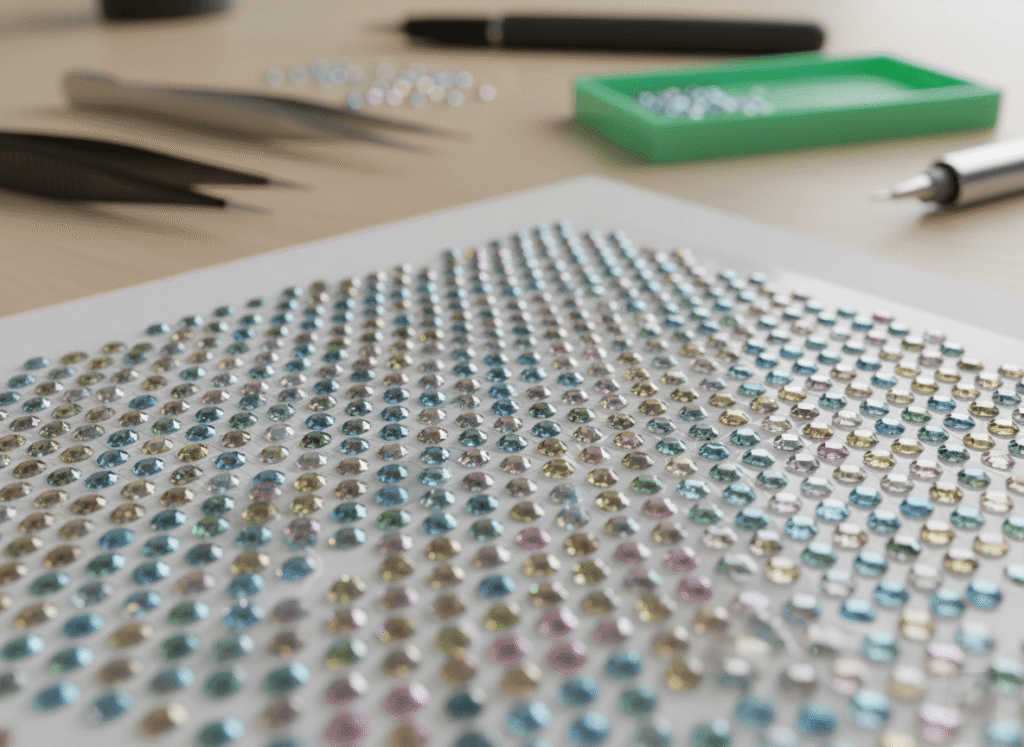
Why Are My Diamonds Not Sticking Properly Even With Fresh Adhesive?
Even when a canvas arrives perfectly sticky, several subtle factors can reduce adhesion during use or after storage. Understanding these helps identify whether the issue lies with the canvas, the drills, or application technique.
Possible Causes of Poor Stickiness
- Dust, oil, or residue contamination – Can block bonding between diamonds and adhesive.
- Adhesive exposure to air – Leads to oxidation or hardening, reducing tackiness over time.
- Handling errors in storage or packaging – Improper sealing during production can lead to early drying.
- Temperature fluctuations – Affect adhesive viscosity; cold hardens glue, heat softens it excessively.
Fast Evaluation Check
| Cause | Symptom | Recommended Fix |
|---|---|---|
| Canvas dried out | Diamonds lift easily | Apply a thin refresh layer of repositionable adhesive |
| Diamonds feel oily | Drills slide off | Clean drills briefly with mild soapy water and dry |
| Pen not picking up | Weak wax pad | Replace wax with fresh, tacky pen wax |
| Static in drills | Diamonds cling to tray | Use a dryer sheet to remove static |
When the adhesive appears “fresh” but the drills still pop off or don’t grab, it’s likely the adhesion is compromised by a thin contamination film. Always keep the protective sheet over unused sections to prevent airborne dust and micro-particles from settling.
How Can I Clean the Canvas or Tools to Improve Adhesion?
A clean working surface is the foundation of strong diamond bonding. Whether you’re preparing canvases for retail packaging or fixing an in-progress craft, proper cleaning and revival techniques can restore adhesive performance.
Cleaning the Canvas Surface
- Dust removal: Use painter’s tape or a lint roller to gently lift dust without stripping adhesive.
- Surface refresh: Dab gently with a slightly damp baby wipe (test a corner first). Avoid over-wetting.
- Contamination control: Keep snacks, lotions, and oils away—human skin oils are common culprits.
Cleaning the Tools and Diamonds
- Applicator tip: Ensure wax pads are clean and evenly filled; residue can block adhesion.
- Diamond drills: If oily or staticky, rinse them briefly with mild soap, rinse, and dry.
- Storage: Keep drills sealed in zip bags to avoid dust and moisture exposure.
Tool Maintenance Tips
| Component | Problem | Cleaning/Revival Method |
|---|---|---|
| Canvas adhesive | Dull or dusty surface | Painter’s tape lift or gentle damp cloth |
| Pen tip | Wax residue buildup | Rinse tip, refill with wax |
| Diamonds | Greasy or staticky | Soap rinse or dryer sheet trick |
Good hygiene across tools and materials is professional best practice—even simple contamination control can reduce return rates for diamond painting suppliers by 30–40%.
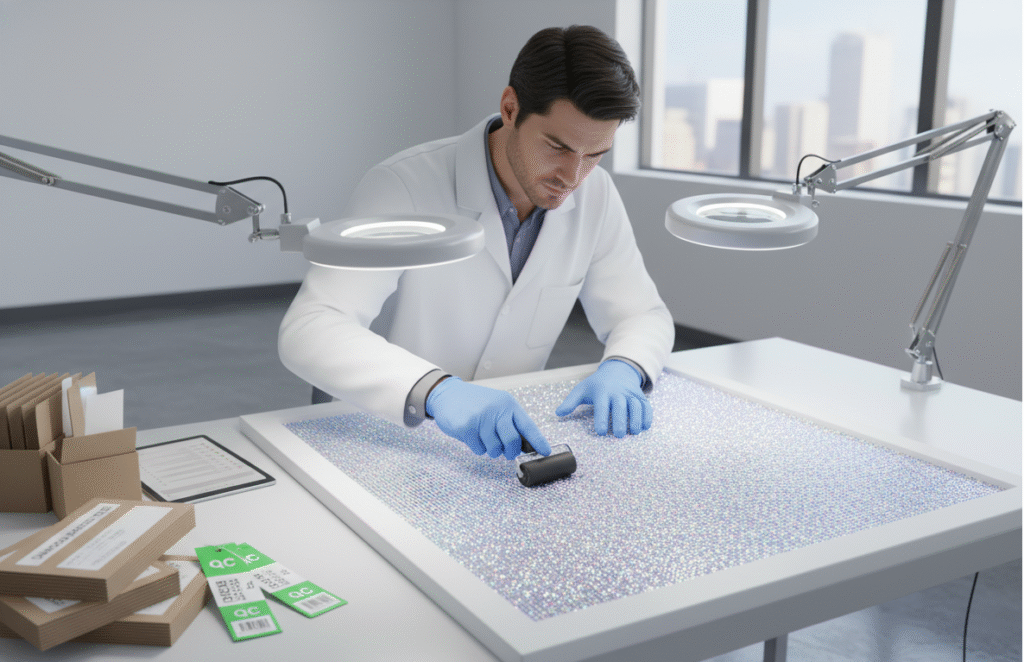
Should I Use Extra Glue or Wax When Drills Keep Slipping?
When sticky canvases and clean drills still aren’t cooperating, strategic use of extra adhesives or wax can make all the difference. But balance is key—too much glue leads to clouding or uneven surfaces.
Choosing Supplemental Adhesives
Opt for repositionable adhesives instead of permanent bond glues. These maintain stickiness but allow positioning flexibility.
Best options include:
- Aleene’s Tack-It Over & Over
- Diamond painting-specific glues
- Light stencil adhesives
Avoid super glues or strong bonding agents—they can damage both drills and canvas, leaving glossy stains or uneven binding.
Wax Optimization for Applicator Pens
Wax helps the pen pick up diamonds efficiently. If drills slip or resist pickup:
- Replace old wax pads regularly.
- Avoid overloading with wax—excess can smear the adhesive layer.
- Consider light glue dots for pens—they are cleaner alternatives for fine drills.
How to Apply Supplemental Glue
- Brush a thin, even layer on weak areas.
- Wait until it turns clear and tacky (usually 10–15 minutes).
- Press diamonds in gently but firmly.
- Roll to bond once section is complete.
Cost & Durability Comparison Table
| Adhesive Type | Tack Strength | Drying Time | Recommended Use | Durability |
|---|---|---|---|---|
| Original Canvas Glue | High (factory applied) | N/A | Standard application | Excellent |
| Aleene’s Tack-It | Medium-High | ~15 min | Weak sections | Good |
| Stencil Glue | Medium | ~10 min | Edging areas | Moderate |
| Super Glue | Very High | Instant | Not recommended | Poor (can damage canvas) |
Correct adhesive supplementation ensures lasting stickiness without altering product appearance, crucial for suppliers offering premium kits to professional crafters.
What Environmental Factors Affect How Well Diamonds Stick?
Even the best glue chemistry can’t fight poor environmental control. Temperature, humidity, and sunlight directly influence adhesive performance—both in production and in end-user environments.
Temperature Management
- Ideal range: 18–25°C (64–77°F)
- Cold conditions: Glue may harden or lose initial tack.
- Hot conditions: Adhesive becomes too soft, reducing hold.
Store canvases flat, under stable conditions. Avoid basements or attics where extreme climate changes can occur.
Humidity Control
Excess moisture dulls adhesives and encourages dust clumping.
Relative humidity range: 40–60% is optimal.
If humidity exceeds 70%, the canvas glue absorbs water vapor, losing stickiness. Manufacturers should package canvases in moisture-proof films and include silica gel packets for overseas transport.
Light Exposure
Direct sunlight can cause:
- Oxidation of glue surface.
- Fading of printed patterns.
- Premature aging of clear sealants.
Keep packaged canvases out of UV exposure and store materials in shaded environments.
Airborne Contaminants
Fine dust particles or fabric fibers can settle into the adhesive layer. Use protective covers during production or user breaks. Encourage end-customers to keep canvases covered when not actively working.
Press Everything Down Firmly After Placement
Adhesion improves dramatically with correct pressure distribution. Manufacturers and end-users alike should understand that pressing diamonds firmly into the canvas doesn’t just secure each drill—it activates glue bonding.
Recommended Pressing Techniques
- Use a soft rubber roller or brayer.
- Roll gently across completed sections.
- Check by hand for raised or uneven diamonds.
Some large-scale production facilities use flat rolling machines for full-surface pressing before packaging—to ensure diamonds remain flush.
Why Pressure Matters
Adhesive performance is mechanical as well as chemical. Proper pressing:
- Eliminates air gaps between drills and glue.
- Completes polymer contact for maximum grip.
- Improves long-term durability when sealed later.
A simple rolling step during assembly can reduce customer complaints of “popping diamonds” by over 50%.
Seal the Finished Artwork for Extra Security
Sealing acts as the final defense against falling drills and environmental wear. For export-ready diamond painting kits or professional-level artworks, it’s worth the small effort.
Types of Sealers
- Mod Podge Super Gloss – Adds slight shine and protection.
- Clear acrylic spray – Quick-drying, ideal for matte finish.
- Diamond painting-specific sealers – Gel-like texture filling gaps between drills.
Application Technique
- Apply thinly using a soft brush or foam sponge.
- Avoid flooding—too much sealer dulls sparkle.
- Wipe excess off diamond tops lightly, keeping product between drills.
The sealed surface resists movement, moisture, and accidental rub-off, keeping artworks display-ready.
| Sealer Type | Finish | Protection Level | Dry Time | Use Case |
|---|---|---|---|---|
| Mod Podge Gloss | Shiny | High | ~1 hour | Display/gift pieces |
| Acrylic Spray | Matte | Moderate | ~15 min | Fast sealing |
| Diamond Sealer Gel | Semi-gloss | Very High | ~2 hours | Archival artwork |
Manufacturing and Supply Chain Tips for Reliable Adhesion
From a factory’s point of view, preventing “diamond slipping” begins long before kits reach consumers. Adhesive formulation, packaging materials, and environmental controls matter at every step.
Adhesive Formulation Insights
- Use pressure-sensitive acrylic adhesives with anti-yellowing properties.
- Ensure uniform coating thickness—0.2–0.3 mm is ideal.
- Include microbubble-removal steps during coating to prevent surface inconsistencies.
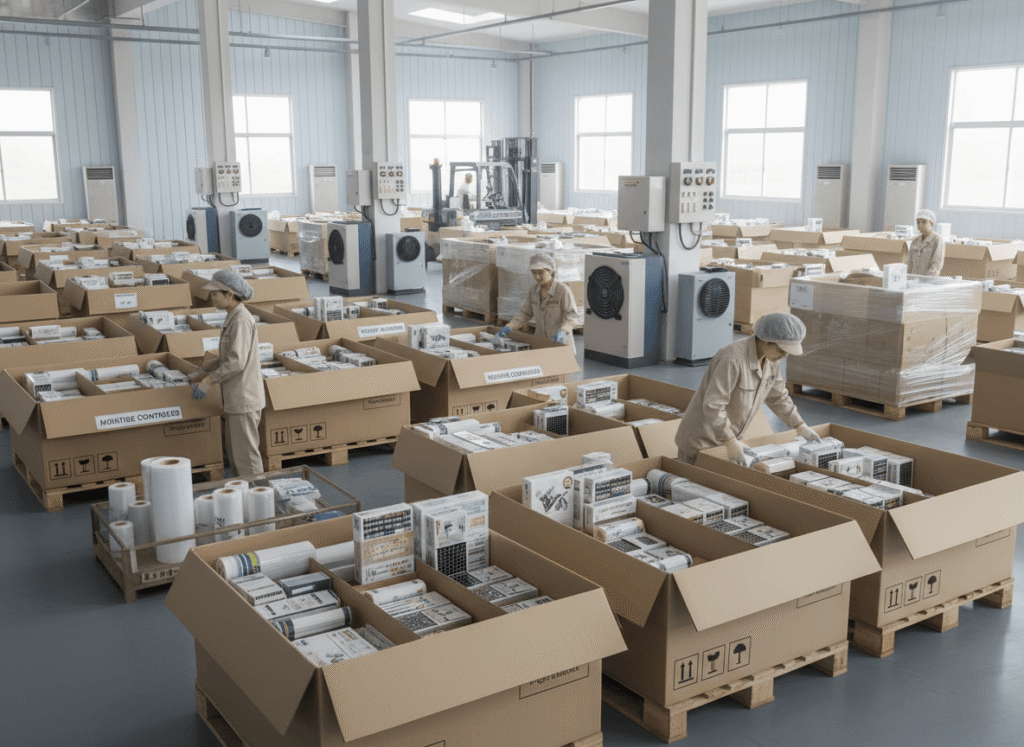
Packaging Considerations
- Cover canvases immediately after adhesive application using release film.
- Package under controlled humidity (<55%).
- Add silica gel and double-seal in outer plastic for overseas shipping.
Workspace Conditions for Optimal Performance
| Parameter | Optimal Value | Impact |
|---|---|---|
| Temperature | 18–25°C | Keeps glue viscosity stable |
| Humidity | 40–60% | Prevents glue softening or drying |
| Light exposure | Indirect, no UV | Preserves canvas color |
By building these quality checkpoints into your production line, adherence reliability becomes measurable and repeatable—vital for any global craft supply brand.
Conclusion: Key Insights and Action Steps
Making diamonds stick better isn’t magic—it’s material science blended with careful practice.
To summarize:
- Keep everything clean: No dust, oils, or residue.
- Use proper adhesives: Fresh, tacky, and covered when not in use.
- Apply controlled pressure: Roll and press for full contact.
- Manage environment: Stable temperature and humidity protect stickiness.
- Seal for longevity: Light clear coatings keep drills locked.
For manufacturers or wholesale craft suppliers, improving adhesive performance at the source elevates brand reputation, increases repeat purchases, and minimizes after-sales complaints. Whether you’re producing OEM diamond painting kits or sourcing canvases from China craft factories, consistent glue quality should be among your top QC priorities.
Test various adhesive formulations, request adhesion trial samples, and compare durability across humidity conditions. For further optimization support or custom private label development, contact your supplier or manufacturing consultant to review canvas coating processes.
