
Helping children engage in creative activities like crafting is a challenge faced by many parents, teachers, and childcare professionals. While some children naturally gravitate toward arts and crafts, others lose interest quickly or avoid these projects altogether. For educators, after-school leaders, and parents, finding ways to inspire creativity in reluctant children can make a world of difference to their emotional growth, fine motor skills, and self-expression.
Quick Takeaway for Busy Educators and Parents:
Children who don’t enjoy crafts often need less structure, more ownership, and deeper emotional connection to the activity. Choose simple, interest-based projects; let kids pick their materials and colors; praise their effort over results; and keep sessions playful and flexible. Link crafts to storytelling, sensory experiences, or group fun to transform creative reluctance into curiosity and joy.
Crafting can be reimagined as a form of exploration rather than a task. When we frame creative activities as storytelling, play, or science experiments, children begin to see art as part of their world rather than a separate, intimidating subject. With thoughtful project design—safe materials, inclusive activities, and positive reinforcement—you can awaken a lifelong appreciation for creativity, even in children who claim, “I don’t like crafts.”
Understanding Why Kids Lose Interest in Crafts
Not every child who “dislikes crafts” is truly rejecting creativity—it’s often a symptom of a deeper issue. Identifying that root cause is the first step toward designing experiences they actually enjoy.
Common Reasons for Craft Resistance
- Frustration with Fine Motor Skills – Tasks like cutting, gluing, or threading beads require coordination that younger children are still developing. When it feels “too hard,” they quit early.
- Perfectionism or Fear of Failure – Kids who worry about mistakes are less willing to engage in freeform creative activities.
- Short Attention Spans – Some get restless quickly, especially if crafts take too long to show visible progress.
- Lack of Emotional Connection – When projects have no personal meaning, children disengage before they even start.
- Environmental Factors – Overly strict, adult-led instruction, or limited workspace can dampen enthusiasm.
Diagnosing the Real Issue
Before altering your approach, observe your child or students carefully:
- Do they fidget or get frustrated? The problem may be motor-skill fatigue.
- Do they say, “Mine doesn’t look good”? They might be struggling with self-esteem.
- Do they appear bored? You’re likely missing a connection to their interests.
Once the “why” is clear, you can pivot your strategy to meet their specific creative needs.
Start Simple: Quick, Interest-Based Projects
When children lose interest easily, starting with quick, low-stress activities helps build trust and confidence.
The Power of 5-Minute Crafts
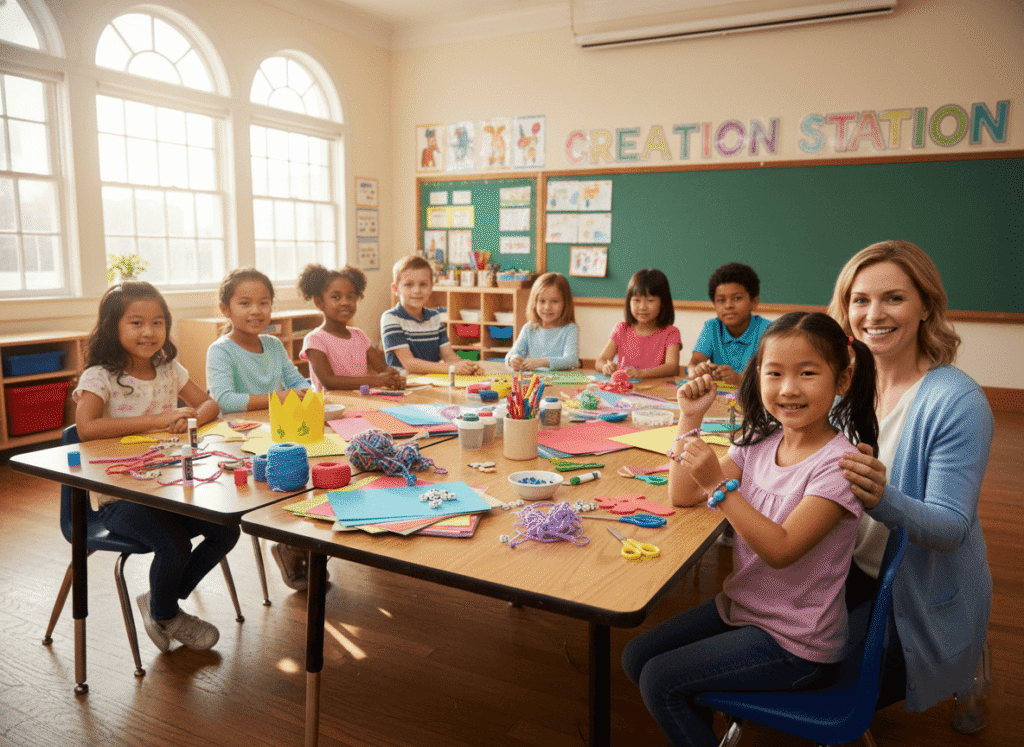
Short projects with immediate results—like sticker collages, yarn wrapping, bead bracelets, or colorful paper mosaics—give children a sense of accomplishment before frustration sets in.
Examples of beginner-friendly quick crafts:
- Paper plate masks inspired by favorite cartoon animals
- Simple friendship bracelets using elastic cords
- Foam sticker picture frames with the child’s photo
- DIY slime or sensory play dough for tactile fun
Linking Crafts to Personal Interests
The fastest way to engage a reluctant child is to tailor the craft to something they already care about.
| Child’s Interest | Corresponding Craft Idea |
|---|---|
| Animals | Create animal masks or paw-print art |
| Sports | Decorate water bottles or jerseys |
| Science | Make “lab experiment” lava lamps |
| Fantasy | Craft wands, crowns, and capes |
| Technology | Use design apps or 3D print charms |
By relating creative tasks to hobbies, crafts become a vehicle for storytelling and identity—not just a hands-on assignment.
Build Confidence Through Scaffolding
If a child struggles with scissors or glue, simplify materials:
- Offer pre-cut shapes or stickers to minimize challenges.
- Use self-opening scissors for control without strain.
- Gradually introduce more complex tools as skills improve.
Progressive scaffolding prevents discouragement while still fostering growth.
Make Crafts Playful, Social, and Story-Driven
Children thrive when creativity feels like play. Reframing craft time as a social, imaginative adventure can reignite interest and delight.
Turn Crafts Into Cooperative Games
Instead of focusing on individual results, turn projects into team activities:
- Build a class mural where each child contributes one piece.
- Organize a “creative relay” where kids add to each other’s work.
- Host a “design fair” day where children present their own small creations.
Social interaction boosts emotional engagement and reduces performance anxiety, especially in classrooms or group settings.
Add Storytelling and Roleplay
Storytelling transforms crafts from static projects into emotional journeys:
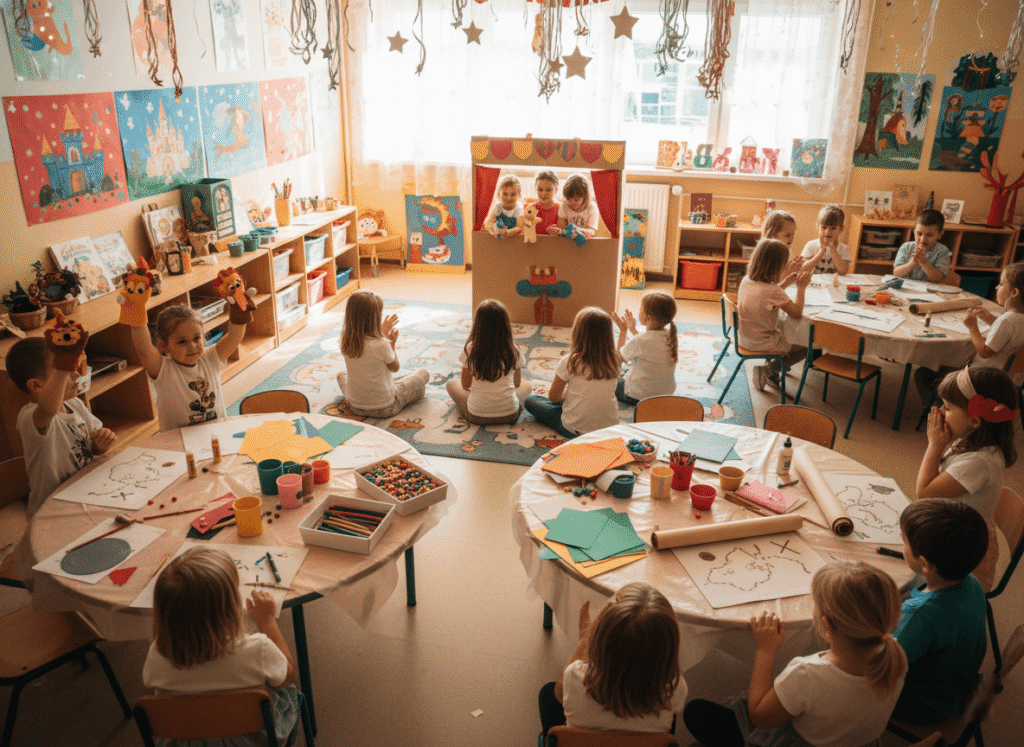
- While making animal puppets, craft a mini play afterward.
- Design treasure maps and then go on a “hunt.”
- Create jewelry or accessories for characters in an imaginary story.
By connecting making with narrative, children channel emotion and imagination simultaneously—a technique proven to deepen engagement.
Blend Crafts With Movement or Outdoor Activity
Many children are kinesthetic learners—they focus better when physically active.
Try:
- Large-scale chalk murals outdoors.
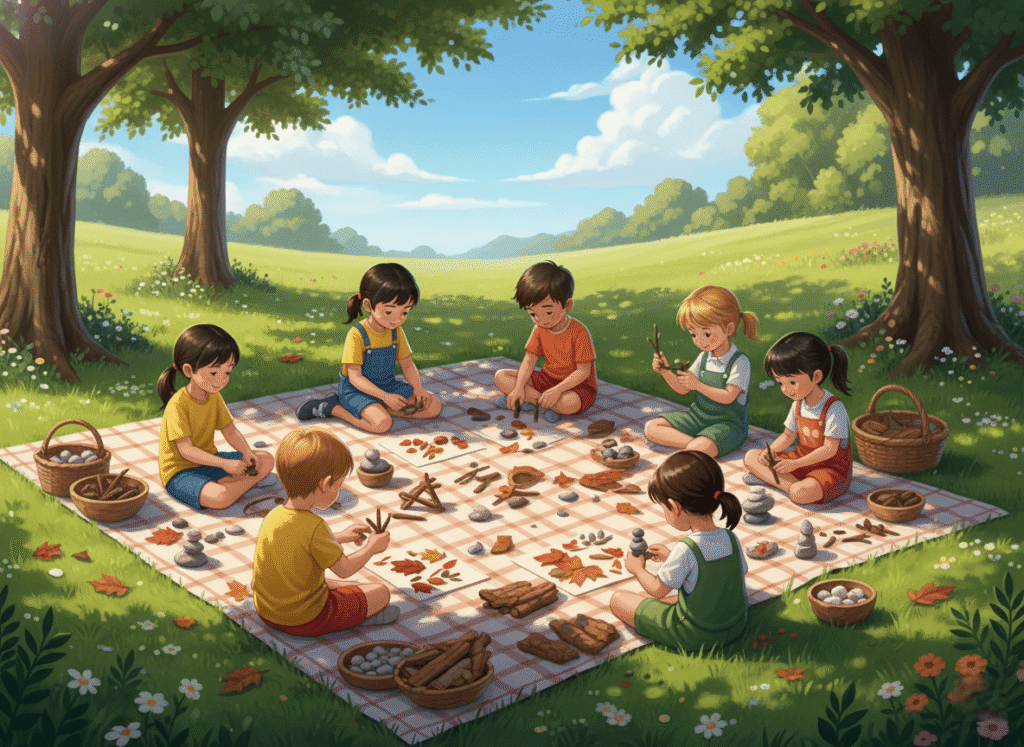
- Nature crafts using leaves, pebbles, and bark.
- Combining craft steps with short movement breaks.
This prevents fidgeting and allows energy release while keeping creativity alive.
Choosing the Right Materials: Safety, Variety & Inspiration
Material choice can make or break a child’s interest in crafts. A diverse, safe, and tactile materials set keeps boredom away and ensures inclusiveness for all skill levels.
Safe and Engaging Craft Materials
Here’s a quick reference for selecting kid-friendly supplies:
| Material Type | Benefits | Notes |
|---|---|---|
| Paper & Card | Affordable, easy to cut | Use thicker cardstock for structure |
| EVA Foam | Soft, colorful, versatile | Ideal for stickers and masks |
| Yarn & Felt | Textured & sensory-rich | Encourages fine motor coordination |
| Recycled Materials | Eco-friendly, imaginative | Encourage problem-solving |
| Clay / Play Dough | Hands-on sensory exploration | Great for tactile learners |
Open-Ended Over Predefined Materials
Children who dislike crafts often fear doing things “wrong.” Open-ended materials—like scrap paper, buttons, or recyclables—invite experimentation without a “right answer.”
Encourage phrases like:
- “Let’s see what this can become.”
- “What do you think we could make from this bottle cap?”
This mindset fosters intrinsic motivation instead of performance pressure.
Digital-Friendly Options
For tech-curious children, allow digital design tools alongside physical crafts:
- Use free drawing apps or virtual jewelry-design platforms.
- Print their digital art to turn into physical charms or stickers.
Integrating familiar technology bridges their digital interests with real-world creativity.
Creating a Supportive, Positive Crafting Environment
How we approach creativity matters as much as project selection. Setting the right emotional tone can be the deciding factor in whether a child participates wholeheartedly—or not at all.
Attitude Starts with the Adult
Children absorb the energy around them. If you say, “I’m not good at crafts,” they may internalize that creativity is innate rather than learned. Be open, playful, and willing to make mistakes yourself.
Focus on Process, Not Product
A process-oriented approach emphasizes exploration and emotional expression over perfect outcomes. For teachers and parents:
- Praise curiosity and problem-solving.
- Avoid over-correcting or “fixing” their project.
- Display all work equally—no “best” or “winner” designations.
Normalize Mistakes as Learning
Frame errors as exciting discoveries:
“Oh, the paint splattered—what else could we do with this effect?”
This reframes failure as experimentation and teaches resilience through art.
Make Crafting Accessible and Unscripted
Keep a “creativity corner” stocked with basic materials. When crafts are spontaneous instead of planned, participation skyrockets. Encourage children to start small creative acts even between other play sessions.
Integrating Crafts into Broader Learning & Everyday Life
Creativity doesn’t need its own time slot—it can blend seamlessly into play, science, math, or storytelling sessions.
Educational Integration Ideas
- Science: Build simple structures or model volcanoes.
- Language Arts: Illustrate scenes from a story.
- Math: Use geometric shapes to make mosaic animals.
By connecting crafting to academic subjects, reluctant crafters begin to see relevance and value in the process.
Encourage Reflection and Sharing
After each craft activity, spend a few minutes discussing:
- “What was your favorite part?”
- “What was tricky but worth it?”
Reflection builds self-awareness and helps children articulate their creative thought process.
Cultivate Long-Term Creative Confidence
Even if children never become passionate about arts, exposure to crafting strengthens:
- Patience and concentration
- Self-reliance and problem-solving
- Resourcefulness and adaptability
The goal isn’t to create “craft lovers,” but flexible, confident thinkers who see creativity as part of life.
Practical Tips: When Children Still Resist
Sometimes, even with renewed strategies, a small group of children may still resist participation.
Know When to Step Back
Forcing creativity is counterproductive. Offer casual invitations instead of directives—“Would you like to join?” instead of “You need to craft now.” Leave room for self-initiation.
Offer Parallel Creative Outlets
If they resist paper or glue, try:
- LEGO modeling
- STEM kits or structure challenges
- Music or drama-based art
- Sensory bins for texture play
Every child has an entry point into creativity somewhere—it may just not be traditional crafts.
The Long Game
Often, children who initially resist may return to creative pursuits later on—once the pressure is gone. Keep modeling curiosity and keep materials visible and accessible.
Conclusion: Turning Reluctance Into Creative Discovery
Inspiring children who don’t like crafts starts with empathy, flexibility, and connection. Rather than focusing on the craft itself, focus on the child’s personality, motivations, and emotional needs. Offer choice, celebrate small successes, and ensure that creative time feels like play, not performance.
Key Takeaways:
- Begin with short, interest-aligned projects.
- Provide open-ended, safe materials that invite exploration.
- Encourage cooperation, storytelling, and process-oriented outcomes.
- Maintain a positive, pressure-free atmosphere.
- Integrate creativity into daily routines and other subjects.
Whether at home or in the classroom, you have the power to show every child that creativity isn’t about perfection—it’s about curiosity, discovery, and joy. Once they experience that freedom firsthand, even the most reluctant crafter can become an inspired creator.
