
As a seasoned fashion jewelry manufacturer, I’ve seen firsthand how materials can transform the identity of a jewelry collection. Among the innovations gaining attention in B2B jewelry sourcing today are silicone beads—a versatile, lightweight, and colorful design component that’s changing how brands approach custom jewelry creation. For global wholesale jewelry buyers, private label brands, and OEM/ODM suppliers, understanding how to integrate silicone into your lineup can open up profitable niches that combine comfort, safety, and distinctive aesthetics.
Silicone beads can be mixed with metal, wood, acrylic, or resin to create visually unique jewelry pieces that are lightweight, durable, and safe for all age groups. Using BPA-free, food-grade silicone ensures quality and compliance, while custom molds and multimaterial combinations allow brand owners to design products that stand out in competitive B2B jewelry markets.
In this article, I’ll walk you through practical strategies for designing silicone bead jewelry, the right ways to mix silicone with stainless steel or wood, and how to ensure your production meets durability and safety standards. Whether you’re developing an original collection for your brand or working with a custom jewelry supplier in China, understanding the manufacturing and design layers behind silicone-based accessories will help you scale more confidently.
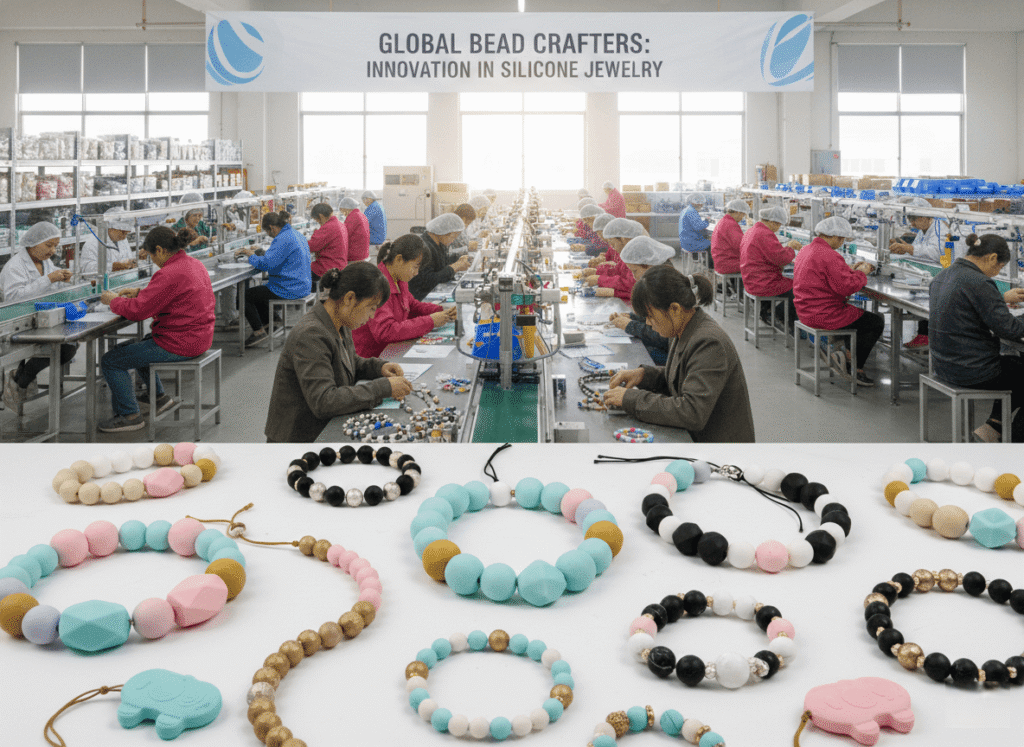
How Can I Mix Silicone with Other Materials Like Stainless Steel or Wood for Jewelry?
When I started experimenting with silicone jewelry production, one of the key breakthroughs came from realizing how powerful mixed-material designs could be. Silicone is flexible, colorful, and soft to the touch, but adding metal or wooden accents creates a visual and tactile contrast that enhances perceived value.
Combining Silicone with Stainless Steel: A Modern Fusion
Stainless steel jewelry is known for its sleek appearance, corrosion resistance, and long-lasting finish. When paired with silicone beads, it delivers a modern, functional look that appeals to both minimalist and activewear audiences.
Design recommendations:
- Use stainless steel spacer beads between silicone beads to add shine and spacing consistency.
- Incorporate silicone rings or disks around stainless steel chains for a pop of color and cushioning.
- Layer silicone beads on 316L stainless steel wire to achieve durability with flexible movement.
| Material | Benefits | Best Use |
|---|---|---|
| 316L Stainless Steel | Tarnish-free, hypoallergenic, shiny finish | Connectors, clasps, pendants |
| Food-Grade Silicone | Lightweight, vibrant, non-toxic | Main beads, accent rings |
| Alloy (zinc-based) | Budget-friendly, wide variety | Costume jewelry, fast trends |
| Wood (maple, beech) | Eco look, natural texture | Boho themes, eco collections |
Mixing Silicone with Wood: Boho Meets Modern
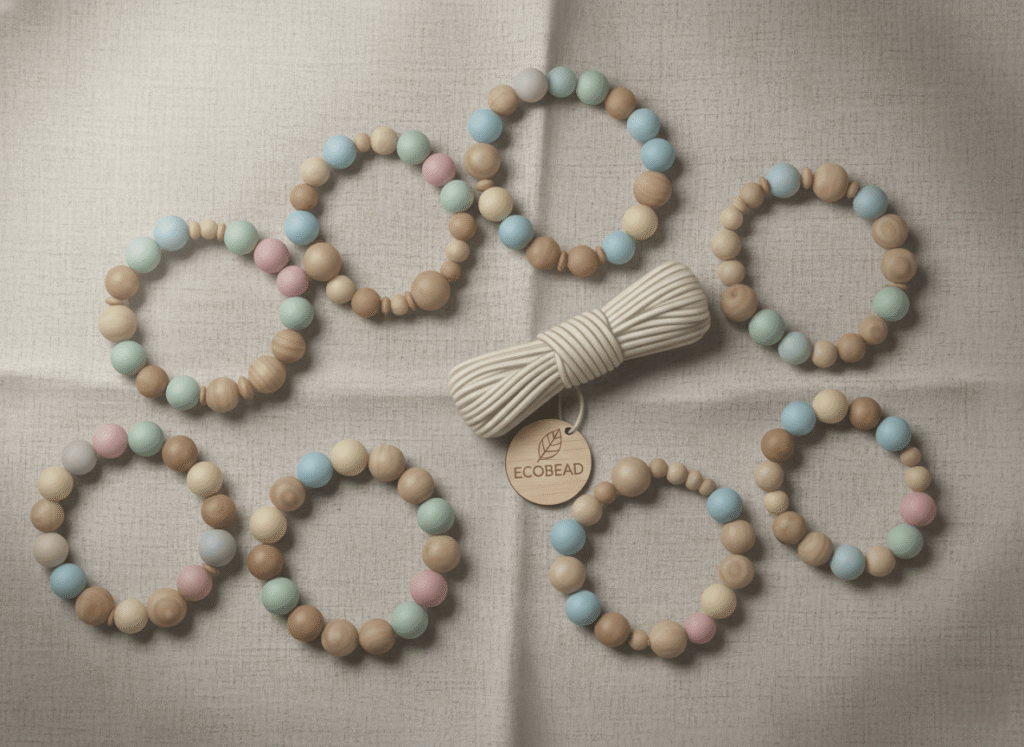
Wood brings warmth and earthiness, offsetting silicone’s clean, contemporary feel. In B2B design terms, combining these two materials allows you to cater to markets that favor eco-friendly jewelry or biodegradable alternatives.
Style combinations:
- Use sanded wooden beads in alternating sequences with matte silicone for a minimalist boho design.
- Add wooden pendants engraved with your brand logo alongside silicone beads.
- Pair pastel silicone beads with dark wood for contrast or mix glossy with matte silicone for added depth.
Pro Tip: Ask your OEM jewelry manufacturer about reinforcing holes in wooden beads with stainless grommets if you plan high-volume production—this prevents cracking during stringing or wear.
What Should I Consider When Designing Silicone Bead Earrings or Bracelets for My Brand?
When developing silicone bead accessories, design isn’t just about appearance—it’s a balance of aesthetic consistency, ergonomic comfort, and production feasibility. Over the years, I’ve refined a few key parameters every brand owner should plan around during prototype development.
Define Your Collection Theme and Buyer Persona
Each jewelry piece should connect with your intended audience. Here’s how to align design elements:
- Boho: Blend silicone and wood beads in muted neutrals, paired with leather cords.
- Minimalist: Stick to 2–3 colors, geometric bead shapes (hexagonal, disc, or pebble).
- Playful/Kawaii: Use pastel silicone pieces with stainless clips or alphabet cubes.
- Statement: Mix oversized silicone beads, tassels, and metallic linking elements.
Color and Finish Coordination
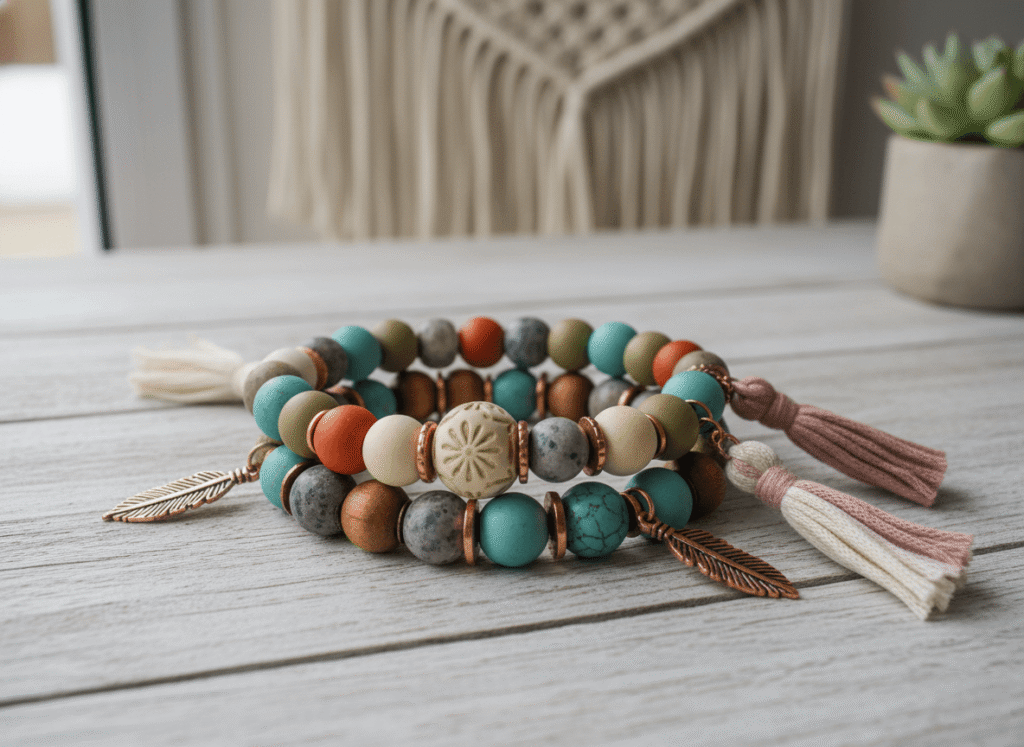
Today’s silicone material technology allows for matte, glossy, and satin finishes. Mixing two finishing types in a single piece adds an instant luxury contrast.
- Matte beads → Soft, subtle aesthetic (premium appeal)
- Glossy beads → Reflective and eye-catching (fashion retail)
- Dual-tone silicone molds → Custom signature branding opportunity
Silicone color-matching can be achieved using Pantone codes. As a supplier, I always advise clients to request color-swatch samples before approving mass production to ensure uniform batch output.
| Design Factor | Recommendation | Manufacturing Advantage |
|---|---|---|
| Color Palette | 2–4 colors | Streamlined production, visual cohesion |
| Bead Size Mix | Combine 8mm, 10mm, 14mm | Dynamic texture, layered design |
| Surface Finish | Matte + glossy mix | Adds depth, reflects light differently |
| Metal Pairing | Stainless steel, brass charm | Strengthens brand positioning |
Stringing, Assembly, and Branding Touchpoints
- Choose elastic or coated nylon cords depending on desired flexibility.
- Integrate engraved metal tags or silicone charms to showcase your logo.
- For earrings: use lightweight stainless pins and hooks to maintain comfort.
- Always review assembly torque (knot strength) and component bonding for bulk shipments.
As a wholesale jewelry supplier, we set internal QC criteria for cord tension (>1.5kg pull) and colorfastness to ensure products remain consistent through handling and shipping.
How Do I Ensure My Silicone Jewelry Meets Durability and Skin-Safety Requirements?
Durability and skin safety are non-negotiable aspects of professional jewelry production. With silicone, achieving safety compliance means verifying material certifications and controlling process parameters meticulously.
Certified, Non-Toxic Silicone
Use food-grade, BPA-free, and phthalate-free silicone. Confirm these certifications with your raw-material supplier before purchase. Look for:
- FDA-compliant silicone (U.S. Food and Drug Administration)
- LFGB-certified silicone (European food safety standard)
- Certificates of Analysis verifying shore hardness and tensile strength levels
Durability Testing and Quality Control
Each batch of silicone beads must undergo basic QC checks before assembly. Below is a simplified inspection framework we use for B2B clients:
| Inspection Item | Testing Method | Acceptable Result |
|---|---|---|
| Stretch Test | Pull cord up to 1.5kg | No breakage |
| Colorfast Test | Soak in warm water 24h | No discoloration |
| Heat Resistance | 200°C oven exposure 15 min | No deformation |
| Surface Check | Visual inspection | No burrs, unevenness |
| Odor Test | Smell test after curing | Odorless |
Maintaining traceability for silicone batches helps if you’re audited by retail clients or cross-border compliance entities.
Metal and Component Compatibility
If you combine silicone with stainless steel or brass, ensure nickel-free plating and smooth component integration. The metallic edges should not cut into the silicone surface—this can happen if mold flash is uneven or if the connecting pin diameter isn’t properly scaled.
Tip: For mass production, implement random sampling at 3–5% per batch to ensure adhesion quality and assembly accuracy between silicone and metal parts.
How Can I Collaborate with an Expert Manufacturer for Custom Jewelry Designs?
Whether you operate a boutique jewelry label or a wholesale trading company, partnering with an OEM/ODM silicone jewelry manufacturer can save you thousands in R&D and sampling costs.
From Concept to Production – The Collaboration Process
- Design Brief Creation – Share sketches, mood boards, or reference samples. Identify bead shapes, color palettes, and intended applications (bracelets, necklaces, earrings).
- Material Selection – Discuss silicone grade (matte, glossy, dual-tone), metal hierarchy (stainless, brass), and any special features (logo engraving, letter beads).
- Prototype & Mold Development – Custom molds can be machined for unique bead profiles (minimum 500–1000 pieces).
- Sample Evaluation – Review tactile feel, finish, and assembly fit before approving mold for mass production.
- Bulk Manufacturing & QC Audit – Use AQL-based random inspection (often 2.5 standard) to confirm compliance.
OEM vs. ODM Manufacturing Options
| Model | Description | Best For | MOQ Consideration |
|---|---|---|---|
| OEM Production | Manufacturer makes your proprietary designs per your specs | Brands with established design IP | Higher MOQ (2,000–5,000 pcs) |
| ODM Collection | Existing manufacturer designs catalogs you can customize | Startups or new brands | Lower MOQ (500–1,000 pcs) |
| Private Label | White-label pieces customized with your logo/tag | Retail distributors | Flexible MOQ, quick lead time |
As a supplier, I always encourage B2B buyers to start small with ODM pieces for market testing, then progress to OEM customization once data proves demand.
Supply Chain Cost Control
For international wholesale distribution, silicone jewelry is logistics-friendly because of its low density and non-fragile nature. To optimize landed cost:
- Ship via consolidated sea freight for large bulk orders.
- Negotiate unit-cost scaling—the difference between 5,000 and 10,000 units may reduce cost per piece by up to 30%.
- Monitor plating yield rates and silicone scrap ratios during production; both impact waste and price.
- Maintain a transparent production timeline—design (7–10 days), mold (15–20 days), final production (25–35 days).
Additional Insights: Global Market and Trend Behavior
The Rising Demand for Silicone Jewelry
Global trends indicate a steady increase in consumer appreciation for lightweight, durable, and colorful jewelry. Silicone-based fashion accessories are expanding beyond baby teething products into adult fashion, fitness, and personalized gift markets.
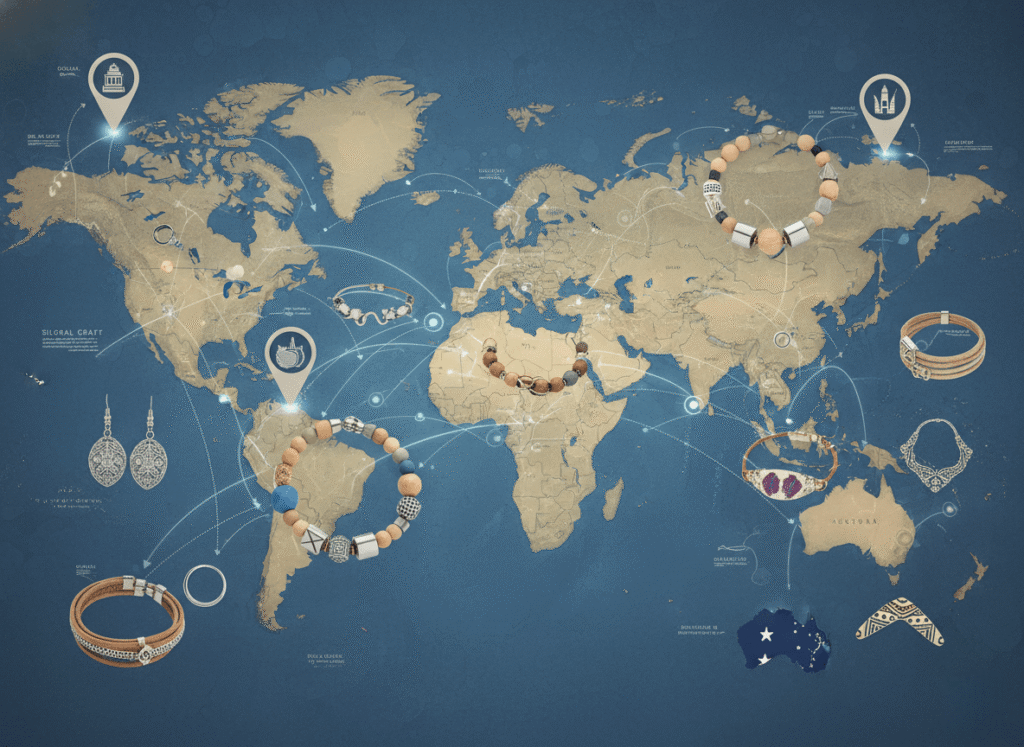
Markets to Watch:
- U.S. & Canada – customization-driven consumers
- Europe – safety-regulated eco products
- Australia & New Zealand – emerging popularity in lifestyle boutiques
- Southeast Asia – rising online retail demand through fashion marketplaces
Sustainability and Conscious Sourcing
Silicone is inherently more durable than plastic and offers longer lifecycle usage. Pairing silicone with eco materials such as wood or recycled metal supports ESG compatibility, a selling point increasingly demanded by global retail chains and ESG-conscious buyers.
Conclusion
Creating unique silicone bead jewelry isn’t just a creative endeavor—it’s a strategic sourcing opportunity. By combining silicone with stainless steel or wood, focusing on certified materials, and implementing consistent QA processes, you can deliver products that look beautiful, perform reliably, and strengthen your brand integrity.
When you collaborate with a trusted custom jewelry supplier experienced in OEM/ODM silicone manufacturing, you gain access to design engineering, material sourcing, and market insights that accelerate product launches.
If you’re planning to expand your fashion jewelry wholesale line or want to test new silicone-based styles, contact your manufacturer for sample development, request an updated color catalogue, or explore joint R&D projects for your next limited-edition collection.
Let’s design the next generation of soft-touch, safe, and trend-forward jewelry—together.
