
Every parent or educator knows that today’s world moves fast — perhaps too fast for developing minds. Children, used to instant entertainment and same-day delivery, often struggle with waiting, focusing, and completing long-term tasks. Yet patience is one of the foundational emotional skills they need to thrive both at school and in life. So how do we help them develop it organically rather than by lecture or punishment?
Crafting, especially hands-on activities like DIY jewelry making, provides one of the most natural and effective environments for children to practice patience. Through step-by-step processes, unexpected mistakes, and waiting periods built into the creative flow, kids learn to slow down, focus, and persist without even realizing they are learning self-control.
Whether you’re a parent guiding a preschooler or a teacher running an art class, crafting transforms patience from an abstract virtue into a tangible experience. Let’s explore how to do this intentionally, how different crafts build focus in unique ways, and how to support children when the going gets tough.
1. How DIY Jewelry Kits Teach Patience
Sequential Steps That Can’t Be Rushed
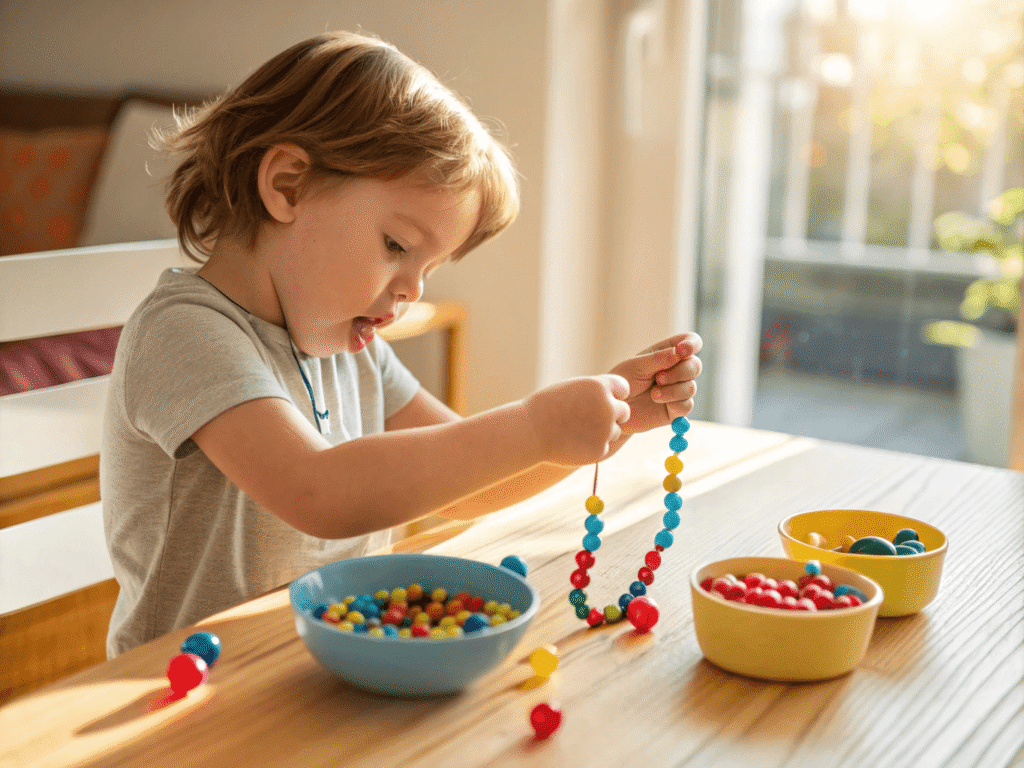
Jewelry making requires planning and sequence. Kids must select beads, organize patterns, thread carefully, and finish securely. Each stage naturally slows their pace — if they move too fast, they’ll drop beads or tangle string, and must patiently start again. The process itself enforces thoughtful focus.
Delayed Gratification Through Assembly
Unlike digital games where results appear instantly, a necklace or bracelet reveals its beauty gradually. The anticipation builds as each bead adds to the design, showing children the emotional payoff of waiting. This nurtures delayed gratification, an essential life skill linked to better academic performance and emotional control.
| Step | Skill Developed | Patience Lesson |
|---|---|---|
| Sorting beads | Organization | Slowing down improves outcome |
| Planning design | Visualization | Thinking before acting pays off |
| Stringing beads | Fine motor control | Calm focus prevents mistakes |
| Finishing/tying | Attention to detail | The process matters as much as the end |
2. Choosing Craft Activities That Build Focus and Persistence
Matching Project Complexity to Age
When selecting patience-building activities, balance is critical — crafts should challenge, not discourage. Younger children benefit from short projects with visible progress (like simple bracelets), while older kids can try resin jewelry, model building, or embroidery, which demand more extended attention spans.
| Age Group | Ideal Activities | Patience Skill Highlight |
|---|---|---|
| 4–6 years | Clay beads, finger painting, paper jewelry | Learning to wait and follow instructions |
| 7–10 years | Beading kits, candle making, basic weaving | Managing frustration and sustaining focus |
| 11–14 years | Embroidery, resin art, detailed model assembly | Planning ahead and emotional regulation |
Integrating Mindful Crafting
Encourage intentional slowness. Have children describe textures, colors, or patterns as they work. Adding language to sensory experience strengthens mindfulness — a proven way to cultivate patience and awareness.
3. Guiding Kids Through Frustration During Crafting
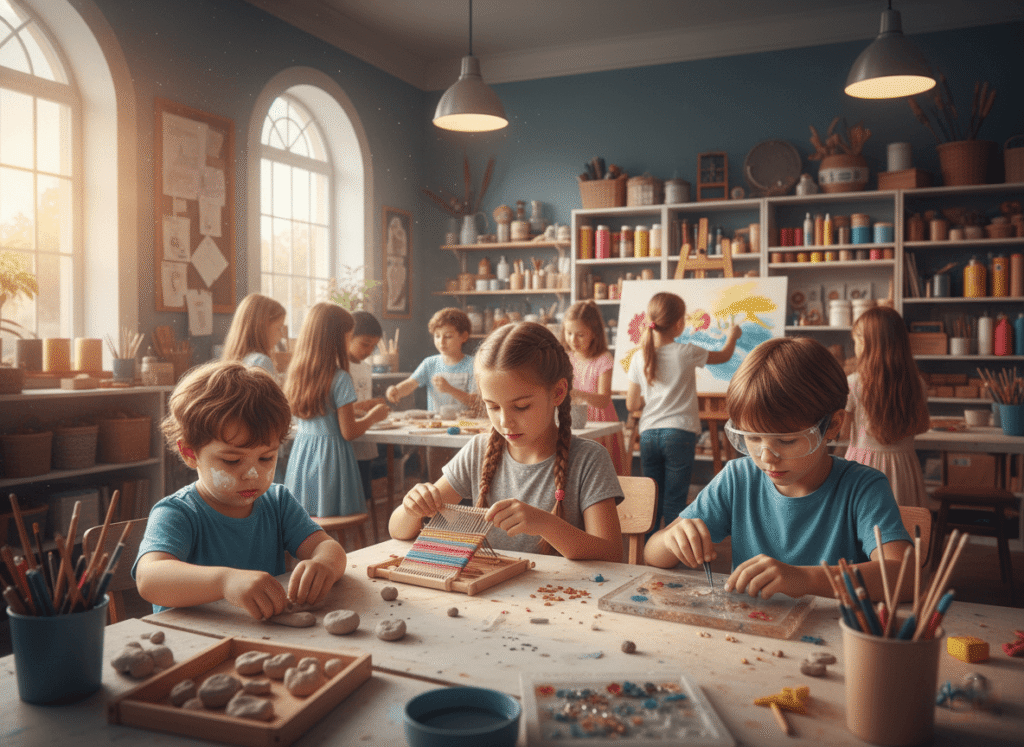
Even the most engaging crafts trigger moments of irritation — beads fall, knots tangle, or glue smears. These moments are golden opportunities to teach emotional regulation.
Step-by-Step Support Strategy
- Pause Rather Than Fix:
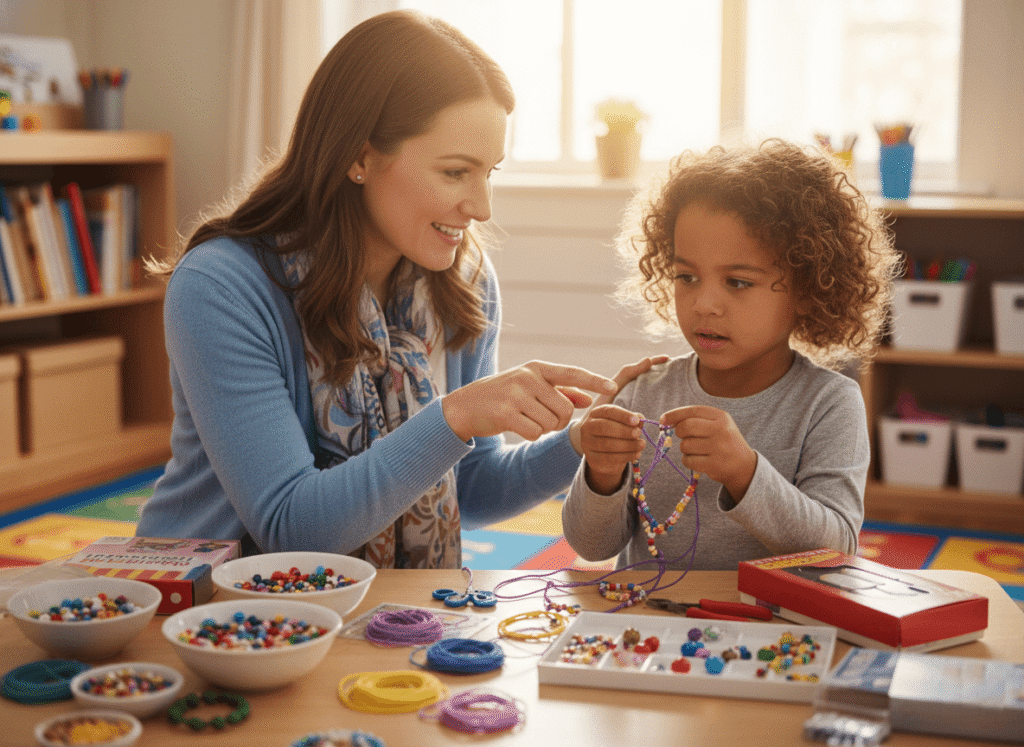
Instead of rushing in to solve the problem, pause and let the child breathe. Ask: “What do you think might help?” This shift teaches self-problem-solving. - Model Calmness:
Children mirror adult behavior. Staying calm when messes happen shows them frustration is manageable. - Highlight Progress, Not Perfection:
Emphasize effort: “You stayed focused even when that knot tangled.” Reinforcing process over results nurtures persistence. - Transform Mistakes Into Experiments:
A broken bracelet can be redesigned — perhaps shorter, perhaps with a new pattern. Kids learn adaptability, a cornerstone of resilience. - Practice Reflection:
After finishing, discuss what they learned about patience or problem-solving. Reflection converts experience into skill.
4. Measuring Patience and Creativity Growth Through Crafting
Teachers and parents often want to know — is crafting really making a difference? The answer is yes, and progress can be observed through specific behavioral indicators.
| Indicator | Measurement Approach | What It Shows |
|---|---|---|
| Time on Task | Track duration child focuses before distraction | Increased attention span |
| Response to Errors | Note how quickly frustration arises and resolves | Improved emotional control |
| Completion Rate | Count fully finished projects | Growth in persistence |
| Self-initiation | Observe how often child starts similar projects independently | Internalized motivation |
Creative Growth as a Secondary Measure
As patience strengthens, creativity blossoms. Children begin experimenting with new materials or reimagining designs independently — a clear sign that patience has become a foundation for inventive confidence.
Long-Term Signs of Progress
- Reduced complaints about “boredom” during waiting periods
- More deliberate movements and design choices
- Pride in completed work, regardless of imperfection
These shifts reveal that crafting develops not only patience but an appreciation of process — a mindset valuable across all areas of life.
Conclusion
Crafting — from DIY jewelry kits to candle pouring — is more than a fun pastime. It’s a quiet, powerful training ground for patience, persistence, and emotional maturity. Through tangible steps, natural waiting periods, and gentle challenges, children learn that true reward lies in steady effort and growth over time.
For parents and educators seeking to nurture calm, mindful, and resilient learners, incorporating regular crafting sessions into classrooms or home routines can be transformational. Start small, stay consistent, and celebrate the process — patience, after all, grows one bead at a time.
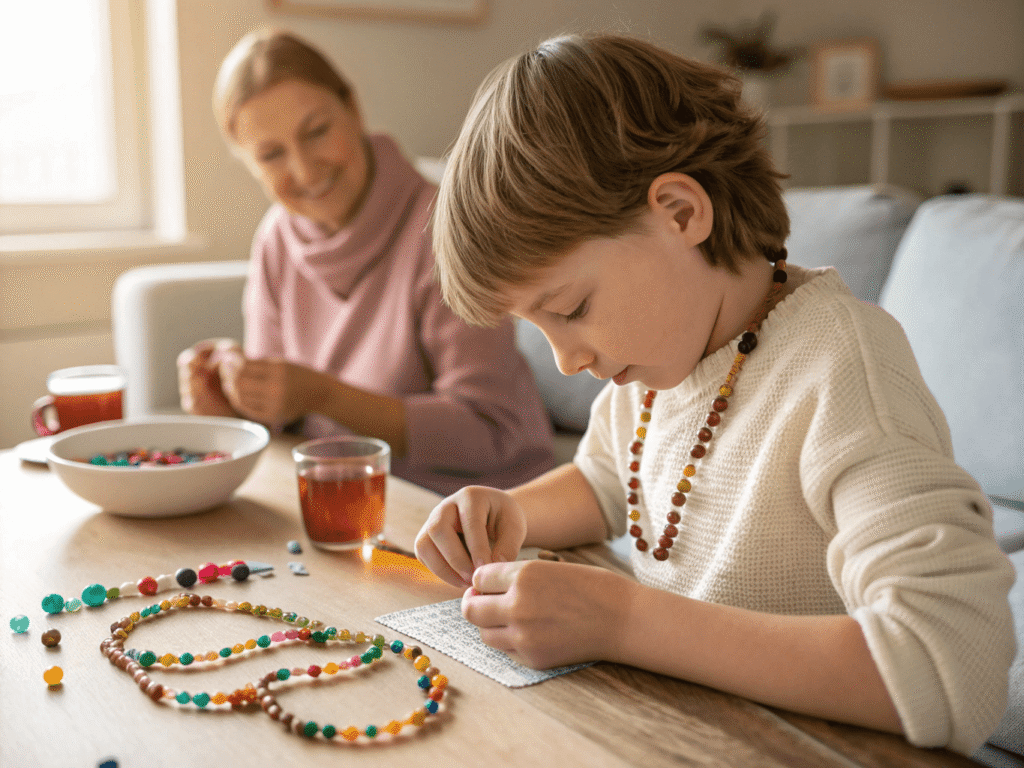
If you’re an educator or brand offering creative kits, framing them as tools for developing life skills—not just crafts—can greatly resonate with parents and buyers. Highlight patience, focus, and mindfulness benefits in your marketing to strengthen both emotional and commercial impact.
