
Sustainable fashion is no longer a niche preference—it’s a guiding principle for the modern accessories industry. As a jewelry manufacturer and private label supplier, I’ve seen a growing demand from wholesalers, brand owners, and sourcing managers who want to balance creativity with ethical responsibility. Jewelry kits, once a DIY novelty, have evolved into a strategic product solution that supports these dual objectives. For suppliers and distributors, tapping into the sustainable jewelry kit market opens new opportunities to serve eco-conscious consumers while reducing material waste and improving production transparency across the supply chain.
Jewelry kits attract sustainable fashion lovers by merging creativity and ethical sourcing. Made from recycled metals, ethically sourced beads, and biodegradable packaging, these kits empower consumers to create personalized jewelry pieces that align with slow fashion values. For B2B buyers, the segment offers cost-efficient sourcing alternatives, lower MOQ flexibility, and growing appeal among Gen Z and millennial buyers demanding green productions and traceable materials.
Sustainability today is not just about eco-friendly materials—it’s about holistic business transformation. From the choice of recycled brass or stainless steel to adopting digital instructions instead of printed manuals, every detail counts toward responsible sourcing. As suppliers, we bridge ethical material selection with scalability, ensuring that fashion jewelry wholesale buyers receive products that comply with sustainability certifications while maintaining profitability and creative freedom. In the following sections, I’ll share how to evaluate, source, and customize sustainable jewelry kits to align with both consumer ethics and corporate sustainability strategies.
Choosing Jewelry Kits Made from Eco-Friendly or Recycled Materials
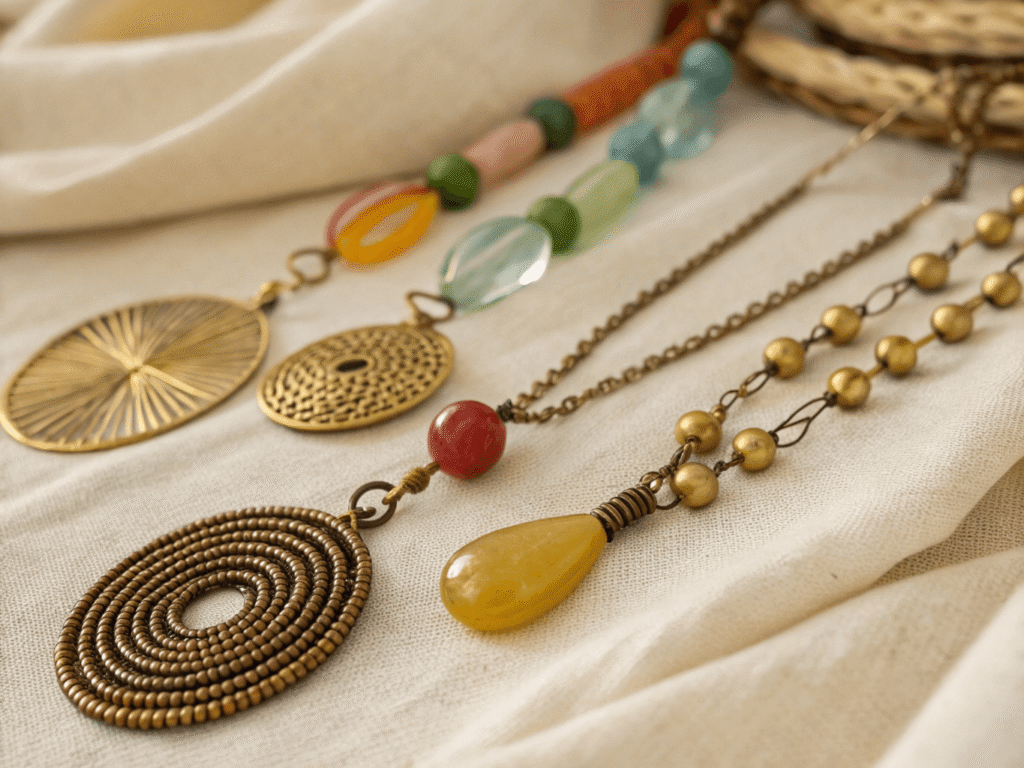
Eco-friendly materials define the foundation of sustainable jewelry kits. As a wholesale jewelry manufacturer in China, I’ve helped brands shift toward recycled metals, ethical stones, and reclaimed beads—all without compromising design versatility.
Comparing Sustainable Material Options
When sourcing materials, understanding metal types and their sustainability profiles is vital. Below is a quick comparison that supports bulk procurement planning:
| Material Type | Sustainability Score | Description | Ideal Use in Jewelry Kits |
|---|---|---|---|
| Recycled Brass | ★★★★☆ | Made from industrial scrap; excellent recyclability and cost control | Beads, pendants, adjustable rings |
| Recycled Stainless Steel | ★★★★★ | Durable, corrosion-resistant, hypoallergenic; excellent for long-term wear | Chains, bracelets, lockets |
| Upcycled Alloy | ★★★☆☆ | Moderate eco impact; offers creative texture and finish | Vintage-style designs |
| Tagua Nut / Natural Resin | ★★★★☆ | Plant-based, biodegradable, renewable | Statement earrings, eco pendants |
Material Insights for B2B Buyers
- Recycled stainless steel jewelry has become the leading sustainable alternative to traditional silver. It supports lower carbon footprints and retains a premium aesthetic appealing to Western markets.
- Recycled brass components allow brands to mix affordability with eco value, enabling product segmentation across entry to mid-range jewelry lines.
- Plant-based materials such as tagua or natural resins offer differentiation. They attract eco-luxury boutique buyers focusing on unique, natural aesthetics.
Packaging and Instructional Sustainability
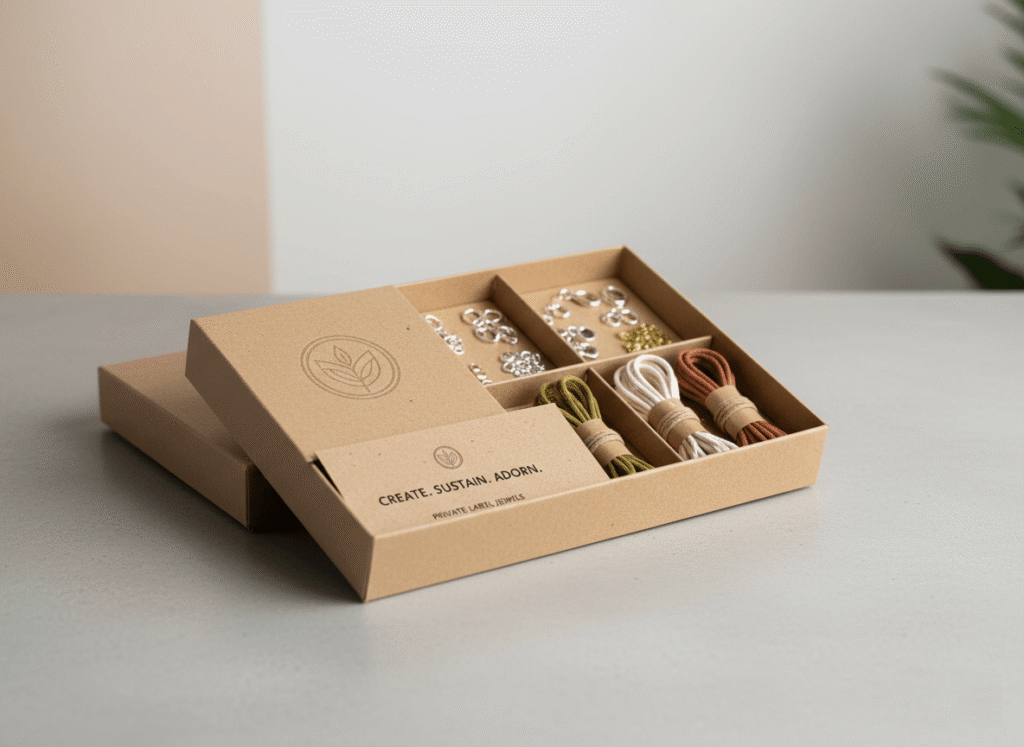
Eco kits often use recycled kraft boxes, biodegradable polybags, and digital instructions. This holistic approach minimizes waste and offers a narrative that resonates with millennial and Gen Z customers who prefer traceable, plastic-free packaging.
What to Look for in a Supplier That Supports Sustainable Jewelry Production
Choosing the right supplier goes beyond sourcing materials—it’s about verifying sustainability credentials and operational ethics. As a custom jewelry supplier, my clients often ask how to evaluate production partners for eco-friendly and social responsibility compliance.
Key Supplier Evaluation Criteria
| Evaluation Factor | Recommended Standard | Why It Matters |
|---|---|---|
| Material Traceability | Use certified recycled or fair-trade sources | Ensures transparency in origin |
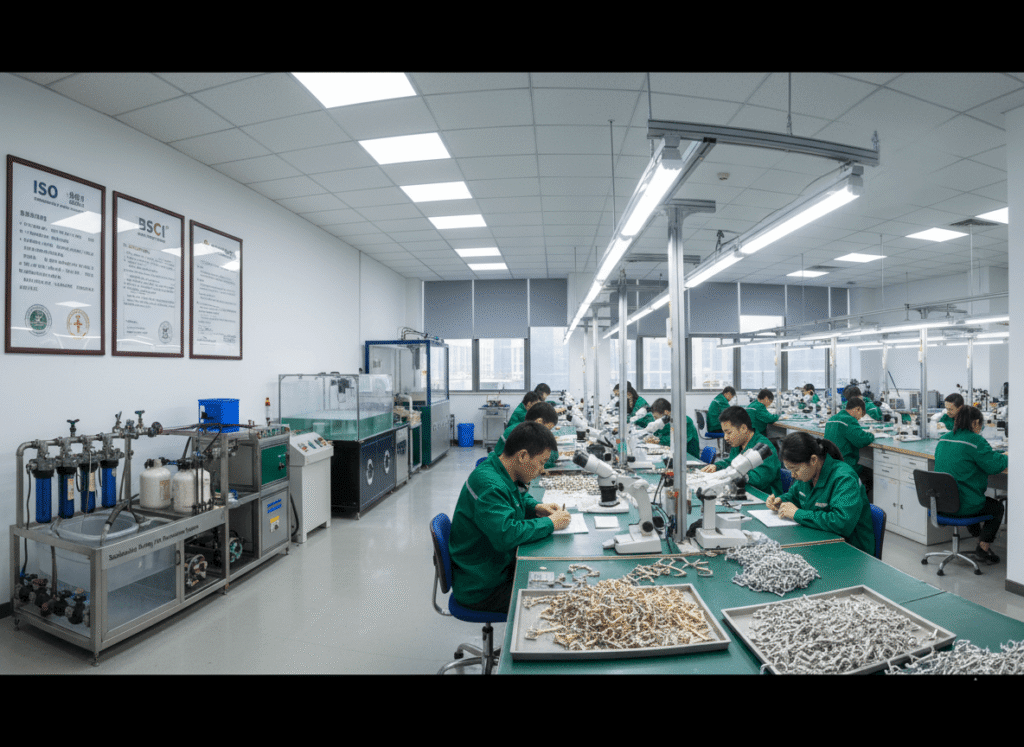
| Environmental Certificates | ISO 14001, RCS (Recycled Claim Standard) | Confirms sustainable facility management |
| Social Responsibility | Sedex, BSCI, or SA8000 audit compliance | Prevents unethical labor practices |
| Plating Quality | PVD or IP plating with eco-friendly coatings | Reduces hazardous waste from electroplating |
| MOQ Flexibility | Customizable bulk minimums | Supports sustainable inventory management for small brands |
OEM/ODM Jewelry Production and Customization
For B2B buyers pursuing OEM or ODM jewelry production, sustainability begins at the design desk. Our design teams incorporate recycled components, water-based adhesives, and non-toxic plating. By maintaining in-house plating lines, we ensure chemical waste is properly treated—meeting strict local and international environmental standards.
QC Standards and Bulk Inspection Protocols
Quality assurance becomes even more crucial with eco materials. Sustainable jewelry must maintain durability while reflecting craftsmanship. Here’s my QC checklist:
- Inspect recycled metal purity consistency (minimum 92% reclaimed content for stainless steel).
- Ensure plating adhesion through salt spray tests exceeding 48 hours.
- Validate gemstone authenticity and ethical origin documentation.
- Conduct packaging integrity checks for eco certification compliance.
Supplier Transparency Tools
Modern suppliers use blockchain-based systems or ERP data tracking to display each material’s lifecycle. If you’re sourcing globally, demand digital certificates of origin and plating process reports to verify sustainable compliance.
How DIY Jewelry Kits Help Reduce Waste and Promote Ethical Sourcing
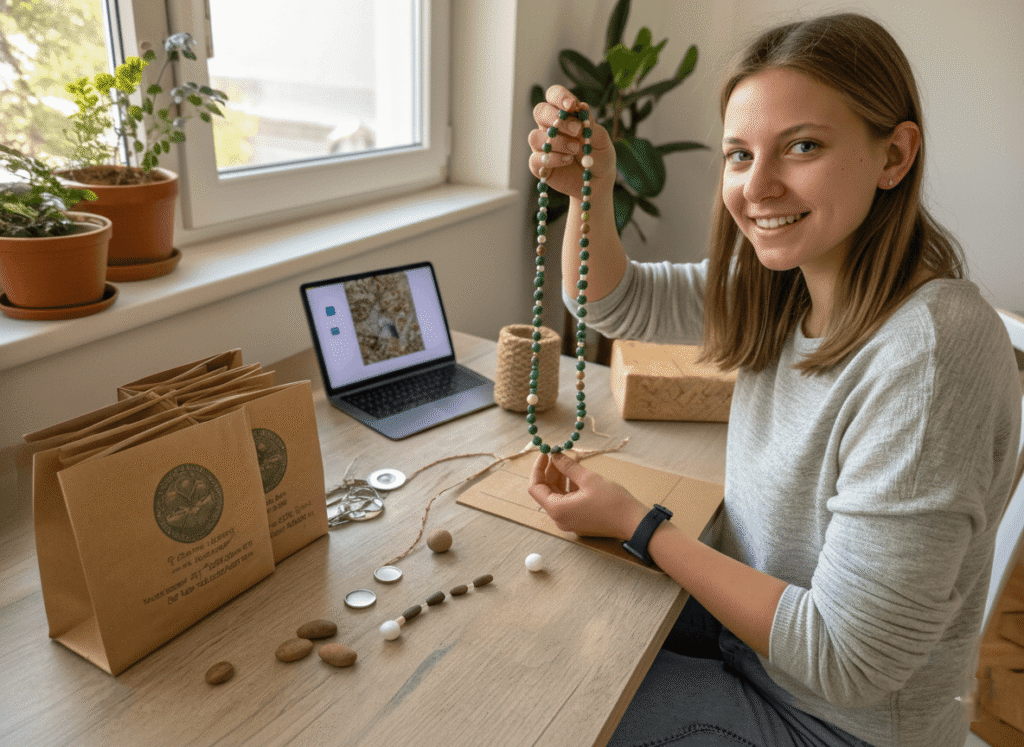
As sustainability reshapes purchasing decisions, DIY jewelry kits provide a practical model for reducing waste and encouraging consumer participation. From a manufacturer’s perspective, these kits bridge creative freedom with environmental responsibility—a win for wholesalers and eco-conscious end users.
Waste Reduction Strategies
- Controlled Production Volume: Unlike mass runs, kits are produced on-demand, minimizing inventory burnout and reducing resource waste.
- Reuse and Upcycling: Many kits repurpose unsold beads or excess findings, extending material lifecycle.
- Digital Innovation: Online tutorials replace printed guides, saving paper and production costs.
- Modular Components: Users can swap parts instead of discarding full pieces, reinforcing circular design principles.
Ethical Sourcing Through Consumer Empowerment
DIY kits democratize jewelry creation. Ethical awareness extends beyond manufacturing—consumers directly engage with the supply chain:
- They choose ethically sourced beads, recycled wires, and fair-trade clasps.
- They understand production origins through transparent labeling.
- They contribute to slow fashion models by creating fewer, more personal pieces.
Sustainability Reporting for Business Buyers
For jewelry wholesalers or brand managers, integrating DIY kit lines supports ESG (Environmental, Social, Governance) goals:
- Reduced carbon footprint per unit sold.
- Enhanced lifecycle traceability.
- Stronger brand alignment with eco-minded demographics.
Customizing Jewelry Kits to Align with Brand Sustainability Values
Customization transforms jewelry kits from simple accessories into compelling brand stories. As a seasoned custom jewelry supplier, I often help boutique brands embed sustainability narratives into their own curated kits—turning ethical choices into high-impact marketing assets.
Private Label and OEM Opportunities
You can request private label jewelry kits featuring:
- Branded, recyclable packaging.
- Eco-certified materials lists.
- Instruction cards emphasizing ethical sourcing.
- Optional refill or component replacement program for circular design.
This level of customization attracts retailers positioning themselves as eco-lifestyle brands or artisan-conscious labels.
Supply Chain Strategy: MOQ and Cost Control
A common misconception is that sustainable materials automatically raise unit costs. In reality, optimized sourcing and MOQ planning balance sustainability with profitability.
| Parameter | Conventional Kit | Sustainable Kit (Recycled/Upcycled) | Notes |
|---|---|---|---|
| Material Cost/unit | $0.80–$1.10 | $1.20–$1.40 | Slight increase offset by higher retail value |
| MOQ | 1,000 sets | 500 sets | Sustainable kits enable smaller MOQ flexibility |
| Lead Time | 25 days | 30–35 days | Additional time for certified material verification |
| Return Rate | 3% | 1% | Consumers value ethical origin; higher loyalty |
Communication Strategy for B2B Buyers
When offering sustainable kits to retailers:
- Emphasize eco storytelling—include the journey of recycled materials.
- Highlight ethical manufacturing certifications in catalog listings.
- Provide comprehensive digital spec sheets detailing plating type, recyclability, and packaging composition.
Trend Outlook: Sustainable Custom Jewelry Demand
Global data reflects accelerating sustainable jewelry growth:
- The sustainable jewelry market will exceed USD 97 billion by 2032, with 11% CAGR growth.
- Gen Z drives 70% of demand for brands committed to ethical manufacturing.
- Private-label kits yield up to 35% higher conversion rates online due to their narrative appeal.
Additional Insights: Comparing Plating Methods for Sustainable Kits
Plating technology plays a crucial role in sustainability performance and jewelry longevity.
| Plating Method | Eco Impact Level | Durability | Usage Recommendation |
|---|---|---|---|
| PVD Plating | Low | Excellent | Ideal for stainless steel kits |
| IP Plating (Ion Plating) | Low | Excellent | Non-toxic, consistent color |
| Electroplating (traditional) | High | Moderate | Avoid unless wastewater treatment verified |
| E-Coating | Very Low | Good | Suitable for recycled brass or alloy components |
Selecting PVD or IP plating ensures minimal waste emissions compared to electroplating and aligns with REACH environmental standards, a must for B2B exports to Europe and the United States.
Sustainability Meets Creativity: Emotional and Economic Advantages
Creating jewelry through kits supports the “slow fashion” ecosystem. Customers develop emotional bonds with handmade pieces, translating into longer product lifespans and reduced disposal rates. From a B2B perspective, this emotional connection equates to better customer retention and brand loyalty—the metrics modern wholesalers value most.
Sustainable kits also yield economic benefits:
- Lower returns due to perceived uniqueness.
- Higher margins for boutique retailers marketing ethical craftsmanship.
- Enhanced brand reputation within eco-aware segments.
Psychologically, crafting sustainable jewelry fosters mindfulness and consumer satisfaction, strengthening the slow fashion movement which prioritizes personalization and longevity.
Global Market Context and Demand Drivers
Emerging reports show:
- 60% growth in lab-grown stone jewelry integration within kits.
- 72% of Gen Z prefer non-mined materials for ethical reasons.
- 25% annual rise in online searches for “eco-friendly jewelry kits wholesale” by small retailers.
These figures confirm that sustainability has evolved from optional positioning to mainstream requirement, driving demand across Europe, North America, and Asia-Pacific.
Regional B2B Adaptation
- China and Thailand lead in OEM/ODM sustainable kit production, offering competitive pricing and eco certifications.
- Europe emphasizes traceability via blockchain-backed sourcing solutions.
- U.S. distributors focus on educational marketing—selling the sustainability story as a value proposition, not just a product feature.
Conclusion: Strategic Takeaways for B2B Buyers
Sustainable jewelry kits represent more than an artistic trend—they are a supply chain transformation opportunity. Whether you’re a jewelry wholesaler, private label buyer, or brand owner, integrating eco-conscious kits into your catalog supports global consumer demands for transparency, creativity, and ethics.
Key insights:
- Choose suppliers prioritizing recycled metals, certified plating, and verified eco packaging.
- Implement OEM/ODM solutions with storytelling-rich branding.
- Leverage smaller MOQ structures to test new markets sustainably.
- Align your business with slow fashion values—craftsmanship, personalization, durability.
As a sustainable jewelry manufacturer, I encourage you to explore this evolving segment. Request a sample kit, compare plating options, or contact our sourcing team to co-develop a private label line that aligns with your brand’s sustainability goals. Together, we can transform creativity into conscious commerce—and make responsible design the new standard in fashion jewelry wholesale.
