
As a jewelry manufacturer and supplier with years in the global B2B sphere, I’ve seen countless small creative ventures grow into full-scale brands. The bead kit hobby is one of the most exciting pathways into the fashion jewelry market — it’s fast-moving, highly customizable, and rich in opportunities for personalization. For wholesalers, brand owners, and private label buyers, this space offers a way to stand out in crowded catalogs while tapping into consumer demand for DIY creativity and unique accessories. Transitioning from individually made bead pieces to scalable production is not just about artistry; it’s about applying industry-level sourcing, quality control, and branding methodologies to your craft.
To transform a bead kit hobby into a personalized brand, define a niche style with market appeal, develop premium OEM/ODM production partnerships, implement robust QC workflows, and establish efficient packaging and distribution logistics. Focus on stainless steel, brass, or premium alloy materials for long-lasting appeal, select plating processes that match your brand positioning, and negotiate favorable MOQs for sustainable scaling. Your visual branding, customization options, and seasonal kit releases will play a decisive role in attracting both retail customers and wholesale buyers.
Strategically, the journey begins by solidifying your creative identity — translating your handmade aesthetic into a market-ready product line. This involves controlling the supply chain, understanding materials deeply, and aligning manufacturing capacities with your projected demand. By combining storytelling-driven marketing with industry best practices (from plating quality to bulk inspection criteria), you’ll set the foundation for a bead brand that competes effectively in both DTC and B2B channels.
How Can I Scale My DIY Bead Jewelry Designs into a Sellable Product Line?
Scaling requires a mindset shift: you’re not only the creative designer anymore, you are now also the production planner and business strategist.
Move From One-Offs to Product Collections
In the B2B jewelry world, buyers look for cohesive collections rather than single SKUs. Transform your DIY bead designs into structured product families — for example, a matching necklace, bracelet, and earring set based on a signature bead palette.
OEM & ODM Production Pathways
- OEM (Original Equipment Manufacturer): You supply the designs; the manufacturer reproduces them at scale.
- ODM (Original Design Manufacturer): The manufacturer creates designs for you that align with your brand style; you brand them as your own.
By using OEM/ODM, you gain efficiency, consistent finishing, and access to advanced plating & assembly processes not possible in small home studios.
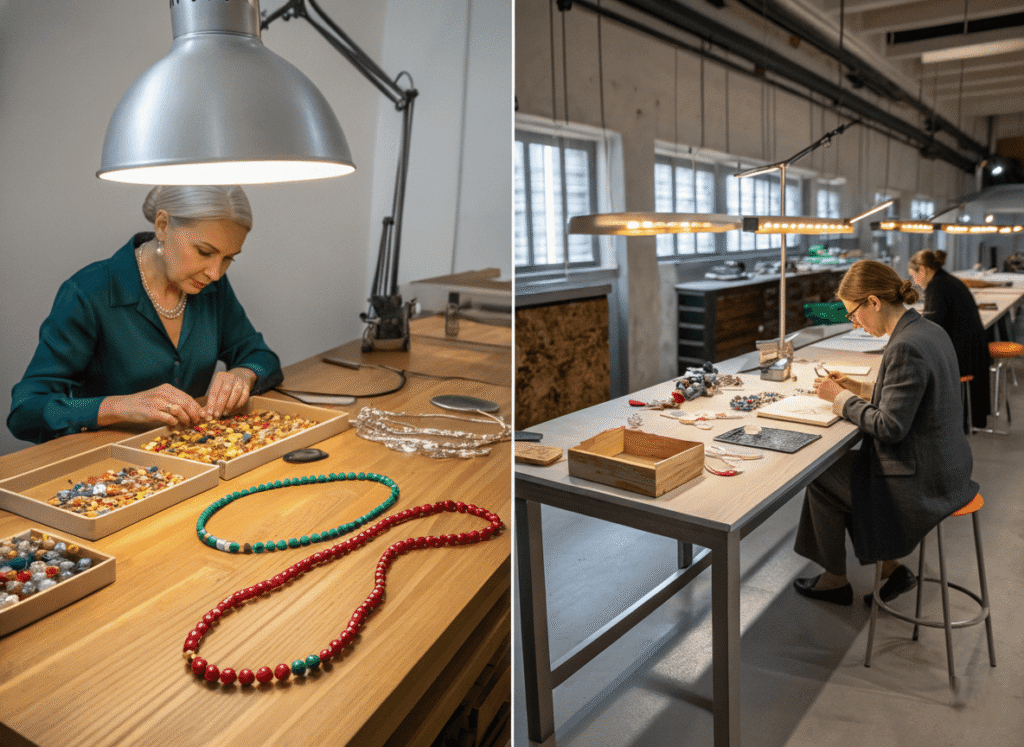
Table 1: OEM vs ODM Decision Factors
| Criteria | OEM | ODM |
|---|---|---|
| Design control | Full design ownership | Collaborative / manufacturer-driven |
| Lead time | Slightly longer due to custom production | Often faster with existing design molds |
| MOQ | Can be higher due to customization | Flexible, depending on manufacturer’s stock |
| Cost per unit | Higher for unique designs | Lower, as design amortization is shared |
What Steps Should I Take to Find an OEM/ODM Partner for Custom Bead Kits?
I always advise startups to approach supplier selection with the same rigor as large wholesalers.
Sourcing Strategies
- Attend international trade fairs (Hong Kong Jewellery Show, Shenzhen Fashion Jewellery Expo)
- Vet suppliers on B2B marketplaces such as Alibaba or Made-in-China
- Request samples of both finished bead kits and raw bead components
Material and Craftsmanship Criteria
Understanding bead materials is critical:
- Stainless Steel Findings: Strong, corrosion-resistant, ideal for brand positioning as “premium”.
- Brass Components: Rich tone, great for intricate plating.
- Zinc Alloy: Cost-effective but less durable for high-wear pieces.
Table 2: Material Comparison for Bead Components
| Material | Durability | Cost Level | Finish Quality | Common Use Cases |
|---|---|---|---|---|
| Stainless Steel | Excellent | Medium | Premium | Clasps, wire, connectors |
| Brass | Very Good | Medium-high | Luxurious | Charms, spacers, accent beads |
| Zinc Alloy | Fair | Low | Moderate | Fashion beads, seasonal trend items |

Supplier Vetting
- Check plating methods (IP plating vs. electroplating — IP lasts longer and resists tarnish)
- Review bulk order QC protocols
- Assess ability to handle custom packaging
How Do I Ensure Consistent Quality When Outsourcing Bead Jewelry Production?
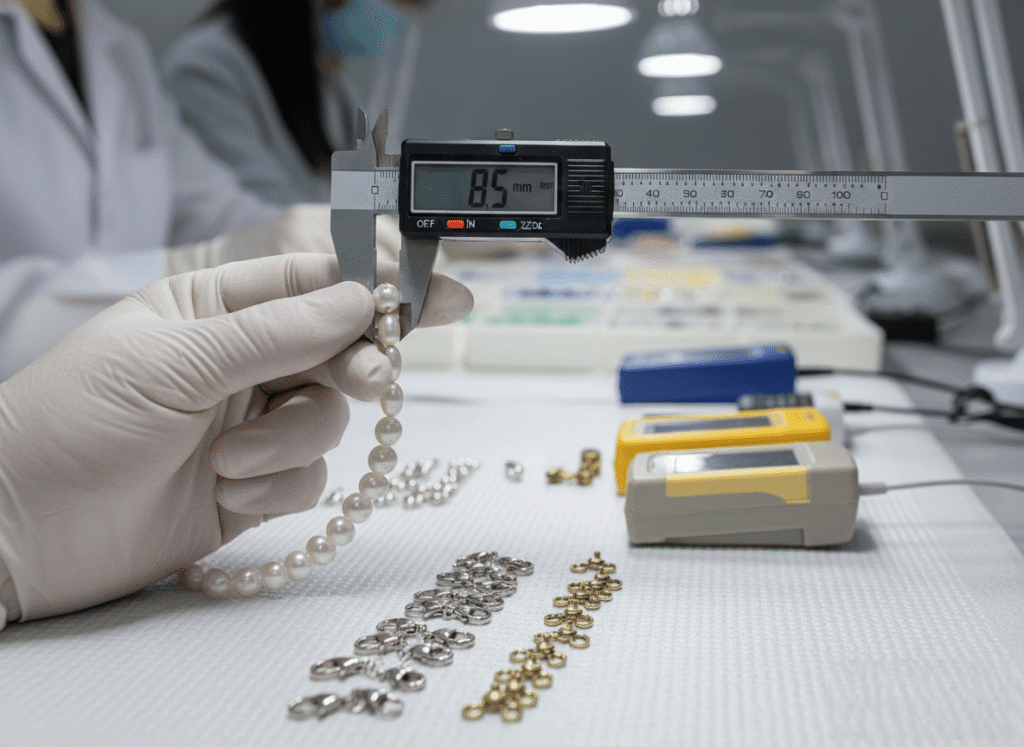
Consistency is the lifeblood of brand reputation. In wholesale jewelry, a single defective batch can cause returns, refunds, and reputational damage on the buyer side.
QC Standards
Implement international QC benchmarks:
- Incoming materials inspection
- In-production checks at 30%, 70%, and 100% completion
- Finished product random sampling before shipment
Plating Quality Assessment
Plating is critical for beads — longevity depends on microns of plating thickness. Stainless steel beads may not require heavy plating, but brass and alloys do.
- Premium plating: IP plating (Ion Plating) — best for anti-tarnish
- Standard plating: Electroplating — lower cost but shorter lifespan
- Test batches in salt spray chambers for accelerated wear simulation.
Bulk Order Inspection Criteria
- Uniform bead sizing and hole diameter
- Consistent color shade across a set
- Secure threading (if pre-strung)
- Clean finish without plating pits
What’s the Best Way to Manage Packaging and Shipping for My Personalized Bead Brand?
Packaging is both a protective and branding asset. In B2B transactions, it often influences buyer confidence before a single product is worn.
Branded Packaging Essentials
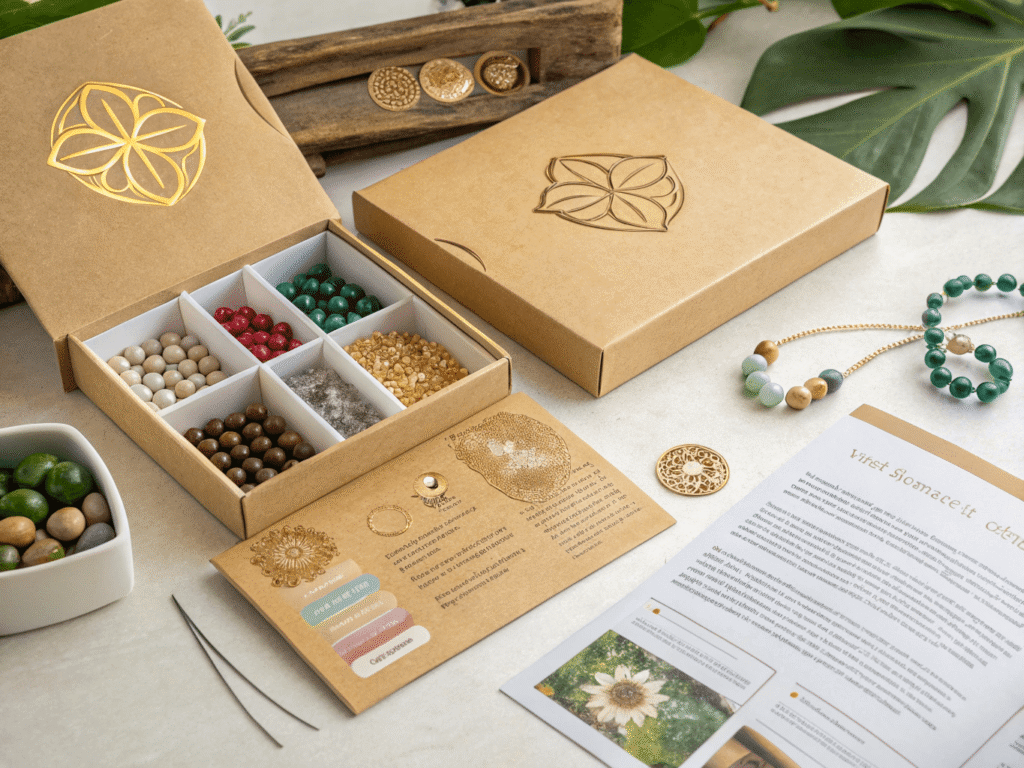
- Logo embossing or foil stamping on kit boxes
- Clear inner trays for bead visibility
- Instruction leaflets with your brand tone and photography
Eco-friendly packaging is increasingly demanded by global buyers — recycled paper, soy-based inks, and minimal plastic are strong selling points.
Shipping Practices
- For wholesale orders, double boxing and desiccant usage prevent moisture damage
- Use batch labeling for easy SKU management and warehouse intake
- Secure competitive freight rates by consolidating shipments
Supply Chain Cost Control Tips:
- Negotiate MOQs that align with demand forecasts
- Work with freight forwarders that understand jewelry export requirements (i.e., HS code classification for jewelry parts)
Conclusion
Turning a bead kit hobby into a personalized jewelry brand is entirely achievable with the right B2B mindset. Begin by aligning your creative vision with market trends, then migrate to structured production using OEM or ODM partners who understand your target quality level. Prioritize durable materials such as stainless steel or brass, and insist on robust QC standards to avoid costly returns. Packaging is not just an afterthought — make it an extension of your brand, communicating quality and aesthetic coherence to both retail customers and wholesale buyers.
Key Sourcing Insights:
- Define and protect your niche within the bead jewelry segment
- Ensure plating and material specs match your brand’s promise
- Balance MOQ commitments with supplier flexibility
Supplier Selection Tips:
- Vet through samples, certifications, and communication responsiveness
- Assess both aesthetic capabilities and logistical competence
If you’re ready to test the waters with professional bead kit production, I suggest starting small with a pilot OEM batch to validate your supply chain before scaling. I invite you to explore our catalog or request sample kits tailored to your brand identity — let’s design something that speaks your style and meets the market head-on.
