
As a jewelry manufacturer who has worked directly with global wholesalers, private-label brands, and craft distributors, I’ve seen firsthand how jewelry bead kits revolutionize the way creative pieces are developed, tested, and produced. For business owners, these kits aren’t merely beginner’s tools—they are streamlined production solutions that bring efficiency, consistency, and scalability to jewelry-making operations. In an industry where design speed and material coordination affect profit margins, bead kits simplify sourcing and execution at every level of the supply chain.
Jewelry bead kits provide everything required to create cohesive designs—pre-curated beads, findings, wires, and instructions—removing the need for separate sourcing and design planning. For B2B buyers and jewelry brands, choosing OEM/ODM kits helps control costs, reduce production time, and maintain brand-standard quality across collections.
From a strategic manufacturing perspective, bead kits also represent an opportunity for wholesalers and brand owners to test new aesthetic directions without committing to large MOQs. They merge convenience with creative flexibility—allowing private label projects to move quickly from concept to market. Whether your goal is to launch a seasonal line, introduce new materials like stainless steel or brass, or manage multiple design themes under one SKU family, bead kits support faster decision-making and optimize workflow in modern jewelry production.
What Should I Look for When Choosing a Bead Kit for My Jewelry Business?
Selecting bead kits for your wholesale operation or private label collection demands more than just a visual check. It’s about ensuring that the kit aligns with your brand quality, target audience, and production standards.
Evaluate Material Composition and Quality
Always begin with base materials. Kits may include:
- Glass, acrylic, or semi-precious beads for visual appeal
- Stainless steel, alloy, or brass findings for durability
- Elastic cords or steel wire to suit the style and longevity
Here’s a simplified comparison that helps sourcing managers make informed decisions:
| Material Type | Durability | Tarnish Resistance | Cost Range (Bulk) | Common Use |
|---|---|---|---|---|
| Stainless Steel | High | Excellent | Mid-range | Long-lasting fashion pieces |
| Brass | Moderate | Good with plating | Affordable | Bohemian and artisan jewelry |
| Alloy | Variable | Moderate | Low-cost | Trend-based collections |
Assess Kit Design Variety and Market Fit
Each kit should serve a clear purpose—whether for DIY consumers, training workshops, or retail package sales. For brands, I recommend selecting kits containing:
- Pre-coordinated color themes aligned with seasonal trends
- A mix of bead sizes to encourage layering and creativity
- Versatile findings compatible with standard jewelry tools
When working with OEM jewelry suppliers, request a design portfolio and ask to review sample kits with different bead compositions. This ensures your product lineup meets market preferences across regions such as North America, Europe, or the Middle East—each with distinct design sensitivities.
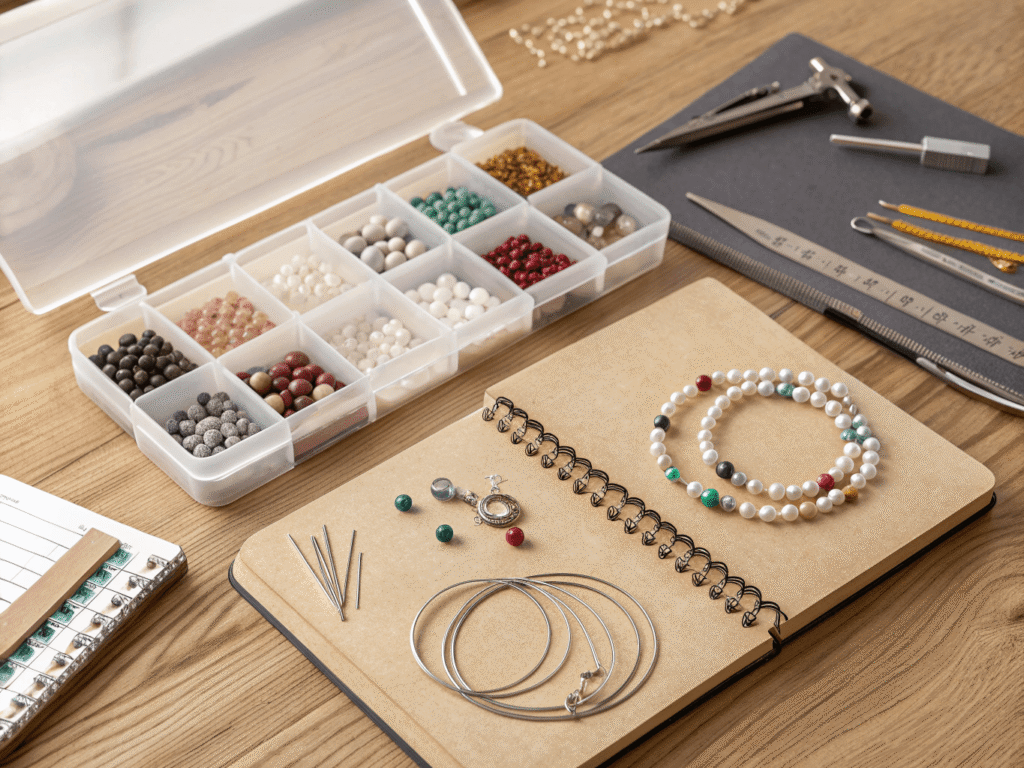
Packaging and Presentation
Packaging impacts perceived value. High-quality bead kits often use compartmentalized trays or eco-friendly reusable boxes to maintain organization. For retailers, these packaging attributes enhance customer experience, while B2B purchasers benefit from reduced inventory mishandling.
How Can I Ensure the Beads and Accessories in My Kit Meet My Brand’s Quality Standards?
As a jewelry manufacturer, I always emphasize structured quality assurance (QA) frameworks—especially in OEM/ODM production cycles. Kits may look appealing, but consistency is king in wholesale environments.
Establish Standardized Quality Control (QC) Protocols
Your QC process should include:
- Incoming material inspection: Verify bead uniformity, size tolerance, and hardness.
- Plating quality testing: Check adhesion, purity of finishing metals (gold, silver, rhodium).
- Colorfastness evaluation: Ensure that dyed beads don’t bleed under moisture or sunlight.
- Tarnish resistance assessment: Use salt spray or acid bath tests to evaluate findings’ endurance.
Here’s an example of a manufacturer-level QC matrix:
| Inspection Stage | Parameter | Test Method | Frequency | Acceptable Rate |
|---|---|---|---|---|
| Raw Beads | Size consistency | Caliper measurement | Each batch | ±0.2 mm |
| Plating | Surface uniformity | Microscopy/adhesion test | 1 in 50 pcs | >95% smoothness |
| Assembly Components | Strength test | Pull & bend | Every 200 pcs | >90% success |
| Packaging | Shelf durability | Drop test | Each batch | No rupture |
Communicate Brand Standards with Your Supplier
For reliable quality control:
- Share your internal jewelry specifications (material grade, plating type, bead tolerance).
- Request photos and videos of inspection before shipment.
- Ask for a Certificate of Material Composition—especially for stainless steel or brass components.
Validate Supplier Capability
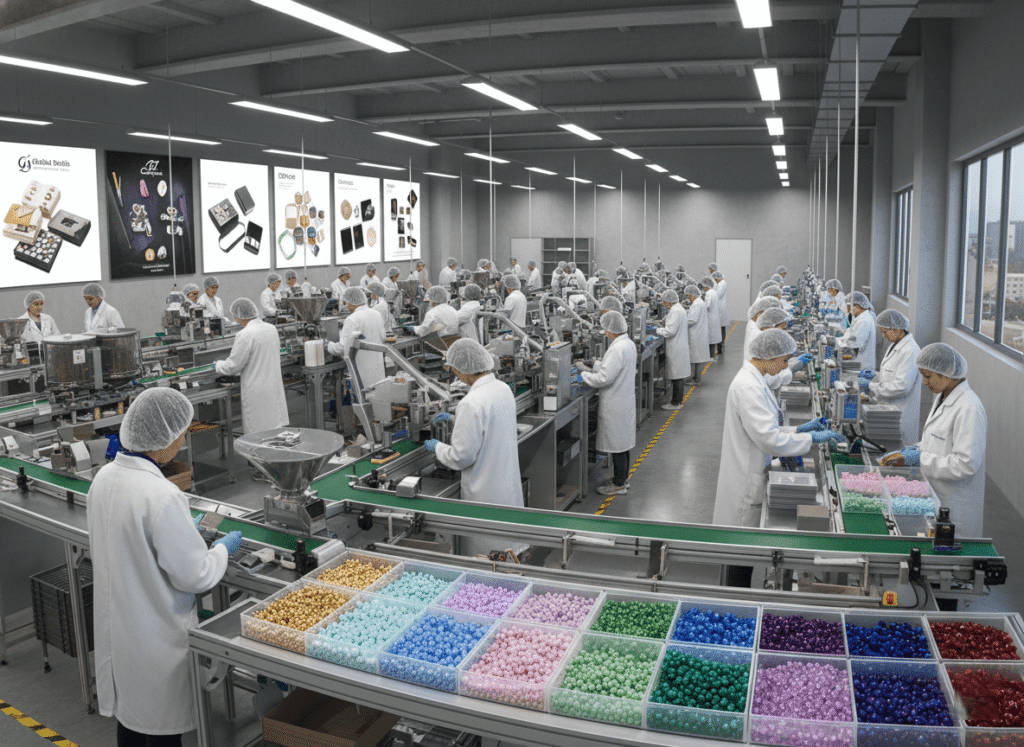
Before entering an OEM contract, initiate a pilot order and review samples under your brand QC conditions. Genuine stainless steel jewelry manufacturers, such as SoulAcc and other leading producers in China’s fashion jewelry wholesale sector, usually offer full transparency during these evaluations.
Can I Customize Bead Kits Through an OEM/ODM Manufacturer Like SoulAcc?
Absolutely. OEM (Original Equipment Manufacturing) and ODM (Original Design Manufacturing) allow complete control over bead kit configuration, packaging style, branding, and design variety.
OEM Bead Kit Development
When I work on OEM projects, clients supply their own concept sketches, themes, or brand guidelines. We convert those ideas into tangible kits through:
- Material selection based on your brand identity (e.g., eco-friendly, minimalist, or luxury finishes).
- Logo printing on boxes, bead trays, and instruction manuals.
- SKU coding and barcode integration for retail and inventory management.
ODM Bead Kit Innovation
ODM services cater to buyers without in-house design teams. Manufacturers like us create new bead combinations, trend-based themes (boho, minimalist, pastel, gemstone), and instructional layouts tailored to your target audience.
OEM/ODM Customization Checklist
- Color palette alignment: Match to your seasonal catalogs.
- Exclusive bead shapes: Introduce brand-unique designs.
- Accessory customization: Optional clasps, charms, pendants.
- Packaging branding: Logo embossing, sticker labeling, sustainable materials.
- MOQ control: Negotiate minimums suitable for prototyping before mass production.
| OEM/ODM Feature | Typical MOQ | Lead Time | Branding Options | Best Application |
|---|---|---|---|---|
| OEM Custom Kit | 500–1000 sets | 30–45 days | Full logo, color theme | Private label |
| ODM Ready Design | 200–500 sets | 20–35 days | Partial customization | Wholesale test runs |
| Mixed Style Kits | Flexible | 25–40 days | Optional brand tag | Promotional gift sets |
This customization flexibility transforms standard DIY kits into premium, brand-aligned products suitable for chain retailers, gift distributors, or e-commerce marketplaces.
How Do Bead Kits Help Me Reduce Production Time and Control Project Costs in Bulk Orders?
In manufacturing, time and cost are interconnected. Jewelry bead kits directly influence both by pre-organizing supply chains and minimizing resource allocation.
Reduction in Design and Material Coordination Hours
Normally, developing a new bead jewelry line involves:
- Multiple supplier communications for materials.
- Sample collection and design trials.
- Inventory management and color matching.
Kits bypass much of this by offering a pre-curated structure. When manufacturing in bulk, it’s far easier to replicate standard kits than to assemble random bead assortments per SKU.
Cost Control Through Component Economy
Manufacturers benefit from centralized material sourcing. For example:
- Buying bead assortments in standardized lots reduces wastage.
- Bulk-plating wire findings together minimizes batch variance.
- Pre-packed kits cut assembly line sorting time by up to 30%.
Optimized Production Workflow
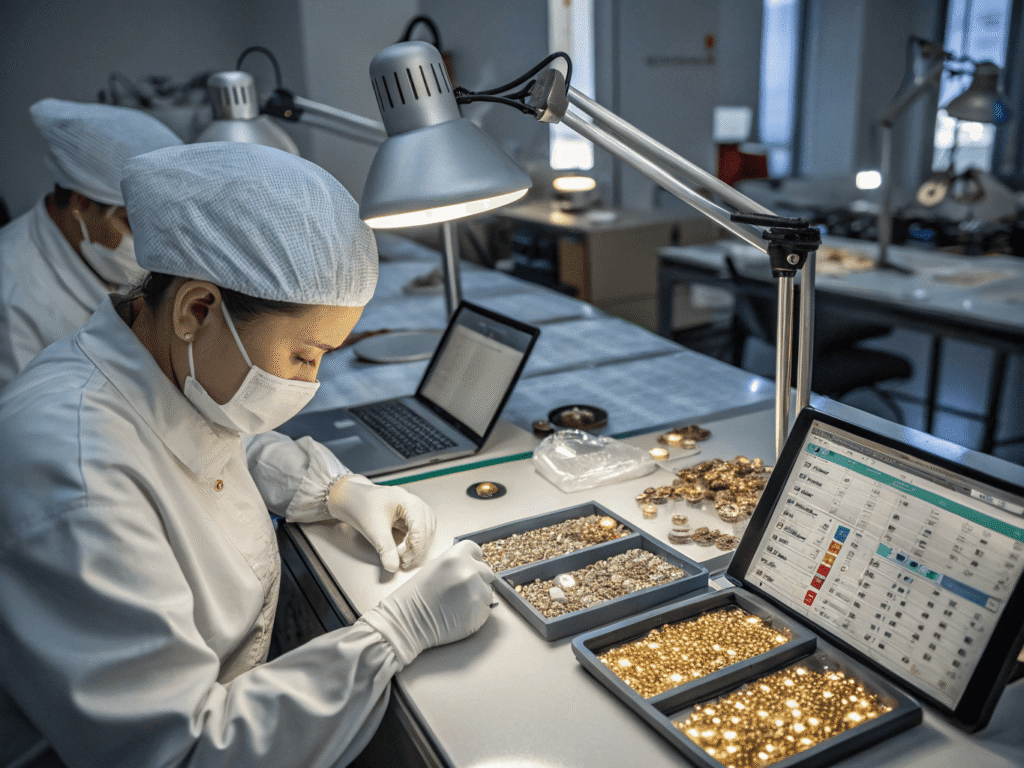
In my operations, bead kit production integrates smoothly with my existing assembly processes. Our workflow includes:
- Automated bead sorting machines for uniform distribution per kit.
- Pre-labeled compartments reducing manual packaging labor.
- Standardized QC checklists for batch integrity during loading.
Together, these measures enhance lead-time accuracy for wholesalers and distributors—especially crucial before seasonal retail deadlines.
MOQ Planning and Logistics
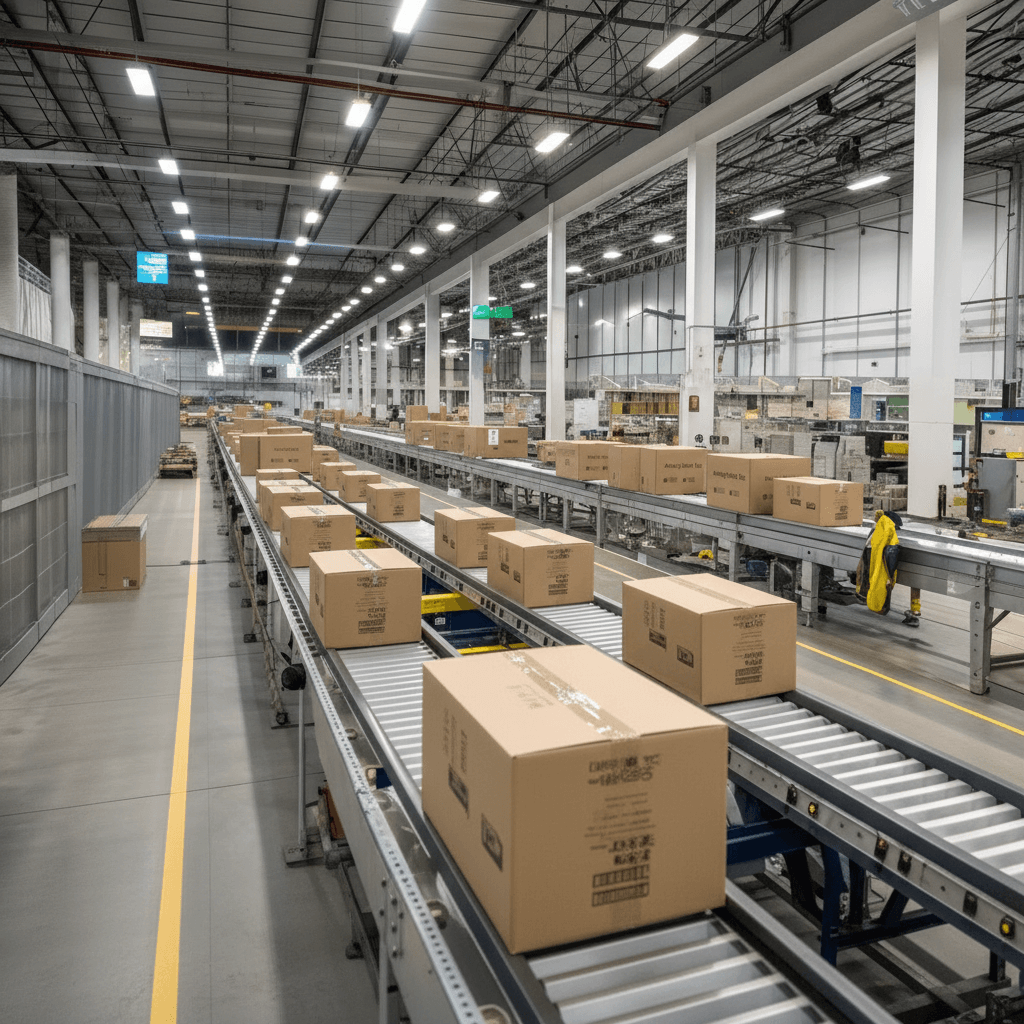
B2B buyers often request low MOQs for testing new kits before market release. Most OEM/ODM manufacturers offer structured MOQ brackets:
- Pilot MOQ (100–300 kits): Ideal for marketing evaluation or influencer promotions.
- Bulk MOQ (500–1000+ kits): Optimized for global retail rollouts.
Global Market Trend Insights
Bead kits perform particularly well in the DIY retail sector and e-commerce. Based on current fashion jewelry OEM trends:
- Europe & North America: Preference for minimalist neutral-tone kits.
- Asia-Pacific: Increased demand for vibrant gemstone mixes and layered aesthetic sets.
- Middle East & Latin America: Rising interest in gold-plated findings and colorful crystal assortments.
Kits cater to these variations by offering localized customization—enabling brand owners to adapt quickly without renegotiating complex material contracts.
Additional Insights: Materials, Plating & Sustainability
Stainless Steel vs Alloy vs Brass – Material Efficiency in Kits
For long-term sustainability and resale quality, stainless steel components remain the industry standard. Brass and alloy serve well for creative diversity and lower-cost collections. Choosing wisely keeps production aligned with your market positioning.
Key Note: Stainless steel offers better plating adhesion and tarnish resistance—ideal for bead kits marketed under premium jewelry brands.
Plating Quality and Craftsmanship
Electroplating advancements allow OEM jewelry suppliers to deliver gold or rhodium finishes even on bead components. Kit manufacturers now offer:
- Multi-layer plating to increase wear resistance.
- Vacuum coating for uniform finish on small findings.
- Protective sealants to maintain shine through shipping and storage.
These technological improvements also support environmental standards demanded by international retailers.
Conclusion
Jewelry bead kits go far beyond a simple DIY concept—they represent a strategic production asset for jewelry wholesalers, private-label brands, and store distributors. They combine pre-curated material efficiency, design scalability, and cost control benefits, ensuring consistent quality from prototype to finished product.
By sourcing through reliable OEM/ODM manufacturers such as SoulAcc or other professional stainless steel jewelry suppliers in China, businesses gain flexibility to adapt fast-moving market trends while maintaining brand integrity. The right bead kit enhances creativity, minimizes decision fatigue, and streamlines every stage—from sourcing to final assembly.
Ready to explore bead kits that match your brand’s needs? Request samples or browse a professional catalog from a custom jewelry supplier today—and experience firsthand how these all-in-one solutions can simplify your production and elevate your next jewelry line.
