
Craft kits are more than just boxes filled with colorful materials—they’re opportunities for parents and children to connect, create, and communicate in meaningful ways. In a world where digital distractions dominate family time, crafting provides an analog retreat where imagination takes center stage. Whether you’re painting, threading beads, or building small models, each activity becomes a shared experience that bridges generations and sparks joyful learning. For parents, especially those balancing busy schedules, craft kits provide a structured yet flexible way to be fully present and involved with their kids.
Featured Summary:
Parents can use craft kits to strengthen family bonds by engaging children in creative collaboration, conversation, and mutual problem-solving. Choose age-appropriate DIY kits that prioritize safety and fun, create a distraction-free environment, and focus on the process of making rather than the perfection of the final product. The key is transforming crafting time into a shared story—where every painted stroke, bead, or glitter trail becomes part of your family’s memory.
From choosing the right materials to creating an educational experience, crafting together offers both emotional and developmental rewards. Parents can tailor their approach depending on the child’s age, fostering curiosity in toddlers, teamwork in school-age children, and open communication with teens. Let’s explore how to use DIY craft kits to bond with your children through creativity—making every session a chance to build not only art but lasting connection.
What Kind of DIY Craft Kits Should I Choose to Engage My Child’s Creativity?
Craft kits come in all shapes and skill levels. The right choice depends on your child’s age, interests, and learning goals. As a parent, your role evolves from facilitator to collaborator as your child grows—what matters most is matching the challenge level with their curiosity.
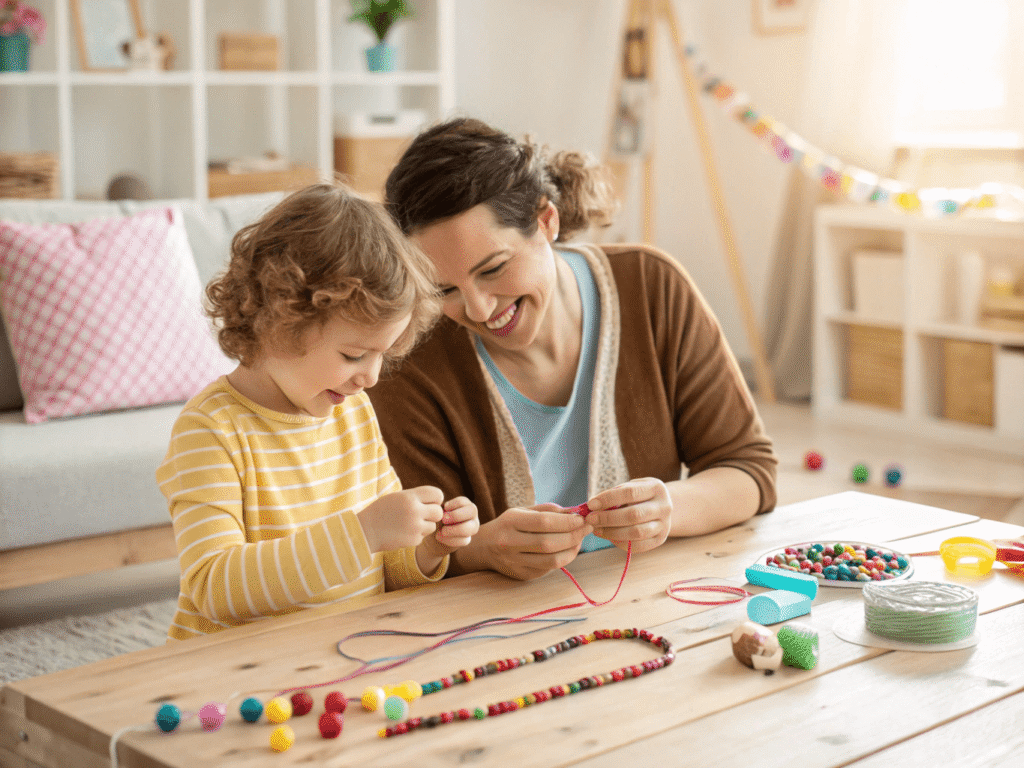
🧩 Choose Kits That Balance Simplicity and Exploration
Begin with craft kits that provide open-ended results. A project that allows freedom (like jewelry making or clay modeling) encourages children to explore independently while still providing a framework to follow.
- For toddlers (2–4 years): Favor kits with large, safe components—think sponge painting sets, chunky beads, or handprint art. Avoid small choking hazards.
- For school-age kids (5–10 years): Choose sets that teach step-by-step skills: friendship bracelets, paint-by-number, or themed building kits.
- For teens (11+): Lean toward kits that match their interests—such as resin jewelry, macrame, or screen-printing kits. Trend-aligned crafts help them feel connected to modern creative expressions.
| Age Range | Recommended Kit Type | Skills Encouraged | Safety Notes |
|---|---|---|---|
| 2–4 yrs | Finger paints, collage sets | Sensory play | Non-toxic, washable materials |
| 5–10 yrs | Jewelry or clay kits | Coordination, pattern-making | Child-safe tools |
| 11+ yrs | Resin, macrame, model kits | Patience, design thinking | Use gloves and ventilation |
🛠️ The “Parallel Play” Approach
When children see their parents actively participating, not supervising, they feel part of a shared project, not a managed one. Try buying two of the same kits—you create side-by-side. This “me” kit approach eliminates pressure and builds equality.
Pro Tip: Turn it into a weekly ritual. Saturday “Craft Mornings” or Sunday “DIY Hour” create predictable, positive anticipation that anchors routine family connection.
How Can I Make Crafting Time Educational and Fun for My Family?
Crafting is naturally fun, but when designed with intention, it becomes a mini learning lab. Every cut, mix, and glue moment can teach fine motor control, artistic decision-making, or emotional intelligence.
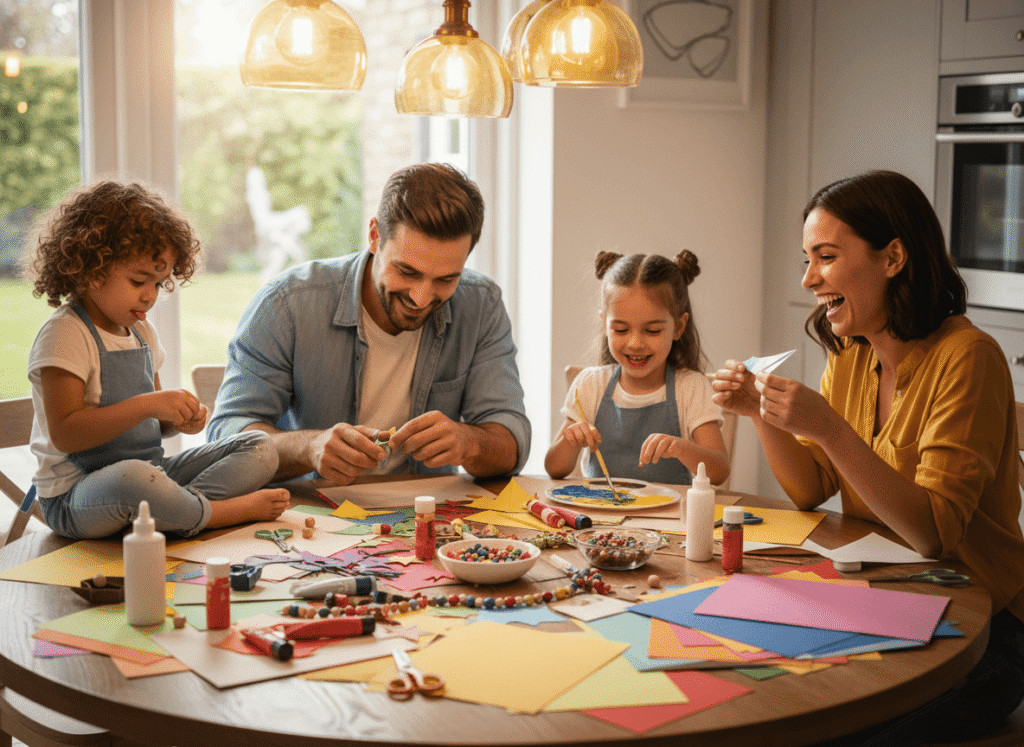
🎨 Transform Crafts Into Mini Lessons
Each project is an opportunity to infuse education subtly—without turning it into “homework.”
- Counting beads or colors: Reinforces math.
- Mixing paint shades: Introduces early color theory.
- Building models: Enhances spatial reasoning and STEM awareness.
- Following step-by-step guides: Strengthens literacy and sequencing.
By verbalizing the process—“Let’s count out ten beads together” or “What happens if we mix red and blue?”—parents become facilitators of discovery.
🗣️ The Conversation Technique: Crafting as Communication
The creative process opens doors to easy, side-by-side conversation. Children, especially teens, often reveal more when their hands are busy and eyes are focused on a joint task rather than direct dialogue.
Try these conversation prompts:
- “Which color best matches your mood today?”
- “If we could sell these crafts, how would you name your brand?”
- “What do you think this could turn into instead?”
This indirect communication style (called the Side-by-Side Effect) allows emotional sharing without pressure, nurturing trust and emotional intelligence.
🪶 Turn Frustration into Opportunity
When crafts don’t go perfectly, transform those moments into resilience lessons. Instead of fixing errors, ask, “What else could this become?” Modeling calm under creative stress teaches adaptability and patience—skills far beyond the crafting table.
| Challenge | Parental Support Strategy | Emotional Skill Developed |
|---|---|---|
| Project didn’t match instructions | Laugh together, highlight uniqueness | Resilience & flexibility |
| Child becomes frustrated | Suggest a short pause, then resume | Emotional control |
| Materials break or spill | “Let’s brainstorm a creative backup.” | Problem-solving |
By focusing on how you create together—rather than what you make—you transform crafting into emotional literacy practice.
What Materials or Jewelry-Making Kits Are Safe and Suitable for Kids?
Safety is the foundation of enjoyable crafting. Choosing non-toxic, age-appropriate materials ensures children can explore freely while parents stay stress-free.
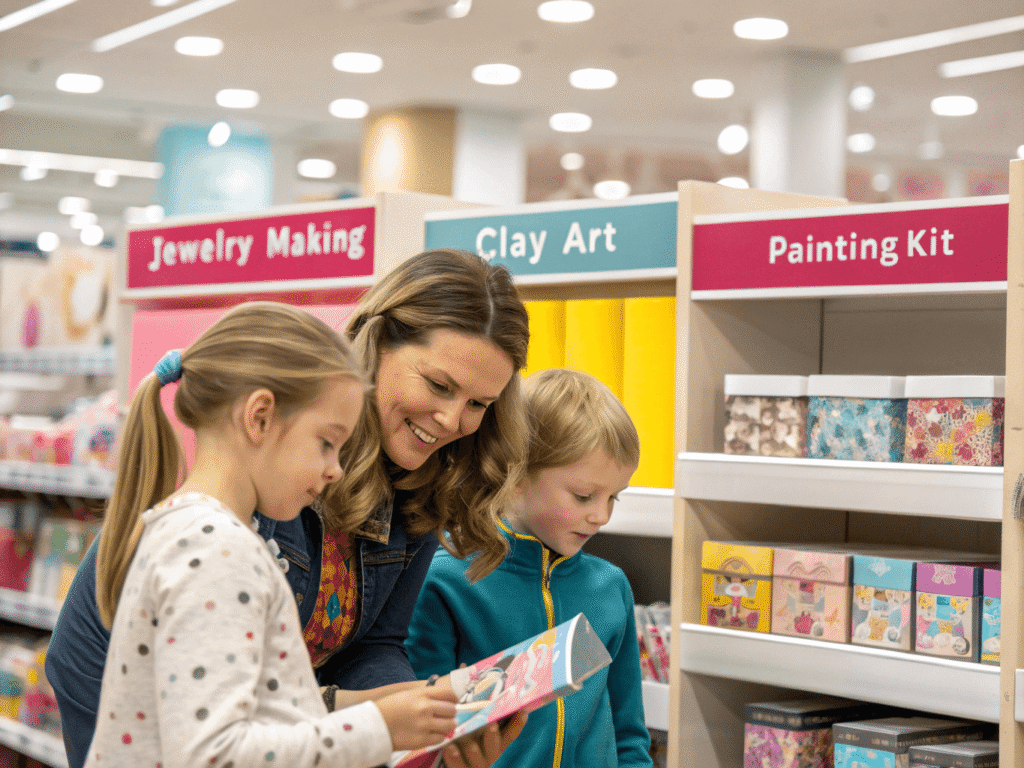
🔍 Understanding Material Safety
Not all crafting materials are created equal. Low-quality or adult-intended kits might contain sharp tools, synthetic glues, or allergens. Here’s a quick safety guide:
| Material Type | Ideal Age Group | Safety Tip | Example Project |
|---|---|---|---|
| Paper, cardboard | 2+ | Always supervise scissor use | Handmade cards |
| Foam, felt | 3+ | Use pre-cut shapes | Puppet crafts |
| Plastic beads | 5+ | Choose large sizes | Friendship bracelets |
| Polymer clay | 8+ | Bake with adult help | Mini sculptures |
| Resin or epoxy | 11+ | Use gloves, mask | Resin jewelry |
💎 Jewelry Kits: Creative and Controlled Exploration
Jewelry-making kits are among the most versatile and rewarding options for bonding families. Here’s how to select the right one:
- Avoid ultra-small beads for children under 6.
- Opt for nylon threads, elastic cords, or soft wire to minimize accidental pricks.
- Prioritize non-toxic enamel coatings and plastic clasps over metal ones for younger children.
- For older kids, introduce simple tools (like pliers or clasps) to build fine motor skills responsibly.
Safety Check: Always look for “ASTM D-4236” or “CE-certified” labels—these indicate child-safe materials.
🧵 Introducing Jewelry as Shared Expression
Crafting wearable art gives children tangible pride. Whether it’s a simple beaded bracelet or a matching parent-child keychain, finished jewelry becomes a physical symbol of emotional connection.
Try assigning each family member a color theme—when everyone wears their creation, it becomes a visible family memory.
How Can I Store and Reuse Craft Supplies for Future Family Projects?
Nothing halts creative momentum faster than a chaotic supply box or dried-up glue stick. Smart storage keeps crafting sustainable, organized, and stress-free.
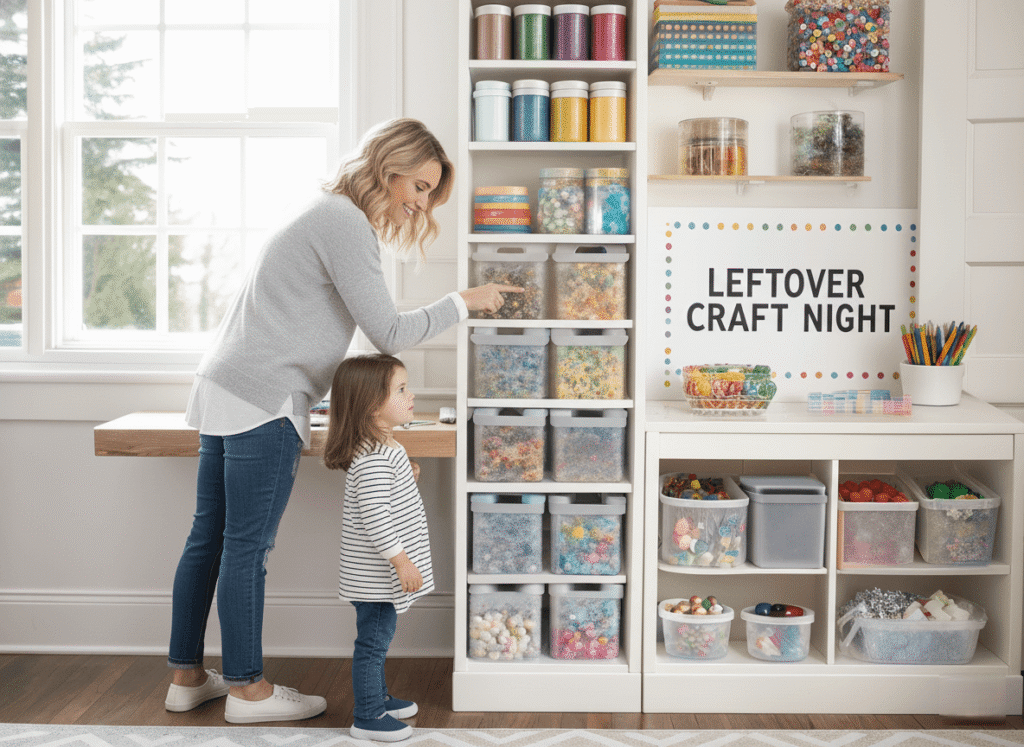
♻️ Building the Home “Craft Station”
Repetition builds creativity. A dedicated craft zone encourages spontaneous making and limits the prep-time friction.
Essentials for a Home Craft Station:
- Clear, labeled containers: Children can easily find and return materials.
- Divided trays: Separate tools (scissors, brushes) from consumables (glue, paper).
- Recycled jars & boxes: Teach eco-consciousness by reusing everyday items.
- Sealable plastic or fabric bags: Prevent exposure to moisture or dust.
| Storage Item | Function | Kid Accessibility |
|---|---|---|
| Clear plastic bin | Holds assorted supplies | High |
| Over-door organizer | Small items like stickers | Medium |
| Rolling cart | Portable crafts-on-the-go | High |
| Metal tins | Sharp tools (adult use) | Low |
Maintaining order not only extends materials’ lifespan but also reinforces responsibility and cleanup habits in children.
🔁 Reuse, Redesign, Repeat
Keep leftovers! Scraps from paper collages can become bookmarks, and extra beads may evolve into zipper pulls. Let children brainstorm how to reinvent what’s already available. This approach nurtures sustainable thinking and resourcefulness.
Creative Challenge: Host a “Leftover Craft Night” once a month—where the only rule is using existing supplies. Families often discover their most inventive moments here.
The Emotional ROI: Why Crafting Bonds Families Like Nothing Else
The shared act of making fosters attunement—a harmony between parent and child built through co-created meaning. Every spilled paint jar or crooked bead becomes part of your family narrative. Over time, crafting transitions from a “fun thing to do” into a ritual of connection, belonging, and mutual respect.
- It builds patience through process.
- It strengthens communication through play.
- It fortifies empathy as parents model support under pressure.
Craft kits allow families to create not only objects but also emotional architecture—safe spaces where self-expression and love coexist.
Conclusion: From Glue Sticks to Growing Hearts
Parents can turn ordinary craft kits into extraordinary bonding opportunities. Start by selecting age-appropriate and safe materials, set up an encouraging environment, and remember—the ultimate goal isn’t a flawless finished product but shared time and laughter. Each session reinforces teamwork, creativity, and understanding between parent and child.
To keep the experience joyful:
- Rotate projects weekly to maintain excitement.
- Display finished creations proudly at home.
- Keep an organized craft zone to invite spontaneous creativity.
And most importantly, let your child lead. When crafting becomes a space where parents follow their children’s imaginations, the relationship flourishes naturally.
Call to Action: Explore a variety of family DIY and jewelry-making kits that align with your child’s age and interests. Turn your next weekend into a “create-together” day—and start crafting memories that sparkle far beyond the art table.
