
If you’ve ever admired the unmistakable elegance of designer jewelry — from Cartier’s minimalist bangles to Van Cleef’s iconic clover motifs — you’ve probably wondered: Can I recreate that look myself with a DIY kit? It’s a common question among both jewelry hobbyists and small business owners exploring affordable ways to produce luxury-inspired pieces.
The short answer: Yes, you can achieve remarkably similar aesthetics through DIY kits — but not identical reproductions. The challenge lies in understanding what materials, tools, and finishing techniques bridge the gap between handmade craft and luxury-grade craftsmanship.
For consumers, this journey offers creativity and personalization. For jewelry brands, retailers, and OEM partners, mastering “designer-inspired” production can unlock new market segments without infringing intellectual property. Let’s explore how you can confidently replicate upscale looks while maintaining product integrity and professional standards.
Understanding What a DIY Jewelry Kit Can (and Can’t) Do
DIY kits are designed to be accessible. They provide basic tools, beads, chains, clasps, and guidance—perfect for small projects or personalized pieces—but rarely offer the sophisticated machinery or goldsmithing expertise found in designer workshops.
What You Can Replicate
- Design elements: Patterns, motifs, or silhouettes inspired by luxury styles (e.g., clover charms, twisted wire bracelets).
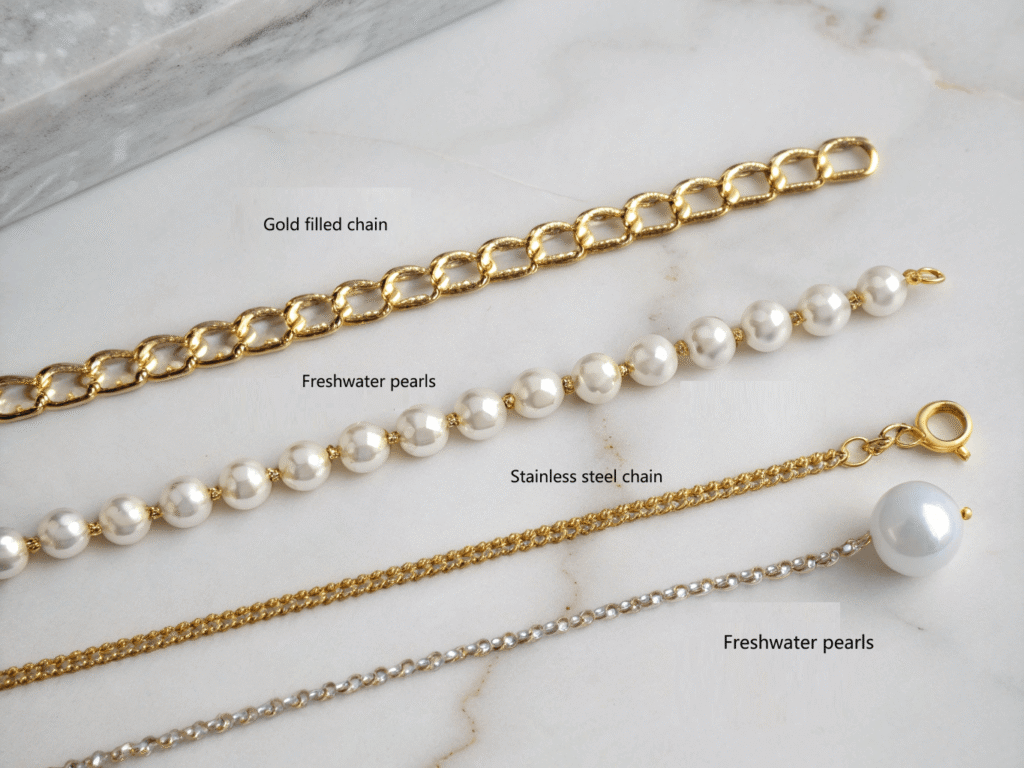
- Metal finishes: Gold-filled, stainless steel, or PVD coatings that mimic solid gold appearance.
- Textural details: Rope twists, beaded strands, or enamel-like effects using resin.
What You Cannot Reproduce
- Exact metal compositions: Designer brands use custom alloys and solid precious metals.
- Stone cutting precision: DIY gemstones and resins often differ in clarity and symmetry.
- Branded engravings or trademarks: Reproduction for resale crosses legal boundaries.
Tip: Focus on interpretation rather than imitation. Use a designer piece as inspiration for form and quality, not as a blueprint to copy.
Choosing the Right Materials for a Designer-Like Finish
The secret to achieving a professional look lies less in the kit itself and more in the materials you select. Luxury aesthetics depend on weight, luster, and durability.
High-End Alternatives for DIY Makers
| Component | Low-Grade Version | Recommended Upgrade | Reason for Upgrade |
|---|---|---|---|
| Chain Base | Zinc Alloy | Gold-Filled or Stainless Steel | Prevents tarnish, longer wear |
| Gem/Stone | Plastic Beads | Cubic Zirconia or Resin Stone Fills | Mimics gemstone brilliance |
| Pearls | Acrylic | Swarovski Crystal Pearls or Freshwater | Higher density and sheen |
| Gold Tone | Spray Coating | PVD or Micron Plating | Platinum-like finish, lasts longer |
To achieve designer-level results:
- Source findings from Rio Grande, Fire Mountain Gems, or Etsy premium suppliers.
- Always look for “hypoallergenic” or “nickel-free” metals; luxury brands never use base alloy mixes.
- Experiment with UV resin filling and electroplating kits for refined surface finishing.
Customizing DIY Kits for Brand or Business Use
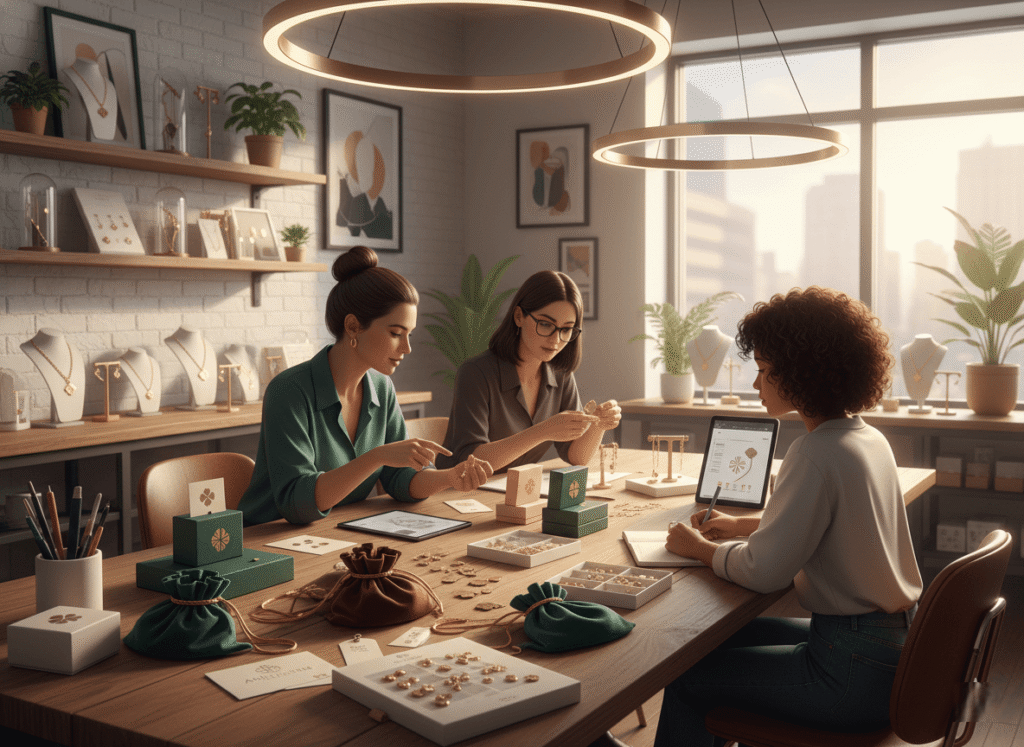
If you’re a small business or jewelry brand, the same tools used in DIY kits can scale into boutique production. The key is customization and consistency.
How to Build a Custom “Designer-Style” DIY Kit
- Define Your Brand’s Signature Look
Choose one recognizable style — e.g., “clover motif” or “cable twist” — and modify proportions or colors to make it your own. - Select Quality Base Materials
Invest in bulk gold-filled chains and custom-cut connectors from professional suppliers. - Add Packaging and Labeling
Create premium presentation with velvet pouches, brand cards, and embossed tags. - Train Your Team or Retail Customers
Offer tutorials or sample kits showing your signature assembly process.
Example: Transforming the Van Cleef Style
- Replace mother-of-pearl with matte resin clovers for affordability.
- Offer seasonal color variations (black, emerald, blush) to create distinct brand identity.
- Maintain luxury chain thickness and clasp strength for perceived quality.
Achieving a Professional Finish: From DIY to Display-Ready
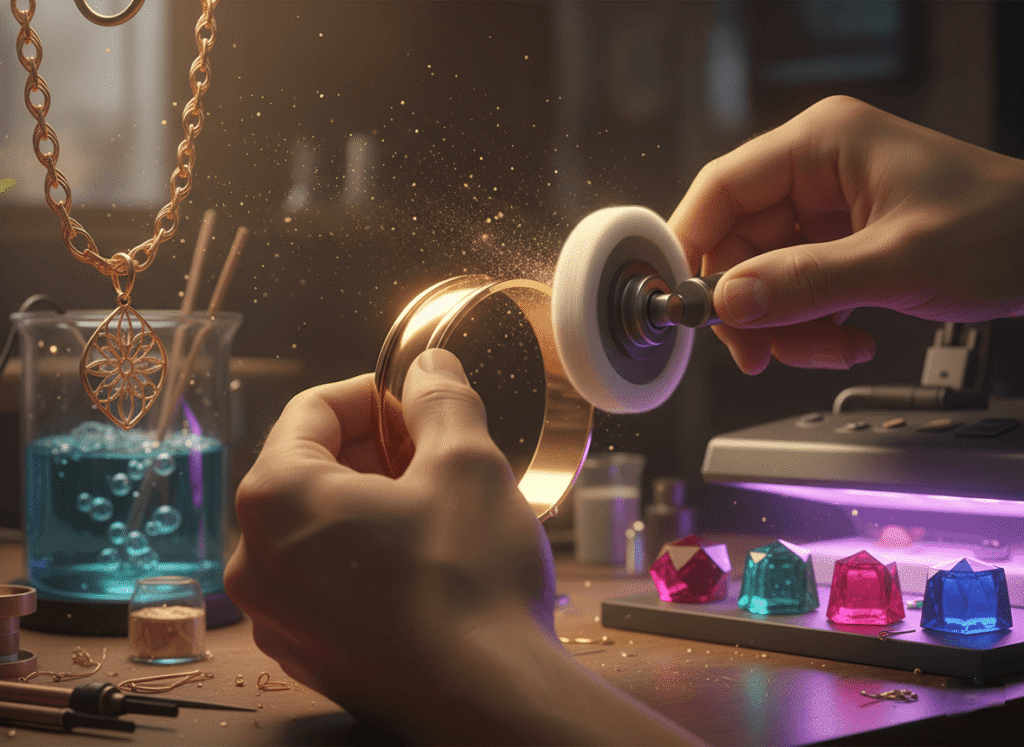
The defining factor between a hobby craft and a high-end replica is finishing. Designer jewelry undergoes multiple polishing, plating, and inspection stages.
DIY Finishing Checklist
Polishing
- Use a cloth wheel polisher or micro-fiber buffing pad.
- Finish with a jeweler’s rouge compound for a mirror-like surface.
Plating
- Invest in a simple electroplating starter kit (gold or silver micron plating).
- Clean components with ultrasonic cleaner before plating for adhesion.
Assembly
- Double-check joins and connectors with micro pliers.
- Add locking jump rings for durability under daily wear.
Inspection
- Assess for scratches, rough edges, and uneven plating before packaging.
| Finishing Technique | DIY Tool Needed | Result |
|---|---|---|
| Buff Polishing | Rotary Tool + Rouge | High gloss shine |
| UV Resin Curing | UV Lamp | Gem-like transparency |
| Electroplating | Small Plating Kit | Gold-tone depth and durability |
| Ultrasonic Cleaning | Mini Cleaner | Clear, residue-free metal surface |
Final Thoughts: DIY Jewelry as an Entry to Designer Innovation
Replicating designer jewelry styles with DIY kits isn’t about counterfeiting — it’s about learning craftsmanship principles and design interpretation. Whether you’re a creative consumer or a boutique brand, DIY jewelry kits can help you understand form, finish, and functionality in ways that translate directly into professional production.
For wholesalers and OEM partners, integrating DIY assembly techniques into prototyping can streamline customization, reduce sample costs, and empower customers to visualize bespoke designs efficiently.
If you aim to position your brand within the “affordable luxury” segment, begin with designer-inspired design studies, upgrade your materials strategically, and establish your own finishing standards. You won’t just recreate style — you’ll craft confidence and trust in your quality.
Pro Tip for Industry Professionals:
If you’re a jewelry retailer or private label brand, consider collaborating with specialized OEM suppliers who offer “semi-finished” components compatible with DIY assembly. This approach reduces manufacturing costs while enabling customized luxury aesthetics at scale.
