
Designers and crafters across the globe have embraced silicone beads as a versatile, durable, and stylish component for both keychains and lanyards. Whether you’re creating custom accessories for teacher IDs or fashionable wristlets for retail, silicone beads offer flexibility and comfort that metal or wood alternatives can’t always match. Yet, when moving from DIY crafting to large-scale production, questions arise about combining materials, manufacturing consistency, and export logistics.
Yes — silicone beads are not only suitable but ideal for making keychains and lanyards. Their soft, water-resistant texture, non-toxic composition, and vivid color possibilities make them a reliable choice for daily-use accessories and high-volume retail lines.
Understanding how to effectively integrate silicone beads with other materials, maintain color uniformity, and package them for global markets can help manufacturers and wholesalers streamline operations and scale production profitably.
How Can I Combine Silicone Beads with Metal or Fabric Elements in Keychains?
Pairing silicone with complementary materials creates premium-quality accessories that appeal to diverse buyers. The right combination enhances both durability and visual appeal, turning simple silicone keychains into eye-catching lifestyle products.
Choosing Compatible Materials
- Metal Hardware: Opt for nickel-free key rings, swivel clasps, or lobster hooks. These add shine and reinforce structural strength.
- Fabric Cords or Paracord: Nylon and polyester cords thread easily through silicone beads, offering flexibility and color contrast.
- Leather or Faux Leather Accents: Adding tassels or tags elevates the perceived value of the product and makes it more gift-ready.
Design Integration Tips
| Element | Recommended Pairing | Effect on Design |
|---|---|---|
| Silicone bead + metal clasp | Adds strength and a polished finish | Professional retail-grade look |
| Silicone bead + woven cord | Enhances flexibility and comfort | Ideal for lanyards or wristlets |
| Silicone bead + leather tassel | Adds luxury and textural depth | Perfect for fashion or boutique branding |
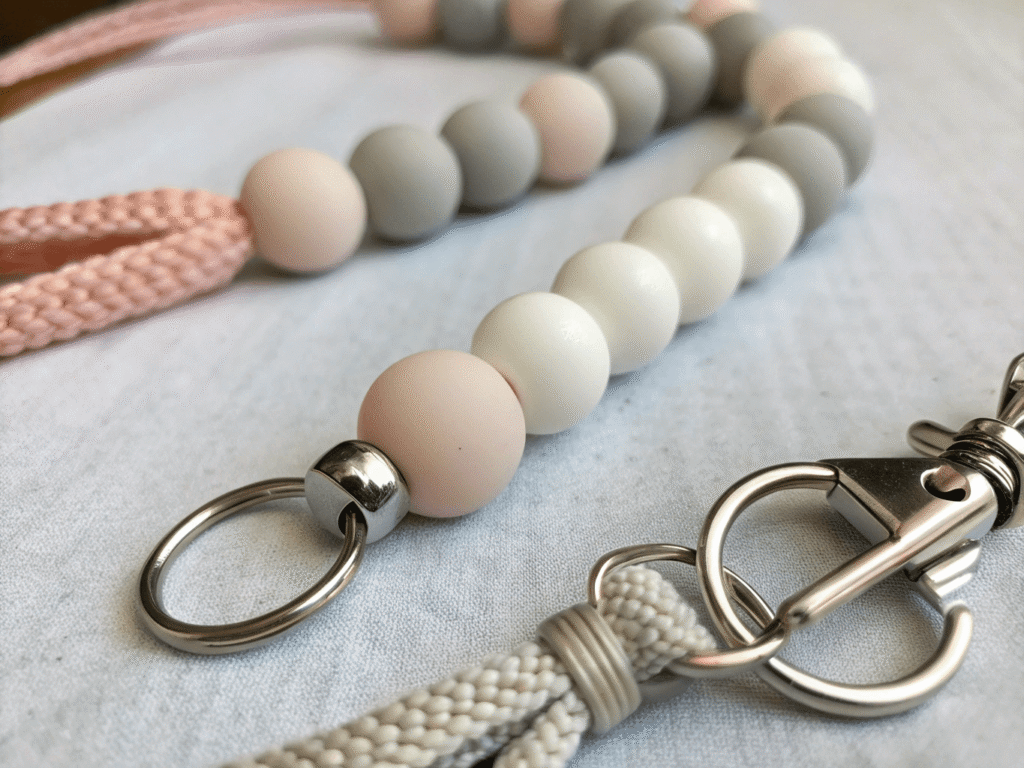
Pro tip: Use heat-resistant or waterproof adhesives when combining silicone with metal or fabric to ensure long-term durability, especially for products intended for outdoor use.
What’s the Best Approach to Bulk-Produce Silicone Bead Lanyards for Retail?
Scaling production requires precision and consistency across thousands of pieces. Manufacturers and OEM suppliers should develop standardized processes that balance efficiency with aesthetic quality.
Step-by-Step Production Workflow
- Design Planning:
- Define bead size (commonly 12–15 mm for keychains, 19 mm for larger lanyards).
- Determine color palette and accessory hardware.
- Material Sourcing:
- Choose food-grade, BPA-free silicone beads from certified suppliers.
- Order cords and clasps in bulk to maintain consistent quality and reduce cost variability.
- Assembly Line Setup:
- Pre-thread cords or paracords using automated bead feeders.
- Apply mechanical crimping tools for attaching metal clips securely.
- Quality Control:
- Inspect bead surfaces for uniform matte or glossy finish.
- Check the pull strength of connections — silicone beads should not detach under light tension.
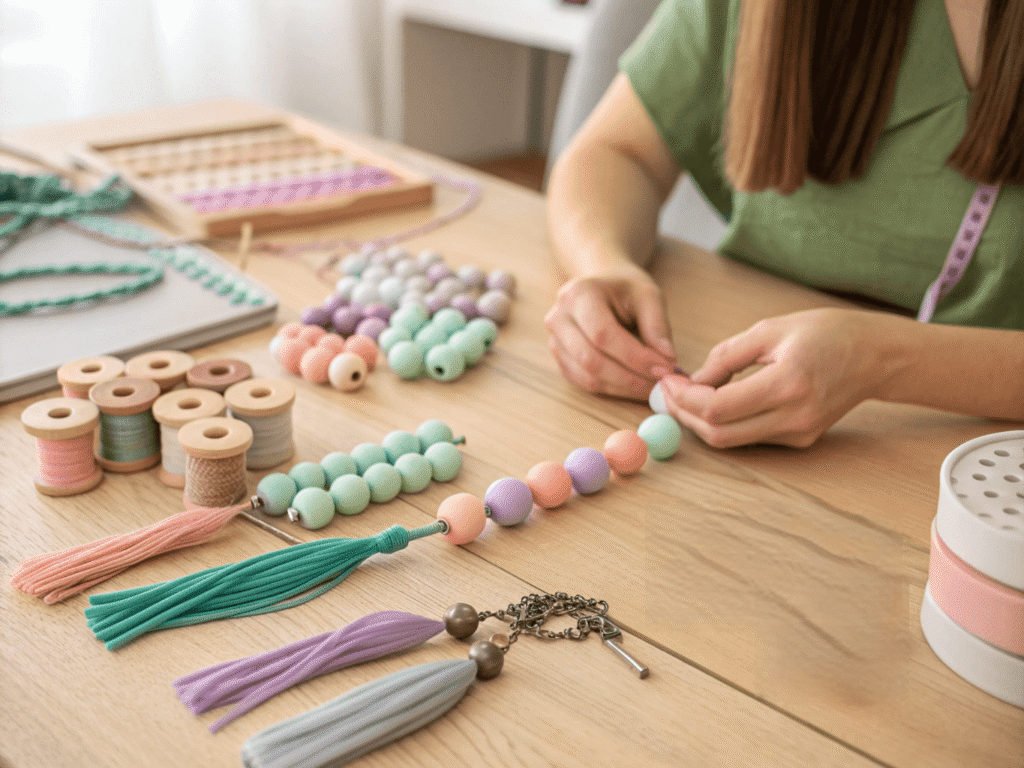
Automation Advantages
Integrating simple semi-automatic threading and clipping systems can cut labor time by 40–60%. This is especially valuable in large-scale retail production where margins depend on efficiency and consistency.
How Can I Control Color Consistency and Texture Across Thousands of Pieces?
Maintaining consistent visual appeal is vital, especially for brands selling coordinated collections. Silicone beads, while forgiving, require controlled manufacturing conditions to ensure identical color shades and tactile finishes.
Key Factors Affecting Consistency
- Pigment Mixing Ratio: Minor deviations in pigment concentration can cause tone shifts — precise digital pigment dosing ensures stability.
- Curing Time and Temperature: Overcuring can make beads hard; undercuring may cause tackiness. Both affect perceived quality.
- Surface Finish Control: Some brands prefer matte silicone for a soft-touch feel; others opt for glossy finishes suitable for vibrant retail displays.
Recommended Inspection Process
| Checkpoint | Method | Frequency |
|---|---|---|
| Color uniformity | Compare samples under daylight LED | Every 1,000 pieces |
| Shore hardness | Use silicone hardness test (Shore A scale) | Batch testing |
| Texture evaluation | Manual touch test and weight sampling | Per production batch |
Tip for OEM partners: Always order pilot batch samples before mass production. It helps prevent unexpected color variations — especially when using multiple pigment suppliers across orders.
What Are the Packaging and Export Options for Silicone Bead Accessories?
Your packaging approach reflects your brand’s professionalism and protects items during transit. For silicone bead accessories, moisture resistance, visual appeal, and sustainability all play key roles.
Packaging Strategies
- Individual Retail Packages:
- Polybags with resealable closures or kraft boxes with window displays.
- Include branding inserts and care instructions.
- Bulk Shipment Options:
- Use vacuum-packed polybags to save space and maintain hygiene.
- Label boxes with batch numbers and bead specifications.
Export and Compliance
When shipping internationally:
- Provide material safety documentation (MSDS) confirming silicone composition.
- Follow REACH and RoHS compliance for European markets.
- For U.S. imports, ensure labeling meets CPSIA (Consumer Product Safety Improvement Act) standards if products may contact skin.
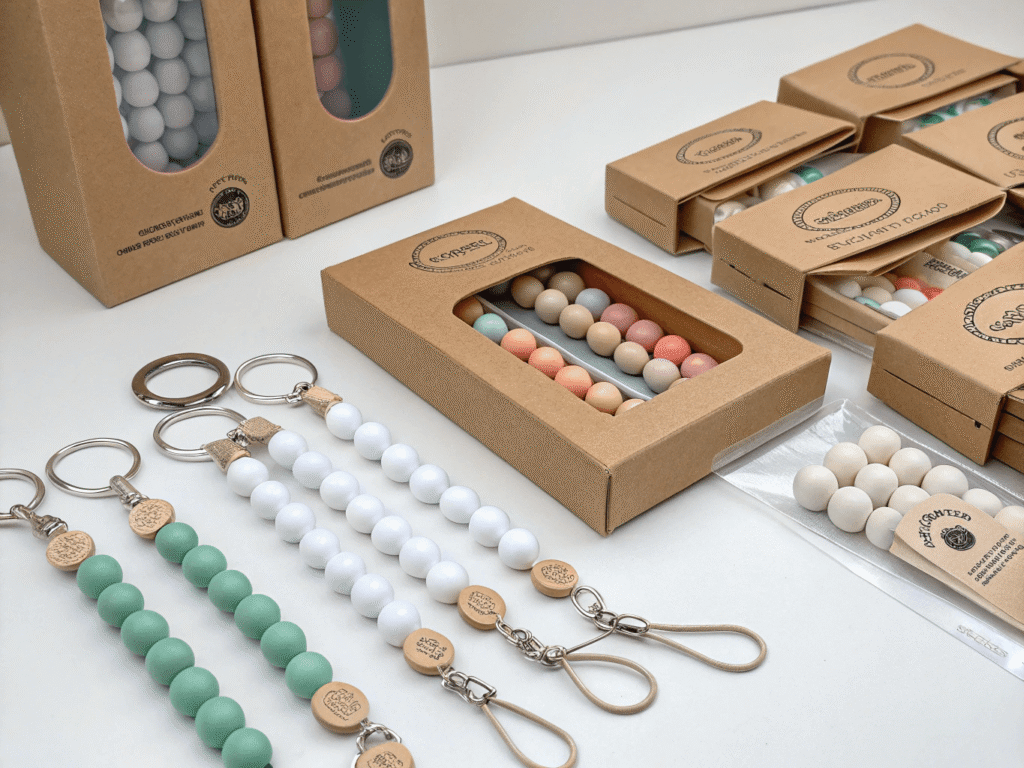
Sustainability Focus: Eco-conscious retailers increasingly prefer recyclable packaging. Opting for paper-based inserts and biodegradable outer wraps strengthens brand reputation.
Final Thoughts
Silicone beads bring comfort, color, and creativity to both keychains and lanyards — perfectly balancing aesthetics with durability. For wholesale manufacturers and OEM collaborators, the opportunity lies in combining efficient production, consistent quality, and attractive packaging.
By implementing structured manufacturing controls and thoughtful design integration, you can confidently scale up your silicone bead line while maintaining retail-grade standards.
If you’re a jewelry or accessory brand, craft supplier, or OEM partner, these insights will help you create high-quality silicone bead keychains and lanyards that meet consumer expectations and thrive in export markets.
