
When I first started exploring jewelry design, I was fascinated by how materials influence not only the look of a piece but also the comfort of wearing it. I remember crafting my first silicone bead bracelet and being surprised by how soft and lightweight it felt compared to traditional glass or metal beads. Many beginners, like I once was, are unsure whether silicone beads—often associated with baby accessories—can actually work in fashionable jewelry for adults. Spoiler alert: they can, and beautifully so.
Silicone beads are ideal for fashion bracelets and earrings because they are lightweight, safe for sensitive skin, and available in countless stylish colors and shapes. In this guide, I’ll explain the latest design trends, how to produce silicone bead jewelry at scale, finishing options for a polished look, and the best ways to ensure product quality for retail or export.
From casual everyday bracelets to bold, mixed-material earrings, silicone beads are becoming a go-to choice for designers seeking comfort and creativity. In the sections below, I’ll walk you through what I’ve learned about this versatile material—from trending looks to production methods and quality checks that every beginner should know.
What Are the Latest Trends for Silicone-Based Fashion Jewelry?
When I browse craft markets or fashion trade shows, I notice a clear trend: consumers want jewelry that feels good as much as it looks good. Silicone beads perfectly fit this demand. Their matte, smooth surface, wide color palette, and skin-friendly nature have reshaped what fashion jewelry can be.
Popular Styles and Color Combinations
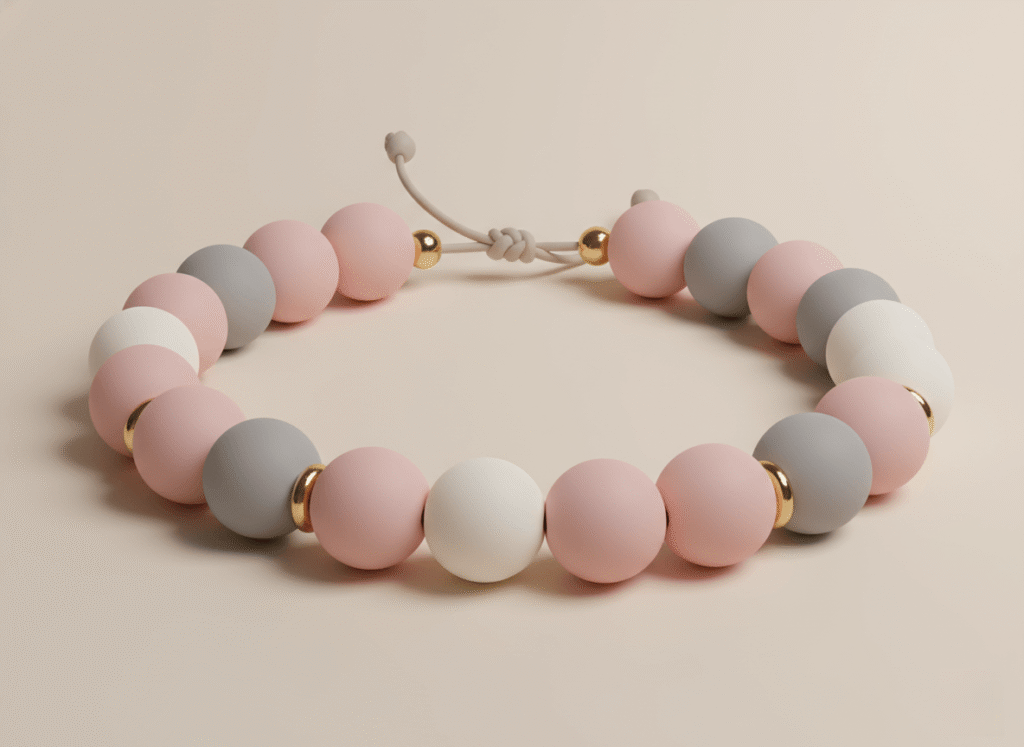
- Minimalist Pastels: Soft pink, grey, and beige silicone beads are trending for calm, Scandinavian-inspired designs.
- Chunky Bracelets: Oversized beads combined with wood or gold‑plated spacers create a contemporary, statement look.
- Playful Earrings: Bright silicone beads paired with resin charms appeal to younger audiences and pop‑inspired styles.
- Sensory or Fidget Jewelry: A growing segment blends aesthetic and tactile satisfaction—popular with people who enjoy soothing, flexible accessories.
| Trend | Typical Design Elements | Target Look |
|---|---|---|
| Minimalist Chic | Matte beads, small metal spacers | Everyday wear |
| Bold & Chunky | Large silicone balls, vibrant tones | Street or festival style |
| Mixed-Material | Silicone + wood or resin mix | Eco-modern aesthetic |
| Sensory/Fidget | Soft textures, movable parts | Comfort-focused use |
Why These Styles Work
Silicone’s soft texture pairs easily with contrasting materials such as stainless steel, wooden charms, and acrylic pendants. This compatibility lets designers create versatile pieces—from gym‑friendly bracelets that resist sweat to stylish earrings that remain featherlight all day.
How Can I Produce Silicone Bead Fashion Pieces for Large Retail Orders?
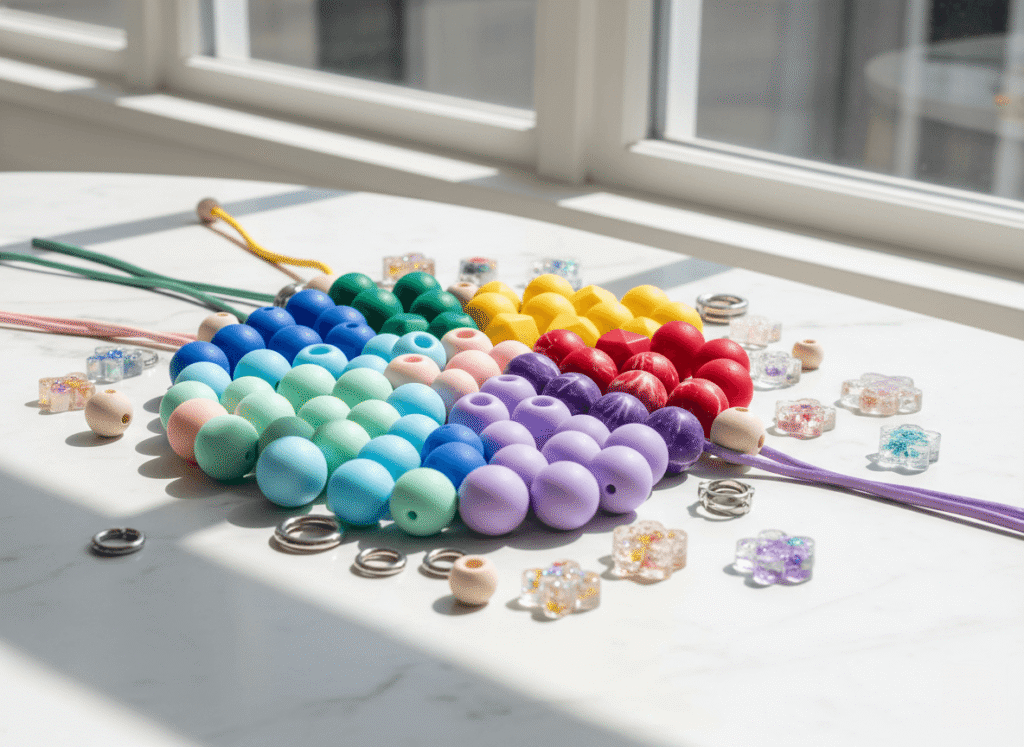
When I scaled from small handmade batches to larger retail runs, production consistency became my biggest challenge. Silicone beads require slightly different handling compared with rigid materials, so understanding manufacturing best practices is crucial.
Step 1: Material Sourcing
- Always choose food‑grade, BPA‑free silicone beads. Suppliers specializing in jewelry-grade silicone ensure hypoallergenic quality and uniform color batches.
- Request color samples before placing big orders, as silicone pigments can vary slightly across production runs.
Step 2: Assembly and Stringing
Due to silicone’s flexibility, threading can be trickier than with glass or metal beads. I’ve found that:
- Stretchy cord (1 mm elastic) works best for bracelets.
- For earrings, use stainless-steel or nylon wire to hold the bead shapes firmly.
- Slightly lubricating the string with a dab of coconut oil can make threading smoother.
Step 3: Quality‑Control During Assembly
- Check for surface defects, like tiny bubbles or uneven coloring.
- Test each bracelet’s tension by gentle stretching to ensure knots or crimps don’t slip.
- Keep humidity moderate—too much heat may soften silicone temporarily, affecting fit precision.
| Aspect | Recommended Practice | Outcome |
|---|---|---|
| Bead Selection | Food‑grade silicone, uniform color | Safe, consistent quality |
| String Choice | Elastic cord (bracelets), steel wire (earrings) | Durable hold |
| Assembly Environment | Room‑temp, low humidity | Prevent warping or stretching |
What Plating or Coating Processes Enhance the Look of Silicone‑Metal Combinations?
Silicone beads alone have a modern matte texture, but pairing them with metal components elevates their appeal. Early in my production journey, I experimented with various finishes, seeking a balance between shine and softness. Here’s what worked best.
Metal Components That Complement Silicone
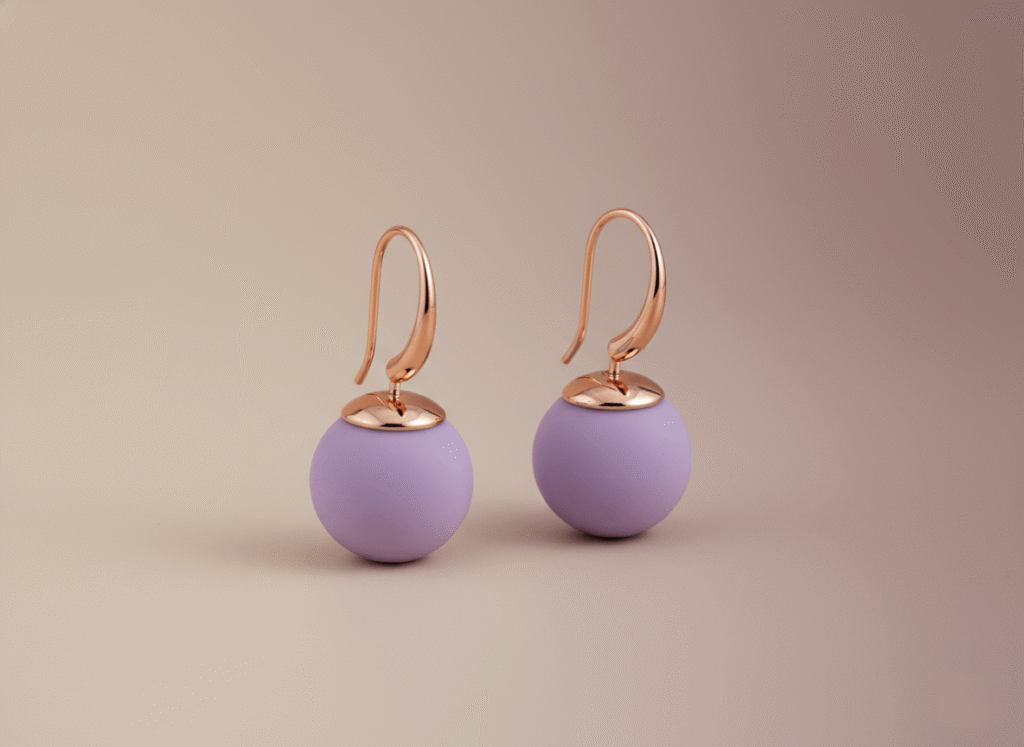
- Gold or Rose‑Gold Plated Brass: Adds warmth and a luxurious contrast to pastel or earth‑toned beads.
- Stainless Steel: Excellent for minimalist designs due to its cool, neutral tone and hypoallergenic properties.
- Rhodium‑Plated Elements: Provide tarnish resistance and an elegant sheen.
Coating and Finishing Tips
Silicone itself cannot be “plated” since it’s a non‑metallic polymer, but you can:
- Apply silicone‑safe paint or UV coatings for glossy finishes.
- Use adhesive bonding to combine beads with small plated metal studs or caps for aesthetic variation.
- For a premium impression, choose electroplated spacer beads between silicone pieces to add sparkle without affecting flexibility.
| Combination | Visual Effect | Best Used For |
|---|---|---|
| Silicone + Gold Plated Brass | Warm, modern contrast | Evening or upscale jewelry |
| Silicone + Stainless Steel | Clean, sleek vibe | Everyday or minimalist wear |
| Silicone + Rhodium Elements | Bright and polished | Export‑grade fashion lines |
Durability and Care
To keep mixed‑material jewelry pristine:
- Store pieces separately to avoid friction between silicone and metal.
- Avoid chemical cleaners; simply wipe with a soft, damp cloth.
- Educate customers about gentle care, since high heat or harsh solvents can degrade silicone’s elasticity over time.
How Can I Verify Quality Before Shipping My Silicone Fashion Jewelry Orders Overseas?
When preparing large shipments, ensuring consistency and safety is non‑negotiable. I learned the hard way that overlooking small details—like color uniformity or packaging protection—can lead to high return rates. Over time, I’ve built a quality‑control checklist that’s saved both time and reputation.
Pre‑Shipment Inspection Checklist
- Material Verification: Confirm that silicone beads meet ISO or FDA food‑grade standards; your supplier should provide documentation.
- Color Consistency: Check random samples under natural light to avoid shade mismatches.
- Mechanical Testing: Gently stretch bracelets and tug earring wires to check joint stability.
- Packaging Durability: Use individual pouches or bubble wrap to prevent shape deformations during long‑distance transit.
- Moisture and Temperature Control: Overseas shipping can expose goods to heat, so avoid sealing products before they’re completely dry.
Using Third‑Party Quality Checks
For bulk exports, I recommend hiring an international inspection agency. They can perform random batch testing and provide certification that boosts buyer confidence. Many retailers also request compliance results for toxicity checks (e.g., lead, BPA, phthalates).
| Quality Parameter | Inspection Method | Acceptance Criteria |
|---|---|---|
| Silicone Grade | Supplier certification | BPA‑free, non‑toxic |
| Stretch Test | Manual tensile pull | No cracking or breaking |
| Color Accuracy | Visual comparison | ±5 % shade difference |
| Surface Defects | 10× magnification | Smooth, bubble‑free |
Final Tip: Communicate After Sales
Once your shipment reaches retailers, gather feedback on wear experience and color durability. It helps refine future batches and strengthens long‑term partnerships. In my experience, transparency and proactive communication are critical for sustaining export success.
Conclusion
Silicone beads have evolved from craft materials into fashion‑forward jewelry components loved for their comfort, color variety, and sustainability. Whether you’re making your first bracelet at home or preparing thousands of retail pieces, this material offers room for creativity and commercial promise.
Based on my own experience, silicone beads are an excellent starting point for beginners. They’re forgiving to work with, affordable, and adaptable to any style direction—from minimalist to boho chic. As you grow your jewelry line, prioritize sourcing quality beads, pairing them with complementary metals, and conducting solid pre‑shipment checks.
With a thoughtful approach, silicone‑based fashion jewelry can blend durability, safety, and modern aesthetics—making every bracelet or earring not just an accessory, but a comfortable statement piece worth wearing every day.
