
Many craft kit suppliers and retailers are re‑evaluating their materials, especially as customers—parents, educators, and eco‑conscious brands—grow more concerned about safety and sustainability. One frequent question I get from importers and wholesalers is: Are wooden craft kits actually safer than plastic ones? The answer isn’t absolute, but understanding the safety landscape helps you choose responsibly for your brand and audience.
In short: Wooden craft kits tend to be safer and more sustainable because they contain fewer toxic additives and are less likely to break into dangerous fragments. However, safety still depends on manufacturing quality, coatings, adhesives, and compliance testing.
For both consumers and business buyers, the material you select affects not only product safety but also your brand’s reputation and long‑term compliance with EU/US standards. Below, I break down how each material performs across key safety dimensions and how you can ensure your kits meet regulatory expectations.
1. Understanding Safety Across Materials
When comparing wood and plastic, you must consider two major risk categories: chemical exposure and physical injury.
| Safety Dimension | Wooden Craft Kits | Plastic Craft Kits |
|---|---|---|
| Chemical Toxicity Risk | Lower, if finishes are water‑based and adhesives are formaldehyde‑free | Higher, especially if made with PVC, BPA, or phthalates |
| Physical Injury Risk | Splinters possible if not sanded properly | Sharp edges or brittle breakage under stress |
| Durability | Long‑lasting; preserves structure | May crack, warp, or fragment with age |
| Eco/Health Reputation | Strong—for brands marketing sustainability | Declining due to microplastic concerns |
Evaluating Material Suppliers
To verify your materials, request:
- Technical data sheets showing finish composition and VOC levels
- Safety certifications such as EC Type Examination (CE) or ASTM F963
- Toxicology test results for adhesives and surface coatings
These documents form the foundation of your safety claim and help you meet export requirements under EU and U.S. toy directives.
2. Chemical Safety: What Testing Reveals
Plastic craft kits have historically faced scrutiny for chemical migration issues, meaning substances like plasticizers and heavy metals can leach during play or prolonged contact. Phthalates and BPA remain common culprits, restricted in both U.S. (CPSC guidelines) and European toy safety directives.
Wooden craft kits avoid many of these concerns but may still hide risks if poor‑quality adhesives or finishes are used.
Key Watchpoints for Wooden Kits
- Adhesives — Avoid urea‑formaldehyde or phenol‑formaldehyde glues; choose water‑based bindings.
- Paints & Dyes — Use low‑VOC, non‑toxic paints (often labeled “EN71‑3 compliant”).
- Surface Treatments — Natural wax finishes are excellent but must be food‑safe and tested for migration limits.
Key Watchpoints for Plastic Kits
- Phthalates (DEHP, DINP, DBP) — Ensure testing below regulatory limits.
- Bisphenols (BPA, BPS) — Common in molded craft components; opt for BPA‑free certifications.
- PVC Levels — PVC parts should meet current EU REACH thresholds.
A responsible supplier will provide a Safety Data Sheet (SDS) detailing these chemical contents before shipment.
3. Physical Safety: Preventing Injury Risks
Mechanical safety determines how safe the toy or craft kit is during handling and prolonged use. Wooden sets present splinter hazards if surfaces aren’t properly polished, while plastic sets may introduce choking or fragment risks from brittle small parts.
For Wooden Kits
- Quality Assurance Checklist
- Sand all edges twice: machine sanding and hand polishing
- Apply a water‑based sealant
- Routinely inspect for cracks or raised grains after shipment
- Preferred WoodsWood TypeDurabilityChild‑Safety NotesBeechExcellentSmooth texture, low splinter riskMapleExcellentHeavy‑duty; ideal for intricate setsPineModerateSofter; prone to dents and splinters if untreated
For Plastic Kits
Use impact‑resistant polymers and test small parts for pull strength (at least 90 N as per ASTM). Avoid detachable micro‑components for age groups under 3 years.

4. Compliance and Customization Options
As a craft kit importer or retailer, compliance defines your credibility. For wooden items, focus on two layers of certification:
A. Regulatory Standards
- Europe: Toy Safety Directive 2009/48/EC and EN71 series (EN71‑1 mechanical, EN71‑3 chemical)
- United States: ASTM F963‑17 and CPSIA lead/phthalate limitations
- Labels to Request: CE marking, ASTM seal, or ISO‑compliant factory audit
B. Sustainable Customization
Many B2B suppliers offer eco‑friendly or child‑safe customization options:
- FSC‑certified wood sourcing
- Non‑toxic water‑based paints
- Packaging with biodegradable inserts
These specifications are valuable for branding—think “eco‑learning sets” or “green DIY kits”—and they position your products for school and museum retail distribution.
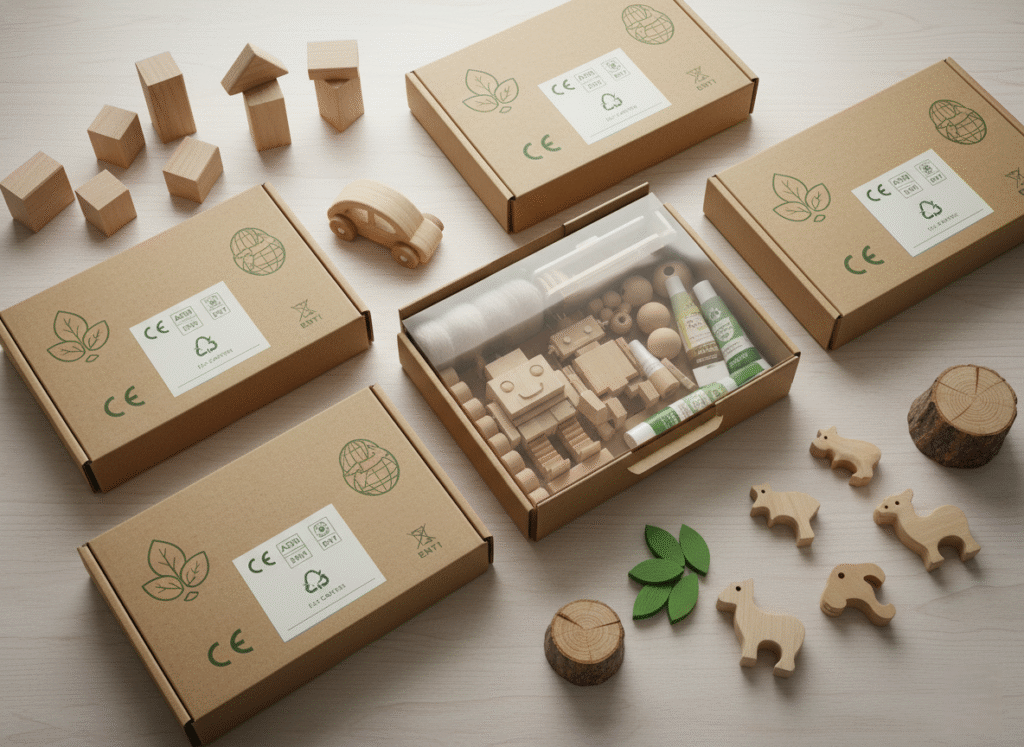
Example packaging compliance chart for EU/US toy products.
Conclusion: Choosing Responsibly for Your Market
Wooden craft kits generally rank higher in safety under proper manufacturing control, but ultimate safety comes from standards, not materials. Splinter‑free finishing, verified non‑toxic coatings, and full chemical compliance make wooden kits preferable for eco‑friendly or child‑focused collections. Plastic kits can still be safe if produced under strict regulatory oversight and modern polymer technology.
If you are a wholesaler, brand buyer, or OEM partner, I recommend:
- Requesting full compliance documentation (EN71, ASTM, CPSIA) during sourcing;
- Conducting random lot tests with third‑party labs (SGS, Intertek);
- Advertising verified material safety as a key brand differentiator.
Safety is not just a selling point—it’s a long‑term investment in consumer trust and regulatory continuity.
