
Anyone entering the jewelry-making world soon faces a common dilemma: should you begin with an all-in-one jewelry bead kit, or build your collection gradually through modular kits? For professionals sourcing supplies for resale, this choice can influence not only creative freedom but also product margins, production efficiency, and customer satisfaction.
In short: all-in-one kits offer convenience, simplicity, and a ready-made solution for fast results—ideal for beginners or gift sets. Modular kits or custom bead systems, however, excel in long-term flexibility, quality control, and scalability for serious creators, retailers, and brands looking to develop a signature look.
Understanding the strengths and trade-offs of each model will help you or your jewelry brand make smarter purchasing and sourcing decisions, especially if you work with OEM jewelry manufacturers in China.
Understanding the Difference Between All-in-One and Modular Bead Kits
What Is an All-in-One Bead Kit?
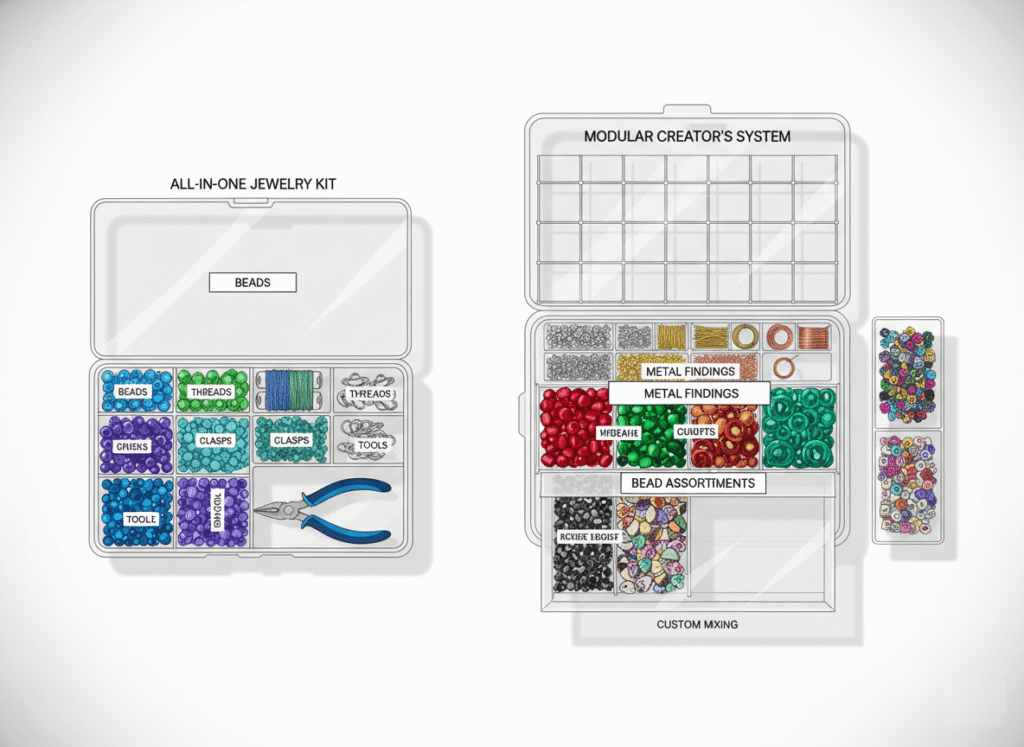
An all-in-one jewelry bead kit includes everything needed to craft ready-to-wear pieces—beads, wire, clasps, needles, pliers, and illustrated instructions. The curation ensures that all items are color- and size-compatible.
Typical users: beginners, casual hobbyists, or gift buyers.
Price range: $15–$40 (consumer retail range).
What Is a Modular Bead Kit?
A modular system allows makers to select bead types, tools, and findings separately—essentially building a personalized toolkit. This method supports sustainable crafting and professional-level results.
Typical users: established jewelry designers, hobbyists scaling up production, or wholesalers requiring flexibility for collections.
Price range: $50–$100+ (depending on material variety and tool quality).
Summary Comparison
| Aspect | All-in-One Kit | Modular Kit |
|---|---|---|
| Ease of Use | Ready to start immediately | Requires planning and skill |
| Creative Freedom | Limited (pre-selected) | Unlimited (full customization) |
| Tool Quality | Basic includes | Professional upgradeable |
| Cost Efficiency | Lower initial cost | Better long-term value |
| Ideal User | Beginner / Gift buyer | Professional / Repeat creator |
Key Advantages of All-in-One Jewelry Bead Kits
All-in-one kits shine where simplicity and speed matter most.
A. Ease of Learning
For newcomers, the biggest barrier is figuring out what to buy. Pre-packed all-in-one kits eliminate confusion and provide all essentials for a single project. This helps new makers build confidence before investing heavily.
B. Time Efficiency
All components are ready for assembly—no sourcing, no size matching. You can create wearable jewelry within hours, making these kits perfect for workshops, gift shops, and DIY events.
C. Predictable Quality Outcomes
Manufacturers designing all-in-one kits often test component compatibility before packaging. This consistency reduces the likelihood of material mismatch or production failures, especially important if you resell DIY jewelry kits.
D. Ready for Retail
Because of their attractive presentation, all-in-one bead kits are popular among wholesale gift retailers and craft store distributors. OEM factories in China often provide customizable packaging (logo, color themes, or multilingual manuals) suited for retail resale purposes.
Strengths of Modular Jewelry Kits
A. Greater Creative Control
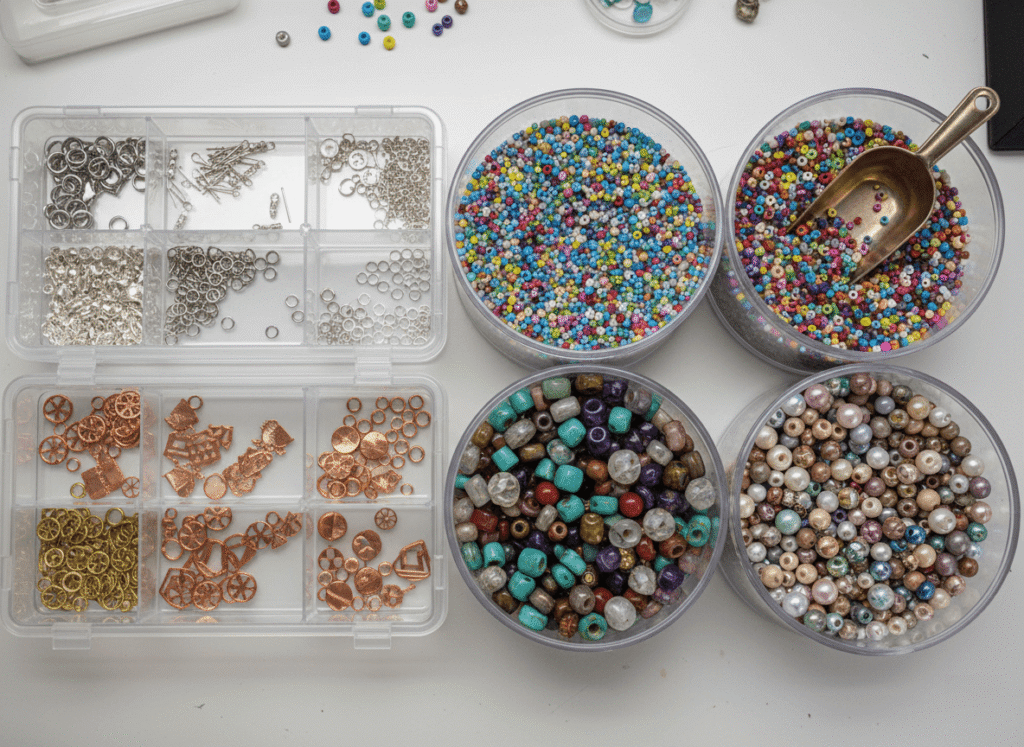
Modular systems give artisans total freedom—mixing glass, resin, acrylic, or metal beads without restriction. Brands using modular systems can create distinctive design collections or match color palettes across seasonal lines.
B. Long-Term Cost Efficiency
Buying beads, findings, and tools separately is more economical over time. Bulk purchasing reduces per-unit bead costs by up to 50%, improving profit margins for boutique jewelry lines.
C. Scalable for B2B and OEM Partnerships
For wholesale-level production, modular sourcing ensures repeatability and flexibility. Working directly with an OEM jewelry factory enables you to:
- Source identical beads in multiple finishes.
- Customize findings and packaging.
- Manage color consistency across production runs.
D. Professional Material Control
Modular setups allow you to test new materials—stainless steel, eco-glass, or imitation gemstone—for brand differentiation. Instead of accepting what comes in a kit, you curate component quality to match your brand identity.
How to Choose the Right Kit Type for Your Business or Project
Step 1: Define Your Purpose
- For hobby kits or retail gifts: choose all-in-one to simplify logistics.
- For a scalable jewelry line or workshop stock: go modular.
Step 2: Consider Experience Level
| Skill Level | Kit Recommendation |
|---|---|
| Complete Beginner | All-in-One |
| Intermediate Hobbyist | All-in-One → Modular transition |
| Professional Designer | Modular |
| Retailer / OEM Buyer | Modular with branded packaging |
Step 3: Evaluate Budget and Sourcing Logistics
All-in-one kits minimize startup costs (under $40). However, if your brand plans regular bead restocks or persistent production, modular sourcing from China’s OEM manufacturers gives better long-term ROI.
Step 4: Partner with Reliable OEM Suppliers
When sourcing bead kits or jewelry components from China:
| Criteria | What to Verify |
|---|---|
| Materials Certification | Nickel-free, lead-free compliance |
| Packaging Customization | Private labeling, branded boxes |
| MOQ Flexibility | For both small boutique and large-scale wholesale |
| Sample Orders | Test bead quality and threading precision |
| After-Sales Service | Transparent warranty or re-supply terms |
Trustworthy platforms and established factories (such as Alibaba OEM-certified jewelry suppliers) can provide both full DIY kit solutions and modular component shipments.
Professional Tips from an Industry Expert
- Combine both models strategically: Start your brand’s learning curve with all-in-one kits to test design concepts; as products gain traction, transition to modular sourcing for higher profit margins and brand exclusivity.
- Emphasize packaging design: Retail-ready all-in-one kits appeal strongly to consumer markets. For B2B, modular sets with refill beads add perceived professionalism.
- Leverage OEM flexibility: Request customized assortments—e.g., “rose-gold bead + freshwater pearl imitation + silver clasp”—to create signature product lines.
- Avoid common mistakes: Don’t rely solely on plastic tools; invest early in basic stainless pliers and waxed thread for durability.
Conclusion
Both all-in-one and modular jewelry bead kits have distinct value depending on your business goals.
- All-in-one kits: Fast, practical, and ideal for new learners or ready-to-retail gift sets.
- Modular kits: Flexible, cost-efficient, and best suited for professionals scaling their jewelry lines or curating OEM collaborations.
For most jewelry entrepreneurs and retailers, the smartest approach is hybrid—start simple, validate your market, and gradually shift toward modular, custom-built systems for greater control over quality and design.
If you’re a jewelry brand, wholesaler, or retailer, investing in OEM partnerships for modular bead kit customization will help streamline production, ensure material consistency, and improve profit sustainability as your craft or business grows.
