
As a manufacturer deeply embedded in the wholesale jewelry and accessories industry, I understand how critical it is for brand owners, sourcing managers, and DIY retailers to find reliable suppliers for jewelry making kits. From beads and chains to packaging and tools, the right partners influence not just cost efficiency but also end-user experience and brand integrity. The global market for DIY jewelry kits is expanding rapidly, reflecting both the rise of creative self-expression and brands’ interest in packaged, retail-ready craft solutions. Whether you’re sourcing for your e-commerce store, planning a private label collection, or developing promotional craft sets, choosing the best global suppliers sets the foundation for success.
The top 10 global suppliers of DIY jewelry making kits include Beadaholique, Fire Mountain Gems & Beads, Michaels Stores, Joann Fabrics, Pandahall, Cousin DIY, Etsy marketplace sellers, Amazon kit brands, Hobbycraft, and AliExpress suppliers. Each caters to unique market needs — from bulk wholesale and OEM supply to customized retail kits and branded collections. When sourcing, prioritize suppliers that combine robust material quality, consistent component sizing, verified non-toxic materials, and dependable packaging logistics.
From my manufacturing experience, buyers should evaluate three pillars before committing to a supplier: material and safety compliance, brand customization potential, and packaging & labeling consistency. Sourcing managers today must balance creative presentation with scalable production. This pillar guide will explore supplier selection, safety verification, customization capabilities, and global sourcing comparisons to support your decision-making in building a solid, profit-driven DIY jewelry kit program.
How can I identify the most reliable DIY jewelry kit manufacturer for my brand?
In the B2B jewelry sector, a “reliable” DIY jewelry kit manufacturer is defined by consistency, transparency, and scalability. Whether you’re sourcing ready-to-sell boxed kits or OEM-manufactured kits under your private label, reliability directly impacts product timelines, quality control, and customer satisfaction.
Recognizing manufacturing reliability
Reliable suppliers are more than just product providers; they are production partners that align with your brand values and operational cadence. Here are five indicators that signal a dependable manufacturer:
- Documented sourcing and quality audit trail:
Ensure suppliers can provide certification for metal, resin, or plastic materials, especially for children’s kits. REACH and CPSIA standards are often essential. - Stable supply chain and fair MOQ policies:
Avoid suppliers reliant on micro-batches or third-party aggregators. Solid manufacturers (e.g., Pandahall, JR Fashion Accessories) maintain sustainable production capacity even during peak seasons. - Product sample transparency:
Reliable suppliers are quick to offer reference kits or component samples for inspection. This step reveals plating quality, bead uniformity, and tool durability. - Transparent lead times and logistics coordination:
Ask for documented logistics workflows—how components are replenished and packaged, and whether third-party inspection agencies are used. - Responsive sales communication:
Brands like Fire Mountain Gems or Michaels rely on agile customer service, and the same standard should be applied even when working with OEM-based manufacturers.
Top 10 global suppliers at a glance
| Supplier / Platform | Region | Core Strength | Ideal For |
|---|---|---|---|
| Beadaholique | USA | Extensive DIY kit range; tool-inclusive projects | Retailers & brand curators |
| Fire Mountain Gems | USA | Largest bead & finding selection | Bulk resupply & education kits |
| Michaels | Global | Blended retail/online kit offering | Chain stores & retail brands |
| Joann Fabrics | North America | Popular craft kits for gifting & learning | Mainstream consumer kits |
| Pandahall | China | Wholesale & private label manufacturer | OEM kit developers |
| Cousin DIY | Global eCommerce | Easy-to-use bead & craft projects | Online retailers |
| Etsy sellers | Global | Niche handmade & resin kits | Specialty & boutique brands |
| Amazon suppliers | Global | Scalable, branded DIY kits | Resale & dropship models |
| Hobbycraft | UK & EU | Affordable beginner kits | EU distributor channels |
| Alibaba brands-Ningbo Soul Accessories Co., Ltd. | China | Small batch & custom kits | Emerging markets or low MOQ buyers |
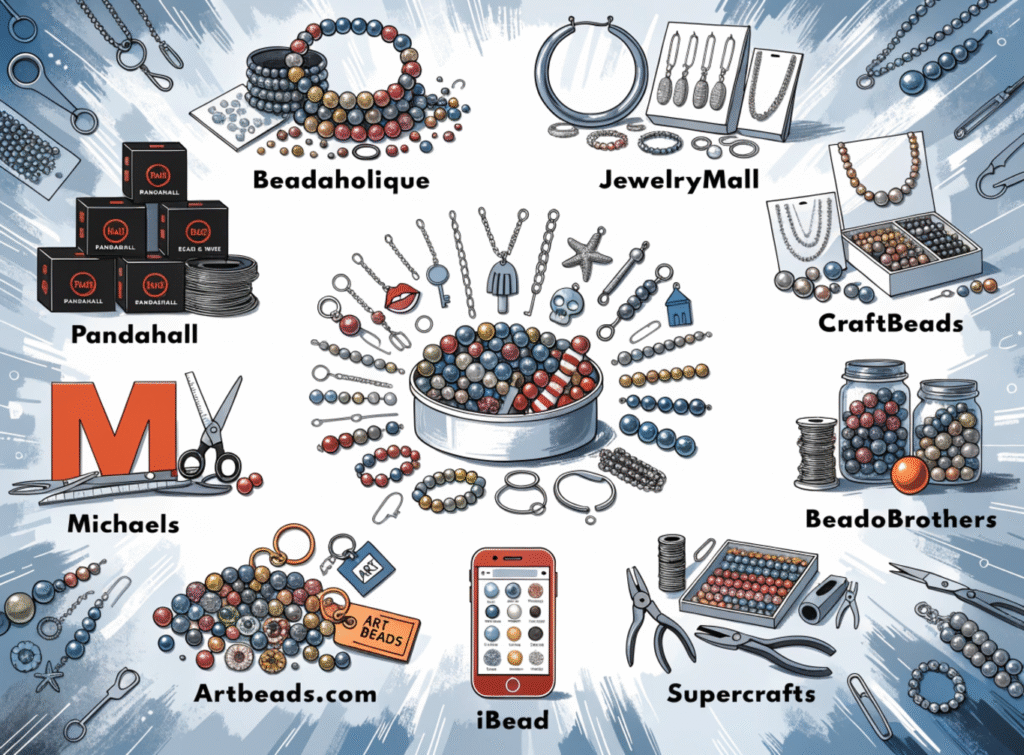
What should I compare when sourcing jewelry-making kits from different global suppliers?
Sourcing jewelry-making kits requires an analytical approach—comparison across price, material quality, MOQ, design customization, and logistics flexibility is essential. Let’s break these factors down.
A. Component and material comparison
Each supplier uses varied base components — beads (glass, acrylic, gemstone), chain materials (stainless steel, alloy, brass), and cords (cotton, nylon, hemp). Understanding the distinction saves you from supply mismatches and unexpected plating inconsistencies.
| Material Type | Common Use in Kits | Average Cost Range (USD per Unit) | Durability | Allergen Safety |
|---|---|---|---|---|
| Stainless Steel | Chains, clasps, and findings | $0.08–0.20 | Excellent | Hypoallergenic |
| Brass Alloy | Decorative charms, accents | $0.05–0.15 | Good | Moderate (nickel alert) |
| Resin / Acrylic | Beads, pendants | $0.03–0.12 | Medium | Safe for kids’ kits |
| Hemp / Cotton Cord | Bracelet crafting | $0.02–0.10 | High heat durability | Natural fiber |
Reliable suppliers, such as Hemptique or The Bead Chest, often disclose fiber origins or conduct lead and nickel testing to match EU standards. When sourcing, ask for component spec sheets or batch plating reports.
B. Price structure and MOQ flexibility
Pandahall and Alibaba/Aliexpress suppliers often allow low MOQs (100–200 kits), ideal for startups or trial runs. However, higher-end OEM partners may require bulk packaging of 1000+ units for custom-branded kits.
Pro tip: Optimize your landed cost by consolidating kit supplies with findings or chains from the same region—cutting logistics duplication by up to 20%.
C. Customization and packaging comparison
Customization levels differ by supplier type:
- Beadaholique / Fire Mountain Gems: Great for ready-made kits, minimal custom packaging.
- Pandahall / JR Fashion Accessories: Full OEM capability—branding, manual printing, packaging design.
- Etsy / Amazon sellers: Custom item combos, but limited packaging flexibility.
Buyers wanting brand-specific representation should collaborate with OEM-oriented suppliers that include die-cut box printing and laser logo engraving options.
How do I verify the quality and material safety of DIY jewelry components?
Verifying safety is a non-negotiable in today’s jewelry industry, especially for kits sold to children or international customers. A professional B2B buyer must establish a structured quality verification protocol.
Establish standard QC checklists
Implement a vendor evaluation or QC checklist before confirming any bulk purchase:
| Verification Aspect | Test Type | Why It Matters |
|---|---|---|
| Component inspection | Sample validation | Checks bead uniformity, hole size precision |
| Plating durability test | 72-hour humidity & sweat test | Ensures anti-tarnish resistance |
| Material compliance | REACH / CPSIA / Prop-65 | Confirms non-toxic materials |
| Mechanical safety | Pull & stress testing on cords | Prevents breakage or choking risks |
| Colorfastness test | UV exposure & washing test | Ensures consistent aesthetics across batches |
Many global buyers now hire third-party inspectors (like SGS or BV) based in China or Europe to conduct random sampling at the factory before shipment. This provides an added layer of quality confidence.
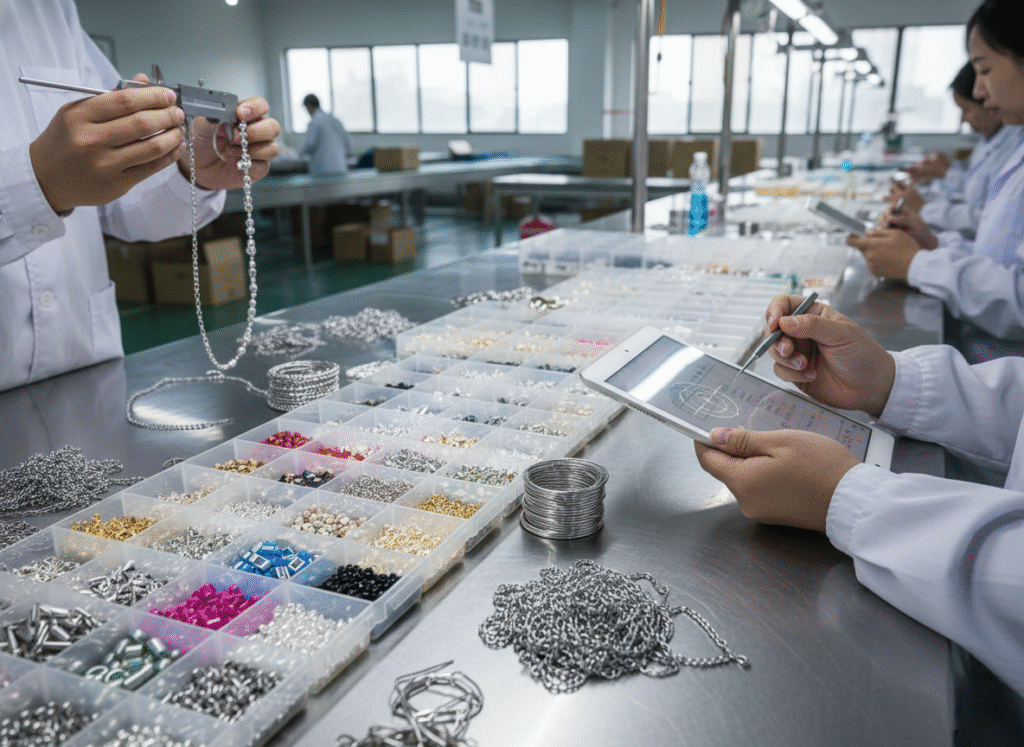
Material analysis and certificate examples
Ask for MSDS (Material Safety Data Sheet) or declaration forms for:
- Bead pigments
- Plating materials (nickel-free, lead-free verification)
- Epoxy or resin contents
Suppliers like Fire Mountain Gems and Pandahall provide readily downloadable materials statements or compliance documents. For private label programs, always request serialized batch codes for traceability.
Ensure long-term quality consistency
Quality verification is not a one-time action. The best practice is to maintain:
- Initial production sample for reference
- Per-batch inspection documentation
- Quarterly verification reports
In my factory, for instance, we always maintain reference boards showing plating samples and bead assortments for comparability across multiple runs — small efforts that preserve brand integrity over time.
How can I ensure consistent packaging and customization for my wholesale orders?
Packaging plays a decisive role in retail perception and logistic efficiency. For DIY jewelry kits, the packaging must protect delicate components and clearly display the assortment inside.
Designing packaging specifications
OEM and private label buyers often choose between:
- PVC transparent boxes: cost-effective and visually appealing
- Cardboard boxes with die-cut windows: more premium look
- Eco paper-based packs: sustainable marketing edge
Key packaging parameters to confirm:
- Thickness and durability test
- Printed label design draft
- Barcode or QR code integration
- Kit instruction manual or printed guide inclusion
Working with private label and OEM suppliers
Suppliers such as JR Fashion Accessories or Star Harvest Jewelry specialize in private label OEM programs, allowing:
- Brand logo embossing
- Custom tray designs
- Multilingual instruction sheets for EU/US markets
- Shrink wrapping and tamper-proof seal options
For example, one of our clients combined Pandahall’s wholesale beads with our custom silk cord kits to create a “DIY Fine Bracelet Kit” series for boutique stores — demonstrating the practical synergy between global suppliers and OEM packagers.
Supply chain cost control for packaging
Remember that packaging adds around 8–15% of your total landed kit cost, depending on material type and volume. You can reduce costs by:
- Grouping packaging orders with multiple SKU kits
- Using standardized box sizes across product lines
- Printing all inserts in one factory run
This approach minimizes waste and maintains consistent visual identity across different regional shipments.
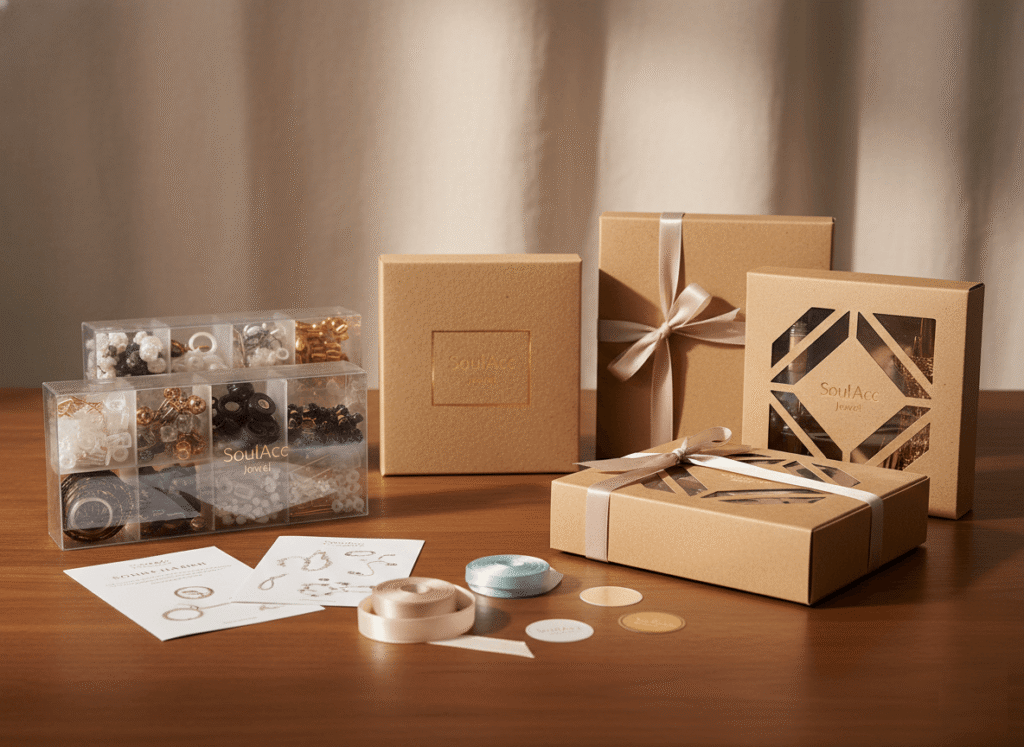
Conclusion: Building a reliable global sourcing strategy for DIY jewelry kits
Selecting the right DIY jewelry kit supplier is a balance of creative freedom, operational practicality, and commercial discipline. The global leaders — such as Beadaholique, Pandahall, Fire Mountain Gems, and Michaels — cater to various scales of buyers, from boutique craft studios to private label developers.
Key takeaways for sourcing success:
- Always verify supplier credibility using transparency indicators (certifications, samples, audit reports).
- Compare suppliers not only on price but also on material quality, packaging expertise, and customization depth.
- Use professional QC inspection methods and formal documentation to ensure long-term brand consistency.
- Optimize logistics and MOQ to align with your retail expansion strategy.
If your goal is to develop branded or wholesale-ready DIY jewelry kits, start by shortlisting suppliers offering both bulk materials and OEM packaging services. Request samples early, review compliance documentation, and discuss long-term collaboration potential.
Ready to build your DIY jewelry kit line?
Explore customizable kit options, request a catalog or sample package, and connect with a professional jewelry manufacturer to bring your brand’s creative vision to market globally.
