
Silicone beads have become a cornerstone material in the baby teething products sector. As a B2B manufacturer and supplier specializing in safe infant accessories, I’ve watched demand for food-grade silicone surge worldwide—especially among wholesalers, brand owners, and private-label producers seeking reliable solutions for baby teething lines. Their chewable, non-toxic nature makes silicone beads an essential component for safe, functional, and stylish teething necklaces and toys.
Silicone beads are used in baby teething necklaces and toys as soft, durable chewable elements that soothe sore gums. Made from BPA-free, food-grade silicone, they’re non-toxic, hypoallergenic, and easy to clean. For B2B buyers, the key is choosing suppliers who meet ASTM, EN71, or CPSIA safety standards, support OEM/ODM customization, and maintain strict QC on bead hardness, tensile durability, and cord strength.
Strategically, selecting reliable silicone bead manufacturers involves deep consideration of material certification, product design, and compliance testing. Whether you’re sourcing in bulk or developing custom OEM/ODM collections, ensuring bead safety and functional design will protect your brand reputation and earn consumer trust in the growing baby teething accessories market.
How Do I Choose Safe and BPA-Free Silicone Beads for Baby Teething Products?
The first step in developing any baby product is material safety. As a seasoned supplier working with international distributors, I always emphasize that not all silicone beads are equal. Your supplier must prove food-grade quality and compliance with global safety requirements.
Material Composition and Certification
Food-grade silicone beads are made from medical or LFGB-certified silicone, meaning they pass rigorous testing for non-toxicity and heat resistance. Below is a comparison of different silicone bead grades used in manufacturing:
| Type of Silicone | Certification | Usage | Safety Level | Recommended For |
|---|---|---|---|---|
| Food-Grade Silicone | LFGB / FDA | Baby teething products | Excellent | All baby accessories |
| Industrial Silicone | None / ISO only | Tech or mechanical parts | Unsafe for baby use | Never use |
| Medical-Grade Silicone | FDA / ISO 10993 | Medical devices | Superior | Premium teething beads |
Beads must be free from BPA, PVC, phthalates, cadmium, and lead. When evaluating a supplier, request testing reports (such as SGS or Intertek) to verify these claims.
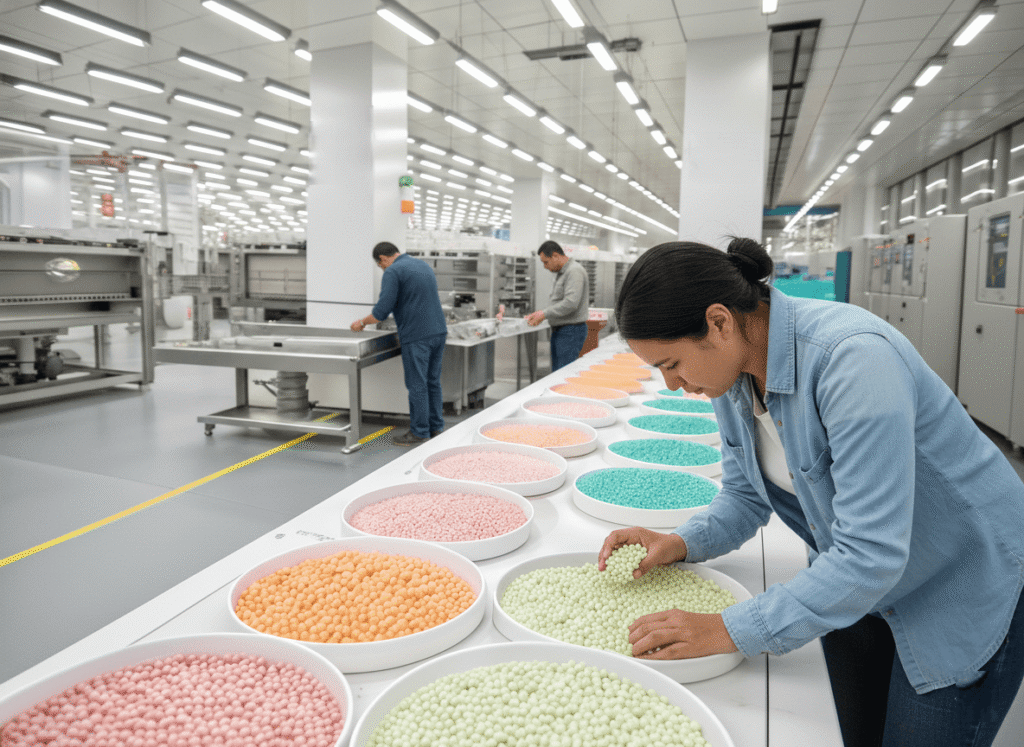
Texture, Durability, and Hygiene
A bead’s softness determines the comfort level for babies.
- Soft Durometer (40–50 Shore A): Ideal for soothing sore gums.
- Medium Hardness (60–70 Shore A): Balanced chew resistance for durability.
- Smooth and matte surfaces are easier to sanitize and feel gentle against skin.
Silicone beads excel because they are waterproof, washable, and sterilizable. They can be cleaned with soap and water or even boiled briefly without losing shape, which is essential for repeated baby use.
What Design Options Work Best for Teething Necklaces in Bulk Production?
Design flexibility is one reason silicone beads dominate in baby jewelry production. In bulk OEM/ODM manufacturing, balancing safety standards with visual appeal is crucial. I often advise buyers to evaluate both functional design aspects and assembly methods.
Adult-Worn Teething Necklaces
It’s important to note: teething necklaces are meant for adults to wear, not babies. The beads give babies a safe surface to chew while being held.

Key features in compliant designs:
- Strong nylon cord or silk rope, resistant to fraying.
- Breakaway safety clasp that releases under pressure to prevent accidents.
- Double-knotted sections between beads for stability.
- Non-toxic pigmentation—colorants must be safe and fade-resistant.
For large orders, verify:
- Uniform bead size and hardness
- Color consistency
- Surface finish quality
Wholesalers typically prefer neutral tones (gray, ivory, blush) or soft pastels (mint, peach) because they pair well with different baby outfits and suit diverse retail preferences.
Handheld Teethers and Rings
Silicone beads can also be integrated into freeform toys, rings, or rattles combined with wood or fabric. These designs promote not only oral comfort but also sensory development.
Design guidelines for safe assembly:
- Closed loops only; avoid long cords.
- Double-knot endings pulled into bead holes for smooth finish.
- Combine textures—e.g., maple wood rings + silicone beads for tactile variety.
- Freeze option: beads can be chilled for extra soothing effect.
How Can I Ensure My Silicone Teething Toys Meet International Safety Standards?
Meeting international safety benchmarks is non-negotiable for any baby accessory brand. Over the years, we’ve worked with distributors who require compliance with multiple international standards depending on target markets.
Global Safety Standards Overview
| Standard | Region / Organization | Key Requirements |
|---|---|---|
| ASTM F963 | United States | Mechanical safety, flammability, chemical limits |
| EN71 Parts 1–3 | European Union | Physical properties, migration of certain elements |
| CPSIA | United States | Limits on heavy metals, phthalates, labeling |
| ISO 8124 | Global standard | Toy safety guidance similar to EN71 |
Your manufacturer should regularly conduct pull tests, bite tests, and tensile strength checks on cords and beads, ensuring no small parts can detach. Document all safety testing reports for compliance auditing during customs inspection or retail certification.

Supplier Quality Control (QC) Parameters
QC during production typically includes:
- Incoming Material Inspection (IMI): Checking silicone bead hardness, color uniformity, and odor.
- In-Process Quality Check (IPQC): Monitoring assembly, cord strength, and knot performance.
- Final QC (FQC): Visual inspection for cracks, flashing, or loose ends.
- Random Sampling (AQL): Statistical inspection for large-volume orders.
When outsourcing to wholesale silicone bead factories in China, insist on transparent QC protocols and photo documentation before shipment. This prevents assembly errors and ensures every batch meets brand quality expectations.
What’s the OEM/ODM Process for Custom Silicone Teething Accessories?
Customization plays a vital role in establishing brand differentiation within the baby accessories sector. Silicone bead factories frequently offer both OEM (Original Equipment Manufacturer) and ODM (Original Design Manufacturer) services. I’ll share how we handle this process for global buyers.
Step-by-Step OEM Process (Buyer-Design Collaboration)
| Stage | Description | Buyer’s Role | Supplier’s Role |
|---|---|---|---|
| Product Planning | Define bead shape, cord style, and clasp color | Provide branding and theme | Offer technical feasibility |
| Sample Development | Prototype based on buyer specs | Approve sample, request minor revisions | Produce prototypes, conduct QC |
| Certification & Testing | Ensure compliance with regional standards | Provide target market info | Run tests (ASTM / EN71) |
| Mass Production | Launch bulk manufacturing | Confirm MOQ and packaging | Execute according to agreed specs |
OEM production is best for buyers with established brand visuals who need brand-specific bead shapes, embossed logos, or packaging.
ODM Design Support (Factory-Concept Development)
ODM allows buyers to benefit from the supplier’s existing designs—ready to customize with private-label logos or color adjustments. This reduces lead times and R&D costs significantly.
ODM design innovations may include:
- Multi-texture bead sequences for enhanced sensory response.
- Integration with natural wood elements.
- Themed collections such as nature, pastel, geometric, or minimalist styles.
- Custom packaging aligned with baby retail standards (polybag, gift box, blister card).

Additional Considerations for Sourcing Silicone Beads
MOQ and Cost Optimization
MOQ (Minimum Order Quantity) differs across manufacturers. Generally:
- OEM orders: 3000–5000 sets per design
- ODM catalog orders: 500–1000 sets per SKU
Cost drivers include:
- Bead diameter and mold complexity
- Custom colors and logo requirements
- Safety testing and certification fees
To maintain cost efficiency:
- Bundle orders across multiple styles to share mold expenses.
- Select standard bead sizes (12mm–15mm) to fit existing molds.
Supply Chain Coordination
As a global supplier, we align production schedules based on seasonal demand. Teething products often peak in Q2 and Q3, coinciding with baby shower and gifting seasons. Buyers should plan ahead for sea freight and allow buffer time for quality control and product safety audits.
Material Comparison: Silicone vs Wood vs Plastic
| Property | Silicone | Natural Wood | Plastic (ABS/PP) |
|---|---|---|---|
| Safety | Non-toxic, BPA-free | Eco-friendly but needs coating | Varies by type; risk of BPA |
| Cleaning | Washable, sterilizable | Wipe only | Washable, not sterilizable |
| Texture | Soft, chewable | Harder, soothing on gums | Hard surface, not ideal for teething |
| Durability | Excellent | Moderate | High but less safe for infants |
Silicone clearly offers the best balance of hygiene, softness, and safety, making it the go-to material for teething accessories.
Conclusion
Silicone beads present an exceptional opportunity for wholesale teething necklace and toy manufacturers, combining functionality, safety, and design versatility. For B2B buyers, the fundamental sourcing priorities include:
- Only select BPA-free, food-grade silicone.
- Verify supplier safety certifications (ASTM, EN71, CPSIA).
- Ensure robust cord construction and secure clasp systems.
- Request OEM/ODM support to scale your private-label line efficiently.
In a market increasingly driven by parental trust and sustainability, quality and transparency are everything.
If you’re exploring high-quality, customizable silicone beads for your next teething collection, feel free to request samples, review our catalog, or contact our sourcing team for personalized OEM solutions.
