In the rapidly evolving world of fashion jewelry and craft accessories, understanding material performance is a strategic advantage for B2B buyers, wholesalers, and private label manufacturers. Whether sourcing beads for teething jewelry, bracelets, or decorative accessories, the choice of bead material—silicone, wood, or acrylic—can significantly impact product quality, compliance standards, and manufacturing efficiency. As a supplier specializing in OEM/ODM jewelry production, I’ve worked with global brands that rely heavily on these material insights to make smart sourcing decisions for diverse product lines.
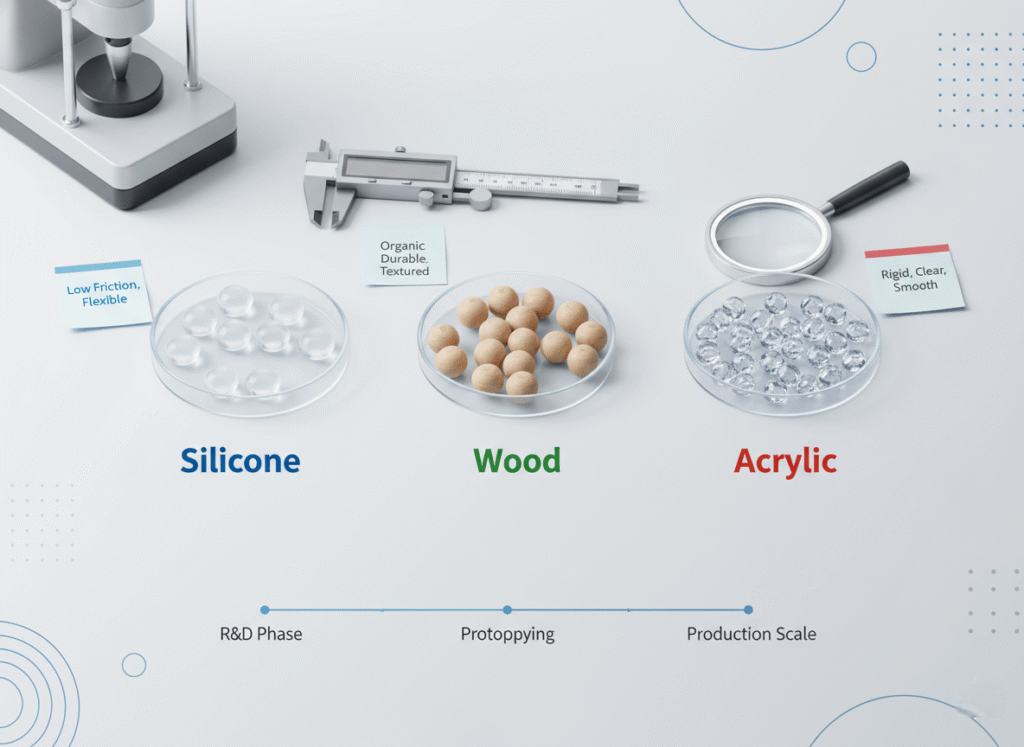
Silicone beads offer soft, flexible, non-toxic properties ideal for baby teething and sensory items. Wooden beads bring natural warmth and eco-friendly appeal perfect for sustainable craft and bohemian designs. Acrylic beads deliver vibrant aesthetics, lightweight durability, and cost efficiency, making them a top choice for decorative and fashion accessories. The best bead choice depends on product application, budget, and brand positioning.
For B2B jewelry buyers, understanding each bead’s composition, durability, cost structure, and visual aesthetics helps optimize MOQ planning, supply chain cost control, and product differentiation. This article covers material performance, customization options, maintenance requirements, and sourcing metrics—everything you need for effective supplier evaluation and product line planning across baby goods, fashion accessories, and bespoke jewelry categories.
What Are the Main Performance Differences Between Silicone, Wood, and Acrylic Materials?
As a manufacturer serving clients across Europe, North America, and Asia, I’ve seen firsthand how bead material dictates both design flexibility and production practicality. Here’s how the three compare from a B2B standpoint.
Material Composition Overview
Material
Texture
Core Attributes
Ideal Use
Silicone
Soft & elastic
BPA-free, non-toxic, high heat/water resistance
Baby products, teething necklaces
Wood
Natural & textured
Biodegradable, porous, warm aesthetic
Eco-friendly, rustic jewelry
Acrylic
Smooth & rigid
Glossy finish, color variety, lightweight
Fashion jewelry, decorative items
Each of these materials fulfills a different niche:
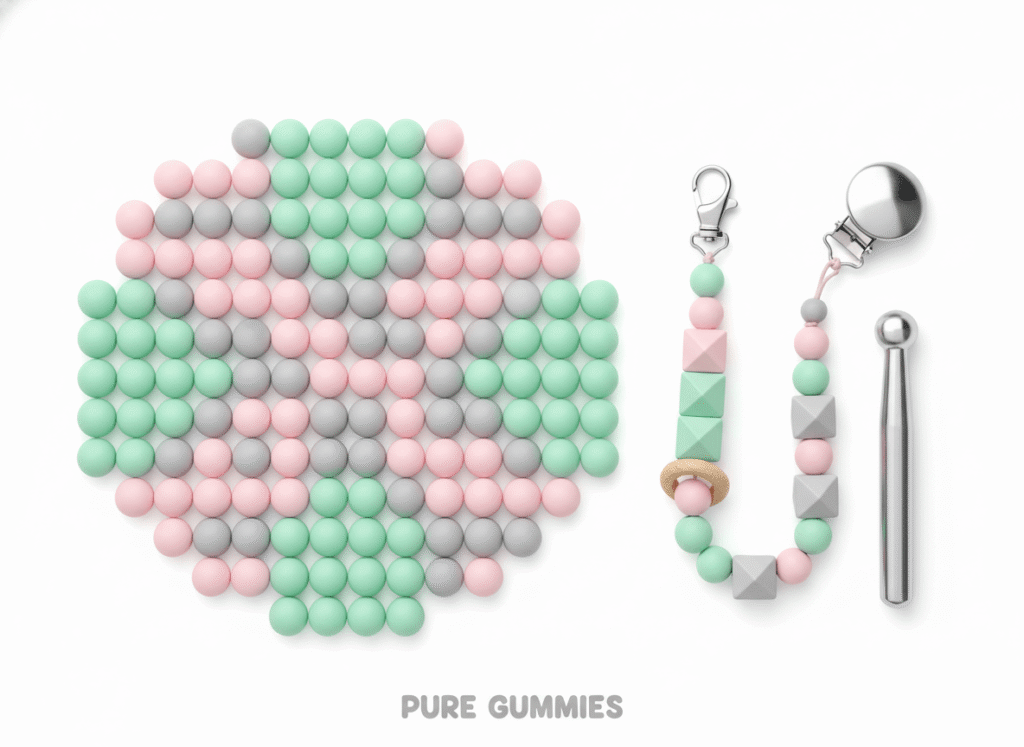
Silicone beads are synthetically derived yet human-safe, crafted from food-grade silicone polymer. They deliver flexibility and durability suitable for sensory, chewable, or heat-exposed applications.
Wooden beads offer organic appeal stemming from natural hardwood sources. They bring authenticity and sustainability, aligning well with eco-conscious branding.
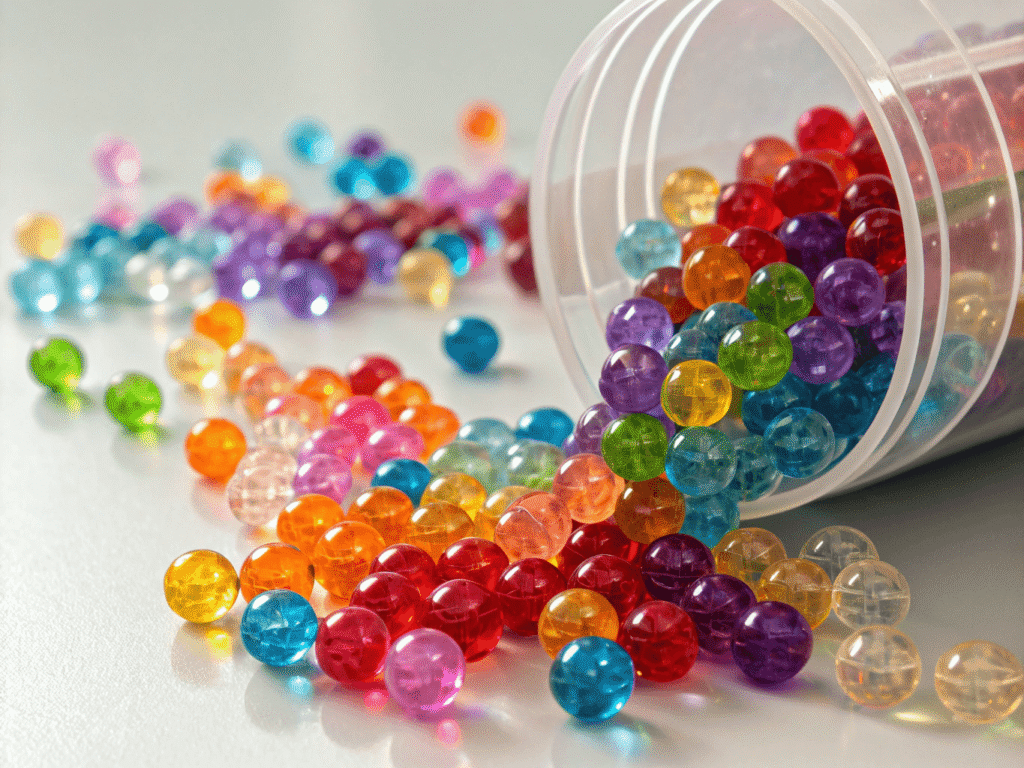
Acrylic beads are resin-based and highly customizable for appearance-focused products. They balance low price points with eye-catching finishes, perfect for high-volume decorative lines.
Material Performance by Key Metric
Performance Metric
Silicone
Wood
Acrylic
Heat Resistance
Very High (-55°C~300°C)
Moderate
Low (Up to 160°C)
Water Resistance
100% Waterproof
Poor, requires sealing
Moderate
Flexibility & Softness
Excellent
Rigid
Rigid
Surface Finish Uniformity
High
Variable
Very High
Hygienic Maintenance
Easy
Difficult
Moderate
Sustainability
Moderate
High
Low
Price (Per Bead Avg)
Mid-range ($0.20–$0.98)
Low ($0.03–$0.58)
Low ($0.01–$0.10)
How Can I Choose the Right Bead Type for My Specific Product Application?
In OEM and private label jewelry production, matching material to end use determines performance and market acceptance. I often advise buyers to consider target demographics, safety regulations, and product context when selecting bead types.
1. Silicone Beads — For Baby & Sensory Product Lines
Silicone beads excel in child-safe categories. They’re:
BPA-free, lead-free, phthalate-free
Suitable for chewable teething jewelry or sensory accessories
Resistant to sterilization and dishwasher cleaning
Recommended applications:
Teething rings, pacifier clips, and nursing necklaces
Sensory bracelets for kids with tactile therapy needs
Keychains and wristlets for water-prone environments
If your product line requires certification compliance (EN71, FDA-grade silicone) and high hygiene standards, silicone is undeniably the superior option.
2. Wooden Beads — For Natural Design and Eco-Focused Branding
Wooden beads appeal to brands promoting sustainability and artisanal craftsmanship. They offer:
For brands emphasizing “natural luxury” or “earth-conscious design,” wood creates an authentic brand story.
3. Acrylic Beads — For Bold, Colorful, and Cost-Sensitive Projects
For high-volume decorative lines, acrylic is unmatched in efficiency and versatility:
Available in hundreds of color variants, shapes, and coatings
Extremely lightweight for shipping and wearability
Best for expression-oriented and fashion jewelry items
Common uses:
Costume jewelry and promotional giveaways
Decorative home items and event embellishments
Mass-market charm bracelet assortments
Acrylic beads allow economical scaling—great when MOQ is high, but design variety must remain broad.
What Maintenance and Durability Advantages Does Silicone Offer Over Other Materials?
In daily handling and long-term storage, silicone’s material resilience outpaces both wood and acrylic. As an experienced supplier, I often explain this to procurement teams managing thousands of units per production order.
Silicone: The Champion of Hygiene and Longevity
Easy cleaning: Dishwasher safe or washable with mild soap
Non-absorbent: Resists mold, fungus, and odor retention
Flexible durability: Won’t chip or crack under repetitive bending
Temperature-proof: Maintains elasticity even after boiling or freezing
These traits make silicone a preferred choice in any product category where moisture and human contact occur regularly.
Wooden: Requires Surface Treatment
Wood’s porous nature limits its durability:
Absorbs moisture → risk of cracking or warping
Requires oil coating or varnish to extend lifespan
Sensitive to humidity changes While beautiful, wood demands a controlled retail environment and diligent QC for surface finish consistency.
Acrylic: Durable Yet Scratch-Prone
In factory production, acrylic performs well under normal stress but may:
Scratch easily during packaging or storage
Discolor under UV exposure
Crack under sharp impact or compression
For optimal QC, suppliers should perform impact and friction testing before bulk dispatch.
QC Checklist for Material Durability Testing:
Inspection Point
Silicone
Wood
Acrylic
Drop Test
✅ No deformation
⚠️ Risk of dent/crack
✅ Usually intact
Water Exposure
✅ Stable
❌ Can swell
⚠️ Limited
UV/Color Retention
✅ Good
⚠️ May fade
✅ Excellent
Heat Resistance
✅ Outstanding
⚠️ Limited
⚠️ Melting risk
Texture Uniformity
✅ Consistent
⚠️ Variable grain
✅ Perfect consistency
How Do Price and MOQ Vary Among Silicone, Wooden, and Acrylic Bead Suppliers?
From a B2B sourcing perspective, price structures reveal how manufacturers balance material cost, processing time, and logistics. Understanding these helps buyers plan profit margins effectively.
Silicone Beads Pricing Structure
Average FOB Price: $0.20–$0.98 per bead (depending on shape, printing, or embossed detail)
MOQ Range: 500–2,000 pcs per style, typical for OEM
Add-on costs:
Custom mold setup ($100–$300 per shape)
Food-grade certification fees (if applicable)
Packing upgrades (eco-bag or blister card packaging)
While upfront costs are higher, silicone beads offer excellent lifetime value, reducing warranty or quality return rates.
Wooden Beads Pricing Structure
Average FOB Price: $0.03–$0.58 per bead
MOQ Range: 3,000–5,000 pcs per style (bulk quantity recommended)
Cost Drivers:
Wood type (maple vs pine)
Surface finishing and drilling precision
Manual painting or engraving customization
Wood’s cost efficiency and artisan branding value make it highly appealing to boutique brands and craft wholesalers.
Acrylic Beads Pricing Structure
Average FOB Price: $0.01–$0.10 per bead
MOQ Range: 10,000 pcs per color mix easily achievable in China manufacturing hubs
Advantage:
Extremely low production cost
Fast injection molding cycle
Broad color inventory availability for just-in-time assembly
In fashion jewelry wholesale, low acrylic bead prices allow seasonal assortments with minimal investment risk.
Supplier Category
Silicone
Wood
Acrylic
Raw Material Cost
Moderate
Low
Very Low
MOQ (pcs/style)
500–2000
3000–5000
10000+
Lead Time
15–25 days
20–30 days
10–15 days
Best Production Area
Guangdong/Zhejiang (China)
Yiwu/Shandong (China)
Fujian/Zhejiang (China)
Additional Sourcing Insights: OEM/ODM, QC, and Supply Chain Optimization
OEM/ODM Production Models
For private label bead manufacturing, OEM/ODM flexibility dictates long-term scalability:
OEM Silicone Beads: Custom shapes using safe molds and FDA-grade materials.
ODM Wooden Beads: Ready design templates that can be rebranded for boutique stores.
OEM Acrylic Beads: Bulk injection molding for large jewelry and craft distributors.
Each option supports different brand identity frameworks—from minimalist eco-luxury to mass-market vibrancy.
QC & Bulk Order Inspection
Before shipment, key inspection parameters include:
Silicone: Hardness (Shore A rating), color consistency, odor-free testing.
Acrylic: Color accuracy, scratch resistance, and packaging abrasion tests.
A clear QC checklist helps mitigate rework costs and maintains buyer confidence.
Supply Chain Cost Control
From sourcing and mold setup to container freight planning:
Choose regional material procurement near production hubs.
Optimize MOQ and packaging standards to balance per-unit freight burden.
Factor in eco-certifications and compliance labeling early for global distribution.
Supply control depends on transparent collaboration between manufacturers and sourcing managers, especially in large-scale jewelry wholesale operations.
Global Market Trends and Buyer Behavior
With the rise of eco-conscious fashion and safety-certified baby accessories, markets are shifting toward materials that balance design and ethics.
Market Snapshot:
Silicone beads dominate baby teething retail in North America and Europe.
Wooden beads see stable growth in eco-craft segments and small-batch artisan jewelry.
Acrylic beads maintain market supremacy in low-cost decorative categories across Asia-Pacific and South America.
Buyers today expect not only variety but also traceability, factory audits, and standard certifications. Suppliers investing in eco-sourcing and compliant raw materials enjoy competitive advantages globally.
Conclusion: Strategic Bead Selection for B2B Success
To summarize:
Silicone beads deliver unbeatable safety, flexibility, and long-term durability for baby and sensory products.
Wooden beads offer aesthetic and environmental appeal suited for handcrafted, sustainable collections.
Acrylic beads enable cost efficiency and design diversity for fast-moving fashion accessories.
In B2B sourcing, the smartest approach involves aligning bead material with end-user expectations and brand goals. Evaluate suppliers based on consistent QC standards, fair MOQs, and transparent production practices.
If you’re planning your next bead collection or private label accessory line, I recommend reaching out for sample evaluation, material testing, and OEM customization consultation. Together, we can tailor your supply chain to achieve both superior product quality and optimized cost control.
Contact us today to discuss your bead sourcing or design customization project — and let’s build your next successful collection with the right material inclusion strategy.
Sophia
Hi, I’m Sophia Luo, the funder of soulacc.com, I’ve been running a company in China that makes jewelry and kid's DIY crafts for 8 years now, and the purpose of this article is to share with you the knowledge related to imitation jewelry and crafts from a Chinese supplier’s perspective.