
Developing fine motor skills lays the foundation for every small movement we make—from tying shoelaces to writing neatly or crafting intricate jewelry pieces. Fuse bead art, often recognized through popular DIY bead brands, is more than a colorful pastime; it’s a structured yet creative activity that systematically strengthens the muscles and coordination required for refined hand control. For educators, occupational therapists, and even DIY jewelry crafters, fuse bead art presents a fun and functional way to enhance fine motor development across ages.
Fuse bead art improves fine motor skills because it requires controlled, repetitive finger movements, color recognition, and pattern placement on a pegboard. Picking up small beads enhances dexterity; arranging them in patterns fosters visual-motor coordination; and ironing the finished design builds awareness of step-based crafting processes. This art form develops concentration, pincer grasp, bilateral hand use, and spatial control—all crucial for handwriting, crafting, and tool manipulation.
When we look beyond its surface-level creativity, fuse bead art becomes a microcosm of motor learning. It involves visual planning, color sequencing, hand-eye synchronization, and repetitive yet varied movement—all components of skill learning that translate directly to handwriting improvement, jewelry-making precision, and even occupational therapy exercises. Whether used in an educational, therapeutic, or hobbyist environment, bead art provides a dual benefit: cognitive stimulation and physical strengthening.
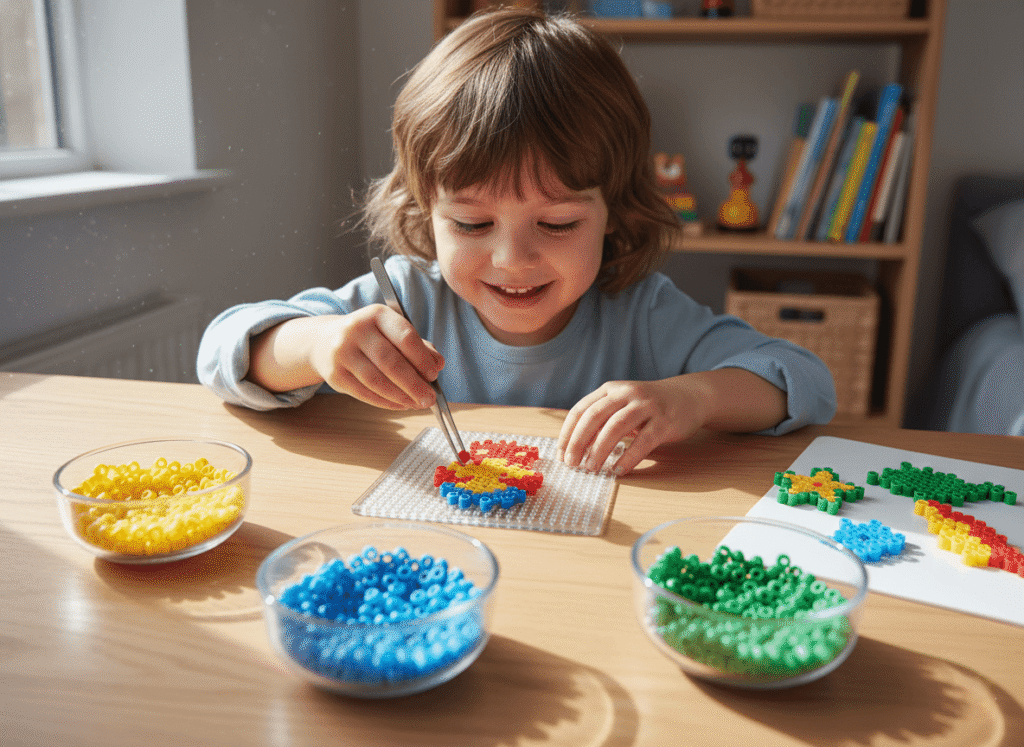
What Kind of Bead Art Projects Can I Try to Improve My Hand–Eye Coordination?
Fuse bead projects come in various forms, from simple color patterns for beginners to elaborate mosaic designs for advanced users. Each project variation plays a distinct role in cultivating hand-eye coordination.
Beginner-Level Projects: Building Visual Tracking and Placement Accuracy
- Simple Color Boards: Start with small grids (10×10 or 14×14) and basic patterns, such as hearts or stars. These designs train the eyes and hands to work together to place individual beads within confined spaces.
- Color Sorting Tasks: Before beginning a design, have children or learners sort beads by color. This repetitive process refines the pincer grasp and ocular focus.
- Alphabet or Number Designs: Reinforce letter recognition while enhancing visual-motor integration by designing basic letters or numbers using matching color codes.
Intermediate Projects: Expanding Coordination Capacity
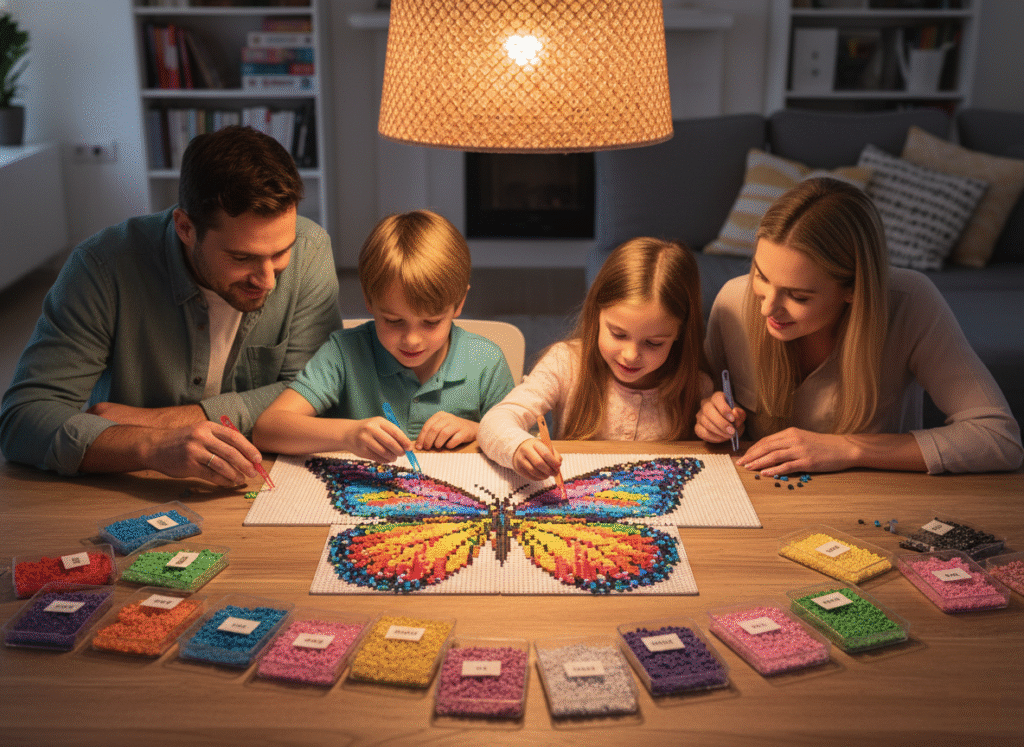
- Symmetrical Designs: Create mirrored images—like butterflies or geometric patterns—to engage both sides of the body equally and strengthen bilateral coordination.
- Layered Color Patterns: Introduce gradual shading or gradients to demand closer attention to color sequencing and bead alignment.
- Collaborative Mosaic Panels: Divide a large picture into multiple segments so each participant contributes a piece that aligns perfectly, cultivating both precision and teamwork.
| Project Level | Focus Area | Coordination Skills Developed | Suitable Age |
|---|---|---|---|
| Beginner | Single-color pattern | Visual tracking, gripping precision | 4–6 years |
| Intermediate | Multicolor patterns | Bilateral coordination, sustained focus | 6–9 years |
| Advanced | Complex mosaics | Pattern reproduction, fine detail accuracy | 8+ years |
By advancing through levels, learners continuously recalibrate their visual and motor systems. Over time, this process builds the steady hand-eye connection necessary for skilled activities ranging from writing to jewelry threading.
How Does Arranging Small Beads on a Template Strengthen My Finger Dexterity?
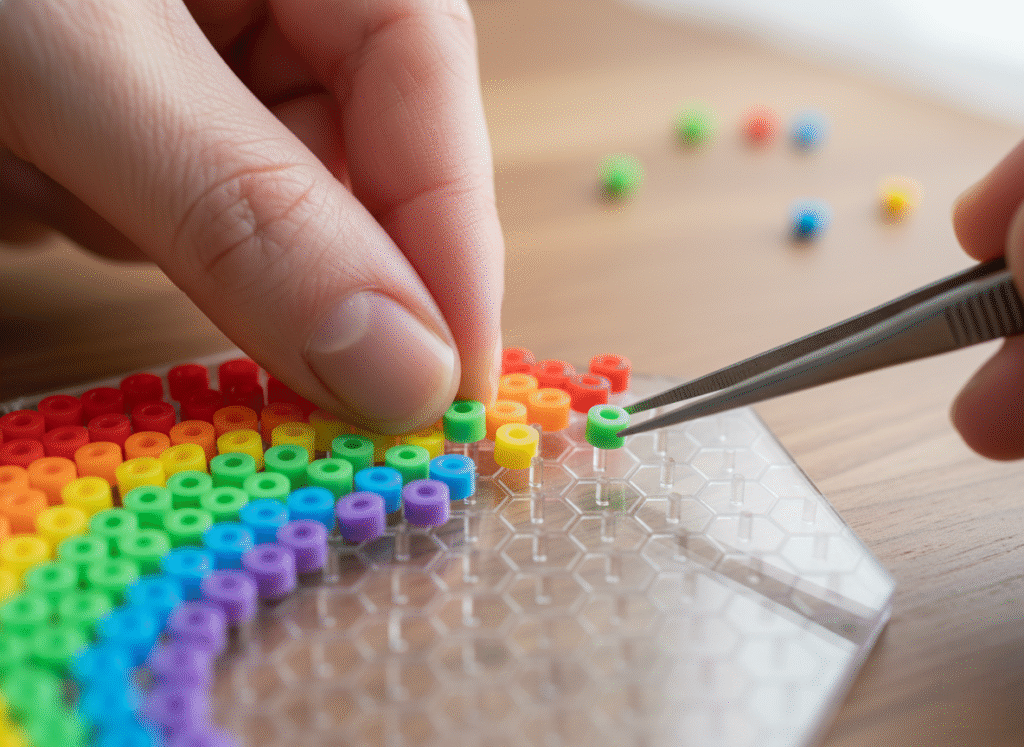
The core of fuse bead art lies in the repetitive act of placing tiny cylindrical beads onto a pegboard template—a precision task that functions as fine motor training.
The Science of Dexterity Development
When fingers repeatedly pick up and position beads, they engage intrinsic hand muscles responsible for micro-movements. These muscles control the thumb, index, and middle fingers—the same triad crucial for holding a pen, cutting fabric, or setting a gemstone.
- Pincer Grasp Enhancement: Picking up beads between the thumb and forefinger refines the pincer grasp.
- In-hand Manipulation: Moving multiple beads in the palm before placement strengthens coordination and grip control.
- Finger Isolation: Each bead placement isolates movement of one finger at a time, allowing fine-tuning of single-digit control.
Repetition Builds Neural Efficiency
Every repetition reinforces neural circuits in the motor cortex associated with precision control. Studies in occupational therapy indicate that fine motor refinement occurs through thousands of structured, purposeful repetitions—the exact process fuse bead projects deliver naturally through creative play.
Progressive Difficulty Enhances Skill Growth
| Bead Diameter | Skill Challenge | Ideal for Learners | Dexterity Focus |
|---|---|---|---|
| 10 mm (jumbo) | Low | Preschoolers or beginners | Hand stabilization |
| 5 mm (standard) | Medium | Elementary-level users | Finger precision |
| 2.6 mm (mini) | High | Teens or adults | Micro-control and visual accuracy |
Choosing bead size strategically lets users graduate through complexity, allowing their dexterity to mature organically as difficulty increases.
What Tools or Accessories Can I Use to Make My Bead Placement More Accurate?
Even the most patient artist can benefit from the right accessories that improve control, accuracy, and ergonomic comfort. Appropriate tools not only reduce strain but also ensure consistent fine motor engagement.
Essential Tools for Improved Placement
- Bead Tweezers: Ideal for smaller beads or for users still developing a pincer grasp. They enhance precision while minimizing dropped beads.
- Sorting Trays: Having divided sections for different colors encourages organization and planning—a cognitive precursor to accurate motor output.
- Lighted Pegboards: Enhanced visibility reduces visual fatigue and sharpens eye-target coordination.
- Magnifying Glass Tools: Support visual details for complex patterns and reduce eye strain.
- Bead Scoops and Funnels: Aid in cleanup and storage, ensuring time is spent creating rather than managing materials.
Ergonomic Placement Tips
- Maintain a neutral wrist position to avoid tension during prolonged placement.
- Keep both forearms supported to encourage steady movement without tremors.
- Take frequent micro-breaks to relax finger joints and sustain accuracy.
For educators or therapists, integrating these tools with progressive templates creates a scaffolding approach—gradually reducing reliance on aids as motor control improves.
Pro Tip: For older children or adults practicing jewelry precision, combine fuse bead trays with microbead tweezers or threading tools to simulate the handling skills needed for stone setting or bead stringing.
How Can I Integrate Bead Art Into My DIY Jewelry Craft Skills Development?
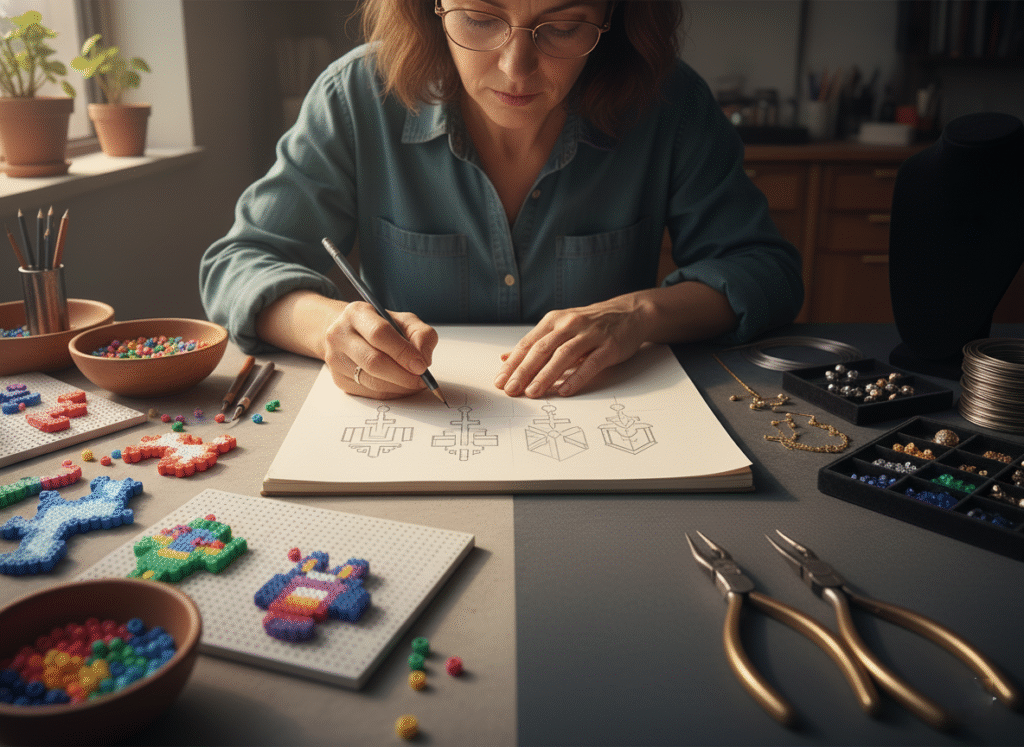
Fuse bead art doesn’t have to be limited to play—it bridges perfectly into DIY jewelry-making and design skill development. In fact, many artisans trace their control and patterning proficiency to early fuse bead projects.
From Bead Boards to Bead Benches: Applying Learned Skills
The same fine motor processes used in fuse bead placement apply directly to jewelry tasks such as:
- Threading tiny seed beads onto wire
- Aligning gemstones in settings
- Creating balanced earring pairs
- Wire wrapping and clasp manipulation
Each of these requires precision, steady bilateral control, and excellent pincer strength—the very outcomes bead art cultivates through repetition and pattern recognition.
Pattern Planning and Color Coordination in Jewelry Design
Designing bead templates trains pattern visualization. Translating that into jewelry creation allows for better balance of symmetry, proportion, and color blending. Over time, bead artists can shift from plastic beads to materials like glass, acrylic, or metal micro-beads to practice real-world jewelry applications.
| Jewelry Skill | Related Bead Art Exercise | Development Focus |
|---|---|---|
| Stone Setting | Exact placement on template | Depth perception, micro-control |
| Wire Wrapping | Repetitive fine motions | Finger endurance |
| Bead Stringing | Color sorting, sequencing | Pattern memory |
| Symmetrical Design | Mirrored pegboard layouts | Balance and bilateral precision |
Integrating Fuse Beads Into Jewelry Design Practice
- Prototype Jewelry Layouts using fuse beads before working with expensive materials.
- Practice Pattern Repetition with complex designs to achieve consistent spacing and alignment.
- Simulate Crafting Steps such as picking, placing, and securing—effective analogs to metalworking or chain assembly.
This cross-skill integration creates a natural link between early motor training and advanced craftsmanship—turning a developmental activity into a lifetime creative advantage.
Beyond Skill: The Cognitive and Emotional Payoffs
Fuse bead art also contributes to emotional regulation and cognitive sharpness. Its rhythmical, task-oriented nature cultivates patience and focus, qualities invaluable for any fine artisan or learner.
- Concentration Training: Repetitive task engagement fosters sustained attention.
- Spatial Awareness: Complex layouts activate planning areas of the brain.
- Stress Reduction: Tactile crafting has calming effects on the nervous system, enhancing both creativity and productivity.
These hidden benefits reinforce that motor skill development isn’t purely mechanical—it’s holistic, connecting mind, movement, and mindfulness.
Conclusion: Why Fuse Bead Art Is a Gateway to Fine Motor Mastery
Fuse bead art forms a bridge between playful creativity and structured skill-building. Whether you are helping a child refine pre-writing abilities, guiding therapy for coordination development, or training your hands for jewelry craftsmanship, this versatile art provides measurable benefits.
In summary:
- Dexterity Growth: Repetitive bead placement refines micro-muscle control.
- Hand–Eye Coordination: Visual guidance strengthens bilateral hand integration.
- Transferable Craft Skills: Bead work transitions seamlessly into jewelry-making and precision design.
- Cognitive Reinforcement: Pattern-making boosts concentration, planning, and spatial reasoning.
Take the Next Step:
Start with a small bead project today—experiment with complex color patterns or symmetrical templates. Over time, you’ll notice not only steadier hands but a deeper creative confidence that extends into writing, crafting, or professional jewelry design.
