
Fuse beads have become a staple in the DIY craft and educational toy market, offering endless creative possibilities—from simple color patterns to elaborate pixel art. For brand owners and craft suppliers, however, understanding which age group these products best fit is vital for product design, safety compliance, and marketing success. Many wholesalers and retailers struggle to match bead size, packaging, and product messaging to the correct developmental stage, which directly affects sales performance and customer satisfaction.
In short, fuse beads are generally suitable for children aged 5 and older, though exact recommendations depend on the bead size, fine motor skill level, and supervision needs. Younger children may use larger bead types designed for safer handling, while older kids and even adults continue to appreciate fuse beads for their artistic versatility.
This article explores how to match fuse bead types to age groups, check safety certifications when sourcing from China, and tailor packaging or customization options to different markets—from school craft programs to adult hobby collections.
How Can I Choose the Right Fuse Bead Size for My Target Customers?
Understanding Bead Size Categories
Fuse beads come in different standard sizes, each suitable for a particular age group:
| Bead Type | Diameter | Recommended Age | Key Features |
|---|---|---|---|
| Maxi / Biggie Beads | ~10mm | 3–4 years | Large size, easy grip, ideal for preschool fine motor training |
| Midi Beads | ~5mm | 5–12 years | Standard fuse beads; perfect for beginners and classroom projects |
| Mini Beads | ~2mm | 10+ years | Small, intricate; ideal for advanced designs and pixel art |
| Water Fuse Beads | ~5mm | 4+ years | Fuse with water mist instead of heat, safer for younger users |

Practical Recommendations
- For preschool programs, select Maxi beads due to their size and ease of handling.
- For primary school workshops or retail craft sets, Midi beads are the most versatile category.
- For teenage and adult hobbyists, Mini beads cater to precision-based art applications.
OEM Considerations
If sourcing from an OEM manufacturer, request size-mixed sets—for example, combining Biggie and Midi beads—to expand your target age range without increasing SKU complexity.
What Safety Standards Should I Check When Sourcing Kids’ DIY Craft Sets from China?
When producing or importing fuse bead kits for children, safety compliance is non-negotiable. The small bead size and ironing procedure present potential hazards, so adhering to international safety standards ensures product reliability and market access.
Key Safety Certifications
- EN71 (Europe) – Covers mechanical safety, flammability, and chemical composition.
- ASTM F963 (United States) – Similar to EN71, mandatory for toys sold in the US.
- CPC/Children’s Product Certificate – Required by the US Consumer Product Safety Commission.
- CE Marking – Confirms compliance with European safety directives.
- CA Proposition 65 – Regulates chemical safety for California markets.
Testing and Material Controls
Manufacturers should verify:
- Non-toxic polyethylene (PE) or EVA materials used for beads.
- No PVC or phthalates that could violate toy safety standards.
- Heat resistance for ironing steps (if traditional fuse beads are used).
- Proper warning labels, such as “Not suitable for children under 3 years.”

Sourcing Tip
Request third-party laboratory reports (SGS, Intertek, or TUV) before confirming a production order. These reports demonstrate compliance and help prevent customs delays or product recalls.
How Can I Package Fuse Beads to Appeal to Different Age Groups and Retail Markets?
Packaging doesn’t just protect the product—it shapes the customer experience and influences buying decisions. Fuse bead packaging should align with the intended user’s age range, skill level, and usage scenario.
For Preschool Market (Ages 3–4)
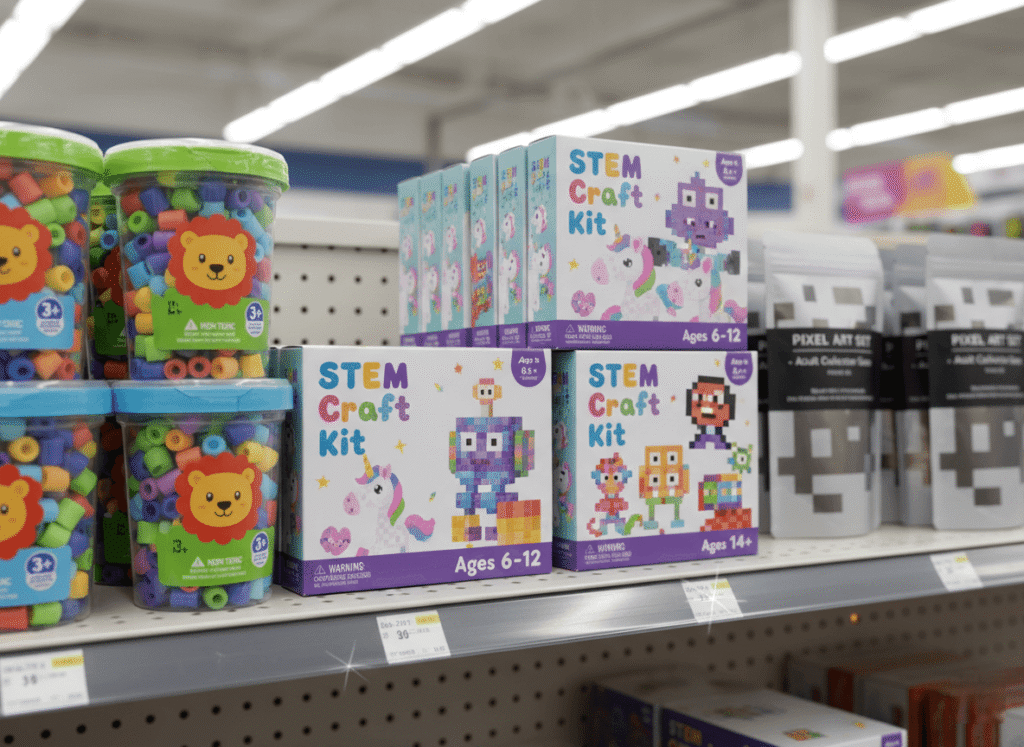
- Use transparent tubs or boxes with large, colorful bead samples visible through the packaging.
- Include basic templates with animals and simple shapes.
- Label clearly: “Safe for ages 3+,” and emphasize easy-grip beads and non-heating fuse methods.
For Kids (Ages 5–10)
- Opt for vibrant boxes featuring finished designs to inspire creativity.
- Include pegboards, pattern cards, and tweezers as accessories.
- Display “STEM / Educational Craft Kit” on the packaging to attract parents and schools.
For Teens and Adults
- Use sleek, minimalist packaging with sophisticated color palettes.
- Highlight advanced art or pixel design potential.
- Consider resealable pouches or stackable jars, which appeal to dedicated hobbyists.
Retail Channel Adjustments
| Market Type | Ideal Packaging | Suggested SKU Approach |
|---|---|---|
| Toy Stores | Colorful boxed sets | Focus on age labeling |
| Arts & Crafts Retailers | Modular storage | Offer refill bead kits |
| Educational Distributors | Class-size kits (10,000+ beads) | Include teaching guides |
| Online Retail | Eco-friendly packaging | Add digital design templates |
What Customization or OEM Services Can I Request for My Educational Toy or Craft Line?
As demand for DIY and STEAM-based crafts grows, OEM manufacturers now offer flexible customization services for fuse beads. These options allow brands and distributors to tailor products to specific demographics or educational objectives.
Available OEM/ODM Services
- Color Customization – Choose unique bead color palettes for brand exclusivity.
- Private Label Packaging – Add your logo and educational messaging for retail differentiation.
- Kit Content Design – Select pegboard shapes, pattern cards, and accessories to match your target age group.
- Material Options – Switch between heat fuse and water fuse systems depending on your safety requirements.
- Bulk Educational Sets – Develop classroom-ready kits with organized bead compartments and teaching manuals.
Collaboration Tip
Discuss age-specific features with your supplier during sampling:
- For preschool kits, request larger bead molds and non-iron bonding options.
- For educational distributors, ask for fine motor skill activity guides or curriculum integration materials.
- For art & design lines, develop high-definition mini bead sets for pixel-art applications.
Conclusion
Fuse beads may look simple, but their appeal spans a broad spectrum—from early childhood craft activities to complex adult pixel art projects. For manufacturers, exporters, and retailers, understanding age-appropriate bead sizing, international safety compliance, and market-specific packaging strategies is essential for success.
If you’re developing your own fuse bead craft kit or educational toy line, consider collaborating with OEM partners that can tailor materials, packaging, and component designs to your target demographic. The result? Safer, more engaging, and commercially effective products that resonate with every age group—from tiny hands to expert crafters.
