
As a jewelry manufacturer experienced in producing fashion jewelry and educational crafting kits, I’ve seen firsthand how jewelry-making activities can transform classroom and after-school learning environments. For teachers, art coordinators, and program directors, jewelry kits are more than simple supplies—they’re structured tools for developing fine motor skills, creativity, and social collaboration in students of all ages. Whether you’re sourcing materials through a wholesale jewelry supplier or designing custom kits with OEM/ODM production partners, these projects can offer cost-effective, high-impact learning experiences.
Jewelry kits for after-school programs empower teachers to combine art education with real-world skill-building. Safe and affordable kits sourced from reliable suppliers help students explore color theory, cultural traditions, and even entrepreneurship. Choose age-appropriate components—non-toxic beads, soft cords, easy-to-use clasps—and structure the activities for both creativity and mindfulness. These kits can support STEM learning, emotional wellness, and teamwork through simple hands-on design processes.
In this guide, I’ll share industry-level insights into how teachers can implement jewelry kits that are safe, scalable, and inspiring. Drawing from experience as an OEM jewelry supplier for global education brands, we’ll cover how to select appropriate materials, develop structured after-school activities, and customize jewelry kits to meet different age groups and skill levels—all while maintaining cost efficiency and classroom safety.
Sourcing Safe and Affordable DIY Jewelry Kits for Students
Choosing reliable suppliers is the foundation of any successful jewelry-making program. As a jewelry manufacturer and B2B supplier, I often advise educators and procurement managers to prioritize three key aspects: safety, affordability, and educational suitability.
Sourcing Strategies for School Programs
When sourcing kits, consider three types of suppliers:
- Wholesale jewelry manufacturers: Ideal for bulk orders and cost control.
- Custom jewelry suppliers (OEM/ODM): Perfect if you want age-specific designs or branding (school logos, themes, etc.).
- Educational craft distributors: Offer pre-packed kits for classrooms with safety certifications.
Most schools prefer OEM jewelry production for tailored kits that combine safe materials with specific educational objectives. As a stainless steel jewelry manufacturer, I often produce classroom-friendly versions using plastic, wood, and brass components rather than sharp metal findings.
Recommended Supplier Evaluation Criteria
| Evaluation Factor | Why It Matters | B2B Implementation Example |
|---|---|---|
| Material Safety Certification | Ensures beads, cords, and paints are non-toxic | Request ASTM F963 or EN71 safety compliance |
| MOQ (Minimum Order Quantity) | Balances cost control with supply flexibility | Look for suppliers offering small MOQ (100–500 sets) |
| Packaging & Labeling | Simplifies distribution for after-school sessions | Kits should be labeled with age group and content |
| Educational Alignment | Matches classroom goals (STEM, art, cultural) | Ask for kits segmented by skill level or theme |
| Shipping & Lead Time | Impacts project scheduling | Choose domestic distributors or fast-turnaround OEM partners |
Material Choices for Student Safety
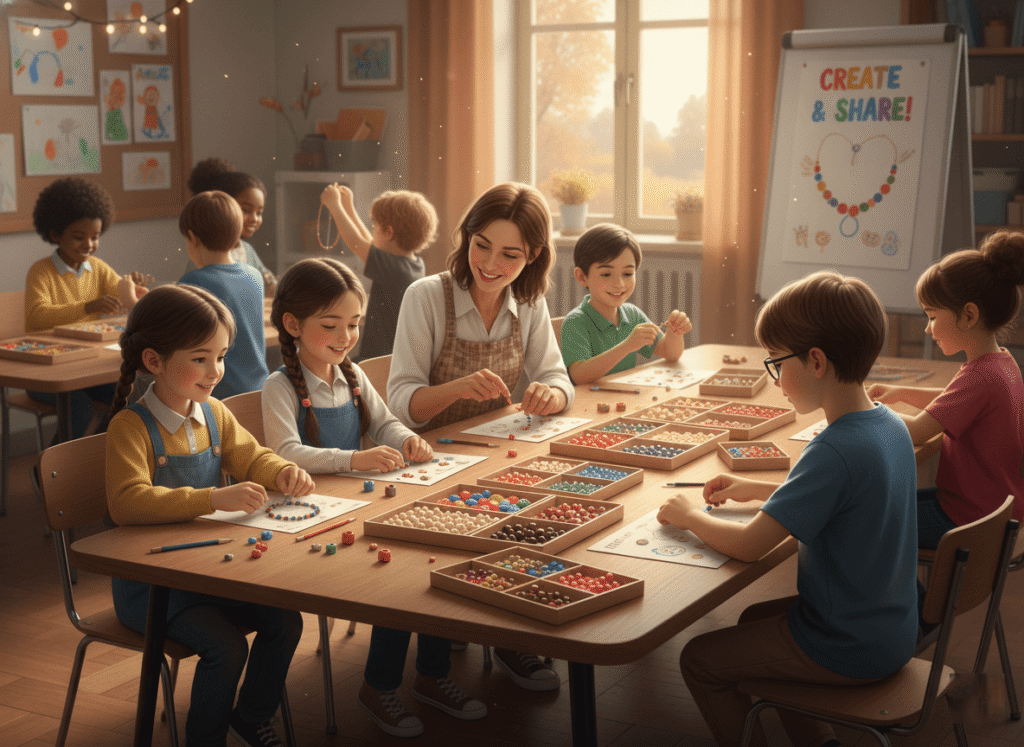
- Plastic or Acrylic Beads: Lightweight, colorful, and safe for younger children.
- Wooden Beads: Natural texture perfect for Montessori or mindfulness activities.
- Soft cords and elastic strings: Prevent frustration and ensure ease of use.
- Nickel-free metal findings: Necessary for older students involved in metal jewelry work.
Custom jewelry suppliers can create modular kits that combine these materials with age-appropriate tools. For instance, younger grades might use thick cord and large beads, while older students can learn wire wrapping and basic metalwork using safe brass or stainless steel components.
Organizing a Jewelry Crafting Project After School
As a manufacturer-educator hybrid, I often consult schools on implementation logistics. The difference between a chaotic craft session and a structured learning project lies in planning, organization, and engagement design.
Step-by-Step Implementation Process
Phase 1 – Planning (1–2 weeks before launch):
- Define learning objectives (creative expression, math integration, teamwork).
- Assess the student age range and choose suitable kits.
- Order sample kits or materials from tested wholesale jewelry suppliers.
- Create one or two visual prototypes to display.
- Establish cleanup and safety guidelines.
Phase 2 – Launch Session Setup:
- Demonstrate bead stringing or knotting slowly.
- Show students different design outcomes—pendants, bracelets, cultural motifs.
- Encourage planning on paper (pattern design or color sequence worksheets).
Phase 3 – Execution and Supervision:
- Allow students to work at their own pace.
- Encourage peer-to-peer support.
- Document progress through photos or journals.
Phase 4 – Display and Reflection:
- Set up mini exhibitions at school events.
- Connect the activity to entrepreneurship lessons (pricing and selling student-made jewelry).
- Reflect on creative challenges and design decision-making.
Classroom Management Tips
- Pre-sort beads by color and size to minimize clutter.
- Assign cleanup roles or rotate “supply monitors.”
- Integrate mindfulness: the repetitive motion of beading helps students focus and relax.
- Use disposable table mats for easy cleanup.
Supply Chain and Cost Planning
| Component | Age Group | Cost (USD) | B2B Tip |
|---|---|---|---|
| Plastic beads + elastic string | Grades 1–3 | $0.50–$1 per kit | Source via craft wholesalers |
| Wooden beads + hemp cord | Grades 3–5 | $1.50–$2.50 per kit | Request MOQ discounts |
| Metal findings + wire | Grades 6–12 | $3–$6 per kit | OEM customization for advanced STEM use |
Bulk buying ensures cost efficiency and sustainability. Many B2B jewelry manufacturers offer sample evaluations before committing to bulk orders—take advantage of these to assess quality and classroom fit.
Ensuring Jewelry Materials Are Suitable for Classroom Activities
Safety and suitability are paramount—both from an educational and liability standpoint. When producing jewelry kits for classrooms, I always emphasize the importance of non-toxic, allergy-safe components and age-appropriate tools.
Material Composition and Classroom Compatibility
| Material Type | Best for Age Group | Properties | Safety Notes |
|---|---|---|---|
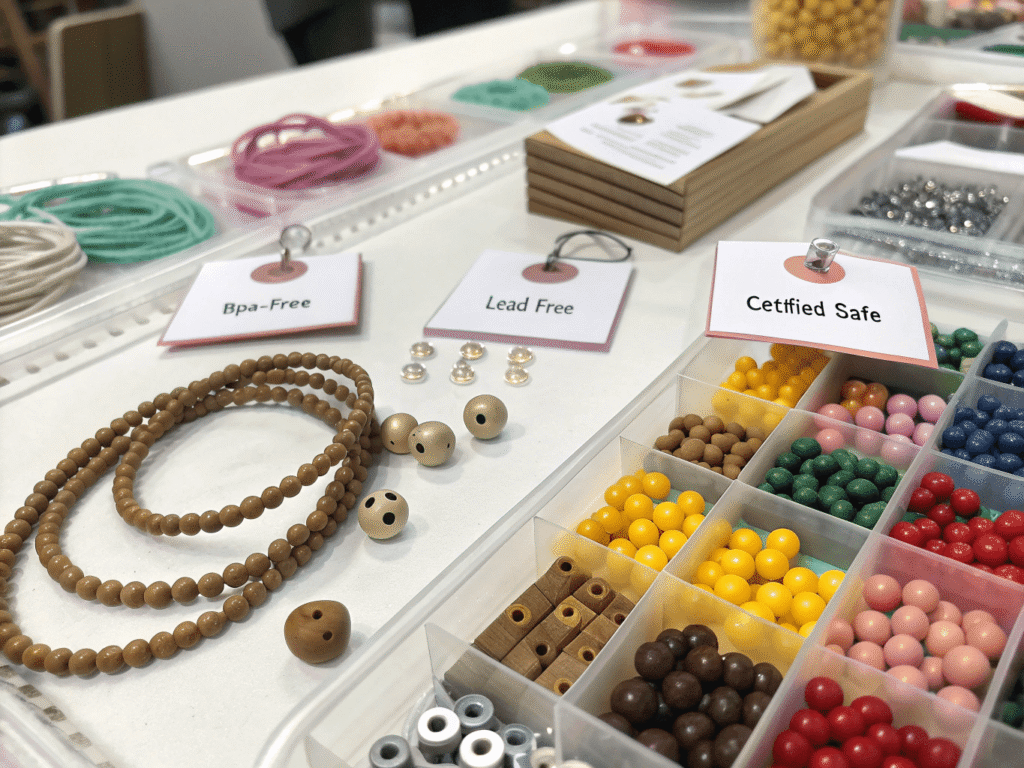
| Plastic/Acrylic | 5–10 years | Colorful, lightweight | Must be BPA-free |
| Wood | 6–12 years | Natural, tactile | Avoid splintered finishes |
| Brass/Aluminum | 10–16 years | Durable, professional look | Choose lead-free alloys |
| Stainless Steel | 13+ years | Advanced projects | Hypoallergenic, corrosion-resistant |
From a manufacturer’s perspective, stainless steel jewelry kits—though more advanced—offer educational opportunities to discuss sustainability and materials science. Alloy jewelry kits are less expensive but require inspection for surface smoothness and safe edges.
Plating Quality and Durability
Plated components (such as small charms or findings) make projects visually appealing. However, for classroom use:
- Choose eco-friendly plating methods like PVD (physical vapor deposition) or electroplating with non-toxic chemicals.
- Avoid nickel or cadmium plating.
- Ensure plating stability for long-term reuse.
Table: Comparison of Standard Plating for Educational Jewelry Kits
| Plating Type | Durability | Eco-Friendliness | Application Suitability |
|---|---|---|---|
| Gold-tone electroplating | Moderate | Medium | Ideal for student projects |
| PVD plating | High | High | Suitable for advanced, reusable kits |
| Nickel plating | High | Low | Avoid – may cause allergies |
| Powder coating | High | High | Safe for kids; bright colors |
Customizing Jewelry Kits for Different Age Groups and Skill Levels
Customization is key to engagement, particularly in mixed-age after-school programs. As an ODM supplier, I frequently design kits tailored for developmental stages—from preschool sensory exploration to high school entrepreneurship projects.
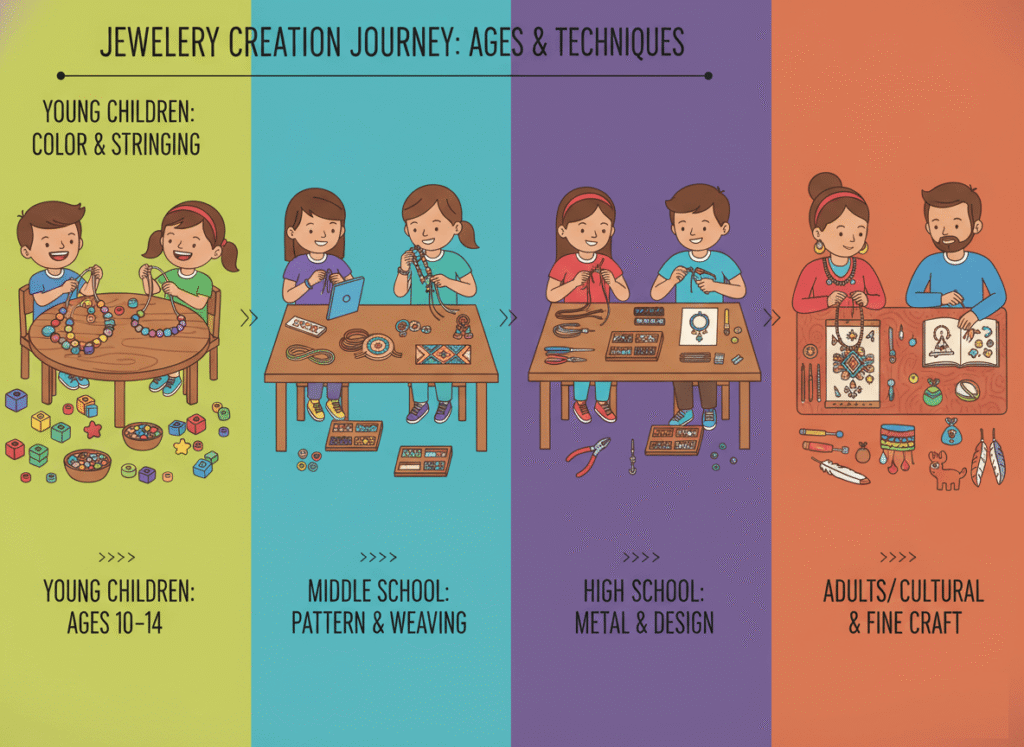
Early Childhood (Ages 4–7: Sensory and Motor Development)
- Use large wooden beads and thick cords.
- Focus on color sorting and pattern matching.
- Incorporate storytelling (“color beads to represent family”).
Elementary Level (Ages 7–10: Pattern Recognition & Teamwork)
- Introduce seed beads or pony beads with elastic cord.
- Encourage pattern design using math-based symmetry lessons.
- Develop teamwork through collaborative projects such as friendship bracelet exchanges.
Middle School (Ages 11–13: Creativity and Culture)
- Teach simple wire wrapping and charm assembly.
- Connect beads to world cultures—Native American or African beadwork.
- Discuss jewelry as personal expression and artistic heritage.
High School (Ages 14–18: Advanced Craftsmanship & Entrepreneurship)
- Integrate metalwork (aluminum or stainless steel) and design theory.
- Combine creative arts with business education—pricing, branding, sales.
- Encourage entries to student art fairs or online craft showcases.
Kit Customization Opportunities for Educators
- Theme-based kits: Nature, festivals, or global cultures.
- Skill-tiered kits: Beginner to advanced complexity.
- Cross-curricular kits: Integrate math (geometry in design) or social studies (cultural motifs).
- Reusable kits: Replace materials semester by semester to control costs.
As a custom jewelry supplier, I often provide branded packaging (e.g., school name, program label) and segmented material sets for differentiated instruction.
Integrating Jewelry Kits into Broader Learning
Jewelry kits can bridge multiple educational disciplines, opening new opportunities for experiential learning.
STEM Education
Introduce physics through balance and tension or chemistry through material finish discussions. Students can measure density differences between wood and metal beads or learn how ionic bonding works in plating processes.
Cultural Studies
Explore jewelry heritage—Egyptian amulets, African bead symbolism, Asian jade rituals—to teach world history and cultural empathy.
Business and Entrepreneurship
Students can create mini collections, calculate costs, and build pricing strategies, linking art with economics. Many school craft fairs use wholesale jewelry kits to teach real-world trade concepts.

Evaluating Suppliers and Maintaining Cost Efficiency
To ensure ongoing success, teachers or procurement teams should adopt a sourcing audit checklist.
Jewelry Kit Supplier Evaluation Checklist
| Criteria | Description | Recommended Practice |
|---|---|---|
| Safety Standards | Non-toxic, lead-free, eco-compliant | Request compliance certificates |
| Material Quality | Inspect plating, bead texture, and finish | Order samples before purchase |
| Cost Management | Compare per-student cost | Consider OEM bulk pricing |
| Logistics Efficiency | Review lead times and replaceability | Select regional distributors |
| After-Sales Support | Availability of spare parts or refills | Essential for recurring programs |
As a B2B supplier, I advise buyers to negotiate flexible MOQs—small enough for pilot projects, scalable enough for nationwide programs. Choosing suppliers located near education hubs minimizes logistics costs.
Conclusion
Jewelry kits are powerful teaching tools—combining art, math, culture, and mindfulness into hands-on learning experiences. Sourced correctly, they offer safety, affordability, and long-term engagement. Teachers can use beginner-friendly materials for early learning or collaborate with custom jewelry suppliers to design kits that grow with students’ skills and confidence.
Key Takeaways:
- Source from certified, reliable wholesale jewelry providers.
- Match materials and projects to age and developmental levels.
- Create structured, creative, and educational sessions.
- Reuse and adapt kits seasonally for sustainability.
If you’re a teacher or educational buyer exploring jewelry kits for your after-school program, I encourage you to request a sample kit or catalog from an OEM jewelry manufacturer. Hands-on evaluation ensures the perfect blend of safety, creativity, and value—setting the stage for meaningful craft-based learning that students will cherish.
