
In today’s globalized accessories market, cultural and ethnic-inspired bead jewelry has become a cornerstone of authenticity and storytelling within the fashion sector. For jewelry wholesalers, brand owners, and private label buyers, understanding how to develop bead-based collections that honor traditional motifs while appealing to international audiences is both a creative and strategic challenge. As a jewelry manufacturer with years of export experience, I’ve witnessed how meaningful designs rooted in culture can elevate a brand’s perceived value and market reach—from boutique collections to large-scale wholesale programs.
Ethnic-inspired bead jewelry production begins with cultural research, authentic material sourcing, and precision in OEM/ODM execution. Successful manufacturers partner with regional artisans or trusted suppliers in China to develop bead forms that reflect local craftsmanship. Key B2B priorities include ethical sourcing of glass, seed, wood, or shell beads; QC protocols for color consistency; and culturally respectful design translation during private label production. Proper packaging and logistics planning ensure the artisanal essence is preserved all the way to global delivery.
Before launching an ethnic jewelry line, B2B buyers must strategically evaluate product development—from material authenticity and design representation to scalable quality control. Understanding cultural color symbolism helps align product collections with storytelling trends, while mastery over manufacturing processes such as plating, bead weaving, and OEM consistency determines whether your brand stands out in the growing handmade and ethnic fusion jewelry segment.
How Can I Source Authentic Bead Materials for Ethnic-Inspired Jewelry Production in China?
China remains a top global hub for wholesale jewelry manufacturing, offering flexible OEM and ODM production for ethnic bead collections. However, the key to authenticity is not volume—it’s sourcing precision and cultural integrity.
Understanding Authentic Material Categories
Authentic beadwork begins with materials. Ethnic jewelry often incorporates:
- Glass beads: Especially Czech and Japanese variants for uniformity and shine.
- Wooden beads: Symbolizing organic and tribal texture, popular for African or Latin-inspired designs.
- Shell and seed beads: Reflecting indigenous craft and sustainability values.
- Bone or clay beads: Used in certain tribal patterns for tactile heritage appeal.
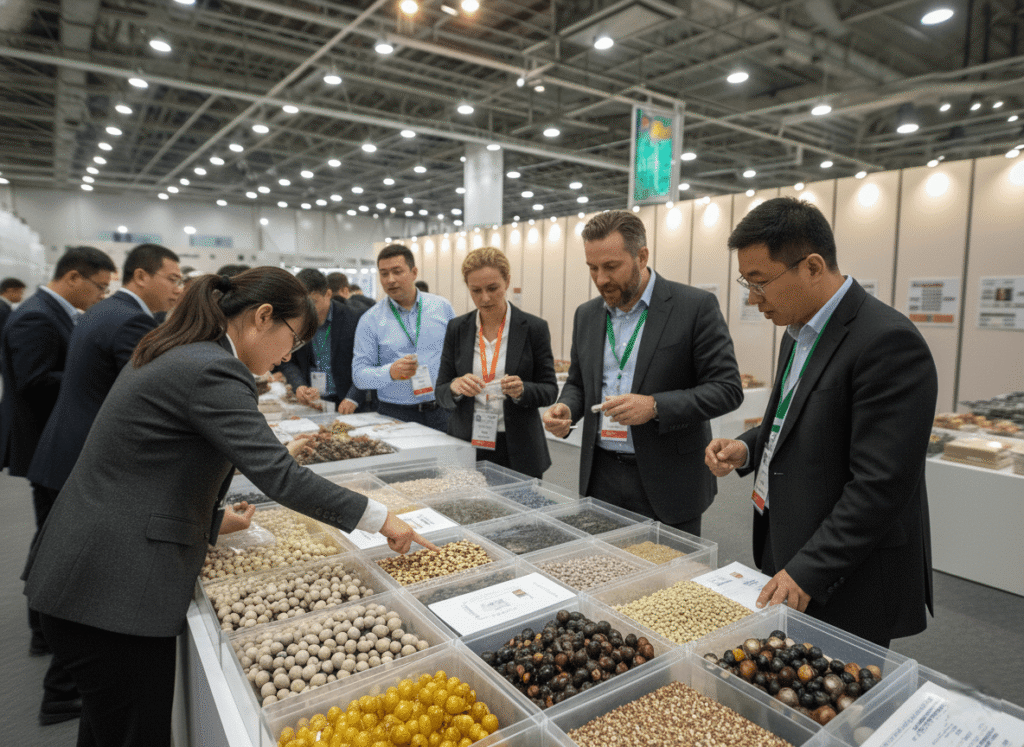
These materials can be sourced through custom jewelry suppliers specializing in cultural collections. When working with Chinese manufacturers, I insist on verifying supply chains to ensure that natural beads are not overprocessed—retaining their texture, shape, and local color variations adds authenticity to the final product.
Supplier Evaluation and Procurement Strategy
Before committing to bulk orders, assess your supplier’s ability to:
- Provide traceability for natural bead raw materials.
- Offer MOQ flexibility for diverse designs.
- Follow ethical and sustainable sourcing practices.
- Support color and texture customization for private labels.
A sample supplier evaluation table can streamline decisions:
| Criteria | Recommended Benchmark | Notes for Ethnic Jewelry Sourcing |
|---|---|---|
| Material Origin | Verified & Certified | Indigenous or fair-trade preferred |
| Bead Type Variety | ≥10 cultural bead styles | Glass, seed, shell, clay, wood |
| MOQ Range | 200–500 pcs per style | Ideal for boutique ethnic lines |
| QC Inspection Frequency | Each production batch | Color matching and authenticity |
| OEM/ODM Capability | In-house design team | Supports cultural motif translation |
Collaborating with an experienced OEM jewelry supplier in China helps ensure bead patterns and finishes respect cultural symbolism while meeting your logistical targets.
What Steps Should I Take to Ensure My Cultural Jewelry Designs Are Accurately Represented During OEM Manufacturing?
Design accuracy during OEM/ODM production is the linchpin of a successful ethnic-inspired collection. In B2B manufacturing, even a slight deviation in color palette or motif interpretation can compromise the storytelling behind the piece.
Research and Cultural Collaboration
Whenever I begin designing ethnic collections for brand clients, the first step involves visual research and cultural consultation. Understanding motifs like tribal geometric forms or floral emblems symbolizing prosperity ensures our design translation maintains integrity. Collaborating with cultural experts or local artisans helps respect origins and avoid appropriation.
Best Practices for OEM Design Translation:
- Provide digital sketches or CAD models reflecting motif structure and bead placement.
- Include Pantone color references for bead color control.
- Specify bead sizes (mm) and materials in production documents.
- Conduct pre-sampling with artisans for pattern verification.
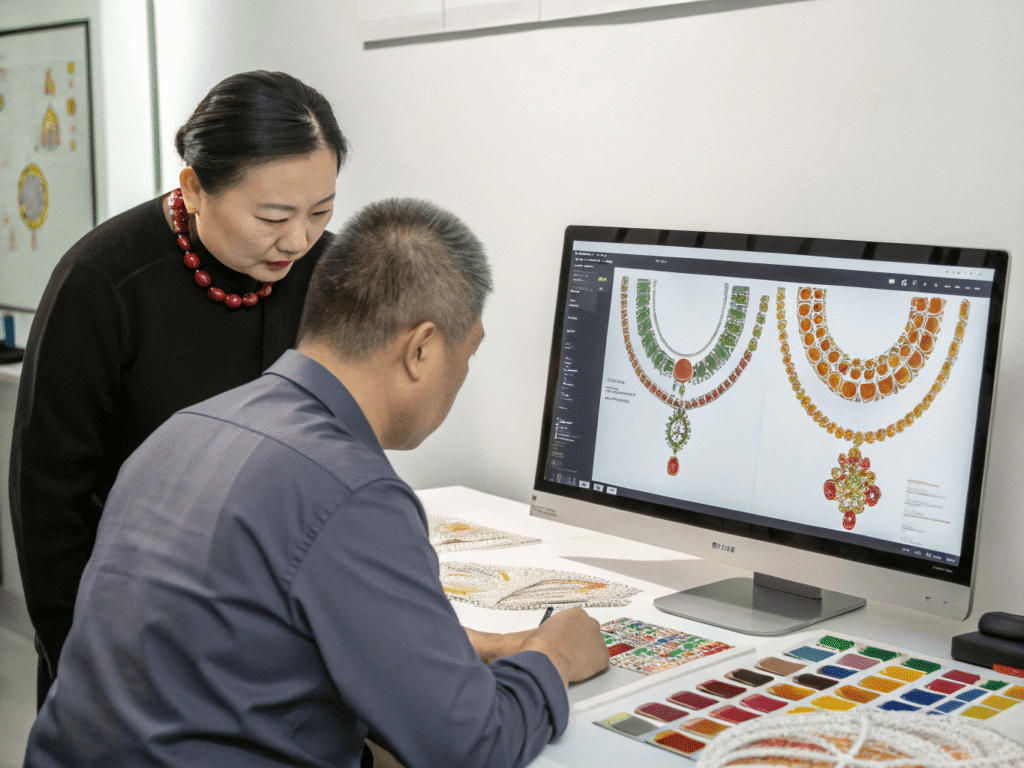
Technical Design Communication with Manufacturers
For accurate OEM production, communicate through multilingual technical sheets or visual mock‐ups including the following specifications:
| Design Element | Technical Description | Supplier Process |
|---|---|---|
| Pattern Geometry | Tribal, Floral, Spiral, Chevron | CAD visualization & manual layout |
| Bead Diameter | 3mm–8mm | Sample validation before production |
| Cultural Color Palette | Red/Black (strength), Blue (protection) | Dyed or pre-colored bead selection |
| Assembly Method | Loom weaving, embroidery, stringing | Machine or manual adaptation |
| Finishing | Matte / Gloss / Semi-polish | Checked for consistency |
This level of documentation ensures OEM partners align design outcome with the cultural narrative intended by the client.
Balancing Traditional Essence with Modern Trend Adaptation
As an experienced custom jewelry manufacturer, I integrate modern aesthetics—metal accents, adjustable clasps, jewelry plating—while preserving symbolic integrity. Fusing tradition with minimalist global styles enhances wearability, making collections suitable for the international wholesale market.
How Can I Control Quality and Color Consistency for Handmade or Ethnic Bead Jewelry at Scale?
Scaling handcrafted ethnic bead jewelry requires multi-level quality control (QC) systems that maintain both visual and symbolic integrity.
Setting Practical QC Standards
In bulk bead production, bead variation, dye batch inconsistencies, and stitching quality can cause unwanted deviations. I recommend establishing three QC checkpoints:
- Material Pre-inspection: Validate bead uniformity, gloss level, and size consistency before assembly.
- Sampling Stage QC: Inspect pattern alignment, stitching tension, and comparative color tests.
- Final Batch QC: Conduct random inspections for structural durability, plating adhesion, and bead shine retention.
A simplified QC matrix for B2B production:
| Inspection Stage | Control Parameters | Acceptable Variation |
|---|---|---|
| Raw bead check | Size ±0.1mm, color tone ±3% | Natural variance ok |
| Pattern stitching | Motif symmetry, thread strength | Minimal offset (<2%) |
| Post-assembly | Adhesion, clasp strength | 95% pass rate minimum |
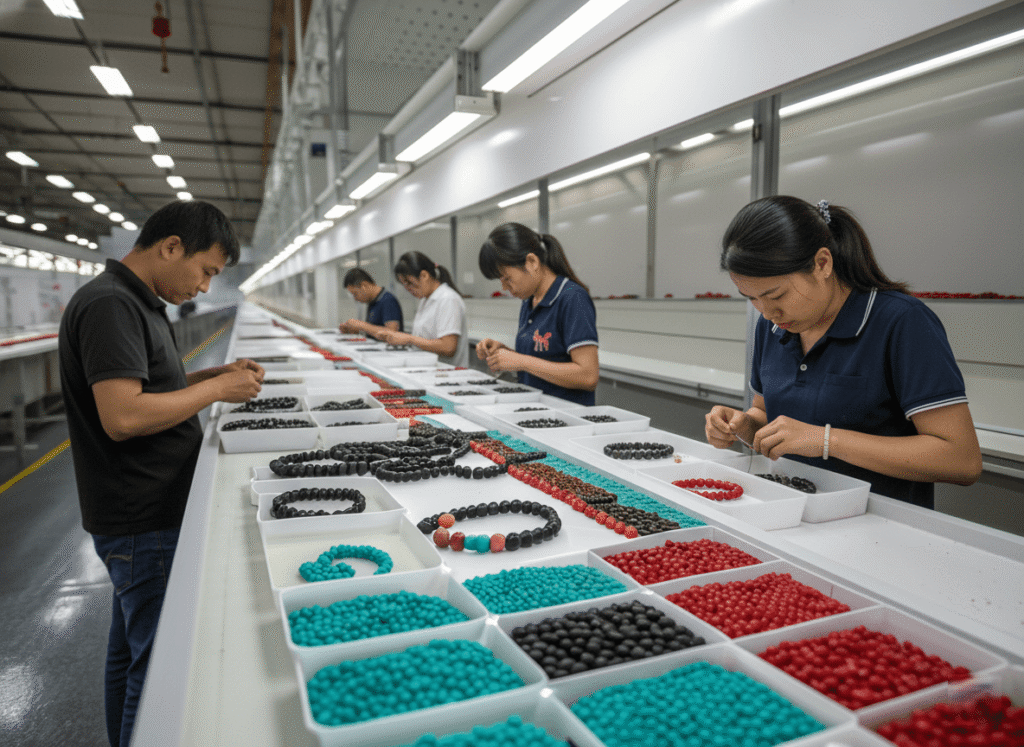
Ensuring Color Stability and Cultural Identity
Ethnic designs often rely on symbolic color combinations, e.g., red and black for protection, blue for peace. I recommend:
- Using UV-resistant bead dye to maintain brightness.
- Avoiding chemical-based color enhancers that dull over time.
- Maintaining consistency via Pantone-coded production batches.
Color calibration machines and controlled light booths are essential in large-scale workshops to guarantee color fidelity.
Handcraft Meets Industrial Precision
For handmade collections processed on industrial scales, hybrid techniques—manual beading followed by machine assembly—retain artisanal authenticity while achieving volume efficiency. Suppliers specializing in ODM jewelry production in China usually maintain small craft teams within their larger factories to handle cultural or limited-edition designs.
What Is the Best Way to Manage Custom Packaging and Global Shipping for Ethnic Jewelry Collections?
Packaging ethnic-inspired jewelry is not only about protection—it’s about storytelling. When selling globally, brands that pair authentic beadwork with cultural packaging elevate their perceived luxury.
Custom Packaging Strategy
For my OEM clients launching ethnic bead collections, I design packaging that complements cultural identity:
- Eco-friendly kraft boxes with tribal patterns for African-inspired lines.
- Silk pouches for Asian collections representing prosperity.
- Recycled paper tags detailing the cultural story behind each piece.
Packaging Design Specifications
| Packaging Type | Material | Usage Scenario |
|---|---|---|
| Kraft Box | Recycled Paper | Wholesale shipments, boutique retail |
| Cotton or Silk Pouch | Natural Textile | Jewelry sets, premium gifting |
| Custom Hang Tags | FSC Paper | Brand storytelling and information |
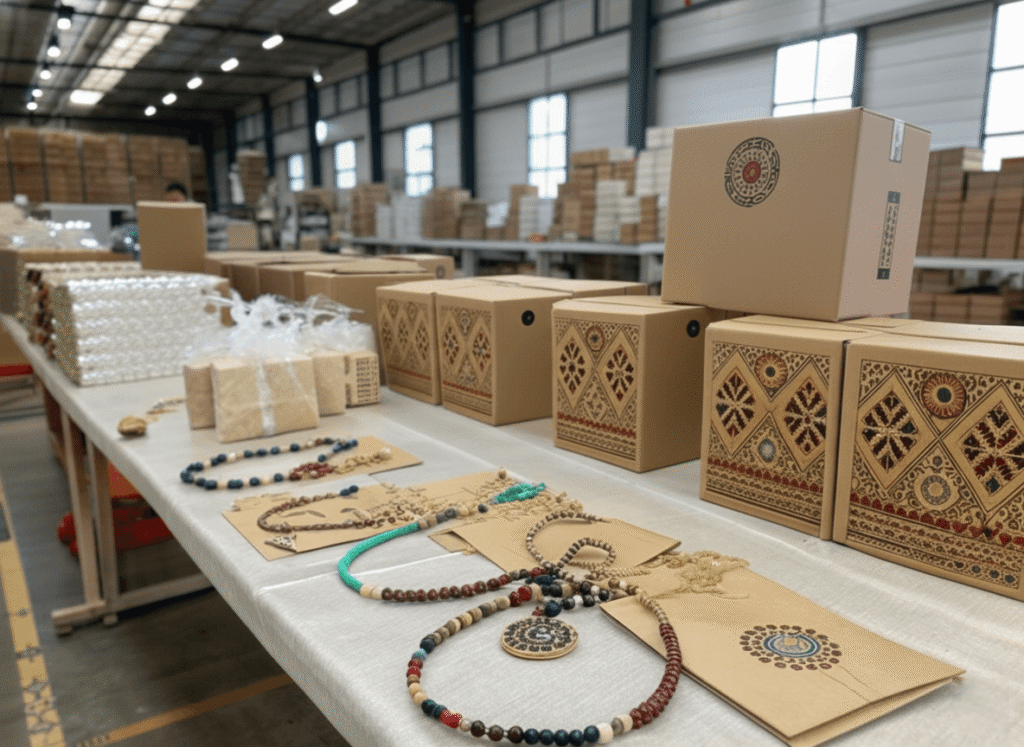
Logistics & Global Distribution
Ethnic jewelry buyers often operate globally across diverse retail channels. To minimize risk during export:
- Use anti-tarnish wraps within packaging for metal-accented bead pieces.
- Consolidate smaller collections to reduce freight cost.
- Implement inventory codes per design motif for cultural tracking.
- Ensure air and sea freight insurance covers handmade product damage.
OEM factories in Guangzhou, Yiwu, and Shenzhen can assist with end-to-end shipping integration, allowing brands to manage customs documentation, export declarations, and delivery tracking through ERP systems.
Additional Considerations: Sustainable and Ethical Production
Building an Authentic Brand Through Ethical Practices
Ethnic-inspired jewelry thrives when sourcing aligns with cultural and ethical integrity:
- Partner with artisans or cooperatives from origin regions for design licenses.
- Adopt fair-trade bead suppliers.
- Incorporate recycled or natural materials supporting sustainable market appeal.
Modern consumers value transparency, and wholesalers positioning themselves as ethical jewelry brands gain faster traction in international markets.
Material and Craftsmanship Comparison Table
| Material Type | Cultural Symbolism | Durability | Eco-Friendliness | Best Application |
|---|---|---|---|---|
| Glass Beads | Modern adaptation of heritage detail | High | Medium | Earrings, necklaces |
| Wooden Beads | Tribal origin, organic feel | Medium | High | Statement pieces |
| Shell Beads | Coastal, spiritual tone | Medium | High | Ethnic beach collections |
| Brass/Alloy | Metal contrast in fusion designs | High | Medium | Multi-material fusion |
Such comparison helps buyers plan product assortment across cultural aesthetics while considering material resilience.
Conclusion
Cultural and ethnic-inspired bead design connects global fashion brands to timeless traditions. To succeed at scale:
- Research authentic symbolism and respect its heritage.
- Source ethical bead materials through verified OEM channels in China.
- Maintain rigorous QC and color matching across production batches.
- Craft packaging and logistics systems that protect and communicate cultural narrative.
By blending artistry with industrial precision, you can develop ethnic jewelry collections that honor tradition yet resonate with global consumers.
If you’re planning your next wholesale bead jewelry project, I invite you to connect with our factory team. Request a sample kit, explore our catalog, or discuss OEM/ODM customizations to bring your cultural jewelry vision to life with craftsmanship and respect.
