
As a jewelry manufacturer who has worked closely with educational toy distributors and children’s accessories brands, I often receive inquiries about how to design safe, engaging, and easy-to-assemble bead bracelet kits for kids. Friendship bracelets have become a sentimental craft project that not only nurtures creativity but also introduces basic jewelry-making principles at a young age. This craft isn’t just about fun—it builds fine motor skills, color coordination, and self-expression while laying the ground for future interest in fashion and jewelry design.
Kids’ bead bracelet kits should include child-safe beads (non-toxic, BPA-free), elastic stretch cords for easy wear, and large-hole beads suitable for small hands. Wholesalers sourcing these kits should focus on durable materials, secure packaging, and appealing color assortments that attract both parents and young creators.
From a supply chain and manufacturing perspective, designing these kits involves more than mixing beads into a box. It requires balancing material quality, creative design flexibility, and age-appropriate safety testing. In this article, I’ll guide you—whether you’re a toy importer, retail brand, or kids’ accessories distributor—through everything you need to know about crafting or sourcing bead bracelet kits that children will love and parents will trust.
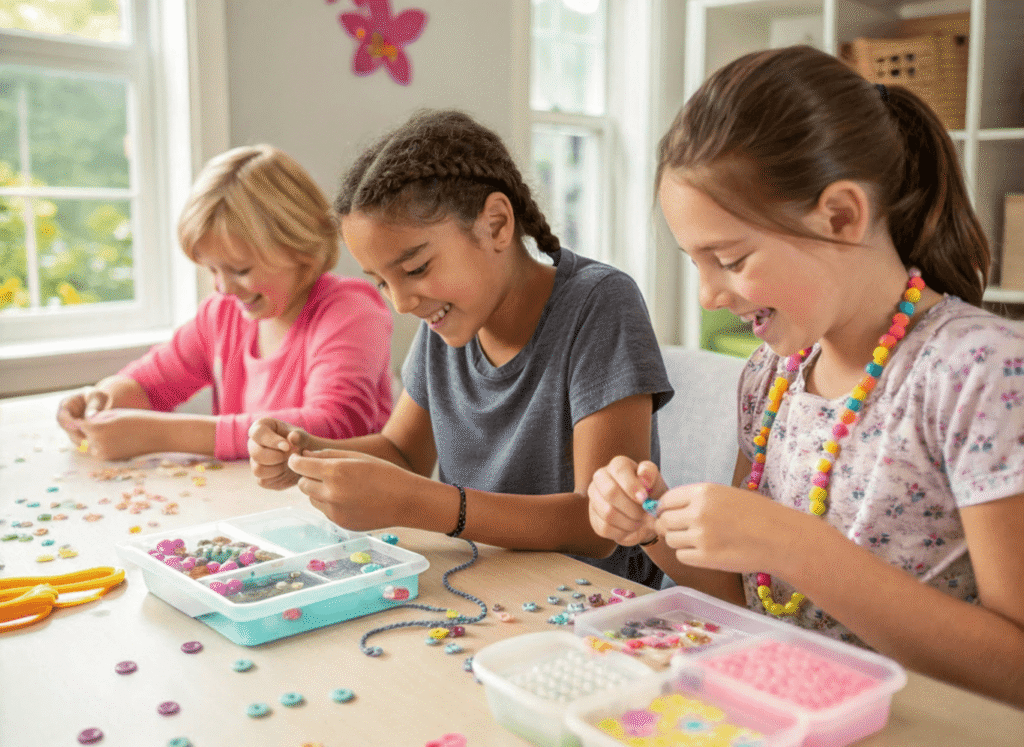
What Materials and Tools Do I Need in My DIY Bead Bracelet Kit?
When I design bead kits for kids, I always consider both product safety and ease of assembly. The goal is to make every kit enjoyable, educational, and worry-free for parents and teachers alike.
Essential Materials
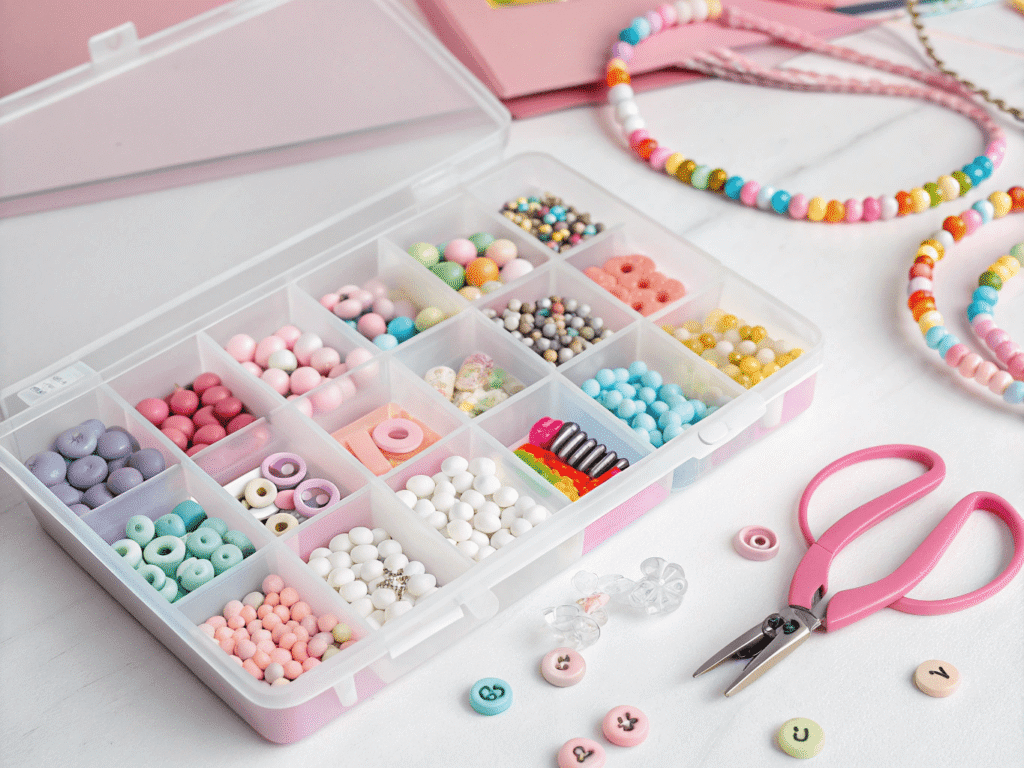
Every DIY bead bracelet kit should include the following components in balanced quantities:
| Component | Recommended Material | Notes / B2B Sourcing Tips |
|---|---|---|
| Beads | Polymer clay, acrylic, resin, or wooden beads | Ensure EN71 / ASTM F963 certification for child safety. Avoid glass or metal for under-8 kits. |
| String | Elastic thread or nylon cord | Elastic should have high tensile strength (>0.7mm diameter). Nylon cords are great for older kids. |
| Alphabet Beads | ABS plastic | Personalization options increase perceived value in retail kits. |
| Spacer Beads | Lightweight acrylic / silicone | Adds design contrast and helps teach symmetry. |
| Storage Container | Compartmentalized plastic box | Keeps colors organized, prevents spillage during use. |
Recommended Tools and Add-ons
Include safety scissors, tweezers, bead mats, and charm pendants (hearts, stars, animals). If targeting craft education or toy retailers, clear step-by-step instruction cards with visuals help enhance user satisfaction and reduce after-sale support.
How Can I Choose Safe and Durable Beads for Kids’ Friendship Bracelets?
Choosing safety-certified beads isn’t just a compliance requirement—it’s a business imperative for reliability and brand trust.
Bead Material Comparison Table
| Bead Type | Appearance | Durability | Age Suitability | Certification Note |
|---|---|---|---|---|
| Polymer Clay Beads | Soft pastel hues, flat disc (heishi) design | High flexibility | 5+ | BPA-free, phthalate-free |
| Acrylic Beads | Glossy, lightweight | Very durable | 6+ | Ensure no sharp edges or flashing |
| Wooden Beads | Natural texture, vintage aesthetic | Moderate wear resistance | 8+ | Must be coated with nontoxic varnish |
| Resin Beads | Vibrant & shiny | High impact resistance | 8+ | Must pass heavy metal safety tests |
| Silicone Beads | Soft-touch finish | Very high | 3+ | Used often in toddler kits; food-grade silicone recommended |
Safety Considerations for B2B Buyers
- Avoid Small Parts for Young Ages – For customers targeting the 3–5 age range, each bead should have a minimum diameter of 8mm to meet choking hazard standards.
- Material Certificates – Always request CPSIA, EN71-3, and REACH reports from your supplier.
- Colorfastness Testing – Beads should retain color after contact with sweat or handwashing. Use colorfast polymer clay to ensure product longevity.
- Eco-friendly Packaging – More brands now request recyclable or compostable boxes, aligning with sustainable sourcing trends.
By maintaining strong QC checkpoints—especially during bead coloring and hole drilling—you can reduce defect rates by up to 20% and enhance brand credibility in the kids’ craft market.
What Steps Should I Follow to Design and Assemble My Bracelet Easily?
Even with the highest-quality bead kit, success depends on how the end-user experiences the creation process. Well-designed kits should simplify learning while encouraging creativity.
1. Setting Up the Craft Area
Kids should have a stable workspace. In the factory packaging guide I create for our retailers, we always advise including diagrams for:
- Laying beads on a tray or organizer
- Using a bead stopper clip
- Proper cord measurement tips (usually 30cm for a child wrist)
Pro manufacturer tip: Include a small reusable bead mat in each kit. It reduces rolling, adds professional appeal, and helps with fine-motor coordination.
2. Prepping the String—The Secret to Strong Bracelets
Before threading:
- Pre-stretch the elastic cord to prevent future slack.
- Secure one end with masking tape or a binder clip.
- Use thicker 0.8mm strings for clay or large-hole pony beads.
This prevents 90% of the “my bracelet broke” complaints retailers often receive post-sale.
3. Step-by-Step Bracelet Assembly
Let’s walk through the production steps easy enough for children (and scalable for classroom bulk activities):
- Measure and Cut: 12 inches of elastic per bracelet.
- Plan the Pattern: Lay out beads before threading.
- Thread the Beads: Use alphabet or heishi beads for mix-and-match aesthetics.
- Size Check: Wrap around the wrist mid-way to check progress.
- Knot and Secure: Use a surgeon’s knot, tighten firmly, and add a dab of glue or clear coat on the knot.
- Trim and Finish: Cut excess string neatly; advise adult supervision here.
4. Fun Pattern Recipes
| Design Concept | Description | Recommended Beads |
|---|---|---|
| Message Bracelet | Use letter beads to spell out names or affirmations like SMILE, BFF, HAPPY. | Alphabet + Heishi |
| Color Sequence Chain | Alternate 3 beads of one color with 3 of another for a rhythmic look. | Pony Beads |
| Confetti Mix | Random selection—teaches creativity and spontaneity. | Acrylic Mix |
| Mirror Pattern | Symmetrical design teaching pattern recognition. | Wooden or Resin |
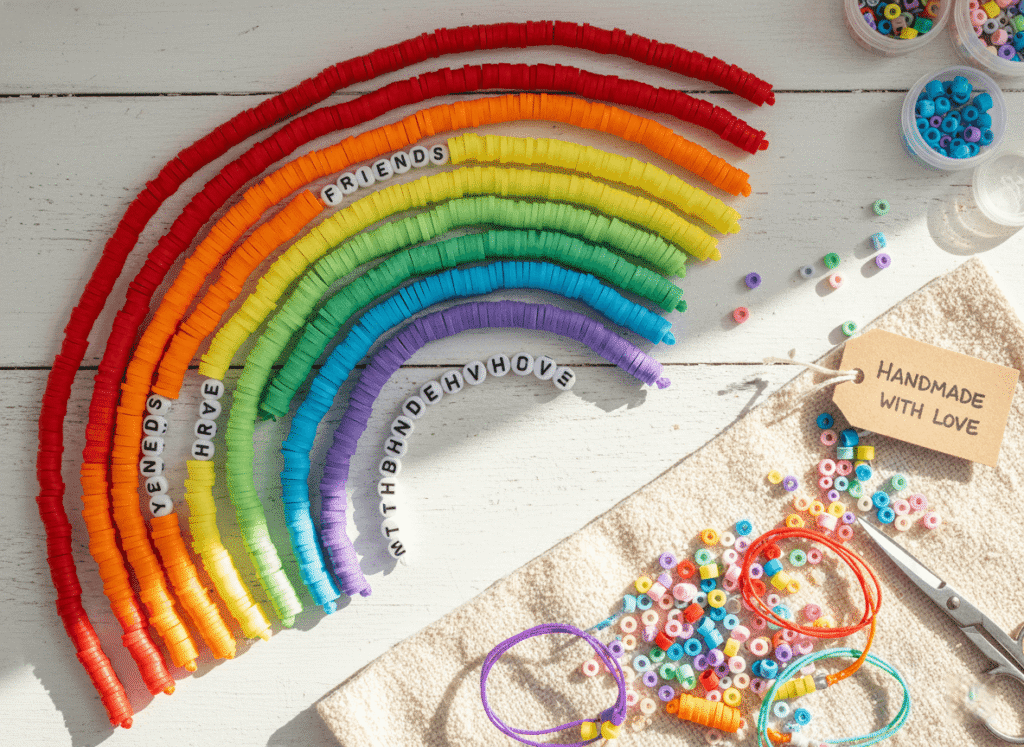
| Rainbow Series | Make seven bracelets, one in each color. | Silicone Clay Mix |
Each of these can be promoted as “design themes” in product marketing, helping retailers categorize packs by creative goal.
5. Incorporating Educational Value
Retailers in the educational products space love when bead kits teach more than just crafting.
Include printed guides showing:
- Basic color theory (primary vs complementary colors)
- Mathematical patterns (counting by 3s, symmetry recognition)
- Cultural exploration (global friendship bracelet origins)
These elements increase parents’ and educators’ willingness to buy in bulk for classroom activities or workshops.
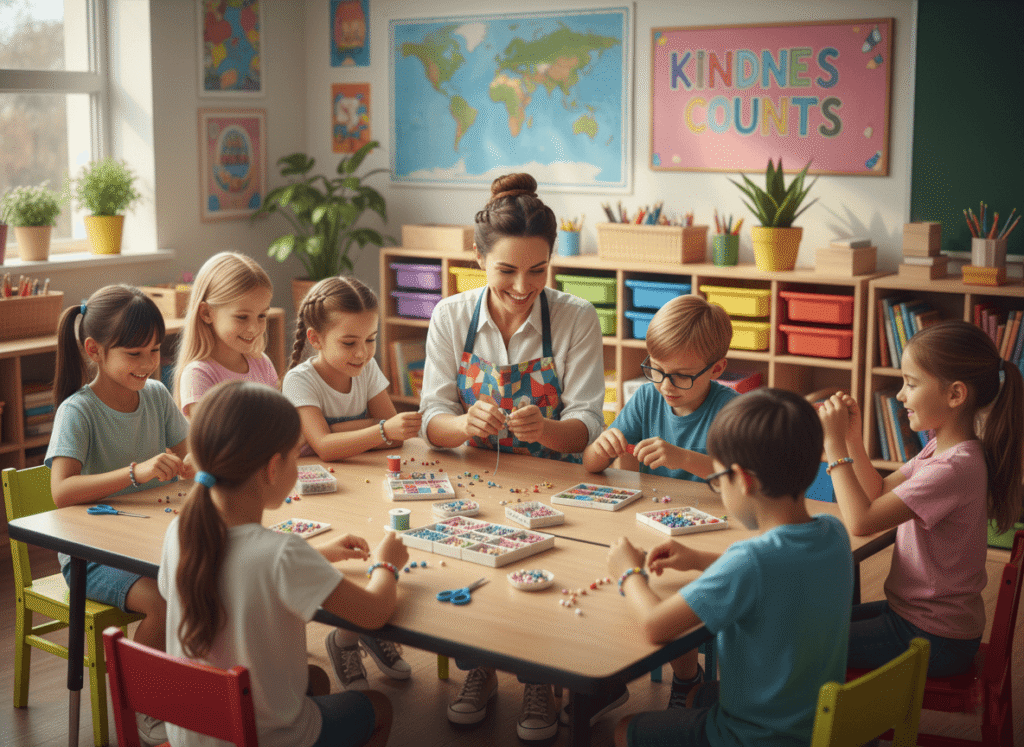
How Can I Organize a Fun Bracelet-Making Activity for My Friends or Classroom?
Whether you’re planning B2B bulk orders for schools, party kits, or retail workshops, understanding how the activity unfolds helps you design or market the perfect package.
Step 1. Create an Organized Setup
For group settings:
- Divide kits into personal trays or zip bags (each containing 100–150 beads, 2 cords, and 1 charm).
- Have color-coded beads for group challenges.
- Provide reference cards for design templates.
As suppliers, we pre-pack components in uniform sachets to save labor at the retail level and to allow drop-shippers and teachers to start activities instantly.
Step 2. Encourage Creativity Through Games
Gamified learning boosts engagement. For example:
- Quick Design Challenge: Give 10 minutes to make the most colorful bracelet.
- Friendship Match Game: Pair kids to make bracelets for each other using each other’s favorite colors.
- “Alphabet Story” Task: Ask groups to spell a theme word together using their bracelets.
These curated experiences can be marketed to activity centers, summer camps, or early learning institutes, promoting your kits as educational-craft solutions.
Step 3. Enhance Teamwork and Learning Value
Each kit should inspire collaboration:
- Let kids trade beads to complete their designs.
- Introduce pattern-based lessons to develop sequencing and memory skills.
- Use the bracelet-making session to discuss friendship and gratitude, linking craft to emotional learning.
For B2B buyers, these are unique selling propositions that differentiate your SKUs from generic craft kits.
Step 4. Add Post-Activity Branding Value
If you’re creating private label or OEM bead kits:
- Include a thank-you or share card encouraging children to show off their designs online with a designated hashtag.
- Offer refill packs—cost-effective for repeat business.
- Create custom charms or logo tags for school or brand exclusives.
By leveraging OEM/ODM jewelry production capabilities in China, you can customize:
- Box artwork
- Charm themes (friendship, festival, seashell, animal)
- Color assortments per region (pastel for EU, bright tone for US markets)
This transforms a simple DIY craft into a recurring sales pipeline.
B2B Insights: Optimizing Costs and Quality for Kids’ Jewelry Lines
Supply Chain Planning
MOQ (Minimum Order Quantity) for bead kits typically starts at 1,000–2,000 sets per design, depending on packaging style.
- Bulk Orders: Opt for blister or paper box packaging to cut costs.
- Retail Display Packs: Ideal for boutiques or craft stores; add barcode integration.
- E-commerce Kits: Include strong visual appeal and zip-sealed compartments.
In my experience, aligning with a stainless steel jewelry manufacturer that also produces children’s accessories ensures superior plating, even for accent pieces or small charm pendants.
Quality Control Tips
QC stages should include:
- Bead hole diameter consistency (tolerance ±0.2mm)
- Elastic durability test (stretch test >10 cycles without deformation)
- Metal charm inspection (nickel-free, no sharp edges)
- Counting verification (ensure accurate bead quantity per section)
- Color sorting QC under daylight conditions
Cost Comparison Table for Sourcing Bead Kit Materials
| Material | Unit Cost (EXW China) | MOQ | Recommended Usage |
|---|---|---|---|
| Polymer Clay Beads (6mm) | $0.015 / piece | 50,000 pcs | Affordable, ideal for large volume kids’ kits |
| Acrylic Alphabet Beads (7mm) | $0.020 / piece | 30,000 pcs | Personalizable designs, popular for online retail |
| Elastic Cord (1m) | $0.05 / piece | 10,000 pcs | Must be clear or color-coordinated |
| Storage Box (compartment) | $0.60 / piece | 3,000 pcs | Reusable, adds high perceived value |
| Charm Pendants (zinc alloy, nickel-free) | $0.10 / piece | 10,000 pcs | Optional for premium SKU positioning |
Market Trend Snapshot
The global DIY jewelry and kids craft kit sector continues to grow at over 8% CAGR, driven by educational toys and parent-led activities.
Key trends to consider when developing or sourcing kits:
- Personalization Demand: Custom name or charm add-ons.
- Sustainability Focus: Eco-friendly beads, wooden options, recyclable packaging.
- Experiential Marketing: Workshops, influencer challenges, and craft parties increase brand engagement.
- Digital Integration: QR codes linking to instructional videos are becoming standard.
Those who adapt to hybrid (craft + learning) positioning gain stronger brand retention across B2B retail and education clients alike.
Conclusion
Crafting friendship bracelets from bead kits is more than an afternoon project—it’s an entry point into creativity, friendship, and even early jewelry design thinking. For B2B buyers and brand owners, sourcing the right DIY bead bracelet kit means balancing safety, fun, and educational value while ensuring consistent quality through reliable custom jewelry suppliers.
When evaluating factories or OEM/ODM suppliers, always review:
- Child-safe certification and QC records
- Material composition (polymer clay, acrylic, silicone)
- Packaging adaptability and design appeal
- MOQ flexibility and lead-time commitments
If you’re a wholesaler, educational retailer, or toy vendor looking to expand your product line with creative kids’ bead bracelet kits, I encourage you to reach out for catalog samples or consultation on private label design. Together, we can create fun, safe, and trend-forward bracelets that bring smiles—and learning—to every child’s wrist.
✔ Ready to explore?
Request a free sample kit or custom design proposal today. Let’s design joy bead by bead!
