
In the jewelry-making industry, bead kits are often seen as entry-level tools — convenient, affordable, and ideal for beginners. However, many boutique brands and designers are now asking: Can bead kits truly deliver professional-grade results suitable for retail or brand collections? The short answer is it depends on the materials, craftsmanship, and sourcing strategy behind each kit.
While standard craft bead kits are designed for hobbyists, certain premium or OEM bead kits can meet professional standards if they include high-quality materials, reliable findings, and customization options. These kits can even serve as a time-saving foundation for design prototyping or for small-scale production runs.
Understanding the distinction between hobby-grade kits and professional-quality bead sets is essential for any jewelry business — whether you’re an emerging brand, a wholesale buyer, or a design studio seeking scalable solutions. Below, I’ll break down what makes a bead kit “professional,” how to identify quality materials, and how OEM/ODM sourcing can elevate your brand’s craftsmanship.
Understanding the Difference: Hobby vs. Professional Bead Kits
Most bead kits available in retail stores or craft outlets are made for personal hobby use. They include pre-selected beads, wires, and clasps that work well for creative practice but not for fine jewelry or brand-level collections.
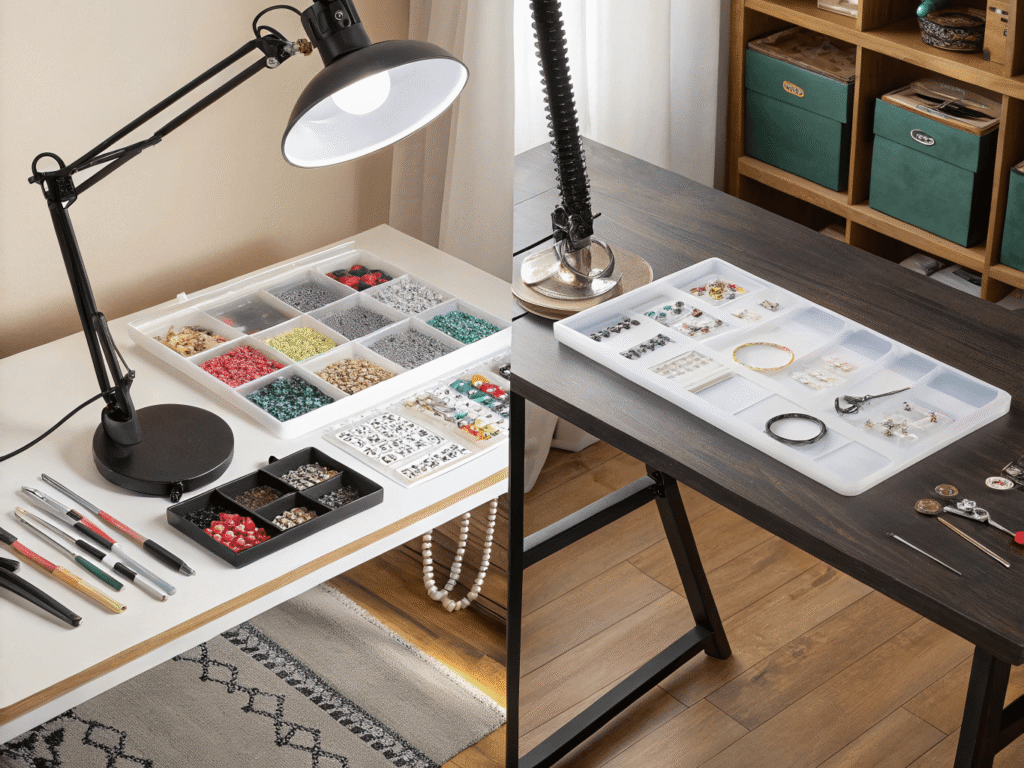
Key Differences in Material and Design Flexibility
| Aspect | Hobby Bead Kits | Professional Bead Kits |
|---|---|---|
| Bead Material | Acrylic, plastic, or low-grade glass | Crystal, gemstone, sterling silver, brass, or gold-plated |
| Metal Findings | Plated alloys prone to corrosion | Nickel-free, sterling silver, stainless steel, or gold-filled |
| Design Flexibility | Pre-arranged color combinations | Customizable, modular design options |
| Purpose | DIY or leisure craft | Production, prototyping, or retail |
| Durability | Short-term wear | Long-term, skin-safe reliability |
When Hobby Kits Can Still Be Useful
Even if a kit isn’t professional-grade, designers can still use it as a prototype tool. Many small brands start with retail kits to test color combinations or assembly techniques before transitioning to customized bulk materials.
How to Identify Bead Kits That Meet Professional Standards
For jewelry businesses sourcing bead kits, identifying genuine quality is crucial — especially when importing from suppliers in China or India.
Step 1: Examine Core Materials
Quality begins with the beads themselves. Look for components like:
- Crystal beads (cut glass for brilliance)
- Semi-precious gemstones (jade, agate, amethyst)
- High-grade seed beads from Toho or Miyuki
- Sterling silver or brass findings rated for skin-safe wear
Avoid kits that rely heavily on acrylic or plated alloys unless you’re targeting short-term costume jewelry collections.
Step 2: Evaluate Findings and Wire
Professional kits use stronger, tarnish-resistant wires such as:
- Stainless steel jewelry wire
- Nylon-coated beading wire
- Silver or gold-filled crimps
Low-cost kits often include aluminum or plastic components that fail under tension — unsuitable for daily-wear jewelry.
Step 3: Verify Quality Certification
When sourcing bead kits through B2B vendors, confirm:
- Material safety certifications (nickel-free, lead-free compliance)
- Finish testing (salt spray or tarnish durability tests)
- Consistency checks (uniform bead sizing, hole precision)
These factors directly affect customer satisfaction and brand reliability.
OEM and ODM Opportunities for Professional Jewelry Brands
If your goal is high-quality mass production or branded packaging, consider customized OEM/ODM bead kits. Many established jewelry suppliers in China offer tailored solutions where you control the material selection, packaging, and design variety.
Advantages of Custom Bead Kits for Brands
- Tailored Composition – Choose metal type, gemstone, bead shape, and color palette.
- Brand Packaging – Include logo-labeled boxes or instruction booklets for resale.
- Design Exclusivity – Secure private molds or bead patterns unique to your collection.
- Production Consistency – Work with manufacturers implementing ISO-certified quality systems.
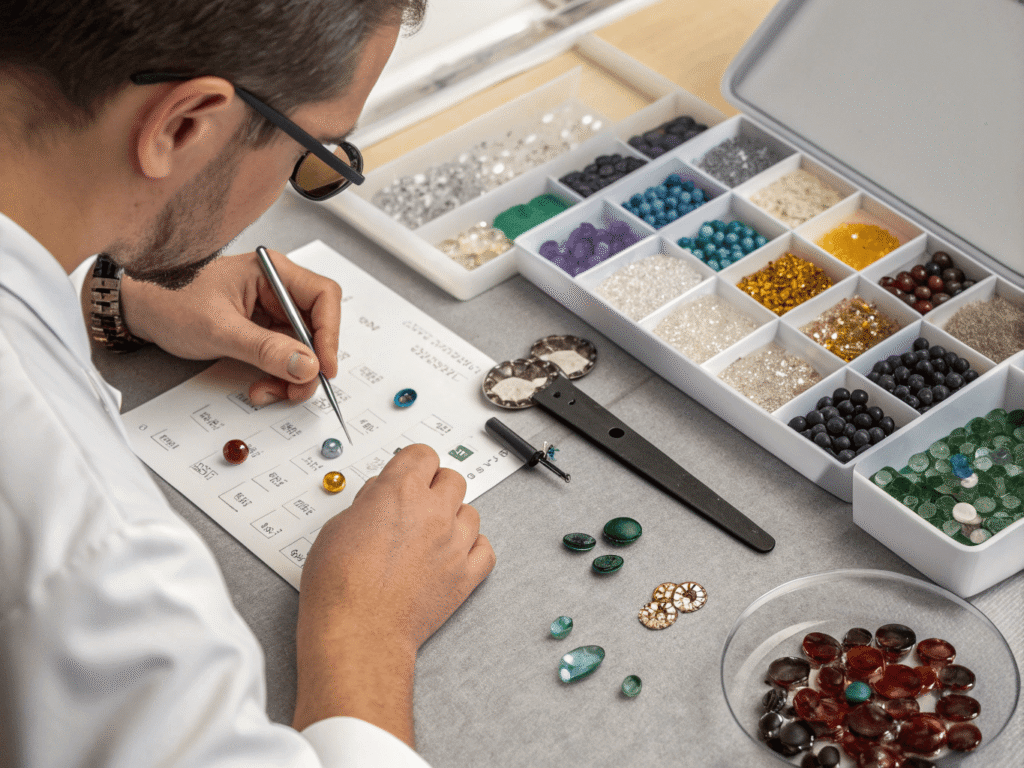
How to Request Custom OEM Kits
- Define your target price point and material standard (e.g., brass-gold plated, real crystal, or sterling silver).
- Choose a trusted supplier — preferably one experienced with jewelry export compliance.
- Request sample kits before bulk production to test durability and color accuracy.
- Negotiate MOQ (minimum order quantity) and packaging specs based on your retail goals.
Many global brands partner with reliable suppliers for private-label beading kits, blending artisan aesthetics with commercial scalability.
Ensuring Quality Consistency When Sourcing from China
China remains a dominant hub for jewelry material production, but quality variation is common. As a brand or wholesaler, consistent sourcing ensures long-term customer trust.
Best Practices for Consistent Quality Control
- Use multi-tier supplier audits — assess production facilities and quality testing standards.
- Request MSDS and compliance documents to confirm non-toxic and nickel-free materials.
- Perform durability checks — tension tests on wire and fade-resistance tests on coatings.
- Implement third-party inspections before shipment to catch assembly or plating issues.
Recommended OEM Regions
| Region | Specialty | Suitability for Jewelry Brands |
|---|---|---|
| Guangdong | High-end plating, gold-filled components | Premium jewelry production |
| Yiwu | Large-scale bead manufacturing | Cost-effective wholesale |
| Shenzhen | Advanced packaging and branding | OEM/ODM customization |
By establishing stringent quality protocols early, brands can avoid the pitfalls of inconsistent plating, poorly sized beads, or unreliable adhesion common in low-end kits.
Conclusion: Choosing Bead Kits Strategically for Professional Use
Bead kits can serve as a practical foundation, especially for start-up jewelry brands and small-scale creators, but success depends on material quality and technical craftsmanship. Acrylic or plated kits are suitable for entry-level products, while OEM-customized kits with premium alloys and crystals meet professional jewelry standards.
For wholesale buyers and brand designers, investing in:
- Certified suppliers,
- Custom-designed bead assortments, and
- Regular batch inspection
will ensure consistent results that align with professional jewelry expectations.
If you’re developing a new product line or private-label jewelry collection, consider working directly with OEM manufacturers that offer bead kits optimized for professional-quality assembly. These partnerships can dramatically improve your material control, design flexibility, and final product appeal — allowing you to elevate from simple DIY aesthetics to true brand-grade craftsmanship.
