
For many aspiring jewelry designers and crafters, the first step into the world of beading begins with a beginner’s bead kit. The market offers hundreds of options — from compact DIY sets to professional-grade beginner bundles — making it confusing to know which kit will help you grow your skills effectively.
A well-structured jewelry bead kit for beginners should include a balance of beads, high-quality threading materials, basic tools, essential findings, and step-by-step project guidance. These items enable beginners to create a few finished jewelry pieces independently while building skills that can later scale into small-batch or wholesale production.
In this article, I’ll explain everything a typical beginner bead kit includes, how to choose one suited to your goals, and how it can become the foundation for future jewelry-making success — whether as a creative hobby or part of a professional jewelry business.
Beads and Bead Supplies
The beads themselves form the creative heart of any jewelry-making kit. A good beginner bundle features a range of materials, sizes, and textures to allow experimentation with different design aesthetics.
| Bead Type | Material | Features | Best For |
|---|---|---|---|
| Seed Beads (11/0, 8/0) | Glass | Small, uniform size | Bead weaving, detailed patterns |
| Acrylic Beads | Plastic | Lightweight, vibrant | Youth jewelry, playful styles |
| Glass Beads | Polished glass | Shiny and elegant | Necklaces and bracelets |
| Wooden Beads | Natural wood | Organic texture | Boho or rustic designs |
| Metallic Beads | Coated alloy | Reflective surface | Accent or spacer beads |
| Faux Pearl Beads | Resin or shell-based | Classic, lustrous | Bridal or elegant pieces |
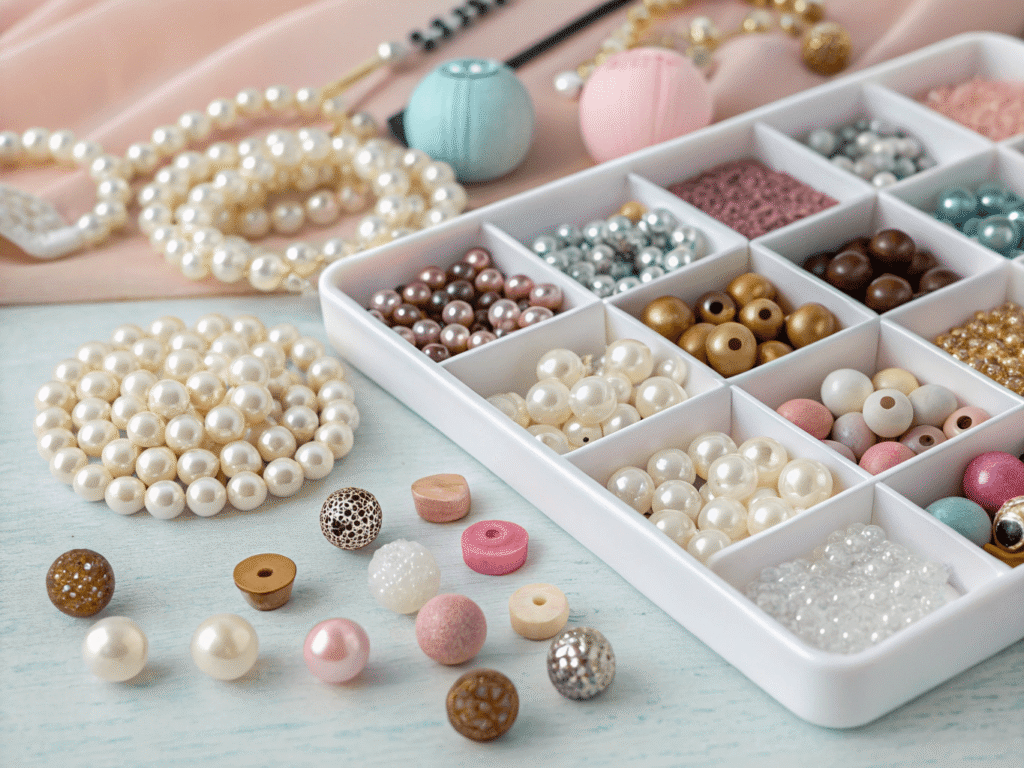
Some kits also include themed assortments (e.g., “boho rainbow mix,” “pastel floral,” or “metallic glamour”) to inspire creative combinations early on.
Example of assorted bead materials in a beginner jewelry-making kit.
Expert Tip
Look for bead kits that specify hole size consistency and smooth finishing. Cheaper kits may contain rough bead edges that fray cords or wires — a common frustration for beginners.
Threading and Stringing Materials
The next essential in any bead kit is the threading foundation — the cords, wires, and threads that hold your designs together. Each material type suits different jewelry styles and functionality.
| Material | Characteristics | Uses |
|---|---|---|
| Elastic Cord | Stretchy, easy to handle | Bracelets without clasps |
| Nylon-Coated Beading Wire | Durable, flexible | Necklaces and high-stress designs |
| Beading Thread (e.g., FireLine, Miyuki Nylon) | Thin yet strong | Weaving and stitching projects |
| Cotton or Leather Cord | Natural texture | Bohemian and rustic styles |
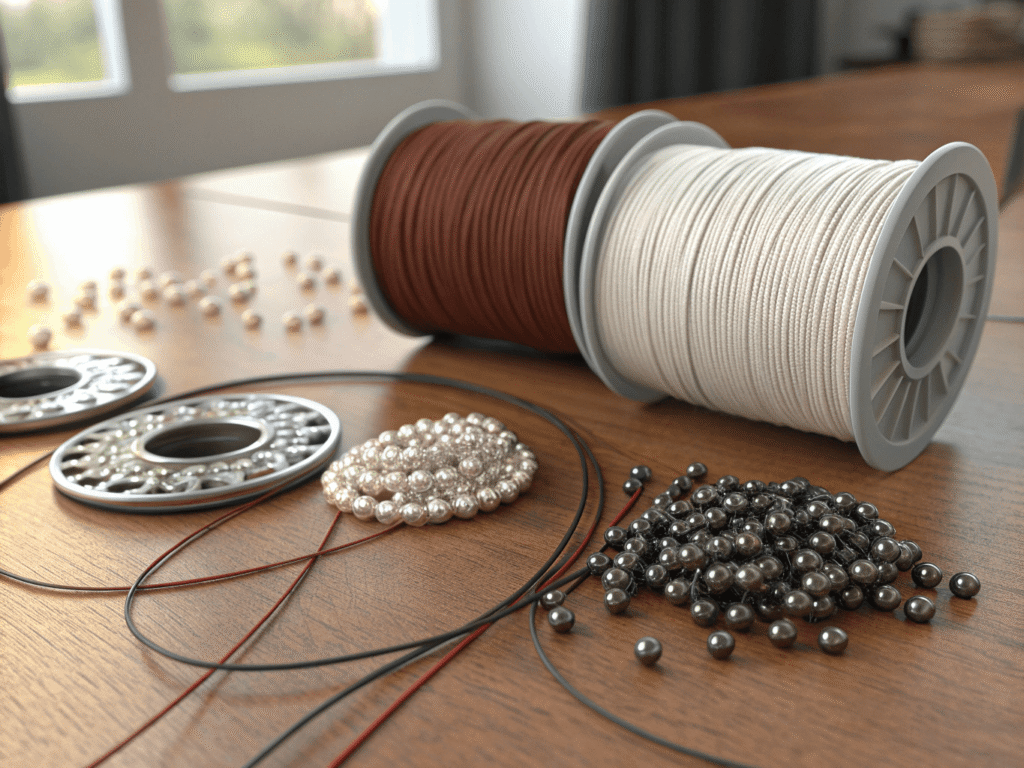
Most starter kits include at least two to three of these materials for experimentation.
Professional Insight: If your goal is to transition from hobby crafting to small-scale production, opt for beginner kits that use industrial-quality beading wire and reinforced elastic cord — materials that can easily scale up when you start purchasing in bulk.
Different stringing materials serve different jewelry types and durability levels.
Findings and Tools
While beads create the “look” of jewelry, findings and tools are what make pieces durable and wearable. Beginner kits commonly include a selection of findings in mixed metallic finishes — gold, silver, and stainless steel — so you can match various color themes.
Typical Metal Findings
| Component | Function | Suggested Quality |
|---|---|---|
| Clasps (lobster, magnetic, toggle) | Secure bracelet and necklace ends | Nickel-free, hypoallergenic |
| Jump Rings & Split Rings | Connect findings to main design | Stainless steel or brass base |
| Head Pins & Eye Pins | Dangle creation | Rust-resistant finishes |
| Crimp Beads/Tubes | Secure wire ends | Copper or plated brass |
| Earring Hooks & Bails | Attach beads or pendants | Anti-tarnish coating |
Basic Tools
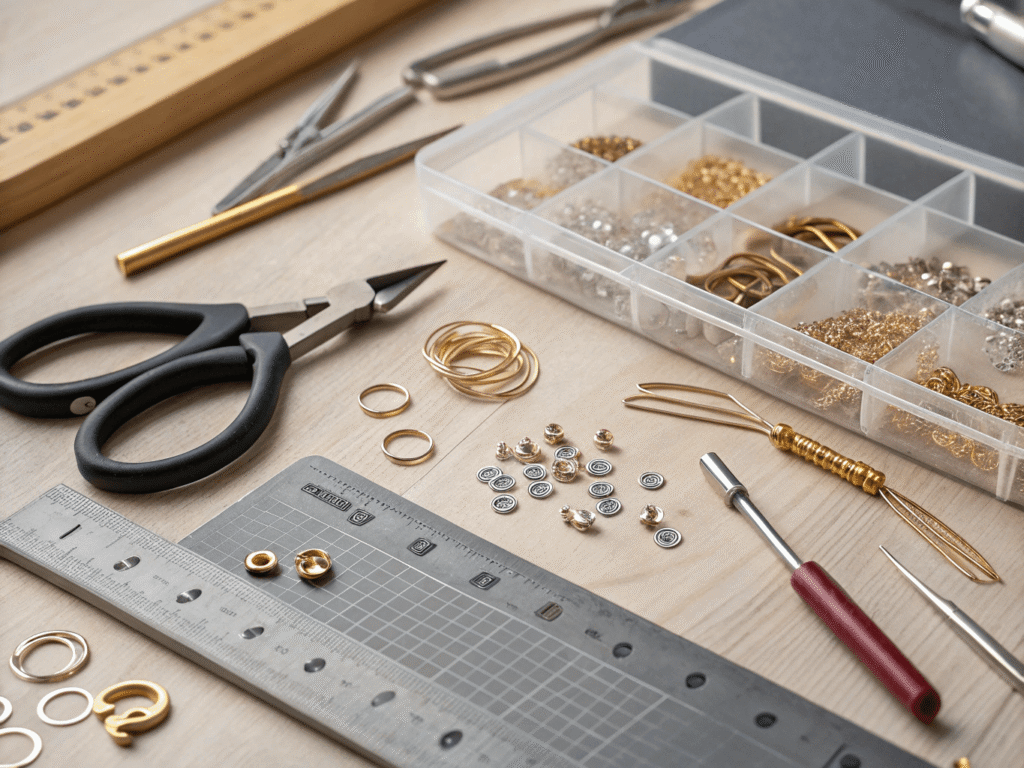
A quality beginner kit will often include:
- Chain-nose, round-nose, and flat-nose pliers
- Wire cutters and scissors
- Tweezers or bead scoop for handling small beads
- Measuring tape or ruler for accurate sizing
Essential findings and hand tools commonly included in bead starter kits.
Pro Tip: Avoid kits with low-grade coated findings, as they tarnish quickly. For professional results, always look for nickel-free or stainless-steel components.
Additional Supplies: Work Surfaces, Organization, and Instruction
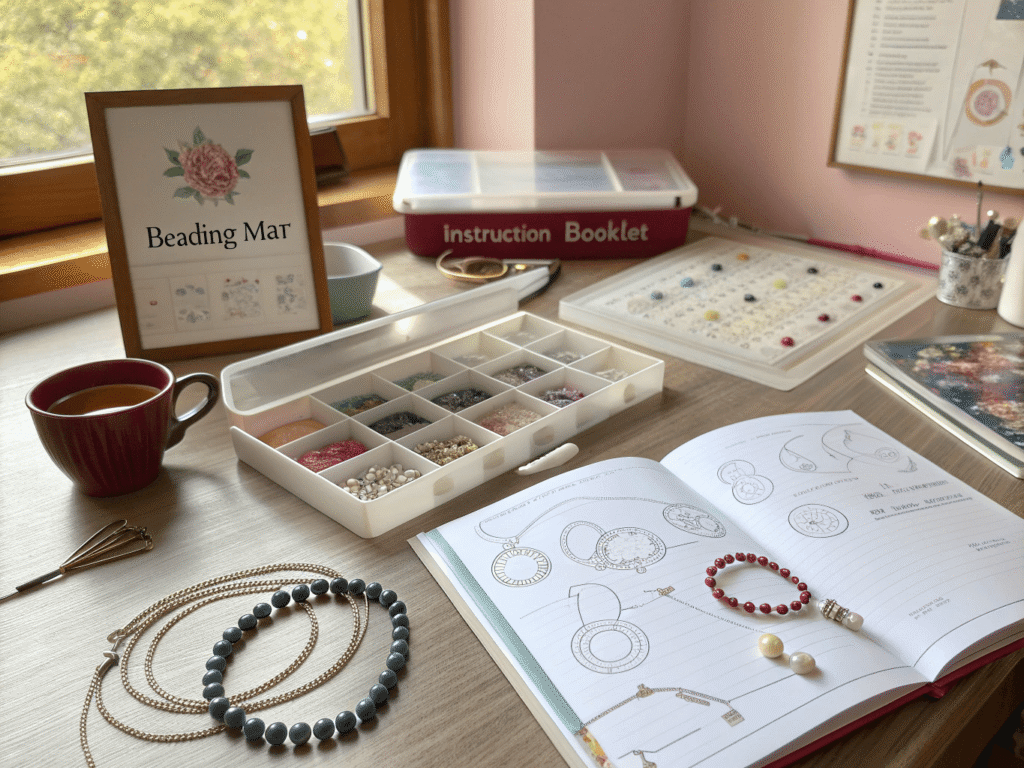
No jewelry workspace is complete without proper organization and guidance tools. High-value kits often include:
- A non-slip beading mat to prevent beads from rolling off your work area
- A multi-section bead organizer or plastic box for sorting materials
- Jewelry glue (for securing knots and endings)
- Beeswax thread conditioner to prevent tangling
- Beading needles (sizes 10–12 or big-eye style) for threading precision
- Instructional booklet or project templates with visuals for step-by-step learning
Clear, structured instructions are especially valuable to new creators. Some kits even include QR codes linking to online tutorials or video guides — a feature worth looking for if you’re self-teaching.
Organizers and work mats improve efficiency and creativity for beginners.
From Beginner Kit to Scalable Jewelry Production
A beginner jewelry-making kit is not just for fun — it’s also the first step in building a scalable jewelry-making workflow.
Here’s how to take your learning further:
- Document your materials and process. This helps when you replicate best-selling designs later.
- Compare thread and wire durability. Choose the materials that hold up best for long-term wear.
- Invest in better tools as you evolve. Upgrade to ergonomic pliers and stronger findings.
- Connect with bulk suppliers. Once comfortable, order beads, clasps, and wires in wholesale quantities.
- Maintain design consistency. Use standardized bead sizing and metal plating to ensure production quality.
By viewing your bead kit not as a one-time craft purchase but as an entry-level toolkit, you set yourself up to develop the design and quality control habits essential for B2B partnerships, OEM projects, or retail production lines later.
Conclusion
In summary, a typical jewelry bead kit for beginners includes:
- A diverse range of beads (seed, glass, acrylic, wooden, and metallic)
- Threading materials such as beading wire, elastic cords, and nylon threads
- Essential findings like clasps, jump rings, and crimps
- Basic tools for wire cutting, shaping, and measuring
- Workstation essentials (mats, organizers, glue, and thread conditioner)
- Instructional materials to guide your first jewelry projects
For both creative beginners and emerging jewelry entrepreneurs, the right kit doesn’t just inspire artistry — it provides a foundation for efficient, professional jewelry-making.
If you’re a jewelry retailer, designer, or OEM partner, choose bead kits that offer higher-quality materials and durable tools; these will support smoother workflow, faster prototyping, and better results as you evolve from hobby crafting to scalable jewelry production.
