
Every jewelry designer, maker, or craft enthusiast understands how much precision matters—placing a bead exactly where it belongs, cutting a wire at just the right length, or aligning a pendant so it sits perfectly. But beyond artistry, these tasks depend on hand–eye coordination, the ability to synchronize visual guidance with controlled hand movement. Craft kits, especially jewelry-making sets, are powerful tools not only for creativity but also for enhancing this fundamental skill.
In essence, craft kits refine hand–eye coordination by engaging both the visual and motor systems through repeated, precision-based actions such as cutting, threading, measuring, and assembling. Over time, these guided tasks improve movement accuracy, timing, and focus—skills that translate directly to professional craftsmanship and design excellence.
For both consumers discovering jewelry-making for the first time and professionals training their teams, understanding how craft-based activities build fine motor control can lead to better results—from cleaner designs to more efficient production workflows.
How Can I Choose a DIY Craft Kit That Best Supports Fine Motor Skill Development?
Selecting the right DIY craft kit is the first step in ensuring effective motor skill improvement. The best kits are designed to encourage small, precise movements and repetitive tasks that strengthen visual–motor synchronization.
1. Look for Detail-Oriented Projects
Choose kits that involve beadwork, wire wrapping, or miniature assembly. These require you to align small materials with visual precision, demanding fine control.
Examples:
- Bead bracelet kits or earring sets with various bead sizes
- Wire-art or charm-assembling kits
- DIY keychain or locket-making kits
2. Prioritize Multi-Step Processes
Craft kits that guide users through structured sequences of design, preparation, and assembly build sustained focus and refined motor timing.
| Craft Kit Type | Motor Skill Benefit | Coordination Level |
|---|---|---|
| Bead Stringing Kits | Repetitive threading improves dexterity | High |
| Wire Jewelry Sets | Hand strength and control | Moderate |
| Mosaic or Resin Art Kits | Visual alignment and bilateral accuracy | High |
| Clay Modeling Kits | Tactile precision and spatial reasoning | Moderate |
3. Consider Age and Skill Level
For beginners, start with simpler kits using larger components that are easier to grip. Advanced crafters should opt for intricate sets requiring higher accuracy, such as fine chain assembly or gemstone setting.
What Materials or Tools in a Jewelry-Making Craft Kit Can Enhance My Hand–Eye Coordination?
The choice of materials directly affects how much visual–motor engagement each project offers.
1. Beads and Small Components
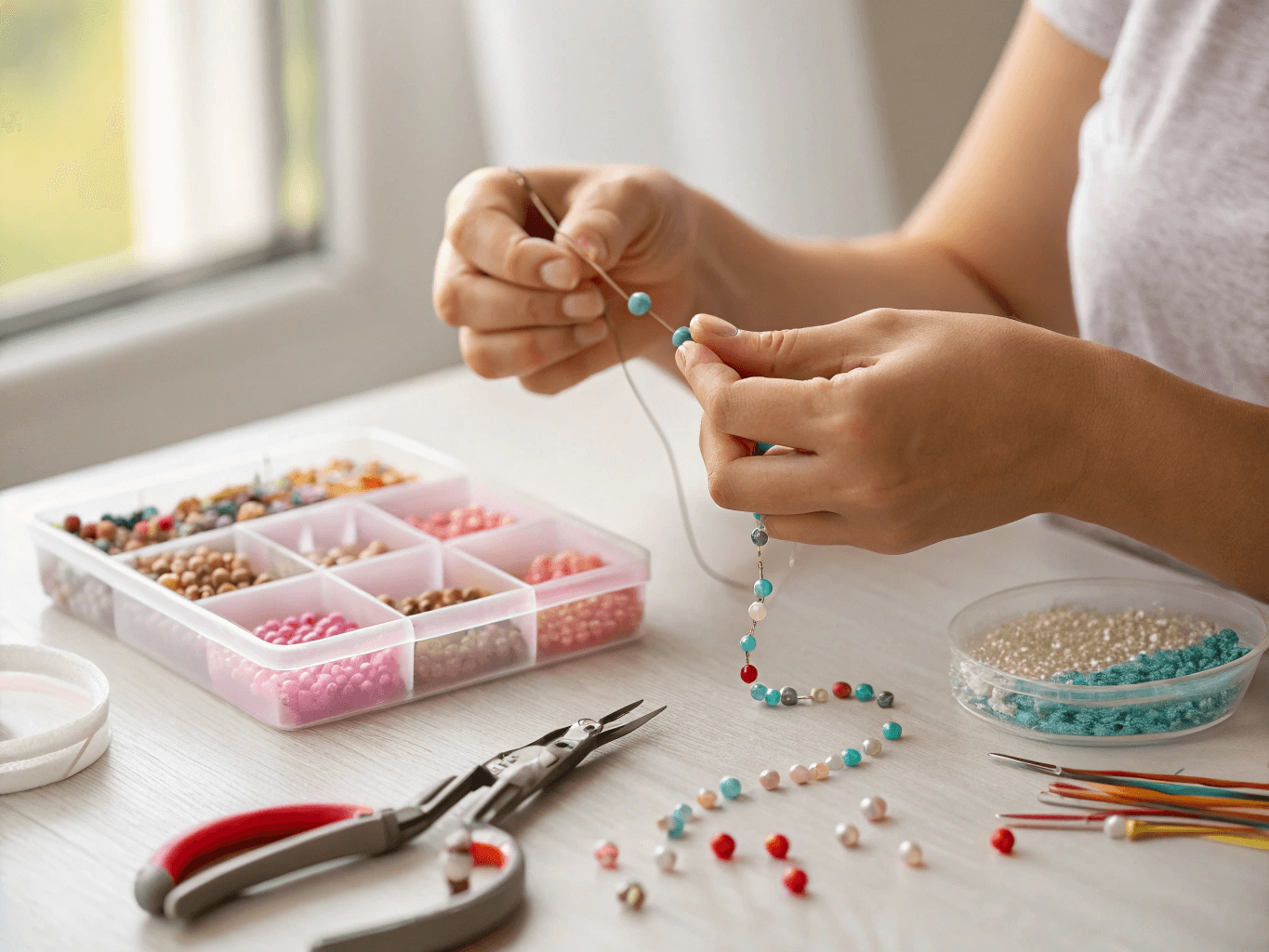
Working with beads demands the pinching and alignment of tiny elements guided by visual cues. Threading them onto a narrow wire or string trains concentration and bilateral coordination.
2. Precision Tools
Tools like pliers, tweezers, and cutters require steady hands and focused sightlines. Manipulating them strengthens grip control while the eyes monitor placement and pressure.
3. Materials Offering Sensory Feedback
Varied textures—like smooth metal, rough stone, and flexible cord—help the brain adapt to different feedback types, improving responsiveness and movement calibration.
| Material Type | Sensory Feedback | Skill Trained |
|---|---|---|
| Metal wires | Resistance and tension awareness | Grip precision |
| Textile cords | Flexibility and pressure control | Bilateral coordination |
| Plastic beads | Smooth finishing and alignment focus | Visual accuracy |
Pro tip: Rotate between different material types weekly. This variation strengthens neural adaptability and overall dexterity—a technique often used in jewelry production training.
How Does Assembling Bracelets or Keychains Help Me Practice Precision and Focus?
Every bracelet or keychain assembly exercise can be viewed as a mini precision workshop.
1. Measurement and Alignment Train Visual Estimation
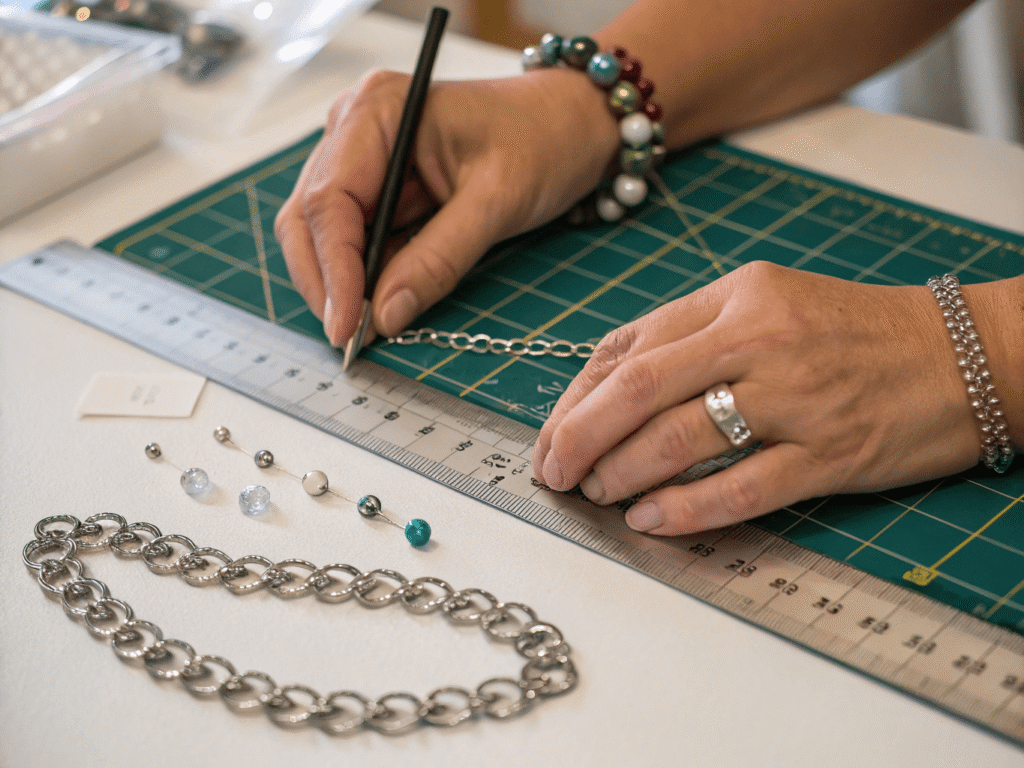
Positioning charms or beads evenly across a chain requires accurate measurement and spatial awareness. The eyes act as guides, constantly adjusting finger movements to achieve balance.
2. Repetitive Patterns Reinforce Controlled Motion
When repeating threading or clasping actions, the repeated movement sequence strengthens muscle memory and improves timing. Over time, actions like fastening jump rings or tying knots become smoother and more reliable.
3. Focus Under Pressure
Jewelry assembly teaches patience—any rushed motion results in misalignment. Trained crafters learn to maintain steady attention, which enhances their focus in both design planning and production environments.
Can I Use Craft Kits to Train My Team or Customers for Better Craftsmanship in Jewelry Production?
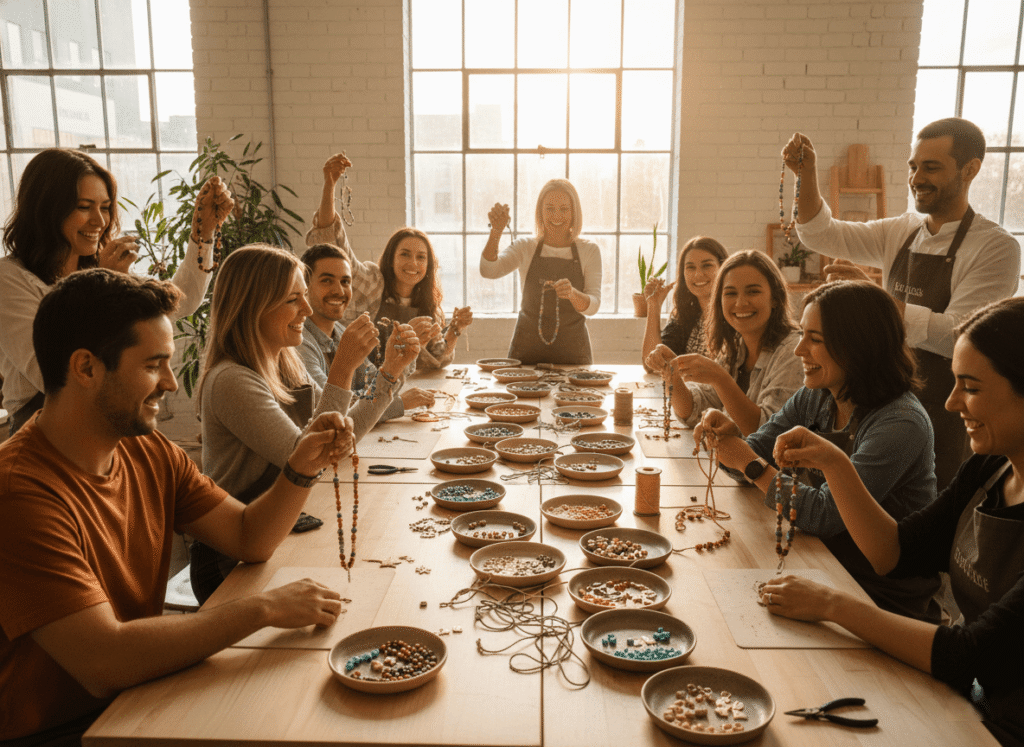
Absolutely. Many professional jewelry studios and OEM suppliers integrate guided craft sessions into their training programs. These workshops cultivate precision, dexterity, and design discipline—all essential traits in jewelry manufacturing.
1. Structured Training Through Craft Kits
Use simple craft kits as warm-up exercises before handling precious materials. Threading, cutting, and pattern-following tasks serve as physical conditioning for fine production work.
2. Team Coordination and Quality Standardization
By practicing uniform assembly techniques, teams improve synchronization and reduce variance in product finishing. Repetitive coordination exercises contribute to consistent craftsmanship—a hallmark of reliable jewelry production.
3. Customer Engagement for Brand Value
Offering DIY craft kits as part of your brand experience can build emotional connection and trust. When customers understand the manual precision involved in jewelry-making, they appreciate your craftsmanship more deeply and value your products beyond aesthetics.
| Audience | Training Focus | Benefit |
|---|---|---|
| Internal Production Team | Technique precision and efficiency | Reduced production errors |
| Customers / Hobbyists | Engagement and education | Stronger brand credibility |
| Design Partners (OEM / ODM) | Material understanding and tactile training | Better design alignment |
Conclusion
Craft kits go far beyond simple recreation—they serve as highly effective tools for improving hand–eye coordination, fine motor control, and craftsmanship accuracy. Whether you’re a jewelry designer mastering delicate assembly or a brand trainer developing artisan teams, these kits provide structured, sensory-rich ways to strengthen coordination and focus.
From beadwork to wire shaping, every small, deliberate movement teaches the eyes and hands to work as one—a lesson that translates directly into high-quality jewelry creation.
If you’re a jewelry brand, wholesaler, or OEM partner, integrating craft-based skill development into your training pipeline will not only refine your team’s craftsmanship but also elevate your product quality and brand reputation. It’s the perfect blend of art, science, and skill evolution—crafted one bead at a time.
