When I first started sourcing craft supplies for my store, I found myself puzzled by the sheer variety of “kits” available — some claimed to teach STEM, others were all about color and texture. I remember testing both types with my niece: the educational craft kit walked her through a science experiment step-by-step, while the art kit simply invited her to create whatever she imagined. That’s when I realized — these kits serve very different purposes, even though they both fall under the “craft” category.
The key difference between educational craft kits and art kits lies in their objective. Educational craft kits are designed to teach specific skills or concepts, often aligned with STEM or STEAM learning goals, while art kits focus on self-expression and creativity without structured learning outcomes. In this guide, I’ll explain how to tell them apart, what materials to look for, how to target parents and schools, and whether you can customize these kits through OEM/ODM manufacturing in China.
I’ve spent years helping educators, retailers, and parents choose the right kits for their needs, and I’ll be sharing everything I’ve learned from sourcing, reviewing, and selling both categories. By the end, you’ll know exactly which type fits your goals and how to position them for your business.
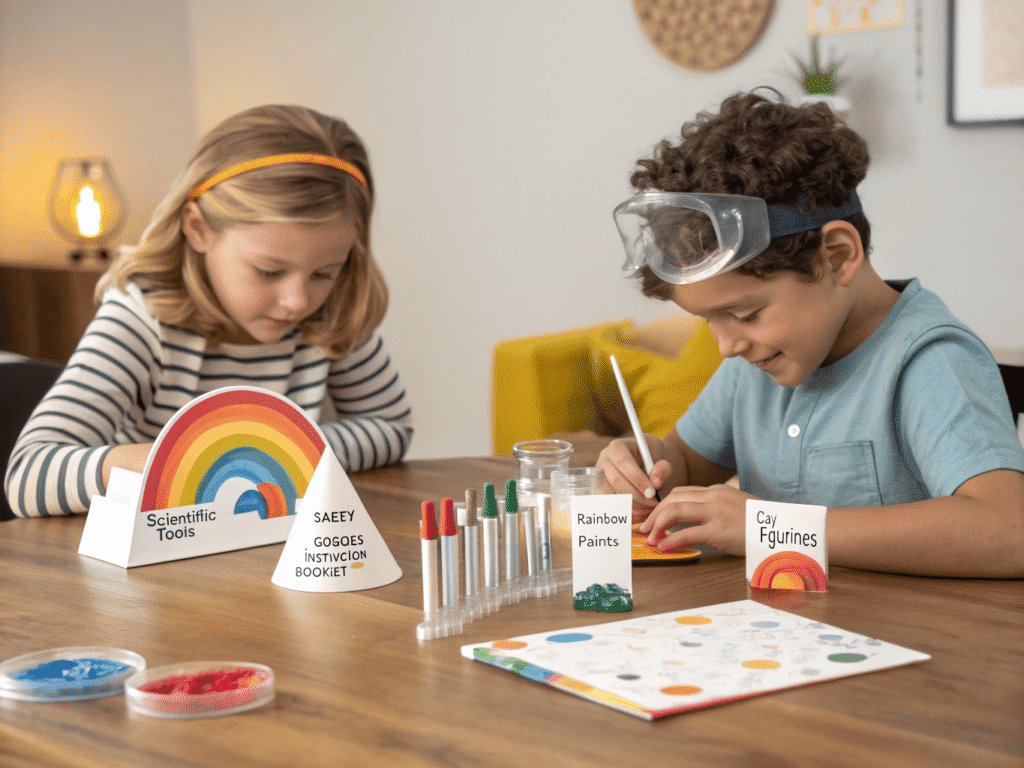
How Can I Tell If a Craft Kit Is Designed for Learning or Just for Creativity?
Here’s what I’ve learned after comparing hundreds of kits from suppliers and brands — the easiest way to spot whether a craft kit is educational or artistic is to look at its learning goal and instructions.
Quick Comparison Table
| Feature | Educational Craft Kit | Art Kit |
|---|---|---|
| Purpose | Teach a concept (e.g., engineering, math, science) | Encourage creative expression |
| Instructions | Step-by-step directions with outcomes | Minimal or open-ended guidance |
| Outcome | Defined — follow a recipe to get a result | Unique — create whatever inspires you |
| Target Users | Parents, teachers, schools | Hobbyists, families, art enthusiasts |
| Materials | Pre-measured parts, guides, circuit pieces | Paints, clay, brushes, canvas |
| Example Kits | Volcano science kit, robotic arm kit | Watercolor painting kit, clay modeling set |
From a buyer’s perspective, educational craft kits usually have a structured project such as building a wind turbine or a solar system model. They’re less about imagination and more about applying learning principles hands-on.
By contrast, art kits center around process art, where materials (like paints or clay) let users express themselves freely. There’s no “right” or “wrong” finished product — it’s all about creativity.
Tip for Buyers
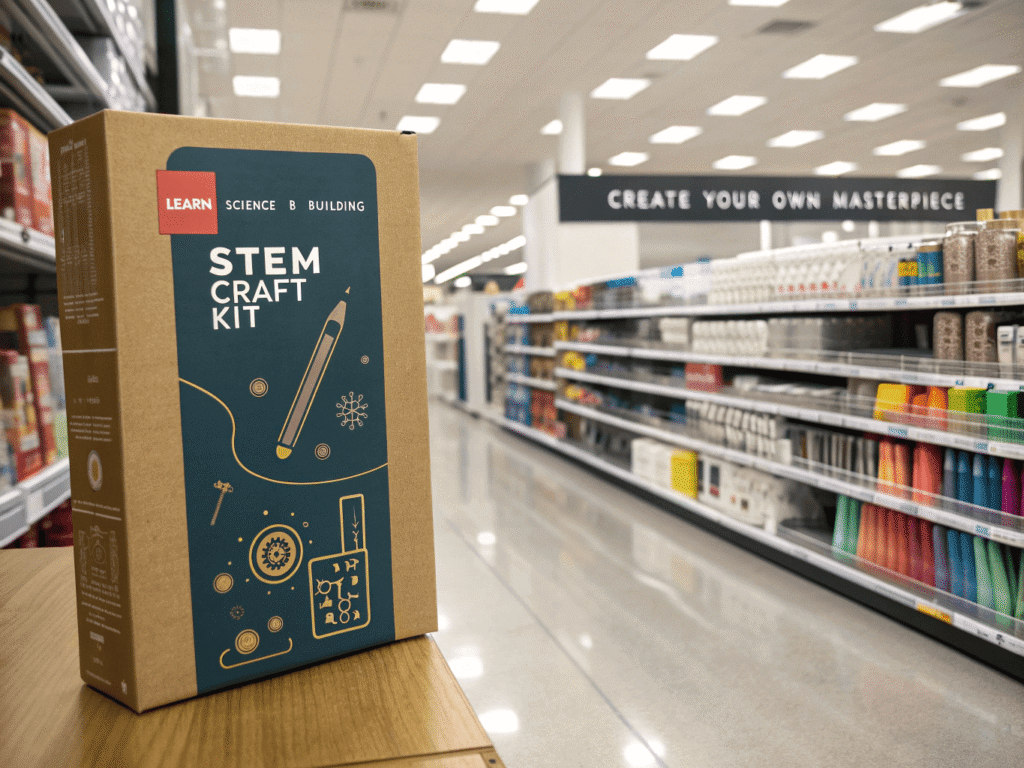
When you see “STEM,” “STEAM,” or terms like “learn engineering while building,” it’s an educational craft kit. If the box says “Design your own masterpiece” or “Let your imagination shine,” it’s an art kit.
What Materials and Components Should I Look for in Educational Craft Kits for My Store?
Choosing the right educational craft kits can make or break your store’s appeal to teachers and parents. Over time, I’ve found that the most successful kits share five materials and design principles:
1. Hands-on, Real-World Components
Educational kits often include tangible parts that demonstrate scientific or mechanical principles:
- Circuits and Batteries for electricity learning.
- Magnets and Gears for physics and motion.
- Pre-cut wooden parts for structural assembly.
- Color-mixture components to explain chemistry.
These materials make learning visible — children can see how theories work in real life.
2. Clear Instruction Booklets
Since the learning is structured, instructions are vital. A good kit includes:
- Step-by-step guides.
- Annotated diagrams explaining each stage.
- Simple scientific summaries connecting play to knowledge.
3. Durable, Safe, and Certified Components
Educational products should comply with safety standards like ASTM F963 or EN71. Parents and schools actively look for these labels.
| Material Type | Common Use | Educational Benefit | Safety Note |
|---|---|---|---|
| Wood | Building models | Teaches geometry and balance | Smooth edges, non-toxic finish |
| Plastic gears | Engineering kits | Demonstrates motion and torque | Must be BPA-free |
| Paper with graphic prints | Learning guides | Visual learning reinforcement | Use recycled or eco-friendly paper |
4. Multi-Project Value
Retailers benefit when kits include multiple project options — it appeals to repeat buyers.
5. Integration with School Curricula
Ask suppliers whether kits match common educational standards (like Next Generation Science Standards in the U.S.). Such kits resonate with teachers and boost institutional orders.
How Do Educational Craft Kits Help Me Target Parents or Schools in My Wholesale Business?
Educational craft kits are a powerful way to connect with parent and school audiences because they blend fun and learning — two things educators value most.
Why Parents Love Them
When I talk to parents at expos, they often say they want activities that make playtime meaningful. Educational craft kits promise exactly that:
- They develop real-world skills (science, engineering, critical thinking).
- They reduce screen time through tactile learning.
- They boost confidence when kids see their projects succeed.
Parents trust brands that communicate educational value clearly — they’ll choose your product over a generic art kit if your packaging mentions “learning outcomes” or “STEM exploration.”
Why Schools Love Them
Institutions buy craft kits in bulk for workshops or science fairs. Teachers use them to:
- Engage students in group projects.
- Reinforce textbook concepts through experiments.
- Promote teamwork and curiosity.
Marketing Insights for Retailers and Wholesalers
Here’s what worked for me when pitching to schools and parent groups:
- Showcase learning impact stories (e.g., “Students built solar-powered cars in 20 minutes!”).
- Offer educational bundle discounts (sets of 5 or 10 kits).
- Develop instructional partnerships — provide educators with free manuals.
- Highlight STEAM alignment in all product listings and online content.

Can I Customize Educational Craft Kits Under My Own Brand Through OEM/ODM Manufacturing in China?
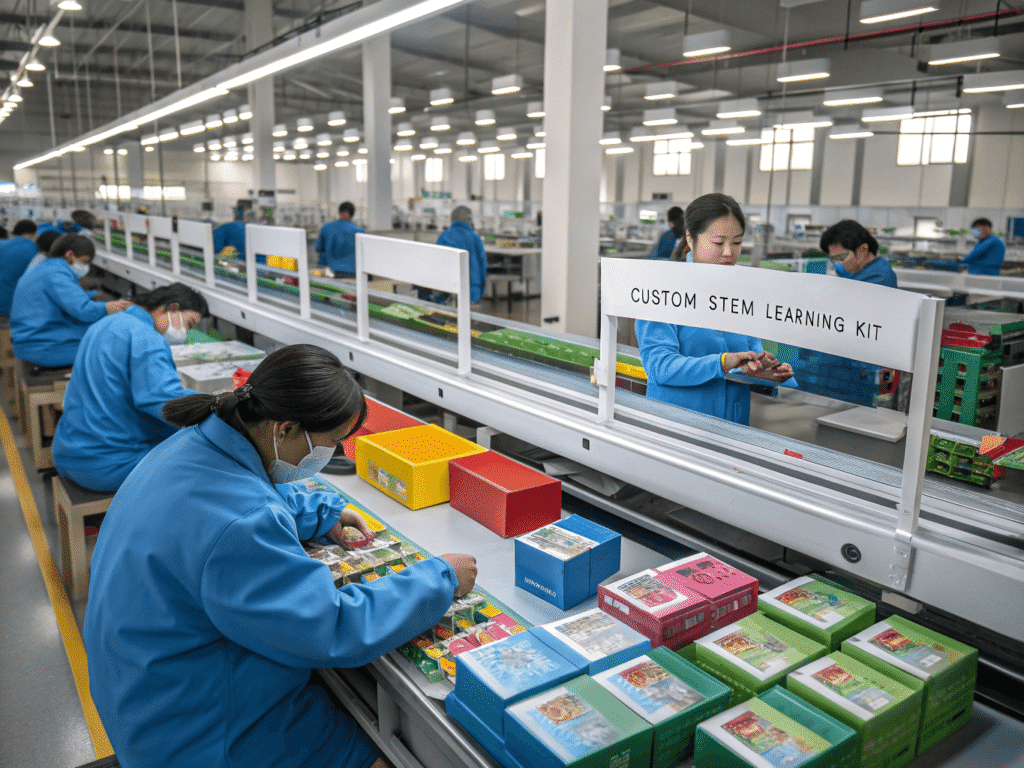
Yes, absolutely — and I’ve done this myself several times. Many Chinese manufacturers specialize in OEM (original equipment manufacturing) and ODM (original design manufacturing) services for educational toys and craft kits. This gives you full control over branding, packaging, and even kit components.
How OEM/ODM Works
- OEM (Your Brand, Their Product):
You choose an existing product from the manufacturer’s catalog and rebrand it with your logo and packaging design. - ODM (Your Idea, Their Design):
You provide specifications for a custom kit — materials, learning goals, and packaging aesthetics — and the factory creates it from scratch.
| Service Type | Best For | Timeframe | Notes |
|---|---|---|---|
| OEM | Quick turnaround, small retailers | 2–4 weeks | Easy white-label setup |
| ODM | Unique designs, educational specialists | 6–10 weeks | Requires minimum order quantity |
Why It’s Worth Considering
Through OEM/ODM manufacturing, I’ve been able to:
- Customize instruction booklets to match local school systems.
- Print QR codes linking to video tutorials for my brand.
- Choose sustainable materials (bamboo, recycled paper).
- Differentiate my offerings from mass-produced art kits.
Manufacturing Tips
- Visit or audit factories to ensure quality control.
- Request prototype samples before final production.
- Register intellectual property copyrights for your branding.
This not only helps you stand out as a serious educational brand but also ensures consistency when selling to wholesale distributors and schools abroad.
Conclusion
After years of working with both art and educational craft kits, I’ve realized that the main difference comes down to purpose. Educational craft kits teach structured skills through guided creation, while art kits celebrate freedom and imagination. Based on my experience, if you’re aiming to build strong relationships with parents, schools, or educational distributors, go for educational craft kits — they promise lasting value beyond entertainment.
If you’re expanding into wholesale or private-label markets, explore OEM/ODM manufacturing in China for customized, branded kits that align with your target audience. With the right partnerships and product selection, you’ll not only offer fun activities but also meaningful learning experiences — and that’s what keeps customers coming back.
