
When I first started exploring children’s craft kits for my nieces, I was surprised by how many options there were—and how the quality varied wildly between brands. Some kits came overflowing with colorful materials, while others felt barebones or included items that weren’t age-appropriate. Understanding what actually goes inside a good craft kit is essential if you’re a parent, educator, or retailer beginning to source your own.
The best children’s craft kits combine creativity, safety, and versatility. They typically include coloring supplies, paper products, adhesives, decorative elements, and safe tools—all designed to spark imagination while protecting little hands. In this guide, I’ll explain what materials belong in a complete kit, how to select high-quality and safe components (especially when sourcing from China), and how to tailor packaging for private label or wholesale orders.
From crayons to beads and felt sheets to glue sticks, the right selection of craft materials can make all the difference between a one-time project and a lasting love of creativity. Let’s dive into the essentials every beginner should know before designing or buying a children’s craft kit.
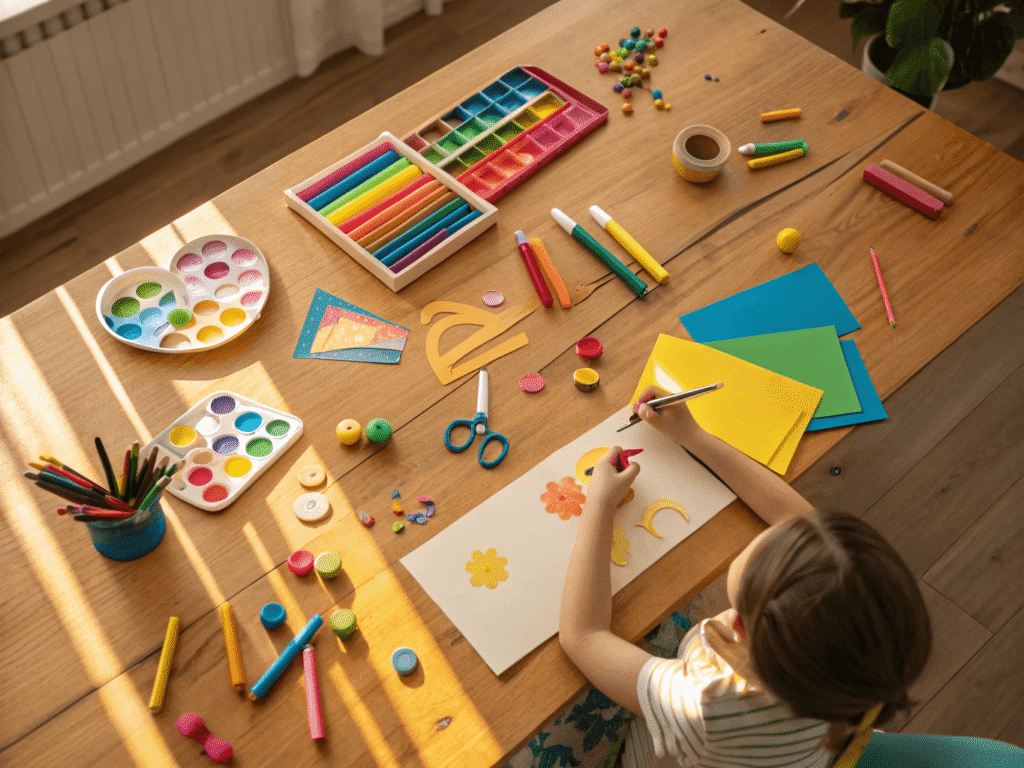
What types of jewelry-making supplies should I include in my children’s DIY craft kits?
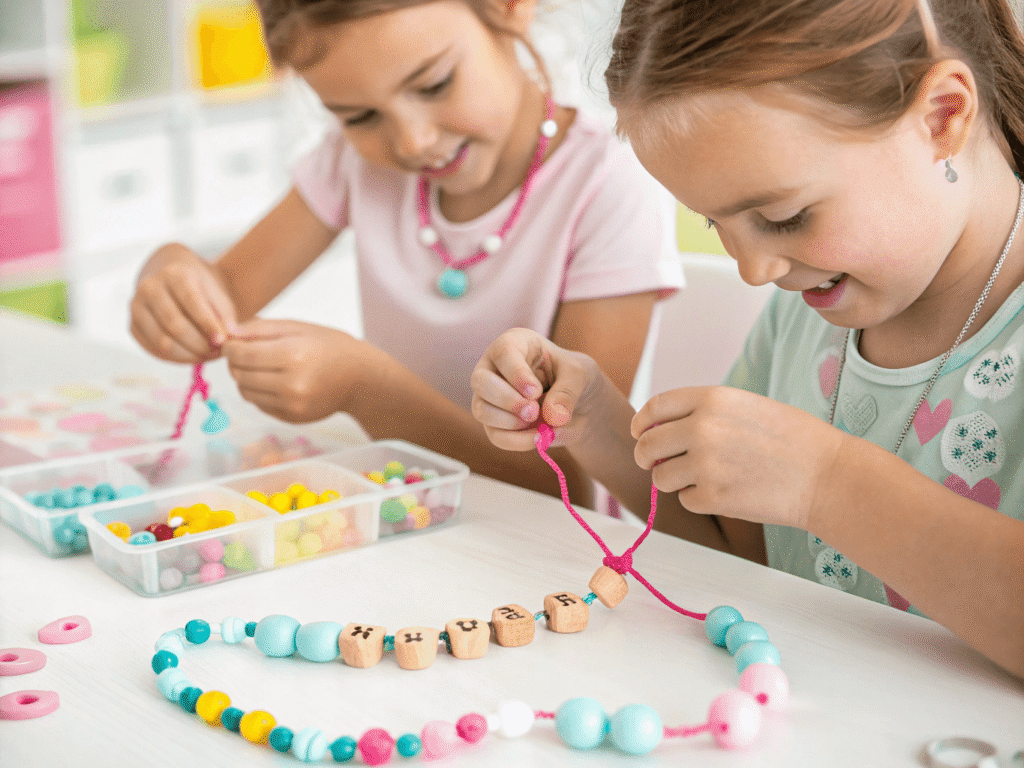
When building a children’s jewelry-making craft kit, I’ve found it’s crucial to balance fun, safety, and age suitability. Kits designed for kids should encourage personal expression without posing risks such as choking hazards or skin irritation.
Core Jewelry-Making Materials
Here’s a breakdown of what I recommend including in a well-rounded kids’ jewelry kit:
| Material | Purpose | Recommended For | Safety Tip |
|---|---|---|---|
| Plastic beads | Basic threading practice and colorful designs | Ages 5–8 | Use large-hole beads to avoid choking hazards |
| Wooden beads | Eco-friendly and lightweight | Ages 6–10 | Choose smooth, splinter-free finishes |
| Elastic string or cord | Easy for small hands to manipulate | Ages 4+ | Ensure non-toxic and durable elasticity |
| Clasps and connectors | For completing bracelets and necklaces | Ages 8+ | Provide easy snap-ons instead of metal clasps |
| Alphabet beads | Encourages literacy and personalization | All ages | Verify safe print coating (no lead or toxic ink) |
| Decorative charms | Adds sparkle and theme | Ages 6+ | Avoid sharp edges or metallic allergens |
Beyond the basics, you might add colorful felt shapes, pompoms, or ribbons to let kids mix mediums and explore texture-based creativity. These additions make kits feel more complete and fun.
My Pro Tip
Always include illustrated instructions showing both simple and advanced designs, so children of different ages can participate. Step-by-step pictures reduce frustration and make the process rewarding.
How can I select safe and durable materials for kids’ jewelry kits when sourcing from China?
I’ve sourced craft supplies from Chinese manufacturers for years, and while it’s cost-effective, safety and durability should always come first. Here’s what I’ve learned to look for when evaluating suppliers.
Key Safety and Durability Considerations
- Non-toxic certification: Look for materials tested under ASTM F963 or EN71 standards, commonly required for children’s products.
- No small detachable parts: Ensure bead sizes exceed 10mm for younger users.
- Material strength: Choose elastic cords that maintain flexibility after repeated stretching.
- Smooth edges and surfaces: Request finished samples to check bead polishing and cord softness.
- Colorfast coatings: Avoid painted beads that chip easily; instead, use embedded coloration or food-grade dyes.
Example of Material Quality Comparison
| Supplier | Material Type | Durability Rating | Safety Certification | MOQ (Minimum Order Quantity) |
|---|---|---|---|---|
| Supplier A | ABS plastic beads | ★★★★★ | EN71 Certified | 1,000 sets |
| Supplier B | Wooden beads | ★★★★☆ | ASTM F963 | 500 sets |
| Supplier C | Elastic cord | ★★★☆☆ | RoHS Compliant | 2,000 rolls |
My Experience Tip
Don’t shy away from requesting sample batches. Manufacturers often adjust bead sizes or materials on request. Communicate your target age range and market (e.g., EU or US) so they follow proper safety labeling.
What should I check to ensure the accessories meet international safety standards for children?
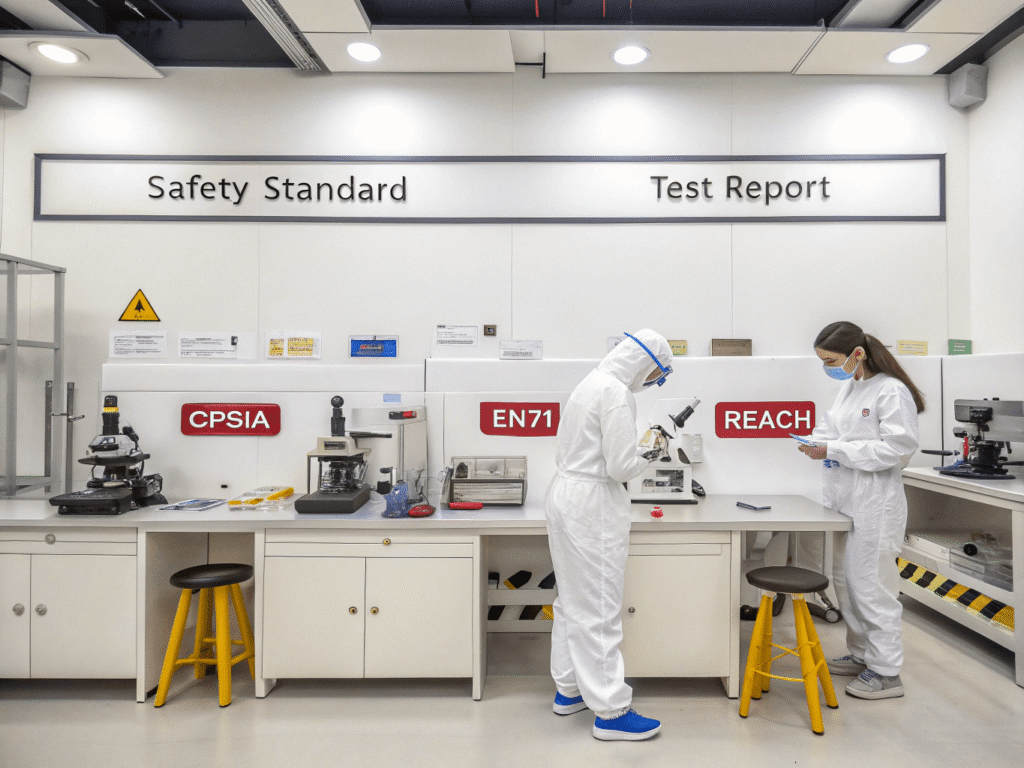
Safety isn’t optional—it’s the backbone of any children’s craft product. I learned early that compliance certificates and test reports are key when importing or distributing craft kits.
Essential Certifications to Request
- ASTM F963 (USA): Governs mechanical and physical properties of toys.
- EN71 Parts 1–3 (EU): Focuses on physical, flammability, and chemical safety.
- CPSIA: Regulates lead and phthalate content for children under 12.
- REACH: European regulation for chemical use in manufacturing.
- ISO 8124: Global testing standard for toy safety, often accepted internationally.
Quick Compliance Checklist
| Safety Aspect | What to Verify | Why It Matters |
|---|---|---|
| Material composition | Non-toxic plastics and paints | Prevent allergic or chemical reactions |
| Choking hazard test | Parts > 3cm diameter | Protect toddlers under 3 years old |
| Flammability test | Meets toy flammability requirements | Enhances household safety |
| Documentation | Supplier provides test reports | Essential for customs and retail approvals |
My Experience Tip
I always include a “safety notes” card in my wholesale kits explaining age recommendations and usage warnings. This not only builds parent trust but also enhances brand legitimacy—especially for private label products sold internationally.
How can I customize the packaging and contents of my kids’ craft kits for wholesale or private label orders?
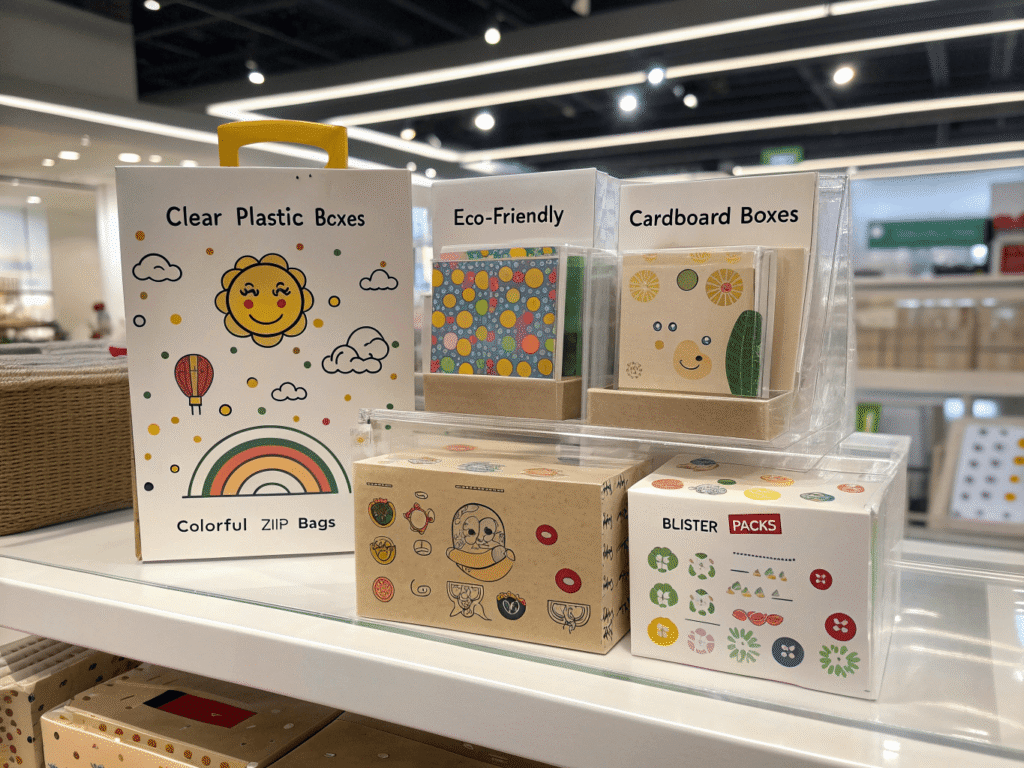
Packaging plays a far bigger role in craft kits than many beginners realize. Attractive, functional packaging makes your product stand out, protects components, and communicates brand values—especially if you’re developing private label or wholesale versions.
Customization Options for Packaging
| Packaging Type | Advantages | Best Use Cases |
|---|---|---|
| Reusable plastic box | Keeps materials organized | Premium kits or educational sets |
| Zip pouches | Lightweight and cost-effective | Basic kits or budget-friendly bundles |
| Cardboard craft box | Eco-friendly, print-friendly | Sustainable or boutique branding |
| Display blister packs | Eye-catching for retail shelves | Single-project kits |
Branding Personalization Tips
- Include instructional booklets: Illustrated project ideas make kits more interactive.
- Add your logo and safety icons: Always show EN71, ASTM, or age-grade icons clearly.
- Color-coordinate contents: Matching beads, felt, and ribbons increases perceived quality.
- Eco-friendly messaging: If using recycled paper or bioplastics, highlight that on packaging.
My Experience Tip
For wholesale orders, I recommend offering modular kit designs—where retailers can pick 3–5 activity types to include (e.g., painting + jewelry + collage). This flexibility allows them to match local market preferences without retooling packaging completely.
Conclusion
Putting together or purchasing a children’s craft kit isn’t just about fun—it’s about inspiring creativity safely and responsibly. Based on my experience, a high-quality kit should offer:
- Non-toxic, age-appropriate materials (like large beads, safe scissors, and washable paints)
- Verified safety compliance from reputable manufacturers
- Clear instructions and reusable packaging for long-term use
If I were starting today, I’d choose a supplier that can guarantee EN71 or ASTM F963 certification, offer custom branding, and provide a range of colorful, durable craft supplies. Investing that extra effort upfront ensures children can explore their creativity freely—and parents can feel confident about what’s in their hands.
