
When I first started sourcing brooches from China, I quickly learned that “lead time” isn’t a one-size-fits-all number. During my first order, I expected everything to arrive within three weeks — only to realize that sampling, material sourcing, and plating processes could easily add another month. If you’re new to importing jewelry or accessories, understanding how production schedules work will save you plenty of stress and help you plan smarter.
The typical production lead time for brooches made in China ranges from 20 to 35 days for standard designs and up to 45–60 days for large or custom orders. Sampling usually takes 7–14 days, while delivery to the U.S. or Europe adds another 7–30 days depending on the shipping method. In this guide, I’ll break down sampling, mass production, potential delays, and proven ways to shorten your overall timeline without sacrificing quality.
That said, lead times can shift dramatically based on customization requests, seasonal workloads, and supplier type. In the following sections, I’ll share everything I’ve learned — from realistic sampling expectations to what affects delivery schedules — along with firsthand strategies for managing timelines effectively.
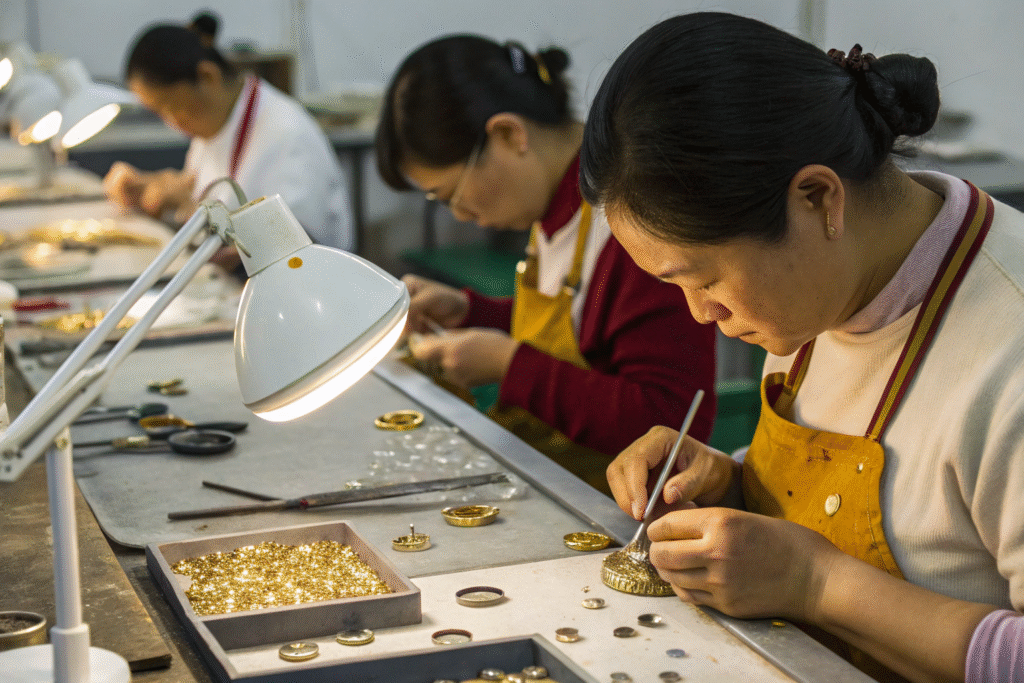
How long does it take to finish sampling and mass production?
When I contact new suppliers, one of my first questions is always about sampling and bulk timelines. Every manufacturer handles these stages differently, but most follow a predictable pattern.
Sampling Stage
For basic designs or existing molds, sample production typically takes 7–10 days.
For custom shapes, logo engravings, or gemstone-inlaid brooches, expect 10–14 days due to mold creation, plating tests, and material sourcing. Some suppliers may charge a refundable sample fee ($20–$100) which is credited once you confirm your bulk order.
If your design requires mold making, here’s a common timeline breakdown:
| Process Step | Typical Duration | Notes |
|---|---|---|
| Design approval & technical drawing | 2–3 days | Communicate clearly to avoid revisions |
| Mold making | 3–5 days | Zinc alloy and brass molds are quickest |
| Sample production & plating | 4–6 days | Includes assembly and polishing |
| Buyer review & approval | 2–3 days | Approve quickly to prevent delays |
Mass Production Stage
Once the sample is approved, manufacturers begin bulk manufacturing.
Here’s the typical range based on order size:
| Order Quantity | Estimated Production Time | Comments |
|---|---|---|
| 1,000–5,000 pcs | 15–30 days | Most common MOQ range |
| 10,000+ pcs | 30–45 days | Requires more plating cycles and inspection |
| Stock or ready-to-ship items | 3–5 days | Fastest option if design is already in catalog |
In my experience, handcrafted or gemstone-inlaid brooches often take longer — sometimes up to 50–60 days — because of manual setting and polishing. Simpler zinc alloy or brass brooches are typically faster, averaging 20–30 days total.

What factors can delay shipment in custom brooch projects?
Even when everything seems on track, unexpected delays can occur — especially for novice importers. Here are the most common reasons I’ve encountered that can push timelines back.
1. Peak Season Congestion
Factories often operate at full capacity before major holidays or trade fairs. Chinese New Year and export fairs (April & October) are notorious for slowing down production. I now schedule my orders 2–3 months before these periods to avoid congestion.
2. Material and Component Availability
Delays often stem from out-of-stock components — especially for brooch styles that use rare plating colors or crystal stones. If your chosen materials aren’t locally sourced (e.g., Austrian crystals), expect a 5–10 day delay while factories source them.
3. Mold Revisions and Design Changes
Minor tweaks like resizing or refining logo details usually require new molds — adding another 3–7 days to the timeline. To prevent that, I always ask suppliers to send high-resolution photos and videos of the sample before approving mass production.
4. Quality Inspection and Packaging
Premium suppliers perform internal QC checks that can extend production by 3–5 days. This includes plating thickness tests and scratch resistance assessments. Although it adds time, it highly reduces returns or rework.
5. Logistic Delays
Once production finishes, logistics can still create setbacks. Shipment booking during busy trade months or limited cargo space may delay dispatch by 2–5 days. For reliability, I prefer working with logistics partners familiar with jewelry exports.
Here’s a quick overview of what typically slows projects down:
| Delay Factor | Possible Impact | Preventive Tip |
|---|---|---|
| Peak season congestion | +7–10 days | Order before January & September |
| Custom mold revisions | +5–7 days | Confirm design early |
| Material shortage | +3–10 days | Use common materials |
| QC & inspection | +3–5 days | Plan buffer time |
| Freight backlog | +5–10 days | Book shipping early |
How can I speed up the lead time without compromising quality?
After multiple brooch sourcing experiences, I’ve discovered that faster production doesn’t necessarily mean cutting corners. It’s more about efficient communication and supplier preparation.
1. Choose an Experienced Supplier with In-House Processing
Factories that handle plating, polishing, and packaging in-house can save 15–20% time. This eliminates outsourcing delays and improves consistency across finishes. Yiwu and Guangzhou suppliers are known for offering this kind of integrated workflow.
2. Provide Clear Design Inputs
Detailed technical drawings, color references, and sample photos greatly reduce back-and-forth communication. When I supply all artwork upfront, manufacturers start mold creation within a day.
3. Confirm Order and Payment Promptly
Factories won’t start production until payment is confirmed. Using fast payment methods (like wire transfer or Alibaba Trade Assurance) ensures your order enters the queue immediately.
4. Opt for Common Materials and Plating
Gold, silver, and rose gold plating are readily available and processed quickly. If you pick less common coatings like antique nickel or matt black, expect longer prep times.
5. Maintain Daily Communication
I usually request brief production updates every 3–4 days. This helps spot delays early and allows me to adjust shipment planning before bottlenecks occur.
What is the standard delivery time from China to the U.S. or Europe?
Shipping duration is the last key element in your total lead time. While factory production determines readiness, logistics defines how soon you’ll have your brooches in hand.
Shipping Options and Timelines
| Shipping Method | Estimated Delivery Time | Best For |
|---|---|---|
| Express Couriers (DHL, FedEx, UPS) | 3–7 days | Small batches (<10kg) |
| Air Freight | 7–10 days (including customs) | Medium-sized orders |
| Sea Freight (FCL/LCL) | 25–35 days | Large bulk quantities |
| Postal Services / ePacket | 10–30 days | Low-cost small parcels |
Tip: Combine Shipping Modes
For example, I often ship samples via DHL for speed and bulk orders via sea freight to save cost. Coordinating both ensures quick review and cost efficiency for replenishment cycles.
Customs and Documentation
Don’t forget that export clearance in China and import clearance in your country can each add 1–3 business days. Working with a freight forwarder or customs broker familiar with jewelry products helps avoid unexpected paperwork delays.

Conclusion
When importing brooches from China, understanding lead time is vital for planning your inventory and launches. Based on my experience, standard orders take 20–35 days, custom projects stretch to 45–60 days, and shipping adds 7–30 days depending on your chosen transport method.
To minimize delays, work with integrated suppliers, confirm designs early, and maintain steady communication throughout production. I’ve found that investing a bit of time upfront — especially during the sampling stage — ensures smoother mass production later on.
If you’re just starting, begin with smaller quantities and well-established manufacturers. That way, you’ll gain reliable timelines and stronger supplier relationships. Once you understand the rhythm of production, importing brooches from China becomes a predictable and rewarding process.
